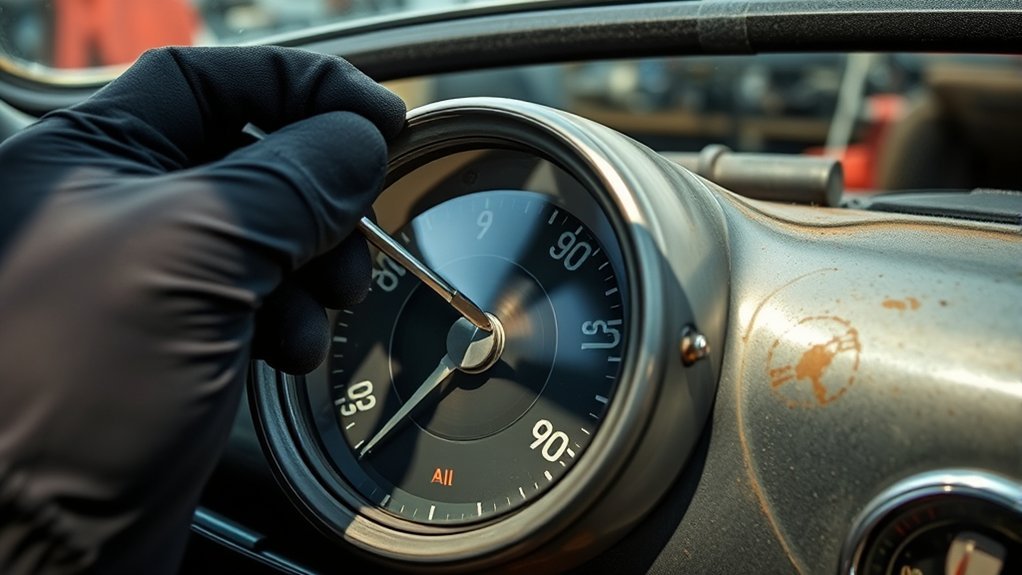
How Do You Fix a Broken Fuel Gauge
If your fuel gauge acts erratically or sticks, start by checking its fuse and inspecting the wiring for loose or corroded connections. A broken fuel gauge can often be traced back to simple issues like these.
You can test the fuel sending unit inside the tank with a multimeter and clean its contacts to improve accuracy. If these steps don’t help, the sending unit or gauge itself may need replacing.
Taking these actions can restore your gauge’s reliability, and there’s more to know about troubleshooting and preventing future issues.
Key Takeaways
- Check and replace the fuse related to the fuel gauge to ensure proper electrical flow.
- Inspect and repair any loose or corroded wiring between the fuel sending unit and gauge.
- Test and clean the fuel sending unit inside the gas tank using a multimeter for accurate readings.
- Remove, adjust, or replace the sending unit if it is damaged or providing inconsistent signals.
- Seek professional help if the gauge needle remains stuck or jumps erratically despite basic repairs.
Signs Your Fuel Gauge Is Broken
How can you tell if your fuel gauge is broken? You might notice it jumps between full and empty without reason or stays stuck at one level no matter how much fuel you add.
A broken fuel gauge may erratically jump or remain fixed regardless of how much fuel you add.
If the needle doesn’t move at all, that’s another clear sign. Sometimes, the gauge may show empty even after filling up, or it might suddenly drop to empty while you’re driving.
Pay attention to inconsistent readings that don’t match how much fuel you’ve actually put in. Also, if your low fuel warning light comes on unexpectedly or never lights up, your gauge could be faulty.
These signs indicate your fuel gauge isn’t providing accurate information, which means you can’t rely on it to know when to refill.
Common Causes of a Broken Fuel Gauge
Several factors can cause your fuel gauge to malfunction, and understanding these common issues helps you diagnose the problem more quickly. One frequent cause is a faulty fuel sending unit inside the gas tank, which measures fuel levels and sends the info to the gauge. If this unit wears out or breaks, your gauge won’t read correctly.
Wiring problems, like corroded or loose connections between the sending unit and gauge, can also disrupt the signal. Additionally, a blown fuse or a malfunctioning instrument cluster can prevent the gauge from working properly. Sometimes, the problem lies with the gauge itself due to internal mechanical or electrical failure.
Identifying these causes narrows down what you need to check next.
How to Fix a Broken Fuel Gauge Yourself
Wondering where to start when your fuel gauge stops working? First, check the fuse related to the fuel gauge; a blown fuse is an easy fix.
Start troubleshooting your fuel gauge by checking the fuse—often a quick and simple fix.
Next, inspect the wiring connecting the fuel gauge to the sending unit at the fuel tank. Look for any loose connections or damaged wires.
If wiring looks good, test the fuel sending unit using a multimeter to ensure it’s sending the right signals. Sometimes, cleaning the contacts on the sending unit solves the problem.
If you feel confident, remove the sending unit carefully and clean or adjust it. After these steps, reconnect everything firmly and test the gauge by turning the ignition on.
If the gauge still doesn’t respond correctly, you may need professional help, but these steps often fix common issues yourself.
When Should You Replace Fuel Gauge Parts?
If you’ve checked the fuse, wiring, and sending unit but your fuel gauge still isn’t working right, it might be time to contemplate replacing some parts. You should consider replacing components when you notice persistent issues that simple fixes don’t resolve. Here are key signs to watch for:
- The gauge needle sticks or jumps erratically.
- The fuel reading never reaches full or empty, even after a fill-up.
- You detect corrosion or damage on the fuel sending unit.
- The gauge completely fails to respond despite electrical checks.
Replacing faulty parts can restore accurate fuel readings and help you avoid running out of gas unexpectedly. Don’t wait too long. Addressing these symptoms early prevents further damage and costly repairs.
How to Prevent Fuel Gauge Problems in the Future
To keep your fuel gauge working smoothly, you’ll want to stay on top of regular maintenance and handle any issues as soon as they pop up. Start by checking your fuel sender unit during routine service visits to catch wear early.
Avoid letting your fuel tank run too low, as this can damage the sender and fuel pump. Keep your fuel tank clean and free of debris by refueling at reputable stations and occasionally using fuel system cleaners.
If you notice any irregular gauge behavior, don’t ignore it. Address it promptly to prevent further damage. Regularly inspecting wiring connections for corrosion or wear also helps maintain accurate readings.
Frequently Asked Questions
Can a Faulty Fuel Gauge Affect Vehicle Emissions?
Yes, a faulty fuel gauge can affect vehicle emissions because it might cause you to run the engine improperly or delay refueling, potentially leading to incomplete combustion and increased pollution.
You should get it fixed promptly.
Is It Safe to Drive With a Broken Fuel Gauge?
It’s generally safe to drive with a broken fuel gauge, but you’ll need to monitor your fuel level carefully to avoid running out. Keep a close eye on your mileage and refuel regularly to prevent unexpected stops.
How Much Does Professional Fuel Gauge Repair Typically Cost?
You’ll typically pay between $100 and $300 for professional fuel gauge repair, depending on your car’s make and model.
Labor and parts costs vary, so getting a detailed quote before starting is a smart move.
Are Fuel Gauge Problems Covered Under Vehicle Warranties?
About 70% of new car warranties cover fuel gauge issues, so you probably will get it fixed for free if it’s a manufacturing defect.
Just make sure to check your specific warranty’s terms and conditions.
Can Using a Fuel Additive Fix Fuel Gauge Issues?
No, using a fuel additive won’t fix fuel gauge issues since the problem usually lies in the gauge, sender unit, or wiring.
You’ll need to diagnose and repair those components to get an accurate reading again.
Conclusion
Now that you know how to spot a broken fuel gauge, how to troubleshoot common causes, and when to replace parts, you’re ready to take control. You can fix your gauge yourself, save money, and avoid being stranded.
You can check your connections, clean your sensors, and test your wiring. Taking these steps will help ensure your fuel gauge works accurately.
And you can prevent future problems by staying proactive, staying informed, and staying safe on the road. With the right approach, fixing a broken fuel gauge is manageable and keeps you confidently on the move.