What Should Wheel Bearing Seals Be Checked for
You should check your wheel bearing seals for cracks, tears, and any signs of brittleness or hardening that could compromise their seal. Inspect closely for leaks, grease splatters, or wet residue around the seal area.
Watch for dirt, moisture, or rust that might have entered the bearing, as these can cause damage over time. Also, listen for unusual noises or feel for rough rotation, which could signal lubrication loss or wear.
Keeping an eye on these issues helps avoid bigger bearing problems. There’s more to learn about maintaining and replacing seals properly to ensure long-lasting performance.
Key Takeaways
- Inspect wheel bearing seals for cracks, tears, deformities, and proper seating to ensure integrity and prevent damage.
- Check for dirt, moisture, rust, and debris near the seal indicating contamination or seal failure.
- Monitor grease leakage, wet residue, and unusual wear marks around the seal for signs of leakage or compromised sealing.
- Listen for unusual noises and assess wheel rotation for roughness or friction indicating lubrication or bearing issues.
- Schedule regular inspections and replace seals promptly if damage, contamination, or noise is detected to maintain bearing health.
What Are Wheel Bearing Seals And Why Do They Matter?
What exactly are wheel bearing seals, and why should you care about them? These small but essential components fit snugly around your wheel bearings, acting as a barrier.
Their job is to keep grease in and dirt, water, and debris out. If the seals fail, contaminants can enter, causing your bearings to wear prematurely. This leads to noisy wheels, rough rides, and even dangerous driving conditions.
You want your seals to maintain a tight seal because they protect the bearings from corrosion and friction damage. Without them, your wheels won’t spin smoothly, and you’ll face costly repairs.
How To Inspect Wheel Bearing Seals Visually
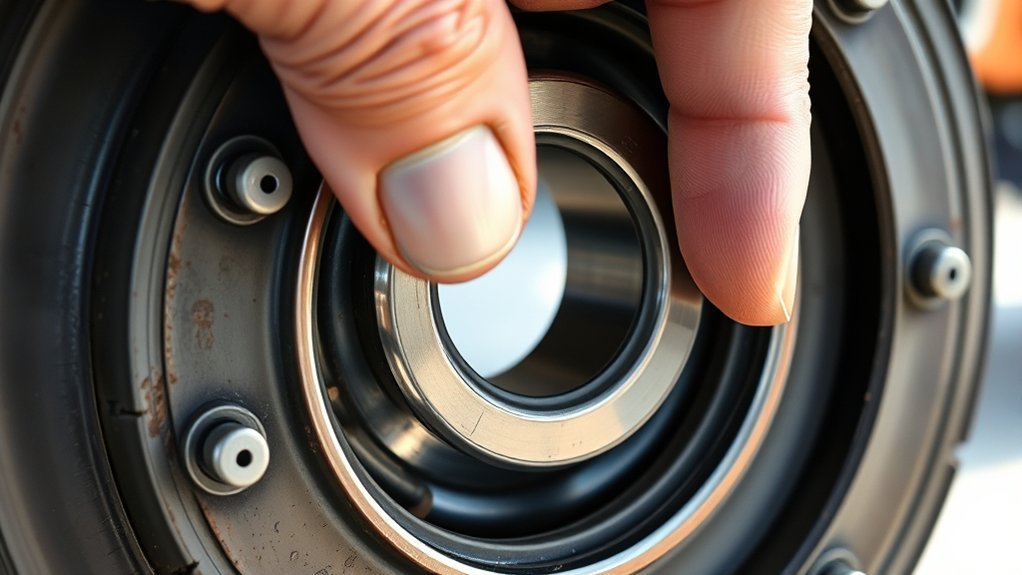
When you inspect wheel bearing seals, look closely for cracks, tears, or any other visible damage. Pay special attention to areas where grease might be leaking out, as this is a clear sign of seal failure.
Catching these issues early helps prevent bigger problems down the road.
Signs Of Visible Damage
How can you tell if a wheel bearing seal is damaged just by looking? Focus on cracks, tears, or any deformities on the seal’s surface. A good seal should look smooth and intact without signs of wear or brittleness.
Check for missing chunks or areas where the material seems worn thin. Also, look for hardening or excessive softening, which can indicate aging or exposure to heat and chemicals.
If the seal appears loose or out of its proper seating, that’s a clear red flag. Don’t forget to examine the edges closely, as damage often starts there.
Spotting these visible signs early helps prevent contamination and bearing failure, saving you time and costly repairs down the line.
Checking For Seal Leaks
After spotting cracks or deformities on the wheel bearing seal, the next step is to check for leaks that could let contaminants in. You want to carefully inspect the area around the seal for signs of grease escaping or dirt entering.
Look for any wet or oily residue on the outside of the seal, which often indicates a leak. Also, check for dirt buildup near the seal’s edge, as this can signal contaminants have passed through.
When inspecting, focus on:
- Grease splatters on the wheel hub or backing plate
- Dirt or grime accumulation close to the seal
- Moisture or fluid dripping around the seal area
- Any unusual wear marks or gaps between the seal and hub
These signs help you catch leaks early and prevent bearing failure.
Essential Tools You Can Use To Check Seal Health
Which tools do you need to accurately assess the condition of wheel bearing seals? Start with a flashlight to illuminate tight spaces and spot any dirt or grease buildup. A magnifying glass helps you closely inspect the seal’s surface for subtle damage.
You’ll also want a clean rag to wipe away grime and avoid false readings. Using a dial indicator or a feeler gauge allows you to measure any irregular gaps or misalignment that might compromise the seal.
Finally, a pry tool or seal puller can safely remove seals for a thorough examination without causing damage. Having these tools on hand ensures you can perform a precise, efficient inspection and maintain your wheel bearing seals in top shape.
Common Signs Of Wear And Cracking On Wheel Bearing Seals
You should carefully inspect the wheel bearing seals for visible damage like cracks or tears. Keep an eye out for any signs of seal leakage, such as grease escaping or dirt buildup around the seal.
Catching these issues early helps prevent bigger problems down the road.
Visible Seal Damage
Visible seal damage is one of the most common signs that your wheel bearing seals need attention. When you inspect the seals, keep an eye out for any visible flaws that could compromise their function. These damages often indicate that contaminants might get inside, risking bearing failure.
Look for these common signs of visible seal damage:
- Cracks or splits on the seal surface
- Torn or frayed edges around the seal
- Hardening or brittleness of the seal material
- Missing or deformed sealing lips
If you spot any of these, it’s crucial to replace the seals promptly. Ignoring visible damage can lead to more serious wheel bearing issues, costing you more time and money down the road.
Signs Of Seal Leakage
Damaged seals often lead to leakage, signaling that wear and cracking have compromised their integrity. When checking for signs of seal leakage, look for grease or oil seeping around the seal edges.
You might notice a dark, oily residue on the wheel hub or surrounding components. Cracks or splits in the seal’s surface are clear red flags, allowing lubricant to escape and contaminants to enter.
If the seal feels brittle or warped when you touch it, that’s another sign it’s failing. You may also detect unusual noises like grinding or humming from the wheel bearing, caused by inadequate lubrication due to seal leakage.
Catching these signs early helps prevent further damage and costly repairs. Always inspect seals carefully during routine maintenance.
Checking For Leaks In Wheel Bearing Seals
How can you tell if a wheel bearing seal is leaking? You’ll want to look closely for any signs that grease or lubricant is escaping. A leaking seal often results in dirt buildup or grease splattered around the hub.
To check for leaks, follow these steps:
- Inspect the wheel hub and surrounding areas for fresh grease or oily residue.
- Look for any cracks, tears, or damage on the seal itself.
- Spin the wheel and observe if grease is flinging out from the seal area.
- Check for unusual noise or roughness when the wheel rotates, as this might hint at lubrication loss.
Detecting Dirt And Moisture In Wheel Bearing Seals
Why does dirt and moisture in wheel bearing seals matter? When dirt or moisture sneaks past the seals, they can contaminate the bearing grease, leading to corrosion and wear.
You should inspect the seals closely for any debris buildup or visible dampness. Use a clean cloth to wipe around the seal area and check for dirt particles clinging to the surface.
Also, look inside the hub if possible. Moisture often appears as rust or grime around the bearings. If you spot any dirt or moisture, it’s a clear sign the seal isn’t doing its job properly.
Catching these issues early helps you avoid more serious damage and keeps your wheel bearings running smoothly. Regular checks ensure your seals stay clean and dry.
How Seal Damage Affects Wheel Bearing Performance
When a wheel bearing seal gets compromised, it lets contaminants and moisture slip inside, which can quickly degrade the bearing’s performance. You’ll notice increased friction that causes the bearing to heat up, leading to faster wear.
The seal damage also allows grease to escape, reducing lubrication and increasing metal-to-metal contact. Over time, this results in rough, noisy bearings that can affect vehicle handling.
Here’s how seal damage impacts your wheel bearings:
- Contaminants cause corrosion and pitting inside the bearing.
- Moisture accelerates rust formation on bearing surfaces.
- Loss of grease leads to insufficient lubrication and overheating.
- Increased friction results in premature bearing failure.
Checking seals regularly helps you maintain smooth, safe wheel performance.
When You Should Replace Wheel Bearing Seals
Wondering if it’s time to replace your wheel bearing seals? You should replace them if you notice grease leaking or dirt and moisture getting inside the bearings. These signs indicate the seals have lost their ability to protect the bearing assembly.
Also, if you hear unusual noises like grinding or humming from your wheels, it’s a red flag that the seals might be compromised. Inspect the seals during routine maintenance. If they appear cracked, brittle, or damaged, don’t wait to change them.
Driving with worn seals can cause bearing failure, leading to costly repairs and unsafe conditions. Replacing the seals promptly helps maintain wheel performance and extends the life of your bearings, ensuring your vehicle runs smoothly and safely.
Tips To Extend The Life Of Your Wheel Bearing Seals
How can you make your wheel bearing seals last longer? By taking a few simple steps, you can protect them from damage and wear. Regular maintenance and mindful driving play key roles in extending their lifespan.
Here are some tips to keep your wheel bearing seals in good shape:
- Inspect seals regularly for cracks or leaks to catch issues early.
- Avoid driving through deep water or mud, which can cause contamination.
- Keep wheel bearings properly lubricated to reduce friction and heat buildup.
- Replace seals promptly if you notice any damage or unusual noise.
Frequently Asked Questions
Can Damaged Wheel Bearing Seals Affect Fuel Efficiency?
Yes, damaged wheel bearing seals can affect your fuel efficiency by causing increased friction and heat. When seals fail, contaminants enter, leading to rough bearings that make your wheels work harder, reducing overall fuel economy.
Are Wheel Bearing Seals the Same for All Vehicle Types?
Think of wheel bearing seals like puzzle pieces. No, they’re not the same for all vehicles. You’ll need the right fit for your specific make and model to keep everything spinning smoothly and avoid costly damage.
How Do Temperature Changes Impact Wheel Bearing Seals?
Temperature changes cause wheel bearing seals to expand and contract, which can lead to cracks or hardening.
You’ll want to check seals regularly to prevent leaks and contamination that could damage your bearings over time.
Can I Drive Safely With a Faulty Wheel Bearing Seal?
You might think it’s harmless, but driving with a faulty wheel bearing seal is risky. It can lead to bearing damage, noise, or even wheel failure.
Don’t wait. Get it inspected and fixed to stay safe.
Do Wheel Bearing Seals Require Lubrication?
No, wheel bearing seals themselves don’t require lubrication. Instead, they keep the grease inside the bearing.
You should guarantee the bearing is well-greased, so the seal can do its job properly and prevent damage.
Conclusion
Think of your wheel bearing seals as the fortress walls guarding a precious city—your vehicle’s smooth ride. If these walls crack, leak, or let dirt sneak in, the city’s peace is at risk.
By regularly inspecting and maintaining your seals, you keep that fortress strong, ensuring your journey stays safe and seamless. Don’t wait for the walls to crumble; protect your ride’s heart.
Always check wheel bearing seals for signs of damage, leaks, or contamination to maintain optimal performance. Keeping an eye on these seals is key to preserving your vehicle’s reliability and safety on the road.