Where Is the Carburetor
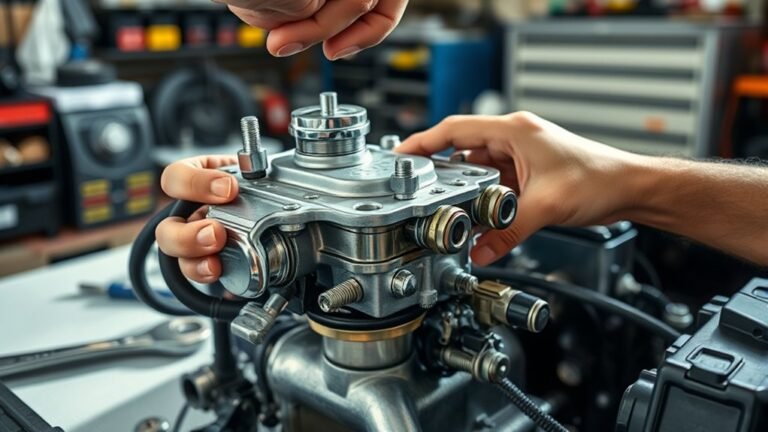
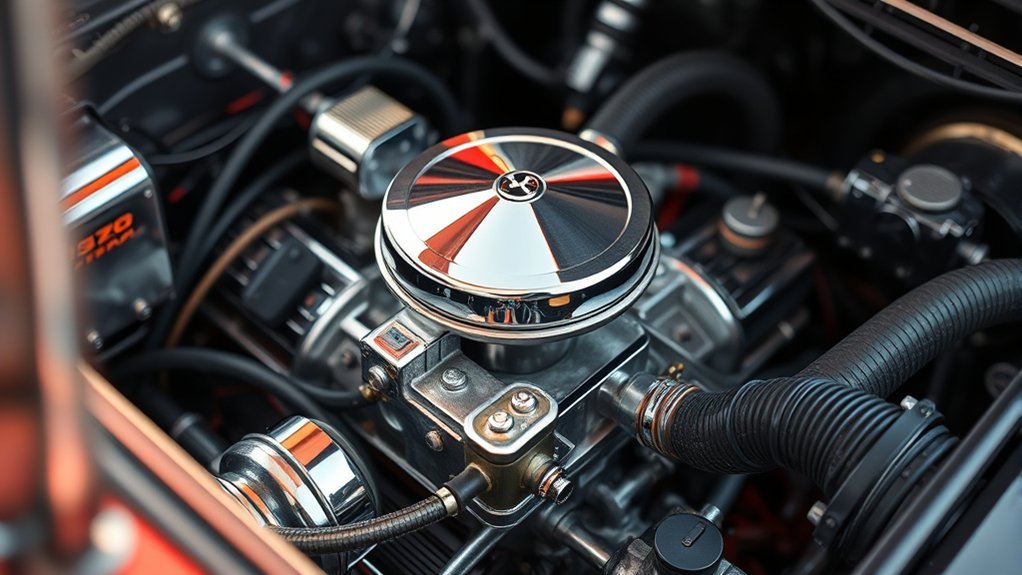
You’ll typically find the carburetor mounted on top of your engine’s intake manifold, centrally placed to efficiently mix air and fuel. The carburetor is a metal component with throttle linkages and an air filter housing. It connects via a gasket-sealed flange to maintain proper vacuum pressure.
This positioning ensures consistent fuel delivery and optimal airflow. Understanding this location helps you identify the carburetor quickly and grasp why its placement impacts performance.
Further details reveal how this affects maintenance and engine efficiency. Knowing where the carburetor sits is key to troubleshooting and keeping your engine running smoothly.
Where Is the Carburetor Located in Most Vehicles
Where exactly can you find the carburetor in most vehicles? Typically, the carburetor is mounted on top of the engine’s intake manifold, centrally positioned to mix air and fuel efficiently before delivery to the combustion chambers.
Understanding carburetor compatibility is essential, as not all engines support carburetors. Many modern vehicles use fuel injection systems instead. This distinction helps dispel common fuel injection myths, such as the belief that carburetors are universally compatible or superior in performance.
The carburetor’s location facilitates direct control over the air-fuel ratio, which is vital for engine operation in older models. However, as fuel injection systems have become standard due to improved efficiency and emissions control, carburetors are mostly found in classic or specialized vehicles rather than contemporary ones.
Identifying a Carburetor Under the Hood
How can you tell if what you’re looking at under the hood is a carburetor? First, locate a metal component sitting atop the intake manifold, typically characterized by a rounded or square shape with visible throttle linkages and fuel lines.
Unlike fuel injection systems, carburetors have a distinct air horn or choke plate that controls airflow. Understanding carburetor psychology helps here: the design focuses on mixing fuel and air optimally before combustion, embodying a precise mechanical harmony.
You’ll notice fuel poetry in the way the carburetor meters fuel through jets and passages, a delicate balance of pressure and flow. If you see a device with these features—metal body, throttle control, fuel inlet, and air filter housing, you’re likely looking at the carburetor, the heart of classic fuel delivery systems.
How the Carburetor Connects to the Intake Manifold
When examining the linkage between the carburetor and the intake manifold, you’ll find that they’re joined by a gasket-sealed flange designed to guarantee an airtight connection. This seal is critical for maintaining proper vacuum pressure, which ensures efficient air-fuel mixture delivery.
It’s essential to verify carburetor compatibility with your intake manifold, as variations in flange dimensions or bolt patterns can lead to leaks or misalignment. Unlike fuel injection systems, which mount injectors directly on the intake ports or manifold runners, carburetors sit atop the intake manifold, mixing air and fuel before distribution.
Proper installation requires careful torque application on flange bolts to avoid warping. Ensuring this connection is airtight and correctly aligned directly impacts engine efficiency and overall performance.
Why Carburetor Position Matters for Your Engine’s Performance
You need to understand how the carburetor’s position affects airflow efficiency and fuel mixture distribution to optimize engine performance. Placing it correctly guarantees consistent fuel delivery across cylinders and helps regulate engine temperature.
Ignoring these factors can lead to uneven combustion and reduced power output.
Airflow Efficiency Impact
Why does the carburetor’s position influence your engine’s airflow efficiency so considerably? The carburetor’s placement directly affects how air mixes with fuel, which is critical for optimal combustion. If positioned improperly, airflow can become turbulent or restricted, reducing fuel efficiency and compromising emission control.
Here’s why it matters:
- Airflow Path Optimization: Correct positioning ensures smooth, laminar airflow, maximizing oxygen delivery for efficient combustion.
- Minimized Pressure Drops: Proper placement reduces pressure losses, maintaining consistent air velocity and improving fuel atomization.
- Thermal Management: Position affects air temperature entering the carburetor, influencing air density and combustion quality.
Fuel Mixture Distribution
The carburetor’s position not only governs airflow efficiency but also plays a significant role in distributing the fuel mixture evenly across the engine’s cylinders. If the carburetor is misaligned or too far from the intake manifold, you risk uneven fuel delivery. This can cause cylinder misfires, inefficient combustion, and increased engine oil contamination.
Just like uneven tire tread affects vehicle stability, uneven fuel mixture harms engine balance and performance.
| Carburetor Position | Fuel Mixture Uniformity | Engine Performance Impact |
|---|---|---|
| Optimal | High | Smooth, efficient |
| Slightly off-center | Moderate | Minor misfires |
| Far from manifold | Low | Rough idle, poor power |
| Improper angle | Variable | Increased oil degradation |
| Loose mounting | Unstable | Erratic performance |
Engine Temperature Regulation
How exactly does the carburetor’s position influence engine temperature regulation? Its placement impacts how heat dissipates within the engine bay, directly affecting performance. If positioned too close to heat sources, the carburetor can cause uneven fuel vaporization, leading to overheating and inefficient combustion.
Consider these points:
- Heat Transfer: Proximity to exhaust manifolds raises carburetor temperature, risking vapor lock and inconsistent air-fuel mixture.
- Engine Oils Efficiency: Excessive heat near the carburetor can degrade engine oils faster, reducing lubrication and accelerating wear.
- Battery Corrosion Risk: Poor carburetor placement may increase engine bay temperatures, promoting battery corrosion due to accelerated chemical reactions.
Optimizing carburetor position ensures stable engine temperature, preserving component longevity and maintaining performance consistency.
Carburetor Placement: Older vs. Modern Cars
Where can you typically find the carburetor in older vehicles compared to modern ones? In vintage engines, the carburetor is usually mounted atop the intake manifold, centrally located for direct fuel-air mixing. This placement was practical for mechanical simplicity and ease of access.
However, carburetor myths often confuse this straightforward setup with more complex locations. In contrast, modern cars rarely use carburetors; instead, they employ fuel injection systems integrated within the intake manifold or throttle body.
When present, carburetors in newer or retrofit applications might be positioned differently due to design constraints and emissions controls. Understanding these differences helps you identify carburetor placement accurately without falling for misconceptions, especially when working on or restoring vintage engines versus assessing modern engine compartments.
Accessing the Carburetor for Maintenance
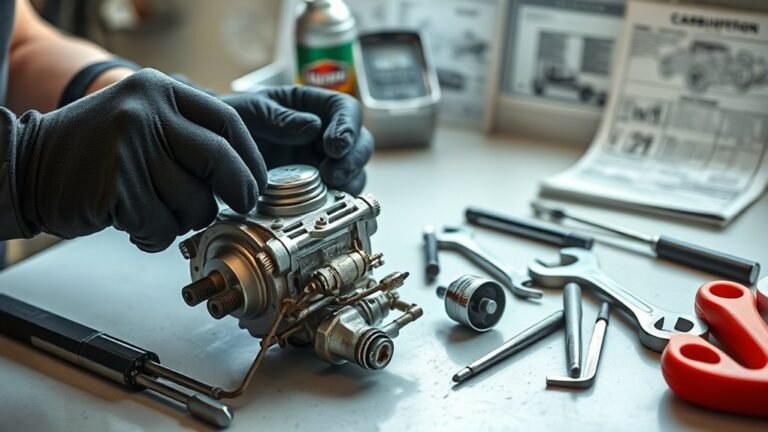
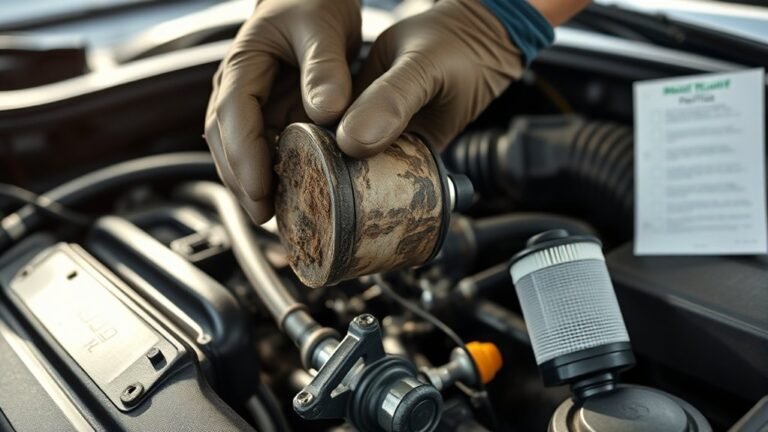
To access the carburetor for maintenance, first identify its exact location under the hood, typically atop the engine in older vehicles. You’ll need a set of basic hand tools, including screwdrivers and wrenches, for removal and adjustment.
Follow a step-by-step process to disconnect fuel lines, linkages, and mounting bolts safely before extracting the unit.
Locating the Carburetor
Locating the carburetor on your engine is essential before performing any maintenance tasks. It’s typically mounted on top of the intake manifold, centrally positioned within the engine bay. Engine bay aesthetics and aftermarket tuning can sometimes complicate identification, as modifications may alter standard layouts or add covers that obscure the carburetor.
To pinpoint it precisely, follow these steps:
- Identify the air filter housing, usually a round or oval component, which sits directly atop the carburetor.
- Trace the fuel line leading from the fuel pump; it connects directly to the carburetor’s fuel inlet.
- Look for mechanical linkages connected to the throttle; these are attached to the carburetor’s throttle lever.
Tools Needed for Access
How do you guarantee safe and efficient access to the carburetor during maintenance? First, you’ll need a basic toolkit: screwdrivers, socket wrenches, and pliers specifically sized for your engine model.
A flashlight or inspection mirror helps navigate tight spaces, especially under poor lighting or variable weather patterns affecting visibility. Gloves protect your hands from sharp edges and fuel residues. Additionally, a clean rag is essential for wiping components, much like how precision in cooking techniques ensures consistent results.
Avoid rushing; use tools that provide firm grip and control to prevent damage. Preparing your workspace with stable lighting and ventilation also mimics the controlled environment in cooking, ensuring safety and efficiency. Having these tools ready streamlines access, preventing unnecessary delays before you begin maintenance.
Step-by-Step Removal Process
A careful approach guarantees you remove the carburetor without damaging surrounding components. Mastering the carburetor art means understanding the precise steps to access it for maintenance, ensuring optimal fuel delivery.
- Disconnect the battery to prevent electrical hazards and then detach fuel lines carefully to avoid spills.
- Remove linkage connections controlling throttle and choke, noting their positions for reassembly.
- Unscrew mounting bolts evenly, supporting the carburetor as you lift it off to prevent strain on gaskets or the intake manifold.
Following this procedure ensures you preserve the integrity of the fuel delivery system and avoid costly damage. Each step demands attention to detail, reflecting the technical skill embedded in carburetor art, crucial for maintaining engine performance.
Signs Your Carburetor Might Be Malfunctioning
What clues should you watch for to know if your carburetor is malfunctioning? First, pay attention to engine performance issues like rough idling, stalling, or hesitation during acceleration. These symptoms often indicate improper air-fuel mixture delivery.
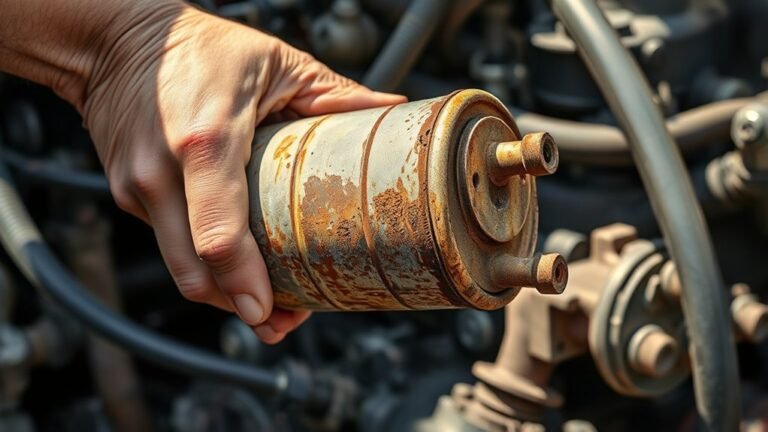
Also, check for black smoke from the exhaust, which suggests a rich mixture caused by carburetor flooding. Visually inspect the carburetor aesthetics; grime buildup or fuel residue around the base can signal leaks or poor sealing.
Fuel additives can sometimes mask symptoms temporarily, so don’t rely solely on them for diagnostics. Additionally, difficulty starting your engine, especially when cold, may point to carburetor issues.
Monitoring these signs early helps prevent more severe damage and ensures optimal engine function.
Alternatives to Carburetors in Modern Fuel Systems
Recognizing signs of carburetor malfunction is important, but understanding the alternatives available today can help you decide if an upgrade is worthwhile. Modern fuel systems have largely replaced carburetors to improve efficiency, emissions control, and compatibility with alternative fuels.
Here are three primary alternatives you should consider:
- Fuel Injection Systems: Precisely meter fuel delivery electronically, optimizing combustion and reducing emissions.
- Direct Injection: Injects fuel directly into the combustion chamber, enhancing power output and fuel economy while supporting a variety of alternative fuels.
- Electronic Carburetors: Combine traditional carburetor mechanics with electronic controls for better fuel metering and emissions compliance.
Maintenance Tips to Keep Your Carburetor Running Smoothly
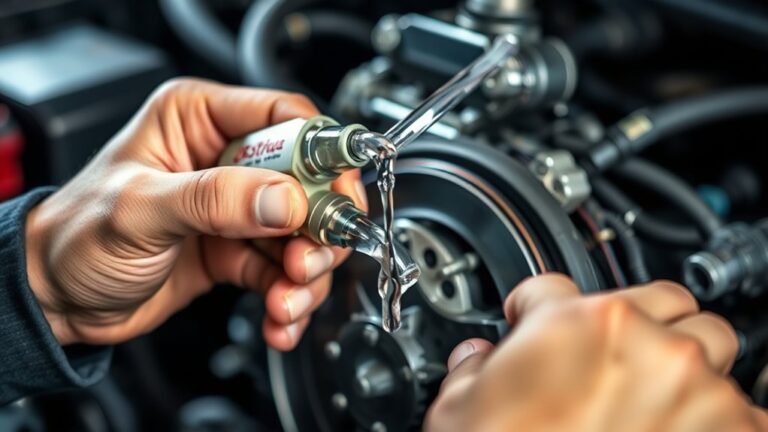
Regularly inspecting and cleaning your carburetor guarantees it performs efficiently and extends its lifespan. Begin by removing any debris or varnish buildup using a suitable carburetor cleaner.
Check the idle adjustment screws to ensure the engine maintains a steady, smooth idle. Incorrect idle speed can cause stalling or poor fuel economy.
Additionally, using fuel additives designed to prevent deposits will help keep internal passages clear and improve combustion. Inspect gaskets and seals for wear, replacing them as needed to prevent leaks.
Periodically examine the float level and needle valve to avoid flooding or fuel starvation. Consistent maintenance, including timely adjustments and cleaning, ensures optimal fuel-air mixture delivery, keeping your carburetor running smoothly and your engine performing reliably.
Frequently Asked Questions
How Does a Carburetor Impact Fuel Efficiency?
You’ll find carburetors affect efficiency by controlling air-fuel mixture; if not calibrated right, they reduce fuel economy. Proper tuning optimizes combustion, improving fuel economy impact and ensuring your engine runs efficiently without wasting fuel.
What Materials Are Carburetors Typically Made From?
Carburetors are typically made from aluminum alloys or zinc due to their lightweight and corrosion resistance. Manufacturing processes include die casting and machining, ensuring precision for fuel-air mixture control and durability under engine operating conditions.
Can a Carburetor Be Rebuilt or Only Replaced?
You can absolutely perform a carburetor rebuild if you’re comfortable with precision work; it restores function and is often cost-effective. However, replacement options are available and sometimes preferred when damage is extensive or parts are obsolete.
What Tools Are Needed for Carburetor Adjustment?
You’ll need a flathead screwdriver, a Phillips screwdriver, and a small wrench for carburetor basics. Follow tuning tips closely. Adjust idle and mixture screws carefully to optimize performance without damaging delicate components during carburetor adjustment.
How Does Altitude Affect Carburetor Performance?
Altitude’s a silent challenge. You’ll notice leaner mixtures as air thins. For adjustment safety, always perform altitude testing to recalibrate fuel flow precisely, preventing engine damage and ensuring optimal carburetor performance at varying elevations.