How to Check Tire Tread
You can check your tire tread using the easy penny test: insert a penny with Lincoln’s head facing down into the grooves. If you see all of Lincoln’s head, your tread is too shallow and needs replacing.
For a precise check, use a tread depth gauge, measuring multiple spots for wear below 2/32 inch. Don’t forget to look for cracks, bulges, or uneven wear too.
Keep checking to ascertain when and why you should replace your tires.
Key Takeaways
- Use a penny inserted head-down into tire grooves to quickly check if tread depth is below 2/32 inch.
- Measure tread depth with a gauge by pressing its probe into the deepest groove and reading the value.
- Inspect multiple spots around each tire to ensure consistent tread wear and identify uneven wear patterns.
- Look for tread wear indicators that become flush with the tread surface, signaling the need for replacement.
- Check for additional tire damage like sidewall cracks, bulges, feathering, or cupping, which affect safety.
Why Your Tire Tread Depth Matters for Safe Driving
Why does tire tread depth matter for safe driving? It’s essential because your tire tread grips the road, especially in wet or slippery conditions. When the tread wears down, your tires can’t channel water away effectively, increasing the risk of hydroplaning.
This means you could lose control of your vehicle during rain, snow, or on slick surfaces. Proper tread depth also affects braking distance. Worn tires take longer to stop, which can be dangerous in emergencies.
Besides safety, maintaining adequate tread helps your car handle better, giving you more confidence behind the wheel. You rely on your tires to keep you safe, so paying attention to tread depth guarantees you’re driving with top-notch traction and control every time you hit the road.
Don’t overlook it; it’s a key part of vehicle safety.
How to Use the Penny Test to Check Your Tire Tread
Wondering how to quickly check if your tire tread is still safe? The penny test is an easy way to do just that. Grab a penny and place it into the tire’s tread groove with Lincoln’s head facing down.
If you can see the top of Lincoln’s head, it means your tread depth is less than 2/32 of an inch, which is too worn for safe driving. If part of his head is covered by the tread, your tires still have enough depth.
Repeat this test in multiple spots around each tire since tread can wear unevenly. This simple method helps you spot when it’s time to replace your tires before safety becomes a risk.
How to Measure Tire Tread Depth With a Gauge
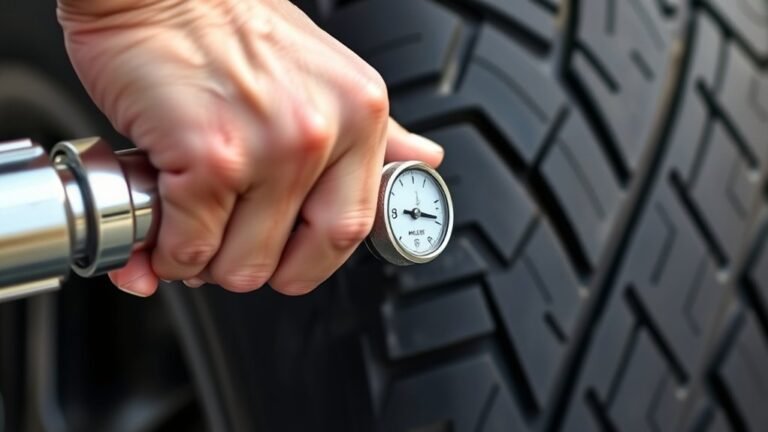
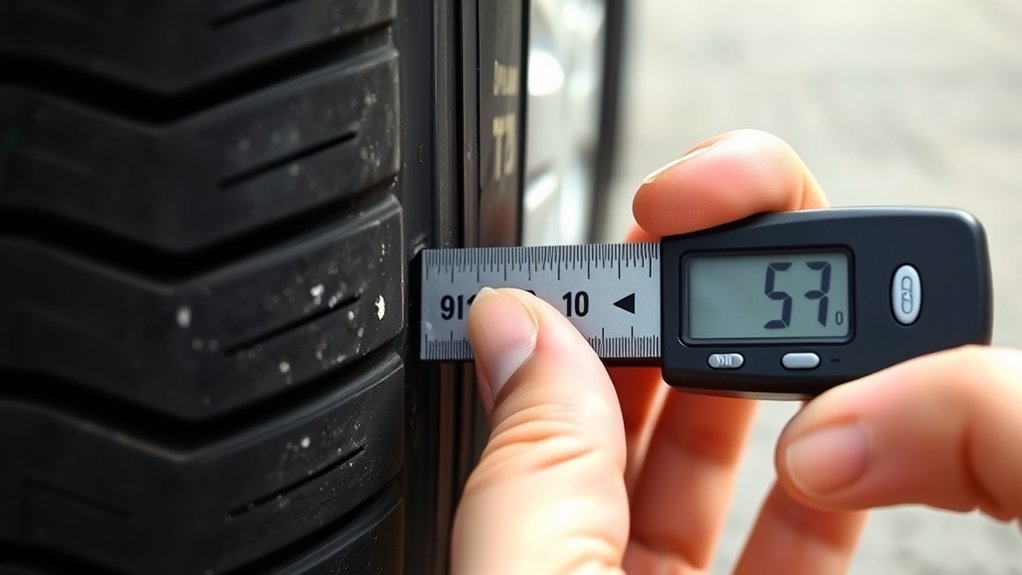
How can you get a more precise measurement of your tire tread depth? Using a tread depth gauge is the best way. First, clean any dirt from your tire’s grooves.
Then, place the base of the gauge flat against the tire tread. Push the measuring probe down into the deepest groove until it stops. Read the measurement on the gauge, usually displayed in 32nds of an inch or millimeters.
Repeat this in several spots around the tire to check for consistent tread wear. If the tread depth is below 2/32 of an inch, it’s time to replace your tires.
A tread depth gauge gives you an accurate reading, helping you maintain safety and know exactly when to change your tires.
How to Spot Other Signs of Tire Wear: Cracks, Bulges, and Uneven Wear
When inspecting your tires, don’t just focus on tread depth. Check for cracks, bulges, and uneven wear too. Cracks often appear on the sidewalls and indicate dry rot. Bulges signal internal damage that can lead to sudden blowouts. Uneven wear might suggest alignment or suspension issues. Use this table to identify what to look for:
| Sign | Appearance | What It Means |
|---|---|---|
| Cracks | Small lines on sidewall | Dry rot, aging tire |
| Bulges | Raised, swollen areas | Internal damage |
| Uneven wear | Tread worn unevenly | Alignment or suspension problem |
| Feathering | Tread ribs worn unevenly | Misaligned wheels |
| Cupping | High and low spots on tread | Suspension issues |
Spotting these signs early helps keep you safe on the road.
When and Why to Replace Your Tires
You should replace your tires once the tread wears down to the tire wear indicators, which means they’re no longer safe. Worn tires can seriously hurt your car’s performance and increase the risk of accidents.
Staying on top of tire replacement keeps you safe and your vehicle running smoothly.
Tire Wear Indicators
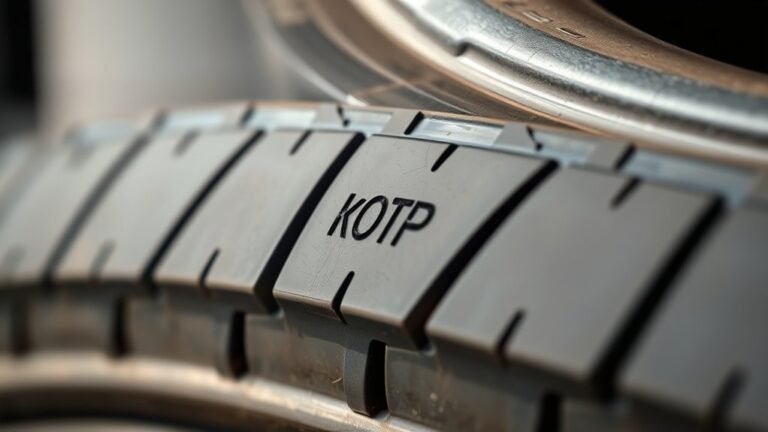
Tire wear indicators are small raised bars molded into the grooves of your tires that reveal essential information about tread depth. When the tread wears down to these bars, it signals that your tires have reached their minimum safe tread depth and need replacement.
You should check these indicators regularly to avoid driving on unsafe tires.
Here’s what you need to know about tire wear indicators:
- They become flush with the tread surface when tires are worn out.
- They help you visually gauge when to replace tires without special tools.
- They’re built into every tire by manufacturers.
- Ignoring them can lead to reduced traction and increased risk of tire failure.
Paying attention to these indicators keeps you on the road safely and helps you avoid unexpected tire issues.
Safety and Performance
How do you know it’s time to replace your tires for safety and performance? When the tread depth falls below 2/32 of an inch, your tires lose grip, increasing the risk of hydroplaning and longer stopping distances.
Cracks, bulges, or uneven wear also signal that your tires aren’t safe. Even if tread looks okay, tires older than six years may harden and crack, reducing performance.
Replacing your tires promptly ensures better traction, handling, and braking, especially in wet or icy conditions. Don’t wait for a blowout or skid; regularly check your tires and replace them when signs of wear or damage appear.
Prioritizing timely tire replacement keeps you safer on the road and maintains your vehicle’s optimal performance.
How Weather Impacts Your Tire Tread’s Performance
Why does weather play such a crucial role in your tire tread’s effectiveness? Because different conditions directly affect how your tires grip the road. Wet, icy, or hot surfaces can change the way your tread performs, impacting safety and control.
Here’s what you need to know:
- Rain: Water reduces traction; deeper tread grooves help channel water to prevent hydroplaning.
- Snow and Ice: Treads with specialized patterns and sipes improve grip on slippery surfaces.
- Heat: High temperatures can soften rubber, causing faster wear and reduced tread life.
- Cold: Low temperatures make rubber stiffer, decreasing traction and increasing the risk of cracking.
How to Maintain Your Tire Tread Longer for Better Safety
Maintaining your tread longer hinges on regular care and mindful driving habits. You should check your tire pressure monthly, as underinflated tires wear unevenly. Rotate your tires every 6,000 to 8,000 miles to ensure balanced wear.
Avoid aggressive acceleration, hard braking, and sharp turns since they accelerate tread wear. Also, keep your alignment and suspension in check to prevent uneven tread loss.
| Maintenance Tip | Benefit |
|---|---|
| Regular tire pressure | Even tread wear |
| Timely tire rotation | Balanced tread wear |
| Smooth driving habits | Reduced premature wear |
| Alignment checks | Prevents uneven tread damage |
Frequently Asked Questions
Can Tire Tread Depth Affect Fuel Efficiency?
Yes, tire tread depth can affect fuel efficiency. When your tread wears down, tires lose traction and create more rolling resistance, making your engine work harder and use more fuel.
Keeping good tread helps you save fuel.
How Often Should I Rotate My Tires to Maintain Tread?
You should rotate your tires every 5,000 to 7,000 miles, like turning the pages of a well-loved book to keep the story even. This keeps your tread wearing evenly and your ride smooth.
Do All Vehicles Require the Same Tread Depth for Safety?
No, you don’t need the same tread depth for every vehicle. Different vehicles and conditions require varying depths for safety.
Always check your manufacturer’s recommendations and local laws to keep your tires safe and road-ready.
Can Winter Tires Have Different Tread Depth Requirements?
You might think winter tires need deeper treads like fresh snow banks, but they actually have slightly different requirements.
You’ll find their tread depth focuses on grip and flexibility, not just depth alone, for icy safety.
How Does Tire Tread Depth Influence Braking Distance?
Tire tread depth directly affects your braking distance; shallower treads reduce grip, especially on wet roads, making you stop slower.
Keeping adequate tread helps you brake safely and maintain control during sudden stops or slippery conditions.
Conclusion
Keeping an eye on your tire tread isn’t just about the numbers—it’s about embracing peace of mind every time you hit the road. When you spot those subtle signs of wear or use simple tests like the penny check, you’re gently reminding yourself to prioritize safety.
By caring for your tires and knowing when to say goodbye, you’re choosing to protect yourself and your loved ones from unexpected bumps along the way. Regularly checking your tire tread helps ensure a safer driving experience for everyone.