What Happens if You Overfill Coolant
If you overfill your coolant reservoir, the excess fluid raises internal system pressure beyond design limits, stressing hoses, seals, and connections. Overfilling coolant can cause leaks, degrade coolant chemistry, and impair the cooling system’s efficiency.
You might notice overflow from the reservoir or swelling, leading to potential damage like warped engine components or thermostat malfunction. Correct coolant levels are essential to maintain system integrity and prevent costly failures.
Explore further to understand how to identify, fix, and prevent these problems effectively.
What Happens When You Overfill Coolant
What exactly occurs when you overfill your vehicle’s coolant reservoir? Contrary to common overheating myths, simply having excess coolant doesn’t immediately cause your engine to overheat. The cooling system is designed with an expansion tank to accommodate fluid volume changes due to temperature fluctuations.
However, overfilling can lead to coolant spilling out as the fluid expands, creating mess and potential corrosion. Addressing pressure myths, the system’s pressure relief valve regulates excess pressure, preventing damage despite overfilling.
Still, overfilling disrupts the coolant-air interface, reducing the reservoir’s ability to manage expansion and contraction efficiently. So, while overfilling doesn’t directly cause overheating or excessive pressure, it compromises the system’s optimal function, increasing the risk of minor leaks and maintenance issues over time.
Effects of Overfilled Coolant on Engine Pressure
When you overfill coolant, the excess fluid raises the cooling system’s internal pressure beyond its design limits. This increased pressure can strain hoses and seals, leading to potential leaks or failures.
Understanding how overfilled coolant impacts engine pressure helps prevent costly damage.
Increased Cooling System Pressure
How does overfilling your coolant impact the pressure within your engine’s cooling system? When you add too much coolant, the system’s volume capacity is exceeded, causing a rise in internal pressure. This elevated pressure alters the coolant chemistry, potentially accelerating corrosion and reducing its heat transfer efficiency.
Overpressure can also exacerbate overheating causes by disrupting the designed pressure balance essential for optimal engine temperature regulation.
| Factor | Effect on Cooling System Pressure |
|---|---|
| Excess Coolant Volume | Increases system pressure beyond design |
| Thermal Expansion | Further raises pressure as coolant heats |
| Coolant Chemistry Change | Alters boiling point, affects pressure |
| Radiator Cap Function | May fail to release excess pressure |
| Overheating Causes | Intensified due to pressure-related stress |
Understanding these effects helps you maintain proper coolant levels and avoid pressure-related engine issues.
Risk of Hose and Seal Damage
Why should you be concerned about overfilled coolant causing hose and seal damage? When you overfill coolant, the excess volume increases the internal pressure beyond design limits, stressing hoses and seals. This elevated pressure, combined with coolant buoyancy effects, can cause hoses to swell or deform, weakening their structural integrity.
Seals, designed to accommodate specific pressure ranges, may develop leaks or fail entirely under these abnormal conditions. Such failures increase the overheat risk as coolant escapes, reducing system efficiency. Additionally, the compromised seals allow air ingress, further disrupting coolant circulation.
You must maintain coolant levels within manufacturer specifications to prevent these pressure-induced damages, ensuring hose and seal longevity and reducing the risk of costly repairs tied to overheat scenarios.
Signs Your Coolant Reservoir Is Overfilled
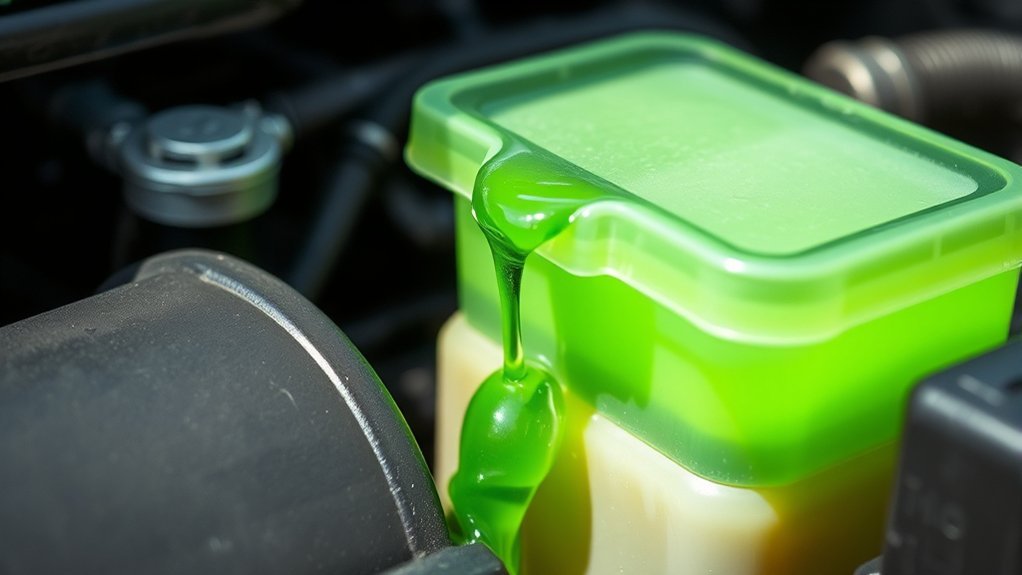
An overfilled coolant reservoir can produce several distinct signs that indicate excess fluid volume. One primary indicator is coolant overflow from the reservoir cap or vent tube during engine warm-up, which can be mistaken due to overheating myths.
Contrary to common misconceptions, overfilling doesn’t directly cause overheating, but the pressure imbalance can lead to system inefficiencies. You might also notice an unusually high coolant level above the maximum fill line, which signals excess fluid.
Paying attention to coolant color remains essential; if the color appears diluted or mixed with oil, it suggests contamination rather than overfill but warrants inspection. Additionally, you may detect a swollen or bulging reservoir, hinting at internal pressure issues caused by the overfill, requiring prompt correction to avoid further complications.
Leaks Caused by Overfilling Coolant
When you overfill your coolant, excess pressure builds up inside the system, stressing seals and hoses beyond their design limits. This increased strain often leads to cracks or ruptures, causing leaks at common weak points like the radiator, reservoir, or hose connections.
Understanding these failure points helps you diagnose and address leaks caused specifically by overfilling.
Pressure Build-Up Effects
How does overfilling your coolant lead to pressure build-up within the system? When you add excessive coolant, the radiator and reservoir are unable to accommodate thermal expansion adequately.
As the engine heats up, the coolant expands, increasing the internal volume and pressure beyond designed tolerances. This elevated pressure stresses components, potentially causing leaks at weak points such as joints or the radiator cap seal.
Unlike comedic interpretation or culinary temperature concerns, this pressure build-up is a precise mechanical issue affecting system integrity. Overpressure triggers coolant displacement through relief valves or minor fissures, leading to fluid loss and compromised cooling performance.
Understanding this dynamic is essential to maintaining top-notch system function and preventing costly damage caused by unchecked pressure escalation.
Seal and Hose Damage
Why does overfilling coolant cause seal and hose damage? When you overfill, excess pressure compromises the sealing integrity of gaskets and O-rings. This elevated pressure forces coolant past seals, leading to leaks.
Additionally, hoses experience accelerated degradation due to constant expansion and contraction cycles under abnormal pressure.
| Component | Effect of Overfilling | Resulting Damage |
|---|---|---|
| Seals | Compromised sealing integrity | Coolant leakage |
| Hoses | Increased stress and expansion | Hose degradation, cracks |
| Connectors | Elevated mechanical strain | Potential disconnections |
Understanding these impacts helps you maintain system reliability and prevents costly repairs. Avoid overfilling to sustain optimal pressure levels and preserve the durability of your cooling system’s seals and hoses.
Common Leak Locations
Where do leaks typically occur when coolant is overfilled? The most common leak points include radiator seams, hose connections, and the coolant reservoir cap. Excess pressure from overfilling strains these components, causing small fractures or seal failures.
You’ll often notice coolant color changes near these leaks, signaling contamination or degradation due to exposure to air or overheating. Overfilling can also indirectly affect overheating electronics by allowing coolant to escape and damage nearby wiring or sensors.
It’s crucial to inspect the radiator neck and overflow tube, as these areas are especially vulnerable to pressure-induced leaks. Monitoring these locations ensures you catch leaks early, preventing further system compromise and potential electronic failures.
Understanding these common leak sites helps maintain optimal cooling system performance and safeguards your vehicle’s electronics.
Engine Damage Risks From Overfilled Coolant
Although coolant is essential for regulating engine temperature, overfilling it can lead to several engine damage risks. Excess coolant increases system pressure, which may negatively impact your engine’s operation. You might notice reduced engine performance and decreased fuel economy as a result.
Here are four key risks to consider:
1. Increased Pressure on Seals and Hoses
Overfill causes excessive pressure, leading to leaks or ruptures.
2. Coolant Overflow and Contamination
Overflow can damage other engine components and reduce cooling efficiency.
3. Warped Cylinder Head or Engine Block
Excess pressure and temperature fluctuations may cause warping or cracking.
4. Impaired Thermostat Function
Overpressure can hinder thermostat operation, disrupting optimal engine temperature regulation.
Monitoring coolant levels precisely helps avoid these technical risks and maintain engine reliability.
Fixing an Overfilled Coolant Reservoir Safely
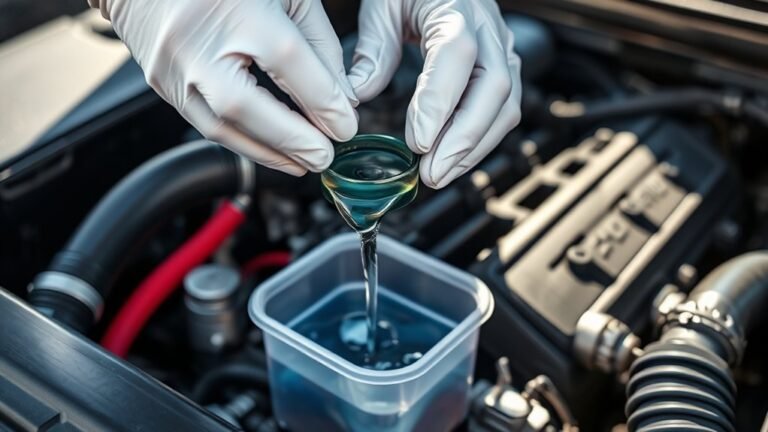
How do you correct an overfilled coolant reservoir without causing further issues? First, ensure the engine is completely cool to avoid burns or pressure-related injuries. This aligns with safety best practices.
Using a clean siphon pump or turkey baster, carefully extract excess coolant until the fluid level aligns with the manufacturer’s recommended mark. After adjusting, conduct how to testing by running the engine and monitoring the coolant level and temperature gauge for stability.
Check for leaks or pressure anomalies in the system. If abnormalities persist, consult a professional mechanic for pressure testing and system diagnostics.
Following this precise protocol minimizes risks, maintains system integrity, and ensures safe correction of overfilling, preventing potential engine damage or overheating complications.
How to Prevent Overfilling Coolant
Why is preventing coolant overfill essential for your vehicle’s cooling system? Overfilling can cause increased pressure, leading to leaks or damage that compromises overheat prevention. To maintain optimal performance, you need precise measures.
- Consult the Owner’s Manual: Verify the exact coolant capacity to avoid guesswork.
- Use Correct Coolant: Ensure coolant compatibility to prevent chemical reactions that impair cooling efficiency.
- Fill Slowly and Monitor Levels: Add coolant in small amounts, checking the reservoir’s max fill line carefully.
- Allow Engine to Cool Before Filling: Filling a hot system can cause inaccurate level readings and potential damage.
Frequently Asked Questions
Can Overfilled Coolant Affect My Car’s Heater Performance?
You might not realize it, but overfilled coolant can seriously impair your car’s heater by causing coolant cavitation, which disrupts heat transfer and leads to overheating symptoms. This reduces heater efficiency and risks engine damage.
Is It Safe to Drive Immediately After Overfilling Coolant?
You shouldn’t drive immediately after overfilling coolant, as it increases overheating risks by causing excessive pressure. The pressure relief system may not function at its best, risking damage.
Let the system stabilize and check levels before driving.
Does Overfilled Coolant Cause Problems in Electric Vehicles?
Yes, overfilled coolant in electric vehicles can cause overheating risks by disrupting proper heat dissipation. Additionally, excess coolant may affect electrical grounding, potentially leading to short circuits or component failures.
You should monitor coolant levels carefully.
How Often Should I Check My Coolant Level?
You should check your coolant level at least every month or before long trips. Maintaining proper levels helps prevent check engine warnings and supports optimal fuel efficiency by ensuring your engine runs at the correct temperature.
Can Overfilled Coolant Damage the Radiator Cap?
Think of your radiator cap as a pressure valve on a steam kettle; overfilled coolant raises system pressure, risking damage to the cap. This increased strain can lead to overheating risks and premature cap failure, so keep levels precise.