How to Start Car With Bad Fuel Filter
If your car won’t start due to a bad fuel filter, there are a few temporary steps you can take to get it running. You can try gently tapping the filter to dislodge minor debris or temporarily bypass it by connecting the fuel line directly to restore fuel flow.
Using a manual pump to push fuel past the blockage or warming the fuel system may also help in some cases. However, these are only stopgap solutions.
Replacing the fuel filter is critical for reliable operation. Learn specific checks and maintenance tips to keep your fuel system running smoothly.
How a Bad Fuel Filter Prevents Your Car From Starting
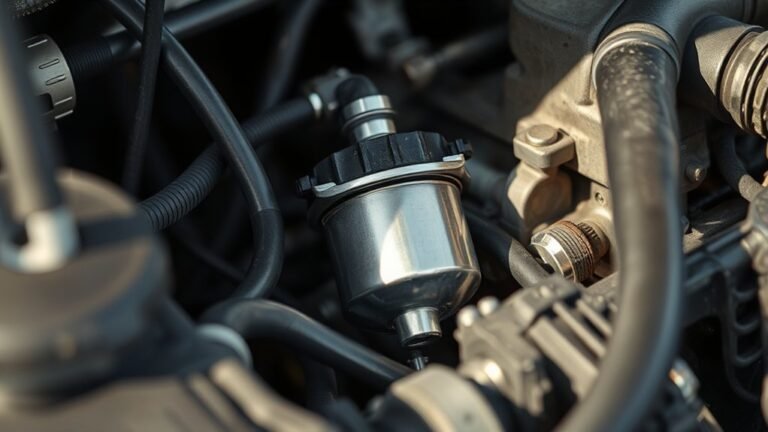
When your car won’t start, a clogged fuel filter might be the culprit. The fuel filter’s job is to prevent contaminants from entering the engine, similar to how rooftop gardening filters air pollutants in urban environments.
Over time, debris accumulates in the filter, restricting fuel flow. Without adequate fuel, the engine can’t ignite, much like a budget airline cutting fuel costs to save money but compromising performance.
Debris buildup chokes fuel flow, stalling the engine much like cost-cutting compromises a budget airline’s performance.
You might not notice this problem until the car fails to start, as the fuel pump struggles to push fuel through the blockage. Understanding this helps you realize why replacing or cleaning the fuel filter is essential for engine function.
Ignoring it can leave you stranded, so addressing the issue promptly ensures reliable starts and smooth operation.
Signs Your Fuel Filter Is Clogged or Failing
How can you tell if your fuel filter is clogged or failing before it causes a breakdown? Key signs include engine hesitation during acceleration, reduced power output, and frequent stalling. You might also notice difficulty starting the engine or a rough idle.
These symptoms occur because a restricted fuel filter limits proper fuel flow, disrupting engine performance. Avoid confusing these with unrelated topic issues like electrical problems or spark plug faults. Stay focused on fuel system symptoms to prevent off topic discussion.
Fuel smell or leaks near the filter could indicate damage, but they aren’t definitive signs of clogging. Monitoring these specific indicators helps you address fuel filter issues proactively, ensuring your vehicle runs smoothly without unexpected failures.
How to Quickly Check for Fuel Flow Problems
To quickly check for fuel flow problems, start by inspecting all fuel line connections for leaks or looseness. Next, use a fuel pressure gauge to test the pressure levels against your vehicle’s specifications.
These steps help you identify blockages or drops in fuel delivery that a bad filter might cause.
Inspect Fuel Line Connections
Where should you start if your engine struggles to get fuel? Begin by inspecting the fuel line connections. Regular inspection intervals are essential to maintain fuel line integrity and avoid blockages or leaks that mimic a bad fuel filter.
Here’s how to quickly check:
- Visually examine all fuel line fittings for cracks or corrosion.
- Feel along the lines for soft spots or bulges indicating damage.
- Ensure clamps and connectors are tightly secured, preventing leaks.
- Look for signs of fuel odor or wetness around connections.
- Wiggle the lines gently to detect looseness or breaks.
Maintaining fuel line integrity is vital in troubleshooting fuel delivery issues. This inspection step helps you identify faults early, making sure you don’t overlook basic connection problems before moving to pressure tests.
Test Fuel Pressure Levels
When exactly should you check the fuel pressure? You want to test fuel pressure levels during your starting diagnosis if the engine cranks but won’t start or runs poorly. Faulty fuel filters often cause low or inconsistent pressure, restricting fuel flow.
To perform this check, connect a fuel pressure gauge to the fuel rail’s test port, then turn the ignition to “on” without starting the engine. Compare the gauge reading to your vehicle’s specified pressure range.
If the pressure is below the recommended level, suspect a clogged fuel filter or failing fuel pump. This quick test isolates fuel delivery issues, narrowing down the cause before replacing components.
Testing fuel pressure levels is a practical step in diagnosing fuel flow problems linked to a bad fuel filter.
Temporary Fixes to Start a Car With a Faulty Fuel Filter
How can you get your car running temporarily despite a clogged fuel filter? When stuck on a creative road trip or exploring antique car culture, a faulty filter shouldn’t ruin your plans. You can apply these quick fixes to regain fuel flow and start your engine:
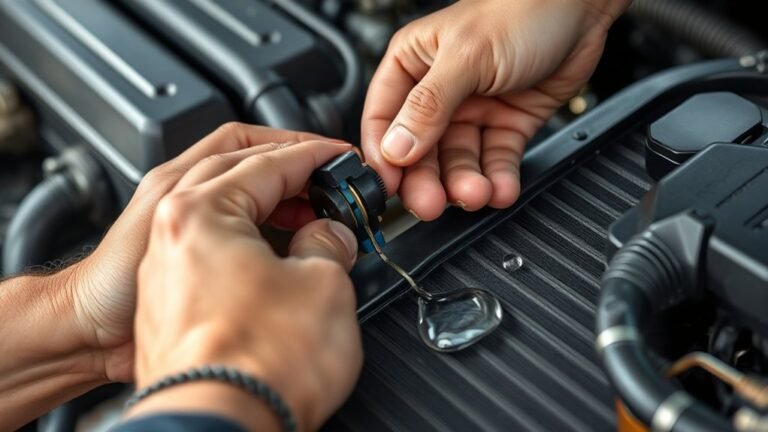
Tap the fuel filter gently to dislodge minor debris.
Bypass the filter using a temporary fuel line connection.
Use a manual fuel pump (if available) to push fuel past the blockage.
Increase engine RPM slightly during startup to help fuel pass.
Warm the fuel system to reduce fuel viscosity and ease flow.
These methods are stopgap solutions. Replace the fuel filter promptly to avoid long-term engine damage and ensure reliable performance.
Using Fuel Additives to Improve Fuel Flow Temporarily
Why consider fuel additives if your fuel filter is clogged? Fuel additives can temporarily improve fuel flow by dissolving deposits and thinning fuel, helping your engine start. While they won’t fix a blocked filter, additives optimize fuel quality, a concept similar to how neural networks refine data inputs in climate modeling for better predictions.
| Additive Type | Function | Duration of Effect |
|---|---|---|
| Detergents | Dissolve fuel deposits | Short-term |
| Flow improvers | Reduce fuel viscosity | Temporary |
| Stabilizers | Prevent fuel degradation | Moderate |
| Combustion enhancers | Improve ignition efficiency | Brief |
Use additives as a last resort; they buy time but don’t replace filter maintenance. The process is a practical, data-driven approach, akin to fine-tuning models in climate science.
Emergency Steps to Bypass or Clean Your Fuel Filter
If your car struggles to start, the fuel filter might be clogged or damaged. You can temporarily bypass the filter to restore fuel flow or clean it safely if you have the right tools.
These emergency steps help get your engine running until a proper replacement is possible.
Identifying Fuel Filter Issues
Although a clogged fuel filter often causes engine hesitation or stalling, you’ll need to confirm the issue before attempting a bypass or cleaning. To effectively diagnose fuel filter problems, focus on specific symptoms and perform targeted checks.
Here are some practical discussion topics and ideas about subtopic diagnostics:
- Notice engine sputtering or rough idling after acceleration.
- Check for difficulty starting or prolonged cranking time.
- Inspect fuel pressure at the rail with a gauge; low pressure indicates restriction.
- Look for visible dirt or discoloration on a removable filter.
- Listen for unusual engine sounds related to fuel starvation.
Accurately identifying these signs ensures you address the correct issue before emergency steps, avoiding unnecessary repairs or delays.
Temporary Bypass Techniques
How can you quickly restore fuel flow when a clogged filter stalls your engine? In emergencies, a temporary bypass can keep your fuel system running until proper repairs.
Locate the fuel filter and disconnect fuel lines carefully to avoid leaks. Use a fuel line coupler or a short hose to connect the input and output lines directly, bypassing the clogged filter. This emergency step restores flow but is not a long-term fix.
| Step | Action |
|---|---|
| 1. Locate | Find fuel filter in fuel system line |
| 2. Disconnect | Carefully remove fuel lines from filter |
| 3. Connect | Attach coupler or hose to bypass filter |
| 4. Test | Start engine and check for fuel flow |
This quick fix supports basic car care but requires prompt filter replacement.
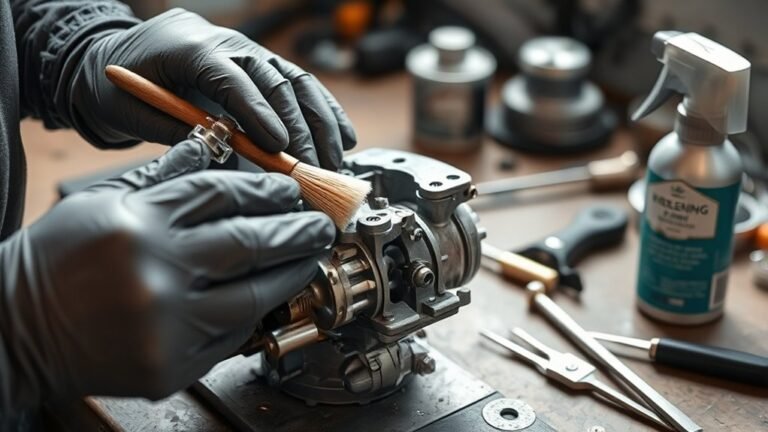
Cleaning Fuel Filter Safely
A clogged fuel filter can severely restrict fuel flow, but you can often clean it temporarily to restore performance. Before starting, ensure you’re cleaning safely by working in a well-ventilated area and avoiding sparks or open flames. Proper fuel handling is crucial to prevent hazards.
Follow these emergency steps:
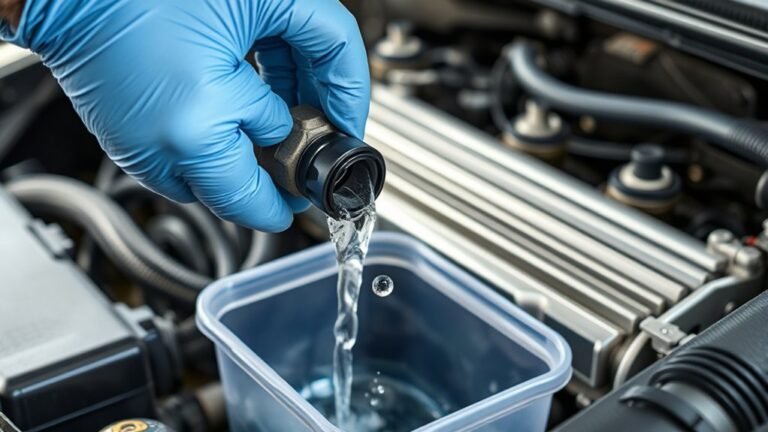
- Relieve fuel system pressure to avoid spills.
- Disconnect the fuel filter carefully using proper tools.
- Use a clean container to catch any dripping fuel.
- Soak the filter in a solvent designed for fuel system cleaning.
- Dry thoroughly before reinstalling to prevent contamination.
Why Replacing the Fuel Filter Is the Best Long-Term Fix
Why should you prioritize replacing a bad fuel filter over temporary fixes? Temporary solutions like cleaning can’t fully restore optimal fuel flow or filtration efficiency. Fuel health depends on consistent removal of contaminants, which filtration science shows is compromised once a filter clogs or deteriorates.
Prioritize replacing a bad fuel filter—cleaning won’t fully restore fuel flow or filtration efficiency.
Over time, trapped debris impairs fuel delivery, causing engine performance issues and potential damage.
Replacing the fuel filter ensures you restore proper filtration capacity, maintaining clean fuel flow and protecting your engine’s components. It’s a straightforward, cost-effective measure that prevents recurring blockages and premature wear.
While cleaning may offer short-term relief, only a new filter guarantees the system functions as designed, preserving fuel health and avoiding costly repairs down the line. Prioritize replacement to keep your vehicle running reliably and efficiently.
Preventing Fuel Filter Problems With Regular Maintenance
When should you schedule fuel filter maintenance to avoid costly issues? Ideally, align it with your regular vehicle service intervals, typically every 20,000 to 30,000 miles. Consistent upkeep prevents clogging and maintains fuel flow efficiency.
Alongside fuel filter checks, monitor these key maintenance tasks:
- Regularly check and maintain proper tire pressures to ensure overall vehicle performance.
- Change oil on schedule to protect engine health and avoid contaminants that might affect fuel quality.
- Inspect fuel lines for leaks or damage during routine service.
- Use high-quality fuel to minimize debris and sediment entering the filter.
- Replace the fuel filter immediately if you notice signs like engine sputtering or reduced acceleration.
When to Seek Professional Help for Fuel System Issues
Even with regular maintenance, fuel system issues can still arise and may require expert diagnosis. If your car exhibits persistent stalling, difficulty starting, or unusual engine noises despite your attempts to address a bad fuel filter, it’s time to seek professional help.
Ignoring these symptoms can lead to irreversible damage to the fuel pump or injectors. Additionally, if you detect fuel leaks or smell gasoline strongly, prioritize fuel system safety and avoid further use until a technician inspects the system.
Professionals have the tools and expertise to perform comprehensive diagnostics and repairs that ensure optimal fuel delivery and prevent costly damage. Don’t risk worsening the problem. Early intervention by a qualified mechanic protects your vehicle’s performance and prolongs its lifespan.
Frequently Asked Questions
Can a Bad Fuel Filter Damage Other Engine Components?
Yes, a bad fuel filter can cause bad fuel indications and stress your fuel pump, injectors, or engine.
You should prioritize fuel system maintenance to prevent damage and ensure optimal engine performance and longevity.
How Often Should I Replace My Fuel Filter for Best Performance?
You don’t want a clogged intake as your car’s new personality, so replace your replaceable filter every 20,000 to 30,000 miles. This keeps your fuel system clean, ensuring optimal engine performance without drama.
Are There Specific Car Models More Prone to Fuel Filter Issues?
Yes, you’ll find that some models with complex fuel system designs, especially diesel engines, face more fuel filter issues than gasoline ones.
Diesel filters clog faster due to fuel contaminants and require more frequent maintenance.
Can Using Low-Quality Fuel Cause Fuel Filter Clogging?
Yes, using low-quality fuel increases fuel contamination, accelerating fuel filter clogging. You’ll experience reduced flow and engine performance.
Always choose higher-grade fuel to minimize contaminants and extend your fuel filter’s lifespan effectively.
Is It Safe to Drive Long Distances With a Clogged Fuel Filter?
You shouldn’t drive long distances with a clogged fuel filter due to driving risks like engine stalling and reduced power.
It also accelerates fuel system wear, potentially causing expensive damage and unsafe conditions on the road.