How to Check Coolant Level
Before checking coolant level, ensure the engine is completely cool. Park your vehicle on a flat surface and engage the parking brake.
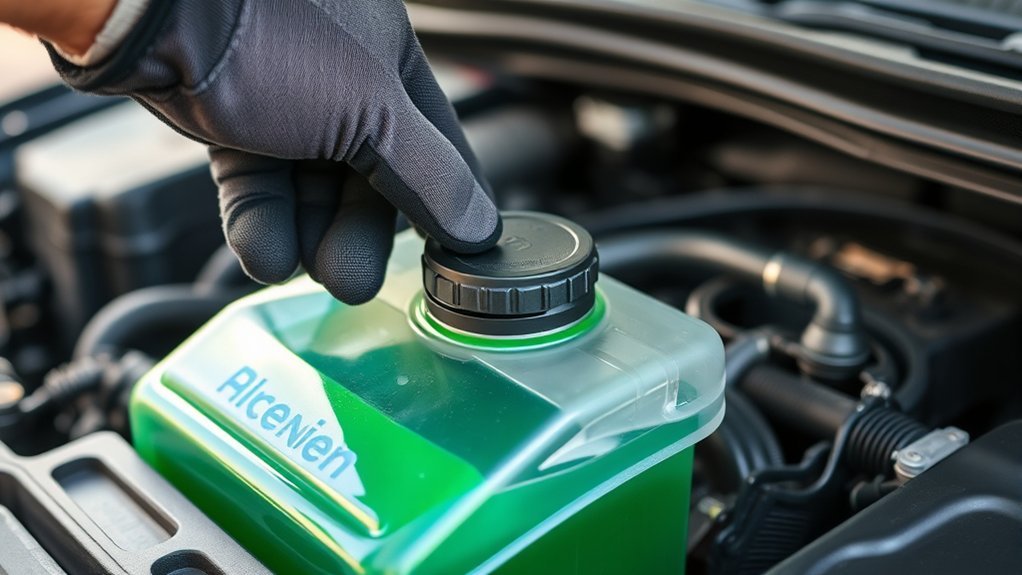
Locate the translucent coolant reservoir, which is usually near the radiator and marked “Full” and “Low.” Never open the reservoir cap when the engine is hot to avoid injury.
Check the coolant level against the markings. If it is low, carefully top off with the recommended coolant mix.
Following these steps helps prevent overheating and keeps your system running efficiently.
Preparing Your Car Safely Before Checking Coolant
Before you begin checking your car’s coolant level, how can you guarantee safety? First, ensure the engine is completely cool; never attempt to open the coolant reservoir or radiator cap when the engine is hot to avoid burns from pressurized steam or hot liquid.
Engage the parking brake and place the car on a flat surface to prevent movement. Use gloves and protective eyewear as part of your preparation safety routine. Confirm the vehicle is turned off and the keys are removed from the ignition to prevent accidental startup.
These engine precautions reduce risk during inspection. By following these steps meticulously, you maintain a safe environment for yourself and protect your vehicle’s components from damage or injury during the coolant level check.
Where to Find the Coolant Reservoir and Level Markings
Finding the coolant reservoir in your vehicle is essential for accurately checking coolant levels. Typically, the reservoir is a translucent plastic tank located near the radiator or along the engine bay’s side. Look for labels or symbols resembling a thermometer submerged in liquid.
The reservoir features level markings, usually “Full” and “Low,” etched or molded on the tank’s side. These markings allow you to quickly assess coolant quantity without opening the cap. When inspecting, note any discoloration or cracks that could indicate leaks, as finding leaks early prevents engine damage.
Additionally, if you’re upgrading hoses, verify they connect securely to the reservoir to avoid leaks. Proper identification and understanding of the reservoir and its markings form the foundation for maintaining your vehicle’s cooling system.
How to Check Your Coolant Level Safely (Cold and Warm Engine)
How do you safely check your coolant level without risking injury or inaccurate readings? First, ensure the engine is cold before opening the coolant reservoir cap to avoid burns from hot coolant or steam.
When the engine is warm, wait until the radiator fan stops running, indicating the cooling system has cooled sufficiently. Never open the cap while the engine is hot, as the pressurized system can release scalding fluid.
For accurate checking, observe the coolant level against the reservoir’s markings. If you suspect thermostat issues affecting coolant circulation, verify the thermostat is functioning properly before relying on coolant level readings.
What to Do If Your Coolant Level Is Low
What steps should you take if your coolant level is low? First, ensure the engine is completely cool to avoid low pressure hazards. Never remove the radiator cap when the engine is hot, as trapped pressure can cause severe burns.
Once cool, remove the radiator cap slowly, using a cloth for radiator cap safety. Inspect the coolant reservoir and radiator fluid levels; if low, top off with the manufacturer-recommended coolant mixture. Avoid overfilling to prevent pressure issues.
After adding coolant, securely replace the radiator cap to maintain system pressure. Finally, start the engine and monitor for leaks or abnormal temperature readings. If levels drop again quickly, seek professional inspection to diagnose potential leaks or system malfunctions.
Warning Signs of Coolant Problems You Should Know
When should you be concerned about your coolant system’s health? Recognizing warning signs of coolant problems early can prevent serious engine damage. Keep an eye out for coolant leaks under your vehicle, which indicate a compromised system.
Overheating of the engine is another critical warning sign; if your temperature gauge rises above normal, stop immediately to check coolant levels. Also, notice any sweet, pungent odors inside the cabin, as this could signal a leaking heater core.
Frequent need to top off coolant or visible rust and discoloration in the reservoir suggest contamination or corrosion. Additionally, engine performance issues like rough idling or reduced power may stem from coolant-related overheating.
Monitor these warning signs closely to maintain your cooling system’s integrity and avoid costly repairs.
How to Choose the Right Coolant for Your Vehicle
Why is selecting the correct coolant essential for your vehicle’s performance and longevity? Choosing the right coolant ensures proper engine temperature regulation, prevents corrosion, and extends your cooling system’s life.
To make an informed choice, consider these factors:
- Vehicle manufacturer’s specifications: Always start here to match coolant type.
- Coolant base type: Understand if it’s ethylene glycol, propylene glycol, or organic acid technology (OAT).
- Mixing ratios: Follow recommended coolant-to-water ratios, typically 50:50, to optimize freeze and boil protection.
- Compatibility: Confirm the new coolant is compatible with your existing coolant to avoid chemical reactions.
- Additives and lifespan: Evaluate corrosion inhibitors and recommended service intervals for maintenance planning.
Tips to Keep Your Cooling System Healthy
How often should you inspect and maintain your cooling system to ensure optimal performance? Regular inspections every 3,000 to 5,000 miles or at every oil change are recommended.
Start by checking the coolant level and condition; low or discolored coolant can impair heat transfer, affecting driving safety and fuel efficiency. Flush and replace the coolant according to your vehicle manufacturer’s schedule, usually every 2 to 5 years.
Inspect hoses and clamps for leaks, cracks, or soft spots, as these can lead to system failure. Ensure the radiator cap seals properly to maintain correct pressure.
Lastly, monitor the thermostat and water pump function, as failures here reduce cooling efficiency. Following these tips will help maintain your cooling system’s integrity, supporting driving safety and optimizing fuel efficiency.
Frequently Asked Questions
How Often Should I Flush and Replace My Coolant?
You should flush and replace your coolant every 30,000 miles or every two years. Regular maintenance prevents corrosion and overheating, ensuring optimal engine performance and longevity.
Always follow your vehicle’s manufacturer guidelines for best results.
Can I Mix Different Types of Coolant in My Car?
Think of mixing coolant types like blending oil and water. It’s risky. You shouldn’t mix coolants without checking coolant compatibility, as mixing cautions exist to prevent chemical reactions that harm your engine’s cooling system and performance.
What Are the Common Causes of Coolant Leaks?
Common defects causing coolant leaks include cracked hoses, faulty radiator caps, and worn gaskets. For accurate leaks diagnosis, inspect these components carefully, checking for visible damage or pressure loss in the cooling system to identify leak sources.
How Does Coolant Prevent Engine Overheating?
Coolant works by absorbing engine heat and circulating it through the radiator, enabling engine cooling. This process prevents overheating by maintaining optimal temperature, ensuring efficient combustion and protecting engine components from thermal damage during operation.
Is It Safe to Drive With a Low Coolant Level?
Driving with low coolant is like sailing without enough water. It’s unsafe. You risk overheating, which can cause irreversible damage to your engine.
Always top up or repair leaks promptly to maintain proper cooling system function.