How Does a Double Clutch Gearbox Work
A double clutch gearbox uses two separate clutches to control odd and even gears independently, allowing one gear to engage while the next is pre-selected on the other clutch. This design is key to how a double clutch gearbox works, enabling smoother and faster gear changes compared to traditional transmissions.
This coordination maintains continuous power flow and allows near-instantaneous, smooth gear changes with minimal torque interruption. The precise clutch synchronization minimizes shift shock and optimizes efficiency, resulting in faster, more responsive driving.
Understanding how a double clutch gearbox works helps you appreciate how advanced transmission design enhances both performance and efficiency further. It represents a significant advancement in automotive technology, combining the benefits of manual and automatic transmissions.
What Is a Double Clutch Gearbox and How Is It Different?
A double clutch gearbox is a type of transmission that uses two separate clutches for odd and even gear sets, allowing for faster and smoother gear changes compared to traditional manual or automatic gearboxes. When you operate this system, the gearbox can pre-select the next gear while the current one is engaged, minimizing shift time and improving torque delivery.
Unlike conventional gearboxes, you’ll notice significantly reduced gearbox noise because the dual clutches eliminate the need for torque converter slip or clutch pedal modulation. This design enhances efficiency and responsiveness, providing a more refined driving experience.
How Do the Two Clutches Work Together to Shift Gears Smoothly?
Understanding how the two clutches operate in tandem is key to appreciating the seamless gear changes in a double clutch gearbox. Each clutch independently controls a separate set of gears, one for odd and the other for even gears.
When you shift, one clutch disengages the current gear while the other simultaneously engages the next gear, ensuring continuous power flow. This dual action eliminates torque interruption, enabling smooth operation.
Precise gear synchronization is achieved by coordinating both clutches’ engagement and disengagement timings, which minimizes shift shock and maximizes efficiency. You’ll notice that this system allows for rapid, fluid transitions between gears, critical in performance and fuel economy.
The coordinated control of the two clutches is what fundamentally delivers the gearbox’s smooth, uninterrupted power delivery.
How the Double Clutch Pre-Selects the Next Gear
How exactly does a double clutch gearbox manage to have the next gear ready before you even complete the current shift? It accomplishes this by using two separate clutches connected to different gear sets. One handles the currently engaged gear, while the other pre-selects the next gear based on input from the transmission control unit.
This design, rooted in gearbox history dating back to racing applications, allows you to seamlessly transition gears without interrupting power flow. While one clutch disengages the active gear, the other simultaneously engages the pre-selected gear, drastically reducing shift lag.
To ensure this precision works reliably, clutch maintenance is critical. Worn or improperly adjusted clutches can disrupt gear pre-selection, causing rough shifts or delayed engagement. Understanding this mechanism highlights why double clutch systems represent a significant evolution in transmission technology.
Why Double Clutch Gearboxes Shift Faster and Smoother Than Manuals and Automatics
Why do double clutch gearboxes deliver shifts that feel both faster and smoother compared to traditional manuals and automatics? It’s primarily due to their unique ability to pre-select gears and execute near-instantaneous clutch engagement.
Precise clutch calibration minimizes slip and torque interruption, while optimized gearbox lubrication reduces friction, allowing seamless transitions. This dual-clutch setup eliminates the lag seen in manual clutch release and automatic torque converters.
| Aspect | Double Clutch Gearbox |
|---|---|
| Gear Pre-selection | Yes, next gear pre-engaged |
| Clutch Engagement | Independent, precise |
| Shift Speed | Extremely fast |
| Lubrication Impact | Reduces internal friction |
| Torque Interruption | Minimal |
You get shifts that are technically superior, with faster response and smoother power delivery.
How Double Clutch Gearboxes Improve Fuel Efficiency and Performance
You’ll notice double clutch gearboxes reduce powertrain losses by maintaining optimal engine load during gear changes, which improves fuel efficiency. Their ability to execute faster shifts minimizes torque interruption, enhancing overall performance.
This combination means you get smoother acceleration with less wasted energy.
Reduced Powertrain Losses
Where does the efficiency gain in double clutch gearboxes come from? It primarily stems from minimized powertrain losses due to their advanced design. Unlike traditional gearboxes, double clutch systems maintain continuous power delivery during gear shifts, reducing energy wastage.
This translates into better fuel efficiency and enhanced performance. You should also consider that while these systems reduce losses, they can raise reliability concerns and maintenance costs if not properly engineered or serviced.
Key factors reducing powertrain losses include:
- Simultaneous engagement of two clutches for seamless torque transfer
- Elimination of torque interruption during gear changes
- Reduced friction through precise mechanical synchronization
- Optimized gear selection minimizing drivetrain drag
- Enhanced thermal management lowering energy dissipation
These elements collectively improve drivetrain efficiency without compromising system durability.
Faster Gear Shift Benefits
How exactly does a double clutch gearbox achieve faster gear shifts, and how does this translate into improved fuel efficiency and performance? The system employs two separate clutches, one handling odd gears, the other even, allowing preselection of the next gear. This design minimizes interruption in power delivery by enabling near-instantaneous gear engagement.
As a result, traction dynamics are optimized, maintaining consistent torque transfer to the wheels without lag or power loss. Faster gear shifts reduce drivetrain inertia and prevent torque dips, enhancing acceleration responsiveness and fuel efficiency.
Since the gearbox avoids the delay inherent in single-clutch systems, engine load remains steadier, lowering fuel consumption during gear changes. Overall, the precise control over gear engagement dramatically improves both vehicle performance and energy efficiency.
Comparing Double Clutch Gearboxes to Traditional Manual and Automatic Systems
Why choose a double clutch gearbox over traditional manual or automatic transmissions? Dual clutch systems offer a distinct advantage by using two separate clutches for odd and even gear sets, enabling near-seamless torque transfer during shifts. This design minimizes power interruption and improves acceleration efficiency compared to manual gearboxes, which require clutch disengagement and re-engagement.
Here’s how double clutch gearboxes stack up:
- Faster gear changes than manual or traditional automatics
- Reduced torque loss, enhancing drivetrain efficiency
- Automated shifting without torque converter lag
- Improved fuel economy due to precise control
- Enhanced driving dynamics with smooth power delivery
Common Types of Double Clutch Gearboxes in Modern Cars
The advantages of double clutch gearboxes come in different configurations tailored to various vehicle designs and performance goals. You’ll typically encounter two primary types: wet and dry double clutch systems.
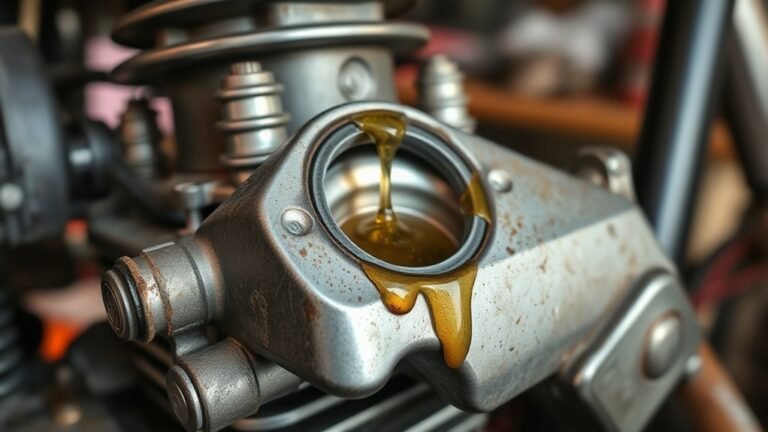
Wet clutches use oil for gear lubrication and advanced cooling, which enhances heat dissipation and durability, making them ideal for high-torque applications or performance cars. Dry clutches, on the other hand, operate without oil, relying on air cooling, which offers reduced weight and improved efficiency but requires precise thermal management to avoid overheating.
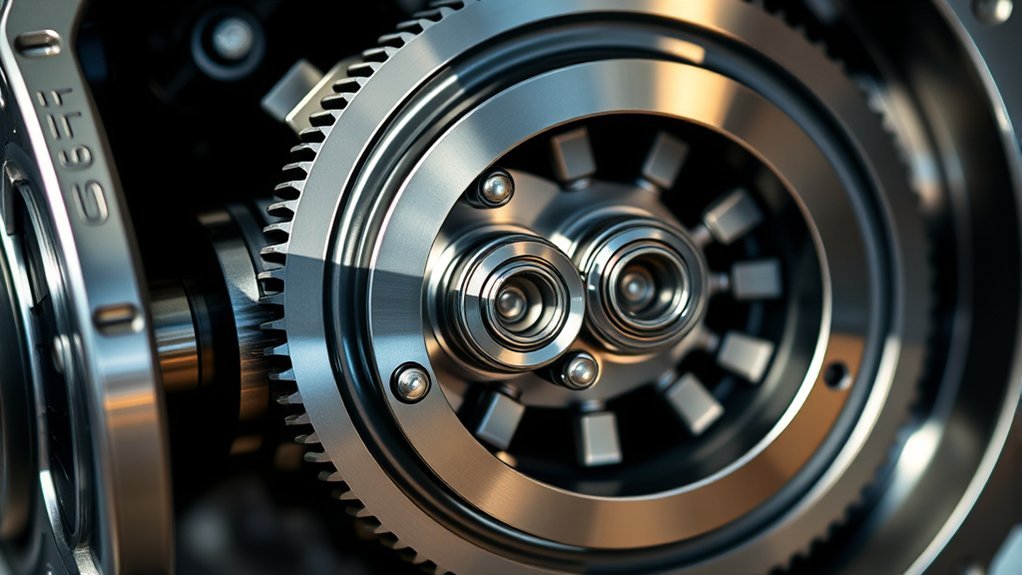
Both types involve dual input shafts and synchronized gearsets, enabling rapid shifts by preselecting the next gear. Choosing between these systems depends on the vehicle’s power output, intended use, and packaging constraints, with advanced cooling and effective gear lubrication being critical for maintaining reliability and shift quality in all double clutch gearboxes.
What Drivers Should Know About Operating a Double Clutch Gearbox
When operating a double clutch gearbox, you’ll notice smoother gear shifts due to the system’s ability to pre-select the next gear. Using manual mode lets you control gear changes precisely, enhancing performance and responsiveness.
To get the most from this transmission, it’s important to understand specific driving techniques that optimize its efficiency and longevity.
Smooth Gear Shifting
Achieving smooth gear shifting in a double clutch gearbox requires understanding how its dual clutch system pre-selects gears to minimize interruption in power delivery. When you accelerate or decelerate, one clutch engages the current gear while the other pre-selects the next, allowing seamless transitions.
To optimize shifting smoothness, keep in mind:
- Maintain steady throttle input to allow precise clutch engagement.
- Avoid abrupt acceleration or deceleration to prevent jerks.
- Trust the system’s ability to manage clutch timing and gear selection.
- Recognize that rapid shifts at higher RPMs are designed for efficiency.
- Use gentle steering inputs to reduce drivetrain load during shifts.
Manual Mode Benefits
Why should you consider using manual mode in a double clutch gearbox? Manual mode gives you direct control over gear selection, allowing precise engine speed management and improved responsiveness. It enhances gearbox safety by preventing unnecessary gear hunting and reducing clutch wear, which automatic shifting might cause in certain conditions.
By operating in manual mode, you can optimize gear changes to suit driving demands, reducing thermal stress and maintaining hydraulic system integrity. Understanding maintenance basics is crucial when using manual mode; smooth, timely shifts help preserve the dual clutch packs and sensors, minimizing repair frequency and ensuring consistent performance.
Ultimately, manual mode empowers you to extend gearbox lifespan and maintain system reliability by actively managing shift timing and load, complementing the advanced design of double clutch transmissions.
Common Driving Tips
How should you adapt your driving habits to maximize the performance and longevity of a double clutch gearbox? Understanding its distinct operation is key to preserving transmission efficiency and ensuring smooth shifts.
Unlike traditional gearboxes, the double clutch system relies on two separate clutches for odd and even gears, reducing shift times and wear. To get the most out of it, you should:
- Avoid excessive clutch slipping by not resting your foot on the pedal.
- Use manual mode selectively to maintain optimal engine RPM and reduce unnecessary shifts.
- Allow brief pauses between gear changes to let the system recalibrate.
- Avoid aggressive downshifting at high speeds to prevent clutch overheating.
- Keep the transmission fluid in good condition by following manufacturer-recommended service intervals.
Future Trends in Double Clutch Transmission Technology
What advancements can you expect to see in double clutch transmission (DCT) technology over the coming years? Future trends point towards increased integration of AI-driven control systems, enhanced thermal management, and lightweight materials for improved efficiency.
Market adoption will accelerate as manufacturers optimize DCTs for electric and hybrid drivetrains, meeting stricter emissions standards and consumer demand for smoother shifts.
| Advancement | Impact |
|---|---|
| AI-Control Algorithms | Adaptive shift patterns, fuel saving |
| Advanced Materials | Reduced weight, increased durability |
| Thermal Management | Enhanced reliability, performance |
| Electrification Focus | Compatibility with hybrid/electric vehicles |
You’ll find that these innovations collectively improve responsiveness, reduce energy loss, and expand DCT applications, making them a pivotal technology in future automotive transmissions.
Frequently Asked Questions
Are Double Clutch Gearboxes More Expensive to Repair?
You might think repairing a double clutch gearbox costs a fortune. It often does.
Despite impressive double clutch durability, repair cost implications can be high due to complex components and specialized labor. Expect pricier maintenance than traditional gearboxes.
How Does a Double Clutch Gearbox Affect Vehicle Maintenance Schedules?
You’ll find maintenance intervals for double clutch gearboxes are generally longer, but repair costs can be higher due to complexity. Staying strict with fluid changes and diagnostics helps prevent expensive failures and keeps schedules manageable.
Can a Double Clutch Gearbox Be Installed in Older Car Models?
Installing a double clutch gearbox in older cars isn’t a walk in the park; you’ll face retrofitting challenges due to older car compatibility issues like differing electronics, space constraints, and mounting points. This requires precise custom adaptations and expert engineering.
Do Double Clutch Gearboxes Require Special Driving Techniques in Heavy Traffic?
You don’t need special driving techniques with a double clutch gearbox in heavy traffic, as it handles gear changes automatically and smoothly. This reduces clutch wear and provides seamless shifts, enhancing control and comfort during stop-and-go conditions.
What Are the Environmental Impacts of Manufacturing Double Clutch Gearboxes?
You’ll find manufacturing double clutch gearboxes impacts environmental sustainability due to energy-intensive processes and rare materials. Ensuring supply chain ethics is crucial to reduce ecological footprints and promote responsible sourcing throughout production stages.