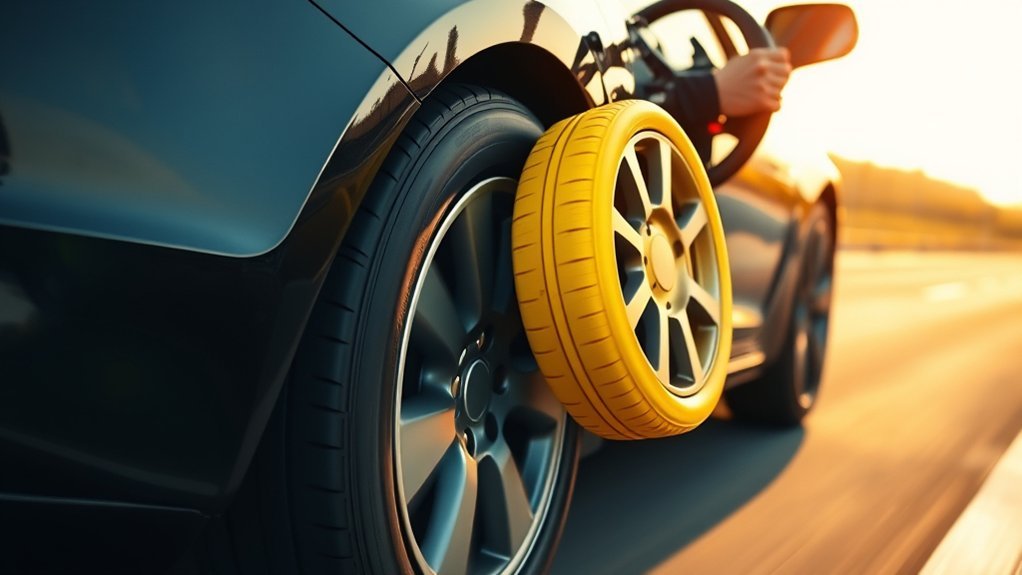
How Fast Can You Drive on a Spare Tire
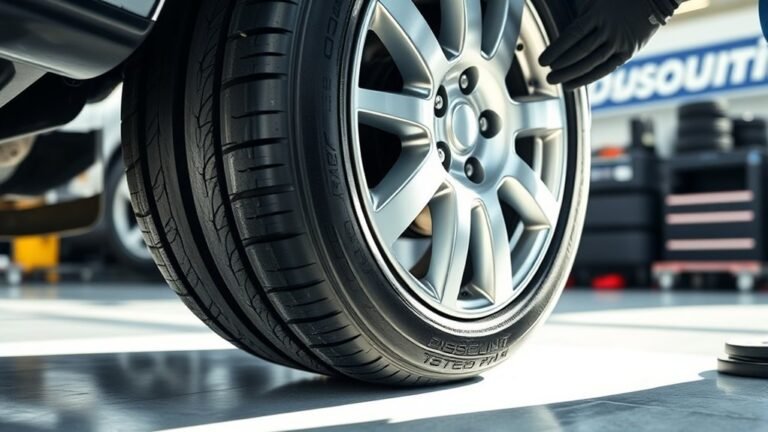
You should keep your speed under 50 mph (80 km/h) when driving on a spare tire because it’s not made for high speeds or long distances. Driving on a spare tire requires extra caution since these tires are designed as temporary solutions.
Spare tires, especially donuts, offer less traction and durability, increasing the risk of blowouts or loss of control if you go faster. They’re a temporary fix, so drive cautiously and avoid sharp turns or sudden stops.
Keep going, and you’ll find out more about spare tire types, risks, and safe use.
Key Takeaways
- Most manufacturers recommend driving under 50 mph (80 km/h) when using a spare tire for safety and tire longevity.
- Spare tires, especially donuts, have reduced traction and stability, limiting safe driving speeds.
- Driving faster than recommended increases risks of blowouts, loss of control, and suspension damage.
- Spare tires are designed for short-term use and not for prolonged high-speed driving.
- It’s best to limit spare tire use to 50-70 miles and replace it with a regular tire promptly.
Safe Driving Speeds for Spare Tires
How fast can you safely drive on a spare tire? Most manufacturers recommend you keep your speed under 50 mph (80 km/h) when using a spare. These tires aren’t built for long distances or high speeds, so pushing beyond that can risk blowouts or loss of control.
You’ll also notice less traction and stability, so it essential to adjust your driving accordingly. Avoid sudden stops, sharp turns, and aggressive acceleration. Keep in mind that spare tires often have different sizes and tread patterns, affecting handling.
Donut vs. Full-Size Spare Tires: What’s the Difference?
While spare tires are designed for temporary use, not all spares are created equal. When you need a replacement tire, knowing the difference between a donut and a full-size spare matters.
- Size: Donuts are smaller and narrower, saving space in your trunk. Full-size spares match your regular tire’s dimensions.
- Weight: Donuts are lighter, making them easier to handle but less durable. Full-size spares are heavier but built for longer use.
- Speed & Distance: Donuts usually limit you to lower speeds and shorter distances. Full-size spares allow normal driving conditions temporarily.
- Cost: Donuts are cheaper but less versatile. Full-size spares cost more but offer better performance in emergencies.
Choosing the right spare affects your safety and convenience on the road.
Why Spare Tires Have Lower Speed Limits
Why do spare tires come with lower speed limits? It’s mainly because they’re designed differently from your regular tires. Spare tires, especially donut spares, are smaller, lighter, and made with less durable materials.
They don’t provide the same grip, stability, or heat resistance as standard tires. When you drive faster, these limitations become more apparent, increasing wear and reducing control. Also, spares often have different tread patterns and less tread depth, which affects traction.
Their construction isn’t meant to handle prolonged high-speed driving or heavy loads. By sticking to lower speeds, you reduce the stress on the spare, helping maintain safety until you can replace or repair your original tire. So, those speed limits are there to protect both you and your vehicle.
Risks of Driving Too Fast on a Spare Tire
What happens if you drive too fast on a spare tire? You risk compromising your safety and your vehicle’s performance. Here are the main dangers you face:
- Loss of control: Spare tires often have less traction, making your car harder to handle at high speeds.
- Increased wear: Driving fast wears down the spare quickly, potentially leaving you stranded.
- Blowouts: Spares aren’t designed for high speeds, increasing the chance of sudden tire failure.
- Damage to suspension: The imbalance caused by the spare can strain your vehicle’s suspension if you push speed limits.
How Long to Use a Spare Tire Safely
How long can you safely rely on a spare tire before replacing it with a regular one? Generally, you should use a spare tire only as a temporary solution. Most manufacturers recommend driving no more than 50 to 70 miles on a spare.
This limited distance helps prevent excessive wear and reduces the risk of tire failure. Additionally, spares aren’t designed for long-term use; their tread and construction differ from regular tires. Prolonged use can compromise your vehicle’s handling and safety.
Key Driving Tips When Using a Spare Tire
When driving on a spare tire, you’ll want to adjust your habits to maintain control and safety. Spare tires, especially compact ones, aren’t built for regular use or high speeds. Follow these key tips:
- Drive slower. Keep your speed under 50 mph to reduce wear and maintain traction.
- Avoid sharp turns. Take corners gently to prevent loss of control.
- Check tire pressure often. Ensure your spare is properly inflated before and during use.
- Limit your driving distance. Use the spare only for short trips until you can replace the damaged tire.
Next Steps After Installing Your Spare Tire
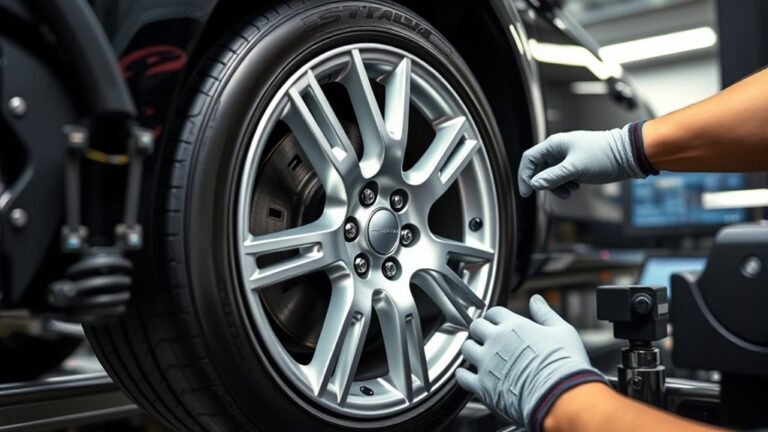
After adjusting your driving habits to accommodate the spare tire, you’ll want to focus on what comes next to keep your vehicle safe and reliable. First, head directly to a tire repair shop or dealership to get your original tire fixed or replaced.
Spare tires aren’t designed for long-term use, so don’t delay this step. While there, have the mechanic check your spare’s pressure and overall condition. Once your regular tire is back on, make sure to store the spare properly in your vehicle.
Finally, take a moment to inspect your other tires for wear or damage. Staying proactive helps prevent future breakdowns and keeps your vehicle running smoothly until your next tire change or maintenance.
Frequently Asked Questions
Can I Use a Spare Tire in Extreme Weather Conditions?
You shouldn’t rely on a spare tire in extreme weather because it’s not designed for harsh conditions. It’s best to drive cautiously and replace it with a regular tire as soon as possible to stay safe and maintain control.
Are Spare Tires Compatible With All Vehicle Models?
No, spare tires aren’t compatible with all vehicle models. You’ll need to check your car’s manual or manufacturer guidelines to ensure the spare fits properly.
Using the wrong spare can cause handling problems and safety risks.
How Often Should I Check the Air Pressure in My Spare Tire?
You should check your spare tire’s air pressure at least once a month and before long trips. This guarantees it’s properly inflated and ready to use when you need it, keeping you safe on the road.
Can a Spare Tire Cause Damage to My Car’s Suspension?
You wouldn’t expect a spare tire to cause damage like a horse-drawn carriage might, but if you drive too long or fast on it, the uneven wear and handling can strain your suspension. So don’t push it.
Do Spare Tires Affect My Vehicle’s Fuel Efficiency?
Yes, spare tires can affect your fuel efficiency. Because they’re often smaller or less optimized, your engine works harder to maintain speed, which uses more fuel.
Conclusion
Think of driving on a spare tire like jogging in flip-flops—you can move, but you shouldn’t sprint. Spare tires, especially donuts, usually top out at 50 mph and are meant for short distances. Pushing beyond that is like tempting fate with every turn.
So, keep it slow and steady, treat your spare like a temporary lifeline, and get your regular tire fixed ASAP to avoid any roadside surprises. Remember, when it comes to how fast can you drive on a spare tire, slower is always safer.