How Do Fuel Gauges Work
You rely on your fuel gauge to avoid running out of gas unexpectedly. A fuel gauge is an essential instrument that helps you monitor the fuel level in your vehicle’s tank.
Inside the tank, a float rises and falls with the fuel level, moving a metal arm connected to a variable resistor. This resistor changes electrical resistance, sending signals to your dashboard gauge, which translates them into a fuel level display.
Different systems use mechanical or digital methods, and knowing about common issues can help you keep it accurate. Keep going to discover how modern technology improves these gauges.
Key Takeaways
- A float inside the fuel tank moves up or down with the fuel level, connected to a sender unit that measures this movement.
- The sender unit includes a variable resistor that changes resistance based on the float’s position, altering the electrical signal sent to the gauge.
- The fuel gauge interprets the resistance signal from the sender unit to display the current fuel level as a needle position or digital readout.
- Mechanical gauges use floats and cables, while modern systems use electrical signals, capacitive sensors, or digital processing for accurate readings.
- Common issues include faulty sender units, wiring, or gauges, while modern systems integrate multiple sensors and onboard diagnostics for improved monitoring.
Why Fuel Gauges Matter for Drivers
Why do fuel gauges matter for drivers? You rely on them to know exactly how much fuel you have left, preventing unexpected stops. Without this essential information, you’d risk running out of gas at inconvenient or unsafe locations.
Fuel gauges help you plan trips more efficiently by letting you decide when to refuel based on your remaining fuel rather than guesswork. They also reduce stress, as you won’t constantly worry about whether you’ll make it to the next gas station.
What the Fuel Sender Unit Does Inside the Tank
Inside the tank, the fuel sender unit uses a float mechanism to track the fuel level. As the float moves, it changes a variable resistor that adjusts the electrical signal.
This signal then tells your gauge how much fuel you’ve got left.
Float Mechanism Function
How does the fuel sender unit measure the amount of fuel in your tank? It uses a float mechanism that moves with the fuel level. As the fuel rises or falls, the float moves accordingly, translating this motion into a readable signal.
Here’s how the float mechanism works:
- The float sits on the fuel’s surface inside the tank.
- When fuel level changes, the float moves up or down.
- The float connects to a metal arm, which pivots smoothly.
- This arm’s position reflects the current fuel level, sending information to your gauge.
This simple yet effective system provides an accurate, real-time reading of how much fuel you have, helping you avoid running out unexpectedly.
Variable Resistor Role
What makes the float’s movement meaningful is the variable resistor it’s attached to. As the float moves up or down with the fuel level, it changes the resistance in the circuit.
This change directly affects the electrical current flowing through, which the gauge interprets as fuel level. Inside the tank, the sender unit combines the float and resistor into one device, making the fuel level measurement simple and reliable.
| Component | Role |
|---|---|
| Float | Moves with fuel level |
| Variable Resistor | Changes resistance value |
| Sender Unit | Houses float and resistor |
| Resistance Change | Signals fuel quantity |
You rely on this resistor’s precision to get accurate fuel readings every time you check your gauge.
Signal Transmission Process
Ever wondered how the fuel sender unit turns the float’s position into a readable signal? Inside the tank, the sender unit converts the float’s movement into an electrical resistance value. This resistance changes as the float rises or falls with the fuel level.
The sender unit then transmits this varying resistance through wires to the fuel gauge on your dashboard.
Here’s how it works step-by-step:
- The float moves up or down based on the fuel level.
- The float’s arm adjusts the variable resistor inside the sender unit.
- This changes the electrical resistance, altering current flow.
- The fuel gauge interprets the current to display the fuel level.
This process ensures you get an accurate reading without opening the tank.
How Your Fuel Gauge Reads Sender Signals
When you check your fuel gauge, you’re actually seeing the result of electrical signals sent from a sender unit inside the tank. This sender has a float connected to a variable resistor. As the fuel level changes, the float moves, adjusting the resistance.
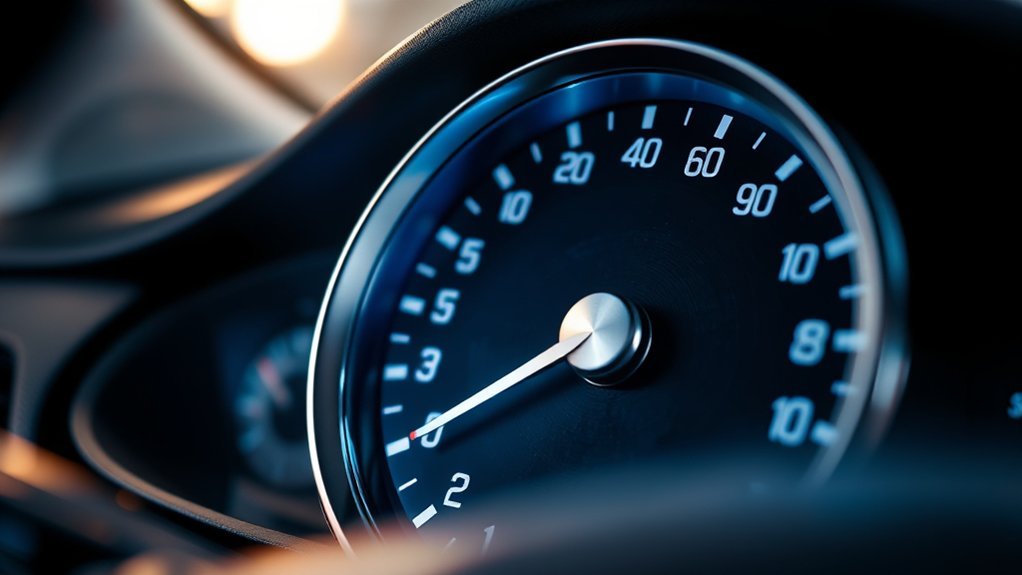
Your gauge reads this resistance and converts it into a needle position or digital reading.
Here’s how the signal translates into fuel level readings:
| Fuel Level | Resistance (Ohms) | Gauge Reading |
|---|---|---|
| Full | Low (e.g., 10 Ω) | Needle at full |
| 3/4 | Moderate (30 Ω) | Needle near full |
| 1/2 | Medium (50 Ω) | Needle at half |
| 1/4 | High (70 Ω) | Needle near empty |
| Empty | Highest (90 Ω) | Needle at empty |
This system gives you a clear, real-time fuel status.
Types of Fuel Gauge Systems You Should Know
Understanding how your fuel gauge interprets signals from the sender unit is just one part of the picture. You should also know the main types of fuel gauge systems used in vehicles today. Each system has its unique way of measuring and displaying fuel levels, so being familiar with them helps you understand your vehicle better.
Here are the four common fuel gauge systems you should know:
- Mechanical Gauge System Uses a float and cable to move a needle on the dashboard.
- Electric Gauge System Converts resistance changes into electrical signals for the gauge.
- Capacitive Fuel Gauge Measures fuel level based on the fuel’s dielectric constant.
- Digital Fuel Gauge System Uses sensors and microprocessors to display precise readings.
Knowing these types helps you grasp how your fuel info is gathered and shown.
Common Causes of Fuel Gauge Errors
Why does your fuel gauge sometimes give inaccurate readings? Several common issues can cause this. First, the fuel sending unit inside your tank may wear out or get stuck, leading to false signals. Dirt and debris can also interfere with its movement.
Second, wiring problems like loose or corroded connections can disrupt the electrical flow between the sending unit and the gauge. Third, the gauge itself might malfunction due to internal faults or damage.
Additionally, fuel sloshing inside the tank when you drive on uneven roads can cause temporary fluctuations. By understanding these causes, you can better diagnose why your fuel gauge isn’t showing the correct level and address the issue before it leads to running out of gas unexpectedly.
How Modern Cars Make Fuel Gauges Smarter
As technology advances, automakers have equipped fuel gauges with smarter features that give you more accurate and reliable readings. Instead of relying solely on a basic float system, modern cars use advanced sensors and digital systems to monitor fuel levels more precisely.
Here’s how they make your fuel gauge smarter:
- Multiple sensors measure fuel at different tank points, reducing errors from fuel sloshing.
- Digital signal processing filters out noise, providing stable readings.
- Onboard computers analyze data and adjust the gauge display in real-time.
- Integration with vehicle systems alerts you early about low fuel or leaks.
These improvements ensure your fuel gauge gives you trustworthy info, helping you plan refueling without surprises.
Easy Tips to Keep Your Fuel Gauge Accurate
How can you make sure your fuel gauge stays reliable over time? Start by avoiding consistently running your tank near empty, as this can strain the sensor and cause inaccurate readings. Refuel before the gauge drops too low.
Keep an eye on your vehicle’s maintenance schedule, and have the fuel sending unit checked during routine service. Dirt and debris can affect the float mechanism, so ensure your fuel tank is clean if you notice erratic gauge behavior.
If you spot sudden jumps or drops in fuel level, get it inspected promptly. Also, avoid modifications that interfere with the fuel tank or electrical system, as these can disrupt gauge accuracy. Following these simple steps helps you trust your fuel gauge every time you drive.
Frequently Asked Questions
Can Aftermarket Fuel Gauges Be Installed in Any Vehicle?
You can install aftermarket fuel gauges in most vehicles, but you’ll need to ensure compatibility with your fuel sending unit and electrical system. Sometimes, modifications or adapters are necessary for proper installation and accurate readings.
How Do Fuel Gauges Work in Electric or Hybrid Cars?
In electric or hybrid cars, you’ll see a battery charge indicator instead of a fuel gauge. It measures your battery’s state of charge, showing how much energy you’ve got left before needing a recharge.
What Materials Are Used to Make Fuel Sender Units?
Think of the fuel sender unit as a tiny dancer on a stage. It’s made from float materials like plastic or foam, a metal arm, and a variable resistor, usually carbon or wire-wound, to measure fuel levels accurately.
Do Fuel Gauges Affect Fuel Efficiency or Consumption?
No, fuel gauges don’t affect your fuel efficiency or consumption directly. They just show how much fuel you have.
However, paying attention to your gauge helps you avoid running empty, which can indirectly protect your engine and efficiency.
How Often Should Fuel Gauge Components Be Inspected or Replaced?
You should inspect fuel gauge components every 12,000 miles or annually since 30% of gauge failures cause inaccurate readings.
Replace parts if you notice erratic behavior to avoid running out of fuel unexpectedly and costly repairs later.
Conclusion
Understanding how fuel gauges work helps you avoid surprises on the road. Imagine driving cross-country, relying on your gauge to find the next gas station—accurate readings keep you stress-free.
By knowing what the sender unit does and how errors happen, you can spot problems early and keep your gauge reliable. With simple maintenance, you’ll always have a clear picture of your fuel.
This knowledge makes every trip smoother and safer, ensuring you understand how fuel gauges work to keep your journey worry-free.