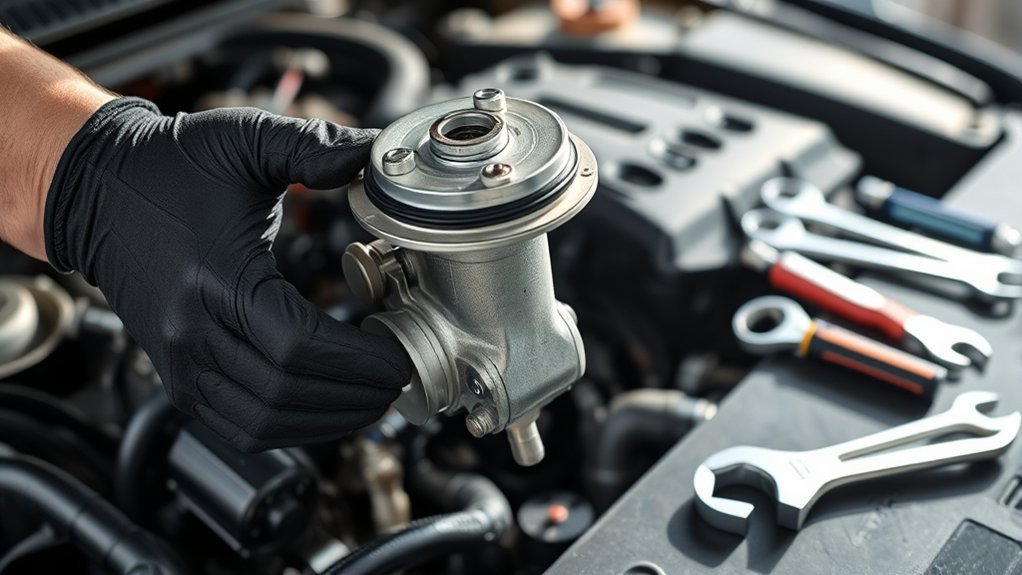
How Do You Fix a Fuel Pump
To fix a fuel pump, first disconnect your battery and safely relieve fuel system pressure to avoid fuel spray. Use the right tools to remove the old pump, carefully disconnecting fuel lines and electrical connections.
Inspect components for damage before installing a compatible new pump, ensuring all connections are secure. After reassembly, test the pump by priming the system and checking for leaks or proper fuel pressure.
If you want to confidently handle every step, there’s more to learn.
Key Takeaways
- Relieve fuel system pressure and disconnect the battery before starting to ensure safety during fuel pump repair or replacement.
- Remove the fuel tank or access panel, then carefully disconnect fuel lines and electrical connectors from the pump.
- Inspect the old pump for damage, clean components, and verify the compatibility of the new pump before installation.
- Install the new pump securely, reconnect all lines and connectors, and reattach the fuel tank or access panel properly.
- Test the new pump by priming the system, checking fuel pressure, inspecting for leaks, and ensuring smooth engine operation.
How To Tell If Your Fuel Pump Is Failing
How can you tell if your fuel pump is failing before it leaves you stranded? You’ll notice your engine sputtering or struggling to start, especially when the car is under stress, like driving uphill or carrying a heavy load.
If your vehicle stalls unexpectedly or hesitates during acceleration, that’s a red flag. A whining noise coming from the fuel tank area is another sign your pump might be on its way out.
Additionally, if your engine misfires or you experience a sudden drop in fuel efficiency, don’t ignore it. Checking your dashboard for a “check engine” light related to fuel delivery issues can give you an early warning.
Catching these symptoms early means you can address the problem before it completely fails.
Tools You’ll Need To Fix Your Fuel Pump
Noticing the signs of a failing fuel pump means you’re ready to tackle the repair. Before diving in, make sure you gather the right tools to make the job smoother and safer. You’ll need equipment that helps you safely access and replace the fuel pump without causing damage or injury.
Here’s what you should have on hand:
Here’s what you need ready to smoothly and safely replace your fuel pump.
- Socket set with extensions for removing fuel tank bolts
- Screwdrivers (flathead and Phillips) for clamps and connectors
- Fuel line disconnect tool to safely detach fuel lines
- Multimeter to test electrical connections and pump continuity
Having these tools ready ensures you can efficiently replace your fuel pump and verify everything works properly once installed. Being prepared helps you avoid unnecessary delays and potential complications during the repair.
How To Relieve Fuel System Pressure Safely
Before working on your fuel pump, you need to relieve the fuel system pressure to avoid accidents. First, locate the fuel pump fuse and remove it to stop the pump from running.
Then, use the pressure relief valve to safely release any remaining pressure in the lines.
Locate Fuel Pump Fuse
Where can you find the fuel pump fuse, and why is it important to locate it first? The fuse controls power to the fuel pump, so identifying it helps you safely cut power before working on the pump. This step prevents accidental fuel spraying or electrical hazards.
To locate the fuel pump fuse:
Check your vehicle’s owner manual for fuse box diagrams.
Inspect the fuse boxes under the dashboard and in the engine compartment.
Look for labels or diagrams indicating “Fuel Pump” or “EFI” (Electronic Fuel Injection).
Use a fuse puller or needle-nose pliers to remove the fuse carefully.
Knowing the exact fuse ensures you disconnect the right circuit, making repairs safer and easier.
Use Pressure Relief Valve
After locating and removing the fuel pump fuse to cut power, the next step is to relieve the fuel system pressure. You’ll find a pressure relief valve, usually on the fuel rail or near the fuel injectors.
Before pressing it, wear safety glasses and gloves to protect yourself from fuel spray. Place a rag or container under the valve to catch any dripping fuel.
Use a small screwdriver or a fuel line tool to gently press the valve stem. You should hear a hissing sound as pressure releases. Keep pressing until the sound stops, indicating the pressure is fully relieved.
This step prevents fuel from spraying when you disconnect fuel lines, making your repair safer and cleaner.
How To Remove Your Fuel Pump
Start by disconnecting the battery to prevent any electrical hazards while working on your fuel pump. Next, relieve fuel system pressure to avoid fuel spray. Locate the fuel pump, typically inside the fuel tank or mounted along the frame.
Begin by disconnecting the battery and relieving fuel system pressure to safely locate your fuel pump.
You’ll need to drain the fuel tank if the pump is inside.
Here’s how to remove your fuel pump:
Disconnect the fuel lines and electrical connectors carefully. Remove the fuel tank if necessary, using proper jacks and supports.
Unscrew or unbolt the pump assembly from the tank or mounting bracket. Carefully lift the pump out, avoiding damage to the sending unit or seals.
Once removed, place the pump on a clean surface to prepare for inspection or replacement.
How To Inspect And Clean Fuel Pump Components
How should you inspect and clean your fuel pump components to ensure optimal performance? Start by examining the pump housing for cracks or corrosion. Check the electrical connections for corrosion or loose wires, as these can cause intermittent issues.
Remove the fuel strainer or sock and inspect it for clogs or debris; a clogged strainer restricts fuel flow and should be replaced or cleaned with a gentle solvent. Clean the pump’s exterior with a lint-free cloth and a mild cleaner to avoid dirt contamination.
If the rotor or impeller is accessible, inspect it for wear or damage. Avoid using harsh chemicals that could damage rubber or plastic parts. Regularly inspecting and cleaning these components helps maintain fuel flow and prolongs your pump’s lifespan.
How To Pick The Right Replacement Fuel Pump
When picking a replacement fuel pump, you’ll want to make sure it’s compatible with your vehicle’s make and model. Understanding the different types of fuel pumps can help you choose the right one for your needs.
Also, look for quality parts that come with a solid warranty to avoid future headaches.
Compatibility With Vehicle
Why does choosing the right replacement fuel pump matter? Because if it’s not compatible with your vehicle, it won’t fit or function properly, leading to performance issues or even damage. To ensure compatibility, match the new fuel pump to your vehicle’s specific make, model, and year.
Also, check the fuel system type, as pumps differ between gasoline and diesel engines. Confirm the electrical connections and mounting style align with your vehicle’s original setup. Finally, consider the fuel pressure requirements to maintain engine efficiency.
Here’s what you need to verify for compatibility:
- Vehicle make, model, and production year
- Fuel type (gasoline or diesel)
- Electrical connector type and wiring
- Mounting design and fuel pressure specifications
Fuel Pump Types
Ensuring compatibility sets the foundation, but selecting the right fuel pump type directly impacts your vehicle’s performance and reliability. You’ll mainly choose between mechanical and electric pumps.
Mechanical pumps, common in older cars, rely on engine movement to push fuel, making them simple but less precise. Electric pumps, standard in modern vehicles, offer consistent fuel pressure and better efficiency.
Within electric pumps, you’ll find in-tank and external types. In-tank pumps sit inside the fuel tank, reducing the risk of vapor lock and noise, while external pumps mount outside for easier access but can be noisier.
Consider your vehicle’s make, model, and fuel system design to pick the correct type. Choosing the right pump ensures smooth engine operation and prevents stalling or poor fuel delivery issues.
Quality And Warranty
A high-quality fuel pump can save you from frequent repairs and unexpected breakdowns. When choosing a replacement, prioritize durability and reliability to keep your vehicle running smoothly. Don’t overlook the warranty. It protects your investment if the pump fails prematurely.
Look for pumps backed by at least a one-year warranty for peace of mind. Also, consider pumps from reputable brands known for quality manufacturing standards.
Keep these tips in mind when picking the right fuel pump:
- Verify the warranty length and coverage details
- Choose pumps with positive customer reviews
- Opt for OEM or high-grade aftermarket parts
- Avoid unusually cheap options that may compromise quality
How To Install Your New Fuel Pump Correctly
Start by disconnecting your vehicle’s battery to prevent any electrical hazards before you handle the fuel pump. Next, relieve the fuel system pressure to avoid fuel spray.
Remove the fuel tank or access panel to reach the old pump. Carefully disconnect all electrical connectors and fuel lines attached to the pump, noting their positions for reassembly.
Remove the retaining ring or bolts holding the pump in place, then gently lift the old pump out. Before installing the new pump, inspect and replace the fuel filter or gasket if needed.
Insert the new pump securely, ensuring it fits snugly without forcing it. Reattach all connections exactly as before, then secure the retaining ring or bolts.
Finally, replace the tank or access panel and reconnect the battery.
How To Test Your Fuel Pump After Installation
After installing your new fuel pump and securing all connections, you need to verify that it’s working properly before fully reassembling your vehicle. Start by turning the ignition key to the “on” position without starting the engine; you should hear a humming sound indicating the pump is priming.
Verify your new fuel pump works by listening for the prime sound with the ignition on before reassembly.
Next, check the fuel pressure using a gauge attached to the fuel rail or test port. Confirm the pressure matches your vehicle’s specifications. Additionally, inspect for any fuel leaks around the pump and connections.
Finally, start the engine and observe if it runs smoothly without hesitation or stalling.
Listen for the pump’s prime sound when ignition is on
Measure fuel pressure with a gauge
Inspect all connections for leaks
Start the engine and check for smooth operation
How To Identify And Prevent Common Fuel Pump Problems
How can you tell if your fuel pump is failing before it leaves you stranded? Watch for symptoms like engine sputtering, difficulty starting, or loss of power under load. A whining noise from the fuel tank also signals trouble.
To prevent these issues, keep your fuel tank at least a quarter full. Running low heats the pump and causes premature wear. Always use clean fuel and replace the fuel filter regularly to avoid clogging.
Avoid contaminating your tank with dirt or water, and address any check engine light promptly. Regular maintenance and paying attention to how your car drives can help you catch problems early, saving you from unexpected breakdowns and costly repairs.
Frequently Asked Questions
How Long Does a Typical Fuel Pump Last?
A typical fuel pump lasts around 100,000 to 150,000 miles, but it varies based on your driving habits and maintenance.
If you keep your tank clean and avoid running low often, it’ll usually last longer.
Can a Bad Fuel Pump Cause Engine Overheating?
Yes, a bad fuel pump can cause engine overheating because it may fail to deliver enough fuel, making your engine run lean and hotter than normal.
You’ll want to check it if overheating occurs unexpectedly.
Is It Safe to Drive With a Failing Fuel Pump?
You shouldn’t drive with a failing fuel pump. It’s like riding a horse-drawn carriage on a modern highway. Your engine might stall suddenly, leaving you stranded or causing unsafe situations.
Get it fixed before hitting the road again.
What Are the Signs of a Fuel Pump Relay Failure?
You’ll notice your engine struggling to start, stalling, or no start at all. Your fuel pump might not run, causing sputtering or loss of power.
Also, listen for clicking sounds near the fuel tank.
How Much Does Professional Fuel Pump Replacement Cost?
You’ll typically pay between $400 and $800 for a professional fuel pump replacement. Don’t be surprised if costs climb higher. Labor and parts can vary, but investing now saves you from unexpected breakdowns on the road.
Conclusion
Fixing your fuel pump might seem intimidating, but with the right tools and steps, it’s surprisingly manageable. While a failing pump can leave you stranded, a properly installed one keeps your engine humming smoothly.
By carefully inspecting, replacing, and testing, you turn a potential breakdown into a seamless repair. Remember, the frustration of failure contrasts sharply with the satisfaction of a job done right—so take your time.
When you follow these guidelines, you’ll not only avoid issues but also enjoy peace of mind. Ultimately, knowing how to fix a fuel pump empowers you to maintain your vehicle’s performance and reliability.