How Long Can You Drive on a Bad Wheel Bearing
You shouldn’t drive on a bad wheel bearing once you suspect a problem because it compromises your vehicle’s safety and stability. A bad wheel bearing can lead to serious issues that make driving dangerous.
If you absolutely must drive, keep it brief and slow—just enough to reach a mechanic. Driving longer risks wheel lock-up, detachment, and severe damage.
Early signs like humming noises or steering wobble mean it’s time to act fast. Keep going to find out how to spot issues and handle replacements properly.
Key Takeaways
- Driving on a bad wheel bearing is unsafe and should be avoided as soon as a problem is suspected.
- If driving is unavoidable, keep it very brief and drive slowly to minimize risk.
- Continuing to drive increases the risk of wheel lock-up, detachment, and severe vehicle damage.
- Early warning signs include humming noises, steering vibrations, uneven tire wear, and ABS warning lights.
- Immediate professional repair or replacement is crucial to ensure vehicle safety and stability.
How Long Can You Safely Drive on a Bad Wheel Bearing?
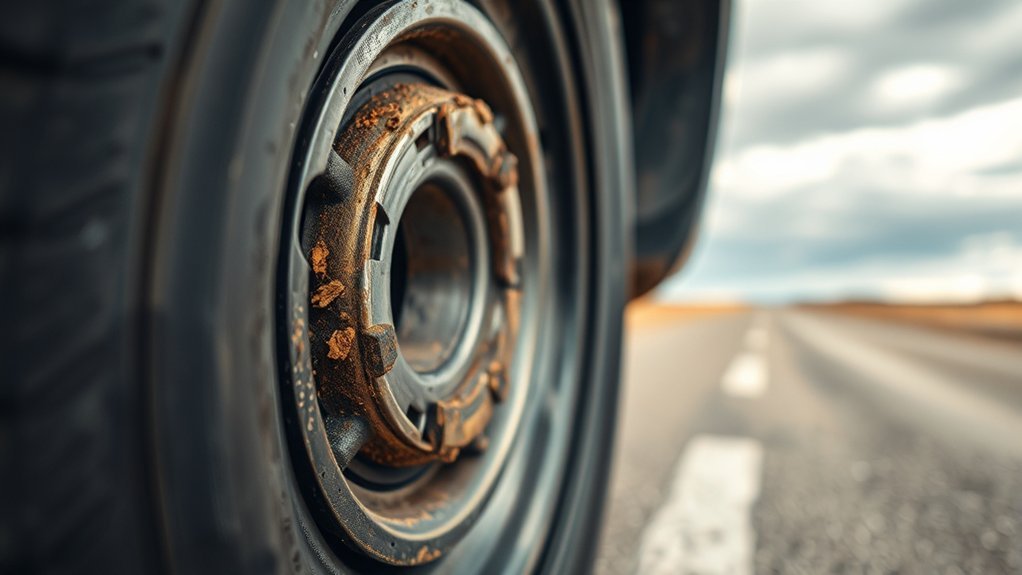
How long can you safely drive on a bad wheel bearing? The truth is, you shouldn’t drive on it at all once you suspect a problem. A failing wheel bearing compromises your vehicle’s stability and safety, increasing the risk of a wheel locking up or even detaching.
While some might push through for a short distance, it’s risky and could lead to costly repairs or accidents. If you must drive, keep it brief and slow, aiming to reach a mechanic promptly.
Don’t ignore the issue, as driving longer on a bad wheel bearing worsens the damage and raises safety concerns. Your best bet is to address the problem immediately to protect yourself, your passengers, and your vehicle.
Early Signs of a Bad Wheel Bearing
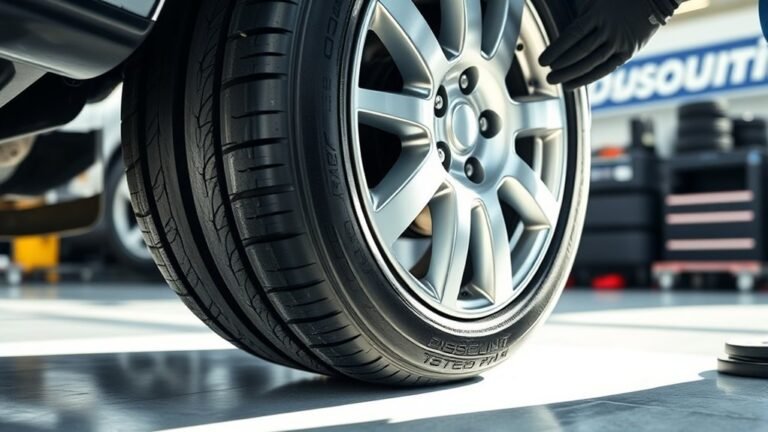
What should you watch for when a wheel bearing starts to fail? One of the earliest signs is a humming or growling noise that changes with your vehicle’s speed. You might also notice uneven tire wear, which happens because the bearing isn’t supporting the wheel properly.
Another clue is a slight vibration or wobble in the steering wheel, especially when turning. You could feel looseness or play when you rock the wheel back and forth while the car is lifted.
Sometimes, a bad bearing causes the ABS warning light to flicker due to sensor issues. If you catch these signs early, you can avoid more serious damage down the line. Don’t ignore any unusual noises or handling quirks; they’re your car’s way of signaling trouble.
What Happens if You Drive With a Bad Wheel Bearing?
Why should you avoid driving with a bad wheel bearing? Because it can quickly turn from a minor annoyance into a serious safety hazard. A failing bearing affects your vehicle’s stability, making steering unpredictable and increasing the risk of accidents.
Ignoring it might lead to wheel lock-up or even the wheel detaching completely.
Here’s what you risk by continuing to drive on a bad wheel bearing:
| Risk Level | Consequence | Emotional Impact |
|---|---|---|
| Moderate | Noise & vibration | Frustration |
| Severe | Steering issues | Anxiety |
| Critical | Wheel failure | Fear for safety |
Don’t gamble with your safety or your wallet. Address a bad wheel bearing promptly.
How to Check If Your Wheel Bearing Is Bad
Wondering if your wheel bearing is failing? Start by listening for a humming or grinding noise that changes with your speed.
Wonder if your wheel bearing is failing? Listen for humming or grinding noises that vary with your speed.
Next, safely lift your car using a jack and secure it with stands. Grab the tire at the 12 and 6 o’clock positions and try to rock it back and forth. Excessive play or looseness signals a worn bearing.
Spin the wheel and pay attention to any roughness or unusual sounds. Also, check for uneven tire wear, which can be another clue.
Finally, if you notice vibrations or pulling while driving, it’s worth inspecting the wheel bearing. These simple checks help you identify problems early before they worsen or cause unsafe driving conditions.
When and How Should You Replace a Bad Wheel Bearing?
How do you know the right time to replace a bad wheel bearing? If you hear grinding noises, feel vibration, or notice uneven tire wear, it’s time to act. Don’t wait until it fails completely, as that can cause serious damage or accidents.
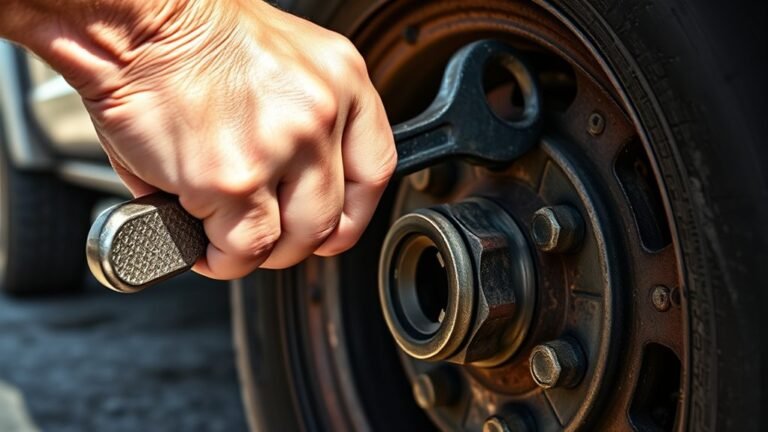
To replace it, first lift your vehicle safely and remove the wheel. Then, take off the brake caliper and rotor to access the hub assembly. You’ll need to remove the retaining nut and press out the old bearing.
Installing the new bearing requires a bearing press tool to avoid damage. Finally, reassemble everything and torque bolts to the manufacturer’s specs. If you’re not confident, have a professional handle it. Wheel bearings are critical for your safety.
Frequently Asked Questions
What Causes Wheel Bearings to Fail Prematurely?
You cause wheel bearings to fail prematurely by driving through deep water, hitting potholes, neglecting regular maintenance, or using low-quality parts. These actions wear down the bearing’s lubrication and damage its components faster than normal.
Are Wheel Bearing Issues Covered by Car Warranties?
Think of your car’s warranty as a shield; wheel bearing issues usually fall under it if caused by defects, not wear and tear.
You should check your specific warranty details to know exactly what’s covered and what’s not.
Can Bad Wheel Bearings Affect Fuel Efficiency?
Yes, bad wheel bearings can lower your fuel efficiency because they create extra friction and resistance while driving. You’ll notice your engine works harder, which wastes fuel, so you shouldn’t ignore any strange noises or vibrations from your wheels.
How Much Does Wheel Bearing Replacement Typically Cost?
You’ll typically pay between $150 and $400 per wheel bearing replacement, depending on your vehicle and labor costs.
It’s smart to get it fixed promptly to avoid further damage and higher expenses later.
Are There Specific Car Models Prone to Wheel Bearing Problems?
Some car models, like certain Hondas and Toyotas, are prone to wheel bearing problems, as common as leaves falling in autumn. You’ll want to watch for noise or vibration and get them checked promptly to avoid damage.
Conclusion
Driving on a bad wheel bearing is like walking on a cracked sidewalk—you might get away with a few steps, but eventually, you’ll stumble hard. One driver ignored the grinding noise and ended up stranded on the highway, facing a costly tow and repair.
Don’t risk your safety or wallet. At the first sign, get your wheel bearing checked and replaced promptly.
To keep your ride smooth and secure, always address issues related to a bad wheel bearing without delay.