How to Use 4 Wheel Drive
Use 4-wheel drive when you hit slippery, muddy, or uneven terrain to gain extra traction and control. Engaging 4-wheel drive helps improve your vehicle’s stability in challenging conditions.
Switch to 4WD High for normal speeds on wet or snowy roads, and 4WD Low for slow, tough conditions like deep mud or steep hills.
Always engage it smoothly, preferably at a stop or crawl to avoid damage. Remember, avoid using 4WD on dry pavement to save fuel and reduce wear.
Keep going to uncover tips on proper use and care.
Key Takeaways
- Engage 4WD when driving on snow, mud, or off-road terrain to improve traction and control.
- Use 4WD High for normal speeds on slippery surfaces and 4WD Low for slow, difficult terrain requiring maximum torque.
- Always stop or slow down before shifting into or out of 4WD, and shift to neutral if your vehicle requires it.
- Avoid using 4WD on dry, paved roads to prevent drivetrain damage and conserve fuel.
- Drive smoothly without sudden acceleration or braking, and regularly check fluid levels and maintain 4WD components.
When to Use 4WD in Snow, Mud, and Off-Road
When should you engage 4WD? You should switch to 4WD whenever you’re driving through snow, mud, or off-road terrain that compromises traction. If your wheels start slipping or you notice reduced control, it’s time to engage 4WD.
Snow-covered roads can be deceptively slick, causing your vehicle to lose grip. 4WD helps distribute power evenly to all wheels, improving stability. In muddy or uneven terrain, 4WD ensures you don’t get stuck by providing extra torque where it’s needed.
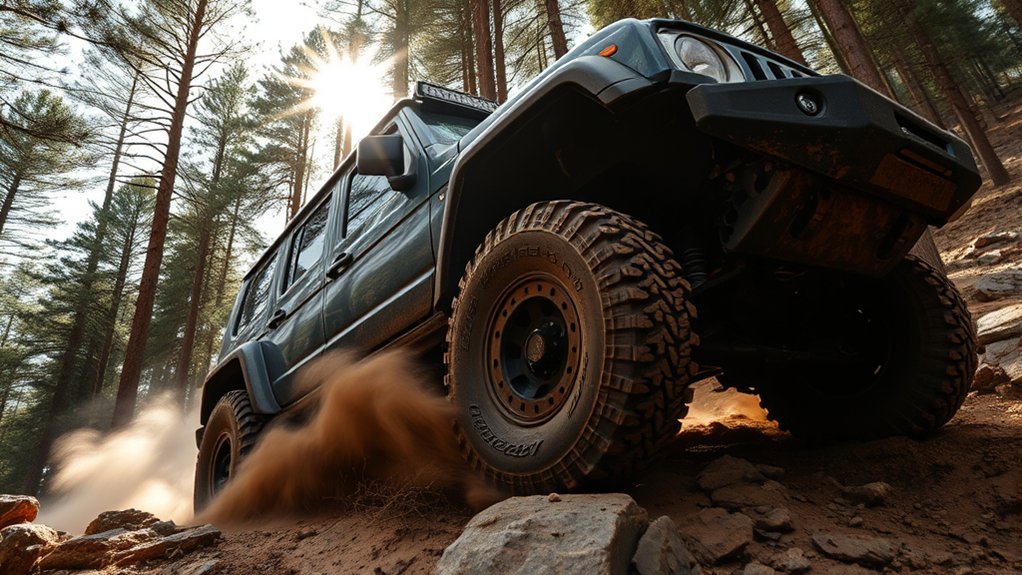
Off-road trails often have rocks, roots, and loose surfaces that demand better traction and control, which 4WD delivers. Avoid using 4WD on dry, paved roads since it can cause drivetrain binding and unnecessary wear. Use it only when conditions require enhanced traction and control.
4WD Modes Explained: Which Setting to Use When
How do you decide which 4WD mode to use in varying conditions? Understanding each mode’s purpose helps you get the most out of your vehicle’s capabilities.
- 2WD (Two-Wheel Drive): Use this for regular driving on dry, paved roads. It saves fuel and reduces wear.
- 4WD High (4H): Engage this when you need extra traction at normal speeds, like on wet, snowy, or gravel roads. It balances power to all wheels without sacrificing speed.
- 4WD Low (4L): Reserve this for slow, tough terrain like deep mud, steep hills, or rocky trails. It provides maximum torque and control.
Choosing the right setting ensures optimal performance and safety without damaging your drivetrain or tires.
How to Engage and Disengage 4WD Correctly
Choosing the right 4WD mode is just the start. You also need to know the proper steps to engage and disengage it to protect your vehicle and maintain control. Before engaging 4WD, bring your vehicle to a complete stop or slow to a crawl, depending on the system.
Shift into neutral if your vehicle requires it, then switch to the desired 4WD mode. Avoid forcing the lever or switch; if it doesn’t engage smoothly, try driving slowly forward or backward slightly. To disengage, stop or slow down again, shift to neutral if needed, then switch back to 2WD.
Always follow your owner’s manual instructions closely. Incorrect engagement or disengagement can cause drivetrain damage or reduce handling effectiveness.
Driving Tips for 4WD Safety and Efficiency
Why does using 4WD properly matter for your safety and fuel efficiency? Engaging 4WD at the right time improves traction on rough terrain but using it unnecessarily can waste fuel and cause drivetrain wear. To drive safely and efficiently, follow these tips:
Using 4WD correctly boosts safety and fuel efficiency by improving traction and preventing unnecessary wear.
- Engage 4WD only when needed. Use it on slippery, uneven surfaces, not dry pavement, to avoid damage and conserve fuel.
- Drive smoothly. Avoid sudden acceleration or braking to maintain control and reduce strain on your vehicle.
- Monitor your speed. Keep it moderate in 4WD; higher speeds increase fuel consumption and risk losing traction.
Maintaining Your 4WD for Long-Term Performance
Maintaining your 4WD system regularly guarantees it performs reliably when you need it most. Start by checking the fluid levels in your transfer case, differentials, and transmission. These fluids keep components lubricated and prevent overheating.
Replace them according to your vehicle’s schedule or sooner if you drive in harsh conditions. Inspect your tires for uneven wear and ensure proper inflation to maintain traction.
Don’t forget to clean your 4WD components, removing mud and debris that can cause damage over time. Test your 4WD engagement frequently to spot issues early.
Lastly, schedule professional inspections annually to catch problems you might miss. By staying on top of maintenance, you’ll extend your 4WD’s lifespan and keep it ready for any adventure.
Frequently Asked Questions
Can 4WD Improve Fuel Efficiency on Highways?
No, 4WD usually doesn’t improve fuel efficiency on highways; it often decreases it because it engages more drivetrain components, causing extra drag and fuel use.
You should stick to 2WD for better mileage on smooth roads.
Is 4WD Necessary for City Driving?
You don’t need 4WD for city driving; “don’t fix what isn’t broken.” It’s best saved for rough terrain or slippery conditions.
Using 4WD unnecessarily can wear out your vehicle and reduce fuel efficiency.
How Does 4WD Affect Tire Wear?
4WD can increase tire wear if you use it on dry pavement because it causes more friction and binding.
You should engage 4WD only on slippery or off-road surfaces to help your tires last longer and perform better.
Can 4WD Be Used in Wet Pavement Conditions?
You can use 4WD on wet pavement, but it’s not always ideal. It may cause drivetrain binding or tire wear.
Stick to 2WD for regular wet roads, and save 4WD for slippery, off-road conditions.
What Vehicles Typically Come With 4WD Systems?
You’ll typically find 4WD systems in trucks, SUVs, and off-road vehicles designed for rugged terrain. They’re built to handle tough conditions, so if you need serious traction, these are the vehicles you’d want to choose.
Conclusion
You might think 4WD is just for extreme conditions, but it’s surprisingly helpful in everyday moments, like unexpected snow or slippery mud. When you know how to switch modes and drive safely, 4WD becomes your reliable partner, ready whenever you need it.
Taking care of it guarantees it won’t let you down just when you need it most. So, trust your 4WD—it’s there to keep you moving, no matter what. Understanding how to use 4 wheel drive ensures you get the most out of this powerful feature.