How Long Does It Take to Replace a Wheel Bearing
Replacing a wheel bearing usually takes about one to two hours, especially on compact cars. Your experience, the vehicle type, and the tools you have can speed things up or slow you down.
DIY replacements might take longer—around two to four hours—while professionals typically work faster with specialized equipment. If you want to tackle it yourself or better understand the process, there are some helpful tips and factors that can make a big difference in timing.
Key Takeaways
- Replacing a wheel bearing typically takes about one to two hours for professionals.
- DIY replacement usually ranges from two to four hours depending on experience and vehicle complexity.
- Compact cars allow faster replacement due to easier access and smaller parts compared to trucks and SUVs.
- Using specialized tools like a bearing press and impact wrench significantly reduces replacement time.
- Preparing tools, following a clear guide, and applying penetrating oil can speed up the entire process.
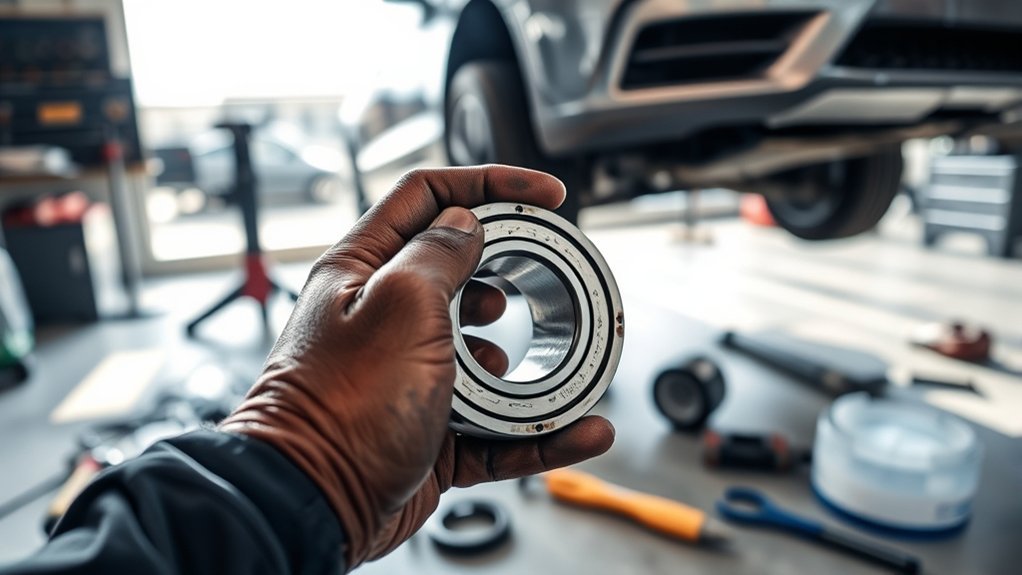
What Is a Wheel Bearing and Why Replace It?
What exactly does a wheel bearing do, and why should you care about replacing it? A wheel bearing allows your car’s wheels to spin smoothly while supporting the vehicle’s weight. It reduces friction between the wheel and the axle, making your ride safer and more efficient.
If the bearing wears out, you’ll notice grinding noises, vibrations, or uneven tire wear. Ignoring a bad wheel bearing can lead to wheel lock-up or even detachment, posing serious safety risks.
Replacing it restores smooth wheel rotation and prevents further damage. Since your safety depends on it, you shouldn’t delay fixing a failing wheel bearing once you detect symptoms. Keeping this component in good condition is vital for reliable vehicle performance.
How Long Does Wheel Bearing Replacement Take?
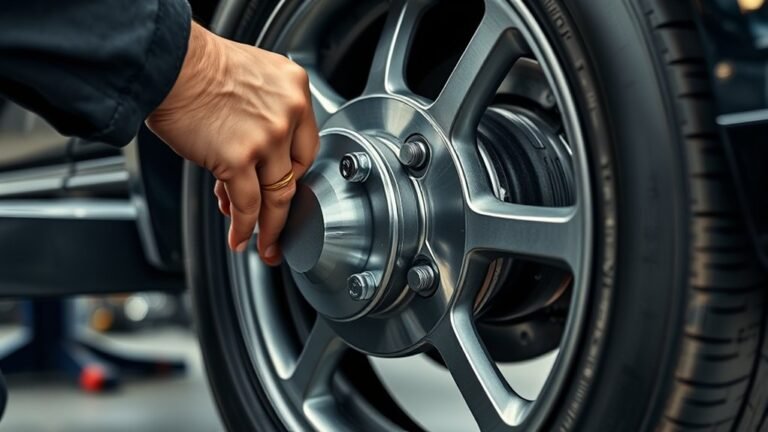
Wondering how long it takes to replace a wheel bearing? Typically, you’re looking at about one to two hours. The process involves lifting the vehicle, removing the wheel, brake components, and hub assembly to access the bearing.
Once exposed, the old bearing is removed, and the new one is pressed in place. After that, everything goes back together in reverse order. If you’re experienced and have the right tools ready, you might finish closer to an hour.
However, if it’s your first time or you run into stuck parts, it could take longer. Keep in mind, this estimate assumes a straightforward replacement without complications. Staying organized and following proper steps will help you complete the job efficiently.
How Vehicle Type and Tools Affect Replacement Time
How much time you spend replacing a wheel bearing can vary widely depending on your vehicle type and the tools you have on hand.
If you’re working on a compact car, the process is usually quicker because parts are more accessible and less bulky. On larger vehicles like trucks or SUVs, you’ll often face tighter spaces and heavier components, which can slow you down.
The tools you use also play a big role. Having specialized equipment like a bearing press or impact wrench can speed things up, while relying on basic hand tools might extend the job.
If you don’t have the right tools, you might struggle with stubborn bolts or the bearing itself, which means more time and effort. So, preparing both your workspace and tools is key to saving time.
DIY vs. Professional Wheel Bearing Replacement Time
Having the right tools and understanding your vehicle type definitely influence how long a wheel bearing replacement takes, but whether you tackle the job yourself or hire a professional makes an even bigger difference.
Right tools and vehicle knowledge matter, but choosing DIY or professional has the biggest impact on time.
If you decide to do it yourself, expect to spend between two to four hours, depending on your experience and the complexity of your vehicle. You’ll need patience, proper tools, and a clear workspace.
On the other hand, a professional mechanic can usually complete the job in about one to two hours, thanks to specialized equipment and expertise. Choosing a pro reduces the risk of mistakes and saves time, but it comes with a higher cost.
Ultimately, your skill level and priorities will guide the best option for you.
5 Tips to Speed Up Your Wheel Bearing Replacement
What steps can you take to make your wheel bearing replacement quicker and smoother? First, gather all necessary tools and parts before you start to avoid interruptions. Use a quality jack and stands to secure your vehicle safely and position yourself comfortably.
Follow a clear, step-by-step guide or video to stay on track and prevent mistakes. Apply penetrating oil on stuck bolts early to loosen them faster. Keep your workspace organized to quickly find tools and parts.
If possible, enlist a helper to hold components or pass tools. Avoid rushing. Work methodically to prevent damage that could cause delays. Finally, double-check your work before lowering the vehicle to ensure everything’s properly installed, saving time on rework.
These tips streamline the process and help you finish efficiently.
Frequently Asked Questions
What Are the Symptoms of a Failing Wheel Bearing?
You’ll notice a humming or grinding noise that gets louder with speed. Your steering might feel loose or vibrate, and you could experience uneven tire wear or a pulling sensation while driving. Don’t ignore these signs!
How Much Does Wheel Bearing Replacement Typically Cost?
Replacing a wheel bearing typically costs between $150 and $400. Think of it like fixing a squeaky door hinge. It’s a small price to keep your ride smooth and safe, avoiding bigger issues down the road.
Can a Bad Wheel Bearing Cause Tire Wear?
Yes, a bad wheel bearing can cause uneven tire wear because it affects wheel alignment and stability.
If you don’t fix it, your tires might wear out faster, leading to costly replacements and unsafe driving conditions.
Is It Safe to Drive With a Damaged Wheel Bearing?
No, it isn’t safe to drive with a damaged wheel bearing. You risk wheel failure, noise, and poor handling.
Get it checked and replaced immediately to avoid accidents and costly repairs. Don’t delay this fix.
How Often Should Wheel Bearings Be Inspected or Replaced?
Like checking your trusty pocket watch, you should inspect wheel bearings every 30,000 miles or during routine maintenance. Replace them when you hear grinding or feel vibrations. Don’t wait, or you risk serious damage and unsafe driving.
Conclusion
Replacing a wheel bearing usually takes about one to two hours, but did you know that professional mechanics can often finish the job 30% faster than DIY attempts? Whether you’re doing it yourself or hiring a pro, understanding the process helps you save time and avoid mistakes.
Remember, having the right tools and knowledge can make all the difference. So get ready to roll smoothly and safely back on the road in no time!
Knowing how long does it take to replace a wheel bearing is essential to plan your repair efficiently.