Does Coolant Evaporate
You won’t see your engine coolant evaporate much under normal conditions because modern cooling systems are closed and pressurized, minimizing vapor loss.
The antifreeze-water mixture raises boiling points and reduces evaporation further.
If you notice significant coolant drops, it’s usually due to leaks, worn seals, or overheating rather than evaporation.
Proper maintenance and system checks help prevent issues.
Exploring these factors can provide a better understanding of why your coolant level changes.
What Is Engine Coolant and How Does It Work?
Engine coolant is a specialized fluid designed to regulate your engine’s temperature by absorbing and dissipating heat. It circulates through the engine block and radiator, maintaining an optimal operating temperature that prevents overheating and freezing.
By stabilizing temperature fluctuations, coolant directly supports engine efficiency, ensuring combustion processes occur under ideal thermal conditions. This temperature regulation also enhances fuel economy, as the engine avoids excessive fuel consumption caused by running too hot or cold.
Coolant’s composition, a mixture of water and antifreeze agents, lowers the fluid’s freezing point and raises its boiling point, expanding the effective temperature range. You’ll find that without proper coolant function, thermal stress increases, leading to diminished engine performance and higher fuel usage, underscoring the fluid’s critical role in maintaining both engine efficiency and fuel economy.
Does Coolant Actually Evaporate Over Time?
How does coolant change over time within your vehicle’s cooling system? Contrary to common coolant myth, pure coolant doesn’t substantially evaporate under normal operating conditions. Here’s why evaporation myths often mislead you:
- Coolant operates in a closed, pressurized system that minimizes evaporation.
- The mixture of antifreeze and water has a higher boiling point, reducing vapor loss.
- Minor vapor loss can occur if the cooling system cap isn’t sealed properly, but this is an exception.
- Over time, coolant degrades chemically rather than evaporating, losing its effectiveness.
In essence, the coolant myth about evaporation overstating fluid loss is inaccurate. You should focus on system integrity and chemical breakdown rather than evaporation when monitoring coolant levels.
What Causes Coolant Levels to Drop?
You’ll notice coolant levels drop primarily due to common leak sources like radiator cracks or hose failures. Additionally, evaporation plays a role, especially if the system’s pressure isn’t maintained correctly.
Boiling can also reduce coolant volume, indicating potential overheating or system malfunction.
Common Leak Sources
Although coolant levels can drop due to evaporation, the most significant causes are leaks occurring in specific components of the cooling system. When inspecting leaks, remember that mixing coolant types can compromise system integrity. This makes color significance vital for identifying the correct coolant type and avoiding contamination.
Common leak sources include:
- Radiator: Corrosion or physical damage causes coolant to seep out.
- Hoses: Cracks or loose clamps lead to visible drips or wet spots.
- Water Pump: Worn seals or bearings result in slow leaks.
- Heater Core: Internal leaks often manifest as interior dampness or a sweet smell.
Evaporation and Boiling
Why does your coolant level drop even when there are no visible leaks? The answer lies in understanding the difference between boiling and evaporation. Unlike evaporation, which is a slow surface process occurring at any temperature, boiling involves rapid vaporization at a specific temperature, the coolant’s boiling point.
Evaporation myths often overstate how much coolant escapes this way under normal operating conditions. In reality, coolant evaporation is minimal due to the closed system design of modern cooling systems, which maintain pressure and reduce vapor loss.
However, if the system overheats, coolant can boil, causing significant vapor loss and a drop in level. Thus, boiling, not evaporation, is the primary cause of coolant depletion without visible leaks, highlighting the importance of maintaining proper system pressure and temperature.
How Leaks and Worn Seals Make Your Coolant Disappear
How exactly do leaks and worn seals contribute to the gradual loss of coolant in your vehicle? When seals degrade or leaks form, coolant escapes the closed system, reducing its volume and impairing cooling efficiency.
Several factors influence this process:
- Seal material degradation: Over time, exposure to heat cycles and weather patterns causes rubber seals to harden or crack, compromising their integrity.
- Leak locations: Radiator, hoses, or water pump leaks allow coolant to seep out, often absorbed by surrounding absorbent material like insulation or dirt.
- Pressure loss: Leaks reduce the system’s pressure, accelerating coolant evaporation through compromised points.
- Environmental impact: Fluctuating weather patterns can exacerbate seal wear and increase coolant loss rates.
Addressing leaks and worn seals promptly prevents coolant disappearance and system failure.
What Are the Signs of Coolant Evaporation or Leaks?
Identifying the signs of coolant evaporation or leaks is essential for maintaining your vehicle’s cooling system performance. One common evaporation misunderstanding is confusing normal coolant boil off with an actual leak.
While coolant can evaporate slightly under high temperatures, significant loss usually signals a leak or compromised seal integrity. You should monitor the coolant reservoir level regularly; a consistent drop without visible leaks suggests evaporation or internal leaks.
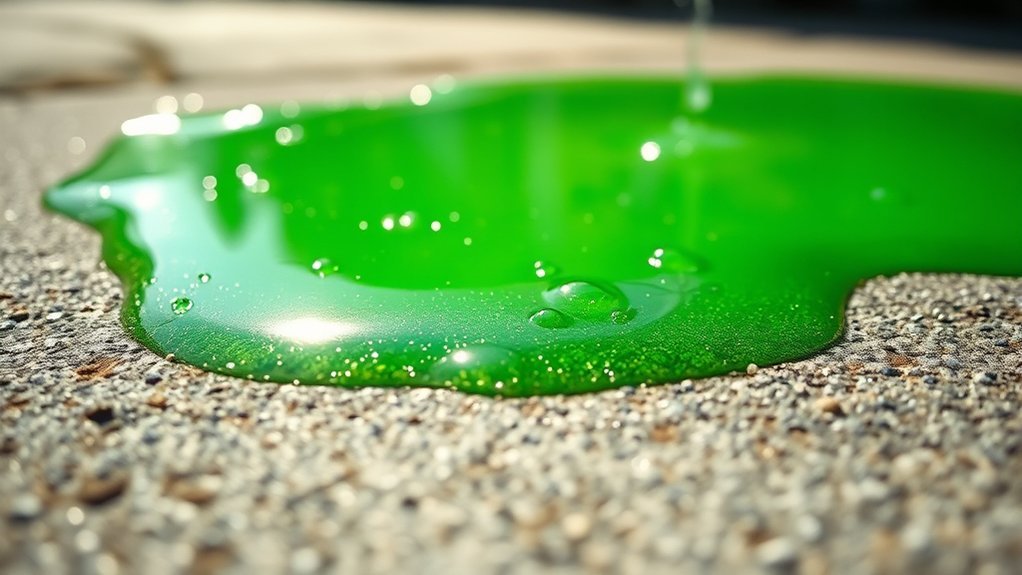
Additionally, look for coolant puddles under your vehicle, a sweet smell near the engine bay, or white exhaust smoke indicating coolant entering combustion chambers. Overheating or fluctuating engine temperatures also hint at coolant loss.
Recognizing these symptoms early allows precise diagnosis, preventing damage from insufficient coolant circulation or overheating caused by unnoticed evaporation or leaks.
How Can You Prevent Coolant Evaporation and Protect Your Engine?
When should you take action to minimize coolant evaporation and safeguard your engine’s cooling efficiency? Ideally, you should address evaporation prevention proactively, before significant fluid loss impacts performance or causes overheating.
To extend coolant longevity and protect your engine, focus on these key steps:
To extend coolant life and safeguard your engine, prioritize regular maintenance and timely repairs.
- Regularly inspect and replace worn radiator caps to maintain proper pressure and prevent vapor escape.
- Use manufacturer-recommended coolant mixtures to optimize boiling points and reduce evaporation rates.
- Routinely flush the cooling system to eliminate contaminants that accelerate corrosion and degrade fluid integrity.
- Monitor hose and gasket conditions, repairing leaks promptly to avoid pressure drops that exacerbate evaporation.
Frequently Asked Questions
Can I Use Water Instead of Coolant in My Engine?
You shouldn’t use water instead of coolant because its lack of proper coolant chemistry causes irreversible erosion inside the engine.
Coolant prevents corrosion and maintains optimal temperature, which water alone can’t achieve, risking serious engine damage over time.
How Often Should I Replace My Engine Coolant?
Like clockwork, you should replace your engine coolant every 2 to 4 years to optimize coolant maintenance.
Regular coolant replacement guarantees efficient heat transfer and corrosion protection, maintaining your engine’s longevity and preventing costly overheating issues.
What Type of Coolant Is Best for Extreme Temperatures?
You’ll want coolant chemistry optimized for extreme temperatures, typically advanced ethylene glycol or propylene glycol-based heat transfer fluids with additives resisting boiling, freezing, and corrosion. This ensures efficient thermal management and engine protection under harsh conditions.
Can Old Coolant Damage My Car’s Radiator?
Yes, old coolant can damage your radiator by accelerating radiator corrosion and increasing coolant evaporation. Degraded additives reduce protection, causing rust buildup and leaks.
Regular coolant replacement prevents these issues, ensuring optimal radiator performance and longevity.
Is It Safe to Mix Different Brands of Coolant?
You shouldn’t mix different brands of coolant without verifying compatibility, as coolant mixing can cause chemical reactions, reducing effectiveness and risking corrosion.
A two word discussion idea: always check specifications before combining fluids.