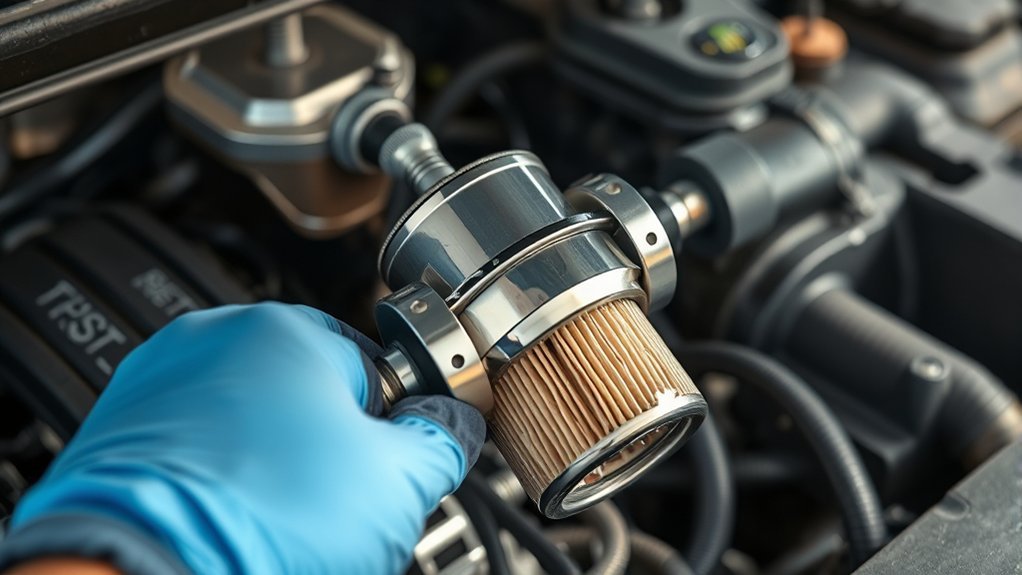
How to Disconnect Fuel Filter
To disconnect your fuel filter, start by relieving the fuel system pressure. Remove the fuel pump fuse and depressurize the system using the Schrader valve. This step is crucial for safety.
Wear appropriate safety gear and work in a well-ventilated area to avoid inhaling fuel vapors. Use line wrenches or a screwdriver to loosen the connectors. For quick-connect fittings, press the release tabs; for barbed fittings, loosen the clamps.
Keep a rag handy to catch any fuel that may spill during the process. Take note of the filter’s orientation before you remove it to ensure proper installation later. Secure all fasteners and prepare for reinstalling the new filter.
For detailed steps and troubleshooting tips, continue exploring the process.
How to Locate the Fuel Filter
Before you begin disconnecting the fuel filter, you need to accurately locate it. Typically, the fuel filter is positioned along the fuel line either near the fuel tank or the engine bay.
First, identify the fuel filter’s exact location near the fuel tank or engine bay before disconnecting it.
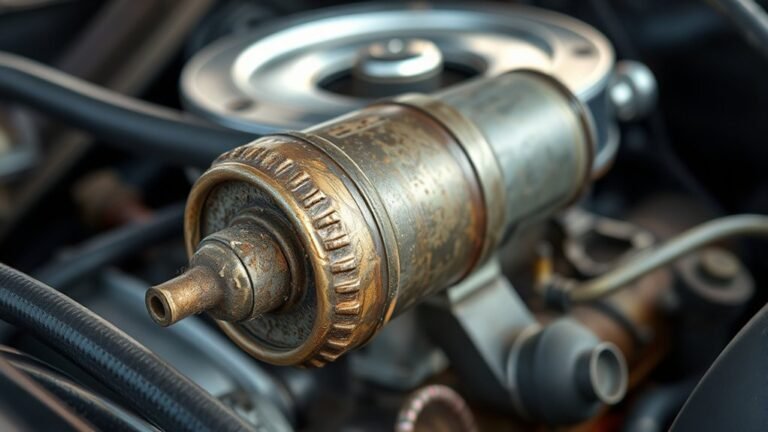
In most vehicles, it appears as a small cylindrical or rectangular component connected by two fuel lines. Consult your vehicle’s manual to verify the exact location because proper identification is crucial for maintaining fuel efficiency and optimal engine performance.
A clogged or malfunctioning fuel filter restricts fuel flow, compromising engine power and increasing fuel consumption. By locating it correctly, you ensure you can service or replace it to sustain smooth fuel delivery.
Be mindful of safety precautions, such as relieving fuel system pressure, before proceeding to disconnect the filter to avoid fuel leaks or hazards.
Tools Needed to Disconnect a Fuel Filter
To disconnect the fuel filter safely and efficiently, you’ll need specific tools like fuel line disconnect tools and wrenches. Don’t forget essential safety equipment, including gloves and safety glasses, to protect yourself from fuel exposure.
Preparing these items beforehand ensures a smooth and secure removal process.
Essential Tools Overview
What tools will you need to safely and effectively disconnect a fuel filter? First, a set of line wrenches is essential for loosening fuel fittings without rounding the nuts. You’ll also want a flathead screwdriver to release clamps or tabs securing the filter.
Needle-nose pliers come in handy for stubborn clips. Avoid unrelated topic distractions or random ideas about general automotive tools; focus strictly on those specific to fuel system disconnection.
Additionally, having a drip pan beneath the filter catches any leaking fuel, preventing spills. A clean rag is useful to wipe connections before removal.
Keep these tools organized and ready, ensuring a smooth, damage-free disconnection process. Avoid improvising with unrelated tools to maintain safety and efficiency throughout the task.
Safety Equipment Required
Having the right tools ready sets the stage for a safe fuel filter disconnection, but you’ll also need proper safety equipment to protect yourself from fuel exposure and hazards. First, always wear chemical-resistant gloves to prevent skin contact with fuel.
Safety goggles or a face shield are essential to guard against splashes, especially during windy conditions common in wind season, which can cause unexpected fuel spray. A long-sleeve, flame-retardant shirt acts as a barrier, providing extra protection when working around flammable liquids.
Additionally, keep a fire extinguisher rated for flammable liquids nearby. If you’re working near vegetation, like a bush beauty or other flammable foliage, ensure the area is clear to reduce fire risk. Proper ventilation is crucial to avoid inhaling fumes; work in an open or well-ventilated space.
How to Relieve Fuel System Pressure Safely
First, locate and remove the fuel pump fuse to stop fuel flow. Next, relieve pressure by running the engine until it stalls or using the fuel pressure relief valve if equipped.
This step prevents fuel spray and ensures safe disconnection of the fuel filter.
Locate Fuel Pump Fuse
Where can you find the fuel pump fuse to safely relieve fuel system pressure? Typically, the fuel pump fuse is located in the vehicle’s fuse box, which is either under the hood or inside the cabin near the driver’s side.
Consult your owner’s manual or the fuse box cover for the exact fuse layout; this avoids pursuing irrelevant topics or unrelated concepts like unrelated electrical components. Once identified, use a fuse puller or needle-nose pliers to carefully remove the fuse.
Removing this fuse disables the fuel pump, cutting power and allowing pressure to dissipate safely. Remember, do not confuse the fuel pump fuse with other fuses to prevent electrical issues.
This step is crucial before proceeding to depressurize fuel lines or disconnect the fuel filter.
Depressurize Fuel Lines
Once the fuel pump fuse is removed, the fuel system pressure begins to drop, but you’ll need to fully relieve any remaining pressure in the fuel lines before disconnecting the fuel filter. To do this, locate the Schrader valve on the fuel rail, attach a fuel pressure gauge, and slowly depress the valve to release pressure.
This prevents fuel spray, ensuring safety and maintaining fuel efficiency by avoiding air introduction into the system. Ignoring this step can cause engine rattling due to air pockets disrupting fuel flow.
| Step | Tool Needed | Purpose |
|---|---|---|
| Remove fuel pump fuse | Fuse puller | Cut electrical power |
| Locate Schrader valve | Inspection light | Identify pressure port |
| Attach pressure gauge | Fuel pressure gauge | Measure current pressure |
| Depress valve slowly | Small screwdriver | Release trapped pressure |
| Confirm zero pressure | Gauge reading | Ensure safe disconnection |
How to Handle Different Fuel Filter Connectors
Different fuel filter connectors require specific techniques to disconnect them safely and efficiently. Quick-connect fittings, common in modern vehicles, demand you press or squeeze the release tabs while pulling the fuel line gently.
For threaded connectors, use the correct-sized wrench to avoid rounding the fittings. Barbed connectors may need clamps loosened before sliding off the line.
When handling these connectors, guarantee the engines humming nearby are off or idling low to minimize fuel pressure. During nighttime maintenance, use adequate lighting and wear gloves to maintain grip and safety.
Always inspect connectors for damage before reconnecting or replacing the filter. Proper handling prevents fuel leaks and ensures system integrity, reducing risks associated with pressurized fuel lines.
Keep a rag handy to catch any residual fuel during disconnection.
How to Disconnect the Fuel Filter Step by Step
How exactly do you disconnect the fuel filter without causing spills or damage? First, ensure your vehicle’s battery maintenance is complete by disconnecting the negative terminal to avoid sparks. Next, relieve fuel system pressure according to your vehicle’s manual. Prepare a clean workspace for DIY car cleaning afterward.
| Step | Action | Tip |
|---|---|---|
| 1 | Disconnect battery negative | Prevent electrical hazards |
| 2 | Relieve fuel pressure | Use proper tools, follow manual |
| 3 | Release fuel lines carefully | Avoid force, use quick-connect tool |
How to Prevent Fuel Leaks and Spills
After safely disconnecting the battery and relieving fuel system pressure, the next priority is preventing fuel leaks and spills during filter removal. Begin by positioning an appropriate container beneath the filter to catch residual fuel. Use absorbent pads or rags around the work area to immediately contain any drips.
When disconnecting fuel lines, do so slowly to control flow and avoid sudden spurts. Tighten any loose clamps before removal to minimize leakage.
While discussing marketing strategies for automotive tools, it’s interesting to note that exploring biology principles, such as fluid dynamics and membrane permeability, enhances the design of fuel system components to reduce leaks. By applying these technical insights during your procedure, you’ll maintain a clean, safe workspace and protect both yourself and the environment from hazardous fuel exposure.
How to Remove and Replace a Clogged Fuel Filter
Start by locating the fuel filter, which is typically found along the fuel line between the fuel tank and engine. Before removal, relieve fuel system pressure to avoid spills.
Locate the fuel filter along the fuel line and relieve system pressure before removal to prevent spills.
Use a wrench or quick-connect tool to disconnect the fuel lines from the filter. Be prepared with a rag to catch any residual fuel. Remove the filter from its bracket, noting its orientation for reinstallation.
Install the new filter in the same direction to maintain proper flow. Reconnect the fuel lines securely, ensuring no leaks. Tighten clamps or fittings as required.
As random trivia, some older vehicles use metal filters, while newer models often use plastic housings.
Unrelated tips: always work in a well-ventilated area and avoid open flames when handling fuel components. This ensures safety and efficiency during replacement.
When to Inspect or Replace Your Fuel Filter
When should you inspect or replace your fuel filter to maintain crucial engine performance? You should check your fuel filter every 20,000 to 30,000 miles or as specified in your vehicle’s manual. Frequent inspection is essential if you drive in dusty conditions or use lower-quality fuel, as contaminants accumulate faster.
Replacing the filter promptly ensures proper fuel flow, which supports combustion efficiency and prevents engine strain. Regular fuel filter maintenance is a key tip for fuel efficiency, as a clogged filter can increase fuel consumption.
Additionally, maintaining a clean filter contributes to weight reduction by avoiding unnecessary engine load and improving overall vehicle responsiveness. Don’t wait for symptoms like engine hesitation; proactive replacement safeguards your fuel system’s longevity and performance.
Troubleshooting Fuel Filter Disconnection Issues
How can you identify and resolve common issues when disconnecting a fuel filter? First, ensure the vehicle’s fuel system pressure is fully relieved to avoid fuel spray.
If connectors are stuck, apply a penetrating lubricant but avoid solvents that damage automotive cosmetics or seals. Use the correct tools to prevent deforming fittings.
If clips won’t release, inspect for corrosion or debris. Clean gently with a nylon brush. Don’t fall for fuel economy myths suggesting unnecessary filter replacements; focus on manufacturer guidelines instead.
When reconnecting, verify seals are intact and properly seated to prevent leaks. If you encounter persistent resistance, double-check connector type, as some require specific release mechanisms.
Frequently Asked Questions
What Are the Signs of a Failing Fuel Filter?
You’ll notice poor engine performance, difficulty starting, and reduced fuel efficiency when a fuel filter fails. Ignoring these signs can lead to irreversible damage, especially if fuel quality is compromised.
Act promptly to avoid costly repairs.
Can a Dirty Fuel Filter Affect Engine Performance?
Can you ignore the impact of a dirty fuel filter on engine performance? It restricts fuel flow, causing misfires and reduced power.
Focus on fuel filter maintenance and engine performance diagnostics to keep your vehicle running smoothly and efficiently.
How Often Should I Replace My Fuel Filter?
You should replace filters every 20,000 to 30,000 miles or as specified by your vehicle’s manual. During fuel system inspection, check for clogging or damage to ensure optimal engine performance and prevent breakdowns.
Are There Different Fuel Filter Types for Gasoline and Diesel Engines?
Yes, you’ll find gasoline variants and diesel variants of fuel filters designed for their specific fuel types. Gasoline variants handle lighter contaminants, while diesel variants are built to filter heavier particulates and water from diesel fuel efficiently.
Can I Clean and Reuse a Fuel Filter Instead of Replacing It?
You can’t reliably clean and reuse a fuel filter, as it’s designed for single-use. For effective maintenance, focus on two-word discussion ideas like “fuel filter” replacement to ensure ideal engine performance and avoid contamination issues.