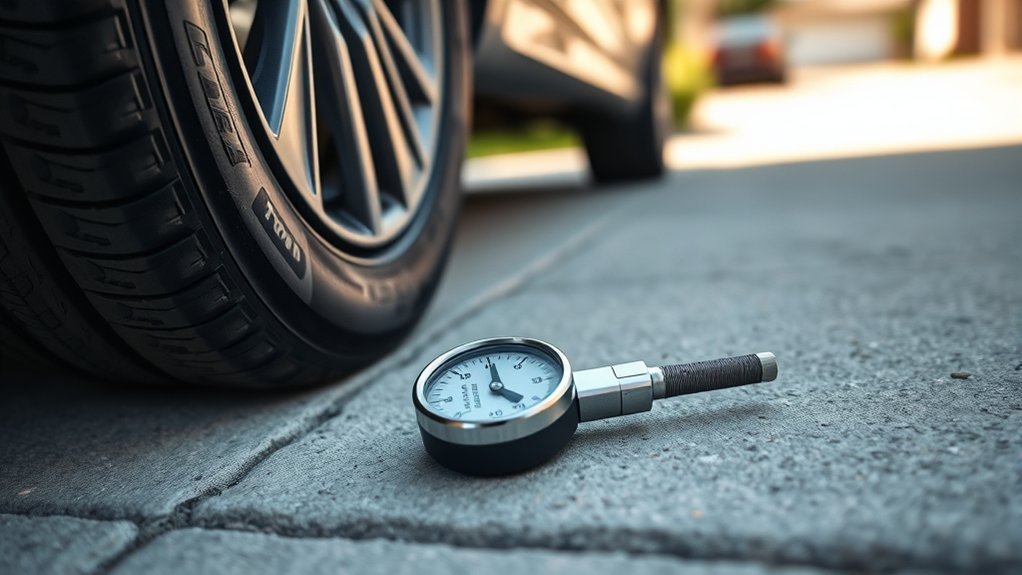
What Should My Tire Pressure Be
You should keep your tire pressure at the exact levels listed on your vehicle’s driver-side door jamb or in the owner’s manual. This is the best way to ensure your tires perform safely and efficiently. Don’t rely on the tire sidewall, as that shows only the maximum pressure.
Check your tires when they’re cold, at least once a month, and before long trips to maintain safety, handling, and fuel efficiency. Proper inflation prevents uneven wear and blowouts. Understanding pressure changes and checks helps you drive safer and protect your tires longer.
Key Takeaways
- Find the recommended tire pressure on the driver’s side door jamb label or in the owner’s manual specific to your vehicle model.
- Check tire pressure monthly and before long trips, using a gauge when tires are cold for accurate readings.
- Maintain the recommended pressure to ensure safety, proper handling, and optimal braking performance.
- Avoid relying on tire sidewall numbers, which indicate maximum, not recommended, pressure values.
- Keep spare tire pressure consistent with vehicle recommendations, usually found on the door jamb label or owner’s manual.
Finding Your Vehicle’s Recommended Tire Pressure
Where can you find the correct tire pressure for your vehicle? The best place is the manufacturer’s label, usually located on the driver’s side door jamb or inside the fuel door. This label provides the recommended pressure for both front and rear tires.
You can also check your owner’s manual, which lists tire pressure details specific to your make and model. Avoid relying on the tire sidewall, as it shows the maximum pressure, not the recommended level.
If you’re unsure, many automotive websites and apps offer tools to look up tire pressure by vehicle. Always use these trusted sources to ensure you set your tires to the ideal pressure, keeping your vehicle running smoothly and efficiently.
Why Tire Pressure Matters for Safety and Handling
You need the right tire pressure to keep your vehicle stable, especially when turning or driving on uneven roads. Proper pressure also helps your brakes work effectively, reducing stopping distances.
Ignoring this can put you and others at risk every time you hit the road.
Impact on Vehicle Stability
How does tire pressure affect your vehicle’s stability on the road? When your tires are properly inflated, they maintain optimal contact with the road surface, giving you better control in turns and straighter handling at high speeds.
Underinflated tires flex more, causing sluggish response and less precise steering. Overinflated tires reduce the contact patch, making your ride feel harsh and increasing the risk of losing traction, especially on uneven surfaces.
Proper tire pressure ensures consistent grip, helping you stay steady during lane changes and cornering. By regularly checking and maintaining the recommended tire pressure, you’ll experience smoother handling and more predictable vehicle behavior, which directly contributes to your safety and confidence behind the wheel.
Don’t overlook this simple maintenance task; it’s key to your car’s stability.
Effect on Braking Performance
Maintaining proper tire pressure doesn’t just improve handling. It directly influences your braking performance. When your tires are inflated correctly, they maintain ideal contact with the road, allowing your vehicle to stop efficiently.
Underinflated or overinflated tires reduce this contact, increasing stopping distances and potentially causing skidding.
Here’s why tire pressure matters for braking:
- Underinflated tires flex more, generating heat and reducing grip, which extends your stopping distance.
- Overinflated tires have a smaller contact patch, decreasing traction and stability during braking.
- Properly inflated tires ensure even wear and consistent road contact, giving you reliable and predictable braking response.
Keep your tire pressure at the recommended level to maximize safety and maintain control during sudden stops.
What Happens When Tires Are Under- or Overinflated
What risks do under- or overinflated tires pose to your vehicle’s performance and safety? When your tires are underinflated, they create more rolling resistance, which can reduce fuel efficiency and cause uneven tread wear, especially on the edges. This also compromises handling and increases the risk of tire overheating, leading to potential blowouts.
On the other hand, overinflated tires reduce the contact patch with the road, causing a harsher ride and less traction. This uneven pressure wears down the center of the tire tread faster and can make steering less stable, especially on rough or slippery surfaces. Keeping your tire pressure within the recommended range ensures even wear, better fuel economy, and safer handling under various driving conditions.
How to Check Your Tire Pressure the Right Way
To check your tire pressure the right way, you’ll need a reliable pressure gauge and a few simple steps to follow. It’s best to measure when your tires are cold for the most accurate reading.
Let’s walk through the tools, the process, and the ideal timing to keep your tires at their best.
Tools Needed
A reliable tire pressure gauge is essential for checking your tire pressure accurately. Without the right tools, you risk getting incorrect readings, which can lead to underinflated or overinflated tires.
To make sure you’re prepared, here are the key tools you’ll need:
- Tire Pressure Gauge Choose between digital, dial, or stick types for precise measurements.
- Air Compressor or Pump Needed to add air if your tires are underinflated.
- Tire Valve Cap Remover Optional but helpful for removing valve caps without damage.
Having these tools on hand ensures you can check and adjust your tire pressure anytime, keeping your vehicle safe and efficient.
Step-by-Step Process
Wondering how to check your tire pressure correctly? First, grab your tire pressure gauge. Remove the valve cap from your tire’s valve stem.
Press the gauge firmly onto the valve stem until you get a reading. If you’re using a digital gauge, the number will appear on the screen. For analog gauges, note the pressure indicated by the needle.
Compare this reading to the recommended pressure found in your vehicle’s manual or on the driver’s side door jamb. If the pressure is too low, add air using an air compressor; if too high, release some air by pressing the valve stem gently.
Replace the valve cap once done. Repeat this for all four tires to ensure safe and efficient driving.
Ideal Timing
After you’ve learned how to check your tire pressure accurately, knowing when to do it can save you from unexpected issues on the road. Ideally, you want to check your tire pressure when the tires are cold, as heat from driving can cause the pressure to rise and give you a false reading.
Here are three key times to check:
1. Before driving in the morning
Tires have cooled overnight and show the most accurate pressure.
2. Before long trips
Ensuring proper pressure helps with safety and fuel efficiency.
3. Monthly routine checks
Regular monitoring catches slow leaks or pressure drops early.
When and How Often to Check Tire Pressure
How often should you check your tire pressure to keep your vehicle running smoothly? Ideally, you should check it at least once a month and before long trips. Regular checks help spot slow leaks and prevent uneven tire wear.
Here’s a quick guide:
| When to Check | Reason | Tip |
|---|---|---|
| Monthly | Routine maintenance | Use a reliable gauge |
| Before long trips | Ensure safety and efficiency | Check cold tires |
| After hitting potholes | Detect damage early | Inspect for visible issues |
| When tires look low | Immediate pressure drop | Inflate to recommended PSI |
How Temperature Changes Affect Tire Pressure
Regularly checking your tire pressure keeps your vehicle safe and efficient, but you should also consider how temperature changes impact it. Tire pressure fluctuates as the air inside contracts or expands with temperature shifts, affecting your car’s handling and fuel economy.
Here’s what you need to know:
- For every 10°F drop in temperature, tire pressure decreases by about 1 psi.
- Cold mornings can cause underinflated tires, reducing traction and increasing wear.
- Hot weather can raise tire pressure, risking overinflation and potential blowouts.
Since temperature swings affect your tires daily, monitoring pressure becomes crucial for safety and performance. Keep an eye on your tires when the seasons change or when driving in varying climates to maintain optimal pressure levels.
Year-Round Tire Pressure Maintenance Tips
Why should you maintain your tire pressure year-round? Because consistent checks help you avoid unsafe driving conditions and unexpected tire damage.
Maintaining tire pressure year-round prevents unsafe driving and unexpected tire damage.
Make it a habit to check your tire pressure at least once a month and before long trips. Use a reliable tire pressure gauge when the tires are cold for the most accurate reading.
Don’t forget to inspect the spare tire as well. Keep the pressure at the vehicle manufacturer’s recommended level, usually found on a sticker inside the driver’s door.
Seasonal temperature changes can cause pressure fluctuations, so adjust accordingly. Also, look for signs of wear or punctures and get them repaired promptly.
Staying proactive helps you drive safely and keeps your tires in good shape throughout the year.
How Proper Tire Pressure Saves Fuel and Extends Tire Life
Maintaining the right tire pressure doesn’t just keep you safe. It also helps you save money on fuel and get more miles out of your tires. When your tires are properly inflated, your vehicle rolls more efficiently, reducing fuel consumption.
Underinflated tires increase rolling resistance, forcing your engine to work harder and burn more gas. Over time, this adds up to extra costs you can avoid.
Here’s how proper tire pressure benefits you:
- Improved fuel efficiency: Less rolling resistance means better gas mileage.
- Even tire wear: Correct pressure ensures your tires wear evenly, extending their lifespan.
- Better vehicle handling: Properly inflated tires maintain optimal contact with the road, reducing strain and damage.
Keep your tires inflated to the recommended level and watch your fuel savings and tire longevity grow.
Common Tire Pressure Mistakes to Avoid
How often do you check your tire pressure? Many people wait too long or only check when a tire looks flat, which can cause uneven wear and poor fuel efficiency. Don’t rely on visual inspections alone. Tires can appear fine but still be underinflated.
Another mistake is measuring pressure when tires are hot. Always check when tires are cold for accurate readings. Avoid overinflating your tires, as this reduces traction and causes uneven wear.
Also, don’t forget to check your spare tire. Using the vehicle manufacturer’s recommended pressure, found on the door jamb or owner’s manual, ensures optimal performance. By avoiding these common errors, you’ll maintain better safety, improve fuel economy, and extend your tires’ lifespan.
Frequently Asked Questions
Can Tire Pressure Affect My Car’s Warranty?
Yes, incorrect tire pressure can affect your car’s warranty if it causes damage or contributes to a failure.
You should keep your tires properly inflated to avoid issues and guarantee your warranty remains valid.
How Does Tire Pressure Impact Tire Noise Levels?
Did you know underinflated tires can increase road noise by up to 20%? When your tires aren’t properly inflated, they create more friction and vibration, making your ride noisier and less comfortable. Keep them balanced!
Are There Apps to Monitor Tire Pressure Remotely?
Yes, you can use apps like TireMinder or myCarTracks to monitor tire pressure remotely. They connect to your car’s sensors, letting you track real-time pressure and receive alerts, so you don’t have to check manually.
Can Different Tire Brands Require Different Pressures?
Yes, different tire brands can require different pressures based on their design and materials. Always check the manufacturer’s recommendations on the tire sidewall or your vehicle’s manual to ensure optimal performance and safety.
How Do Tire Pressure Sensors Work in Modern Cars?
Your tire pressure sensors use tiny transmitters inside each tire to monitor air pressure constantly. They send real-time data to your car’s computer, alerting you immediately if pressure drops, so you can stay safe on the road.
Conclusion
Keeping your tire pressure just right isn’t just a nice-to-have—it’s the key to smooth rides and safety on the road. Think of it like walking a tightrope: too much or too little pressure throws off your balance.
By checking regularly and adjusting for temperature changes, you’ll save fuel, extend tire life, and avoid common pitfalls.
Stay on top of it, and your tires will keep rolling strong mile after mile. Knowing what should my tire pressure be is essential for maintaining optimal performance and safety.