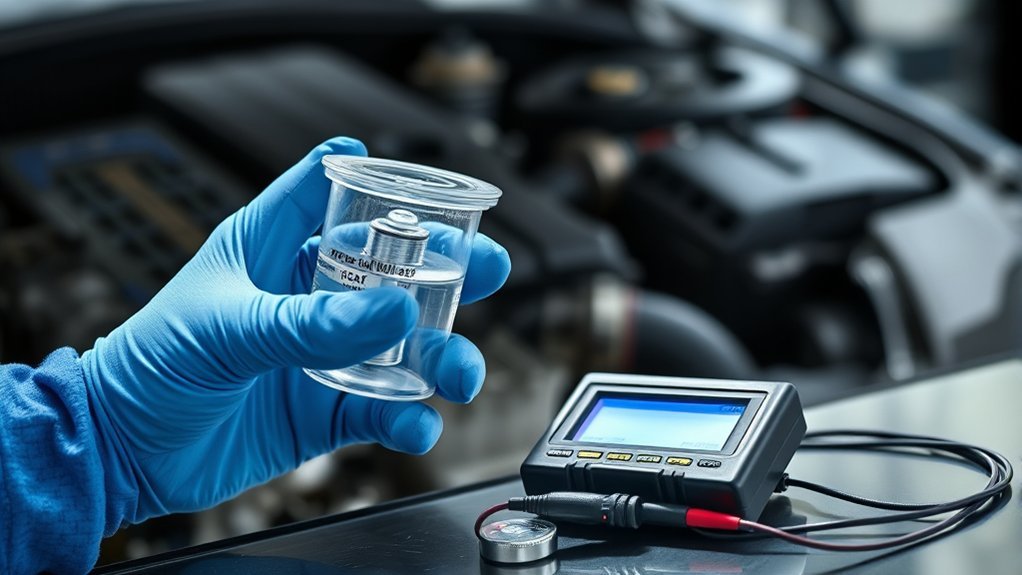
How to Test a Fuel Filter
To test your fuel filter, first gather a compatible fuel pressure gauge, wrenches, gloves, and safety glasses. Locating the test port near the fuel rail or filter housing is the next step. Connect the gauge securely, then turn the ignition on to activate the pump.
Always relieve system pressure beforehand to avoid hazards. Compare the pressure reading to your vehicle’s specifications; a significant drop downstream signals a clogged filter. If your vehicle shows hesitation or hard starts, this test is essential.
Further details explain signs, maintenance, and cleaning options. Regular testing helps ensure your fuel filter functions properly and keeps your engine running smoothly.
Essential Tools to Test Your Fuel Filter
Before you begin testing your fuel filter, you’ll need to gather a few essential tools to ensure accurate and efficient diagnostics. Start with a reliable fuel pressure gauge compatible with your vehicle’s specifications to detect pressure drops caused by clogging.
A set of wrenches or pliers will help you disconnect fuel lines safely without causing damage. Additionally, safety equipment like gloves and eye protection is critical to avoid exposure to fuel hazards.
Having a clean container ready to catch any fuel during disconnection prevents spills. Being properly equipped helps you avoid common fuel filter drawbacks, such as misdiagnosing filter blockages.
It also minimizes testing pitfalls like inaccurate readings or damage to components. Ensuring tool readiness streamlines your workflow and improves diagnostic precision.
How to Test Fuel Filter Pressure
With your tools assembled, you can now proceed to measure the fuel filter pressure to determine if it’s restricting fuel flow. First, locate the fuel pressure test port on the fuel system, often near the fuel rail or filter housing.
Attach a fuel pressure gauge securely to this port. Start the engine or turn the ignition to the “on” position to activate the fuel pump without starting the engine.
Observe the fuel pressure reading on the gauge and compare it to the manufacturer’s specifications. A significant drop in fuel pressure downstream of the fuel filter indicates a restriction, confirming the filter may be clogged.
Always relieve fuel system pressure safely before disconnecting components. Accurate fuel pressure testing ensures your fuel system functions at its best, preventing performance issues related to fuel delivery.
Signs Your Fuel Filter Is Clogged
Recognizing signs of a clogged fuel filter can save you from costly repairs and engine damage. When your fuel filter is clogged, fuel flow restricts, causing performance issues you shouldn’t ignore. Here are common signs clogged fuel filters exhibit as warning indicators:
- Engine hesitation or stalling: Insufficient fuel supply disrupts combustion.
- Reduced acceleration: Your vehicle struggles to increase speed smoothly.
- Difficulty starting: The engine cranks but fails to start promptly.
- Unusual engine misfires: Lean fuel mixture causes irregular firing.
If you notice these warning indicators, it’s a strong signal your fuel filter is compromised. Monitoring these signs clogged filters produce helps you pinpoint fuel delivery problems quickly and maintain optimal engine function.
When to Replace Your Fuel Filter
A fuel filter should be replaced according to your vehicle manufacturer’s recommended maintenance schedule or sooner if you experience symptoms of clogging. Regularly inspecting fuel lines can help you identify wear or damage that may contribute to filtration issues.
When diagnosing filtration issues, consider factors such as reduced engine performance, difficulty starting, or unusual fuel odors. If these signs are present, replacing the fuel filter promptly can prevent further engine damage.
Delaying replacement risks contaminants entering the fuel injectors, impairing fuel flow and combustion efficiency. Always consult your vehicle’s service manual for specific replacement intervals, as they vary by make and model.
Delaying fuel filter replacement can harm injectors and reduce engine efficiency—check your manual for timing.
Timely replacement ensures optimal fuel system function and engine reliability, reducing the likelihood of costly repairs related to clogged or compromised fuel filters.
Inspecting and Cleaning Your Fuel Filter (Optional)
Knowing when to replace your fuel filter is only part of maintaining your fuel system. Regular inspection timing ensures you catch contamination before it affects engine performance. While some filters are disposable, others can be inspected and cleaned to extend their service life.
For effective inspection and cleaning methods, you should:
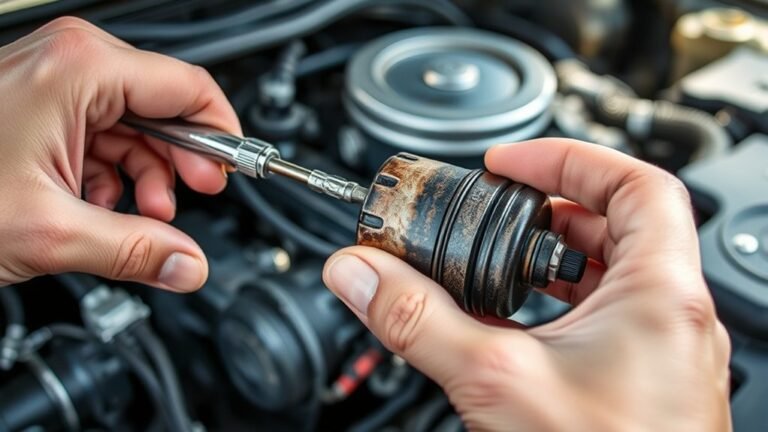
Remove the fuel filter carefully to avoid fuel spillage.
Check for visible debris, discoloration, or clogging inside the filter element.
Use compressed air or a solvent recommended by the manufacturer to clean the filter if applicable.
Reinstall the filter securely, ensuring all connections are tight to prevent leaks.
Frequently Asked Questions
Can a Clogged Fuel Filter Cause Engine Misfires?
Yes, a clogged fuel filter can cause engine misfires by restricting fuel flow, leading to poor engine performance.
It results from fuel contamination, which disrupts proper combustion and causes irregular engine firing patterns.
How Does a Fuel Filter Affect Fuel Efficiency?
You’ll notice a fuel economy impact when the filtration effect weakens due to a clogged fuel filter, restricting fuel flow.
This forces your engine to work harder, reducing efficiency and increasing fuel consumption considerably.
Are There Different Fuel Filters for Diesel and Gasoline Engines?
You’ll find diesel vs gasoline filters differ significantly. Diesel filters handle heavier contaminants and water separation, while gasoline filters focus on finer particulates.
Using the correct type ensures optimal engine performance and prevents premature damage.
Can I Drive With a Partially Clogged Fuel Filter?
You shouldn’t drive with a partially clogged fuel filter. Restricted fuel passages reduce engine performance and risk damage.
Regular two-word discussion ideas like “filter lifespan” help you track maintenance and avoid costly failures.
How Often Do Manufacturers Recommend Changing Fuel Filters?
Manufacturer recommendations for changing fuel filters typically range from 20,000 to 40,000 miles. Following these guidelines guarantees optimal fuel system maintenance, preventing clogging and maintaining engine performance and fuel efficiency.
Always check your specific vehicle’s manual.