How Fast Can You Drive in 4 Wheel Drive
You can drive up to about 55 mph in 4WD High on slippery surfaces, but you should keep speeds under 25 mph in 4WD Low for tough terrain to avoid damaging your drivetrain.
Always engage or disengage 4WD at slow speeds, ideally below 5 mph.
Driving too fast risks loss of control and overheating components.
If you want to master when and how to use 4WD safely, understanding these guidelines will help you get the most from your vehicle.
Key Takeaways
- In 4WD High, drive up to about 55 mph on slippery or rough surfaces for optimal traction and control.
- Use 4WD Low for speeds under 25 mph when navigating tough terrain requiring maximum torque.
- Avoid driving faster than recommended in 4WD to prevent drivetrain strain and potential damage.
- Always shift into or out of 4WD at speeds below 5 mph to avoid drivetrain binding.
- Follow the vehicle manual for specific speed limits and shifting procedures to ensure safe 4WD operation.
How Does Four-Wheel Drive (4WD) Work?
How exactly does four-wheel drive (4WD) work? When you engage 4WD, power from your engine gets sent to all four wheels instead of just two. This system uses a transfer case to split the engine’s torque between the front and rear axles, improving traction on slippery or uneven surfaces.
You’ll find that 4WD systems often have a low-range mode for extra torque in tough conditions, but more on that later. In most cases, you manually switch between two-wheel drive and four-wheel drive, giving you control over when to use it.
When Should You Use 4WD High vs. 4WD Low?
You’ll want to choose 4WD High for higher speeds on slippery roads like snow or gravel, while 4WD Low is best for slow, tough terrain like rocks or deep mud.
Knowing the speed limits for each mode helps protect your vehicle and keep you safe. Let’s explore when to switch between these settings based on your driving conditions.
Speed Limits for 4WD
When should you switch between 4WD High and 4WD Low? Use 4WD High for speeds up to about 55 mph on slippery roads like snow or gravel. It provides better traction without sacrificing too much speed or control.
Avoid going faster than recommended, as it can strain your drivetrain. 4WD Low is for slow, tough conditions like steep hills, deep mud, or rocky terrain. Keep speeds under 25 mph here to protect your vehicle and maintain control.
Driving too fast in 4WD Low risks overheating and damaging components. Always follow your vehicle’s manual for specific speed limits. Sticking to these guidelines helps you drive safely while maximizing your 4WD system’s benefits.
Terrain Suitability Choices
Where should you engage 4WD High versus 4WD Low to get the best traction and control? 4WD High works well on moderately slippery surfaces like wet pavement, snow, or gravel, letting you maintain higher speeds with improved grip.
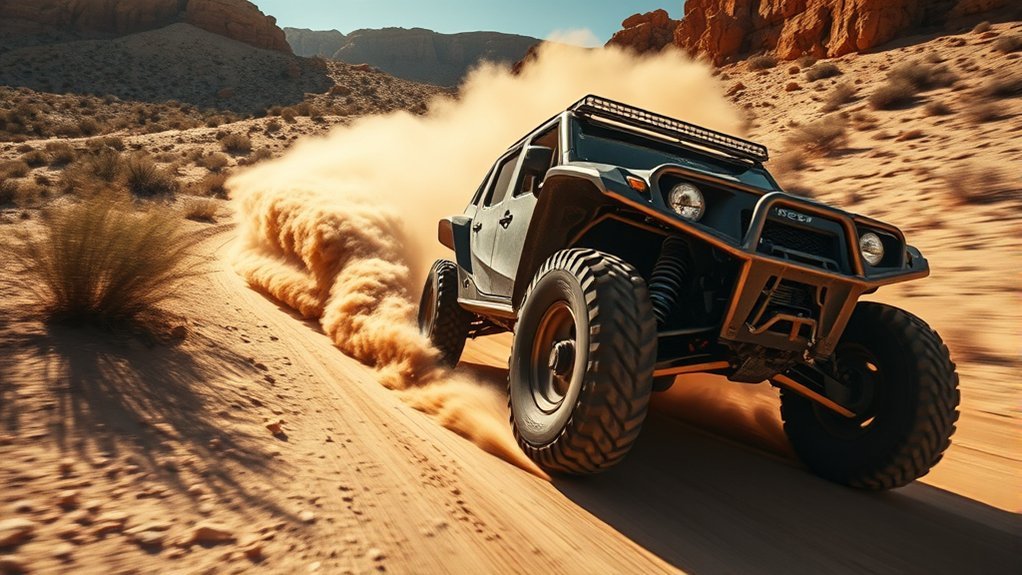
Use 4WD Low when you need maximum torque and control, such as climbing steep hills, driving through deep mud, or rock crawling at slow speeds.
| Terrain Type | Recommended 4WD Mode |
|---|---|
| Wet pavement | 4WD High |
| Light snow | 4WD High |
| Gravel roads | 4WD High |
| Steep hills | 4WD Low |
| Deep mud/rocks | 4WD Low |
Choose the right mode to keep traction without sacrificing control or safety.
What Are Safe Driving Speeds for 4WD High and Low?
How fast can you safely drive using 4WD High or Low? When you’re in 4WD High, you can maintain moderate speeds, typically up to 55 mph, since it’s designed for improved traction on slippery or uneven surfaces while still allowing reasonable speed. However, you shouldn’t push it much faster to avoid drivetrain strain.
In contrast, 4WD Low is meant for slow, controlled driving, often below 25 mph. It provides maximum torque for tough off-road conditions like climbing steep hills or crawling over rocks. Driving too fast in 4WD Low risks damaging your vehicle’s transmission and reduces control. Always shift into the appropriate mode for your speed and conditions to protect your vehicle and ensure safety on the road.
How Does Terrain Affect Safe 4WD Driving Speeds?
Why does terrain play such a pivotal role in determining safe 4WD driving speeds? Because different surfaces affect your vehicle’s grip, control, and stability. On gravel or loose dirt, you’ll need to drive slower to maintain traction and avoid skidding.
Rocky or uneven terrain demands even more caution, as sharp jolts can unsettle your vehicle at high speeds. Muddy or sandy conditions reduce your tires’ ability to dig in, so accelerating too fast can lead to getting stuck or losing control.
Even steep inclines or declines require you to adjust speed carefully to prevent sliding or rolling. By matching your speed to the terrain, you ensure safer handling, better response, and protect both your vehicle and yourself from unexpected hazards.
What Are the Risks of Driving Too Fast in 4WD?
What happens when you push your 4WD too fast? You risk losing control, especially on loose or uneven terrain. Your tires may struggle to maintain traction, leading to skidding or sliding. This increases the chance of accidents or rollovers.
Driving too fast also puts extra strain on your vehicle’s drivetrain and suspension, potentially causing mechanical failures. Overheating your transmission or transfer case becomes a real danger when you push beyond recommended speeds.
Additionally, fast speeds reduce your reaction time to obstacles, increasing the risk of collisions. You also put yourself and others at risk if you can’t stop or maneuver safely. Staying within safe 4WD speed limits helps preserve your vehicle’s integrity and keeps you safe on challenging terrain.
How to Spot Warning Signs Your 4WD Is Struggling
If you hear unusual noises while driving or notice your steering feels stiff or unresponsive, your 4WD might be struggling.
You could also experience reduced traction or slippage, especially on tricky terrain. Paying attention to these signs helps you avoid bigger problems down the road.
Unusual Noises While Driving
How can you tell when your 4WD is struggling just by listening? Unusual noises are often the first hint. Pay attention to grinding or clunking sounds when engaging 4WD; that could mean worn gears or a failing transfer case.
A whining noise during acceleration might signal issues with your differential or wheel bearings. You might also hear a rhythmic clicking or clunking when turning, but since steering problems will be covered later, focus now on sounds occurring on straight roads.
If you notice squeaking or scraping noises, it could be your brakes or suspension components under stress. Ignoring these warning signs can lead to costly repairs, so trust your ears. Regularly listen during your drives to catch problems early and keep your 4WD running smoothly.
Difficulty Steering or Turning
Unusual noises can alert you to problems in your 4WD, but changes in steering or turning feel often reveal deeper struggles. If you notice your wheel becoming stiff or harder to turn, don’t ignore it. This resistance could mean your steering components or drivetrain are under stress.
You might also feel your vehicle pulling to one side during turns, signaling uneven power distribution or mechanical issues. Pay attention if your steering wheel vibrates or jerks unexpectedly; these sensations often point to worn parts or alignment problems.
Addressing these signs promptly helps prevent further damage and keeps your 4WD responsive. Don’t wait until steering difficulty worsens. Early detection is key to safe, smooth driving in your four-wheel-drive vehicle.
Reduced Traction or Slippage
Where do you notice your tires slipping when driving in 4WD? If you feel your wheels spinning without gaining traction, it’s a clear sign your system is struggling.
Reduced traction often happens on icy, muddy, or loose surfaces, causing your vehicle to slide or fishtail. Pay attention when your tires lose grip during acceleration or while climbing hills.
You might also hear unusual sounds from the drivetrain or feel vibrations through the steering wheel. These warning signs mean your 4WD isn’t delivering power effectively.
To avoid damage or getting stuck, slow down and consider switching to 2WD if conditions allow. Staying alert to these cues helps you maintain control and protect your vehicle on challenging terrain.
How to Shift Into and Out of 4WD Safely
When should you shift into or out of 4WD to guarantee safety and avoid damage? Always engage 4WD when your vehicle is stopped or moving slowly, below 5 mph is best. Shifting on dry pavement or at high speeds can cause drivetrain binding and damage.
To shift out of 4WD, slow down or stop, then switch to 2WD. Make sure your wheels aren’t spinning to prevent wear.
| Action | Speed Limit | Road Condition |
|---|---|---|
| Shift into 4WD | Under 5 mph | Slippery, off-road |
| Shift out of 4WD | Under 5 mph or stop | Dry or paved roads |
| Avoid shifting | Above 5 mph | Dry, high-traction |
| Check indicator | After shifting | Confirm engagement |
Tips for Maintaining Your 4WD System for Reliability
How often should you check and maintain your 4WD system to keep it reliable? Ideally, inspect it every few thousand miles or before tackling tough terrain.
Regularly check the transfer case and differential fluid levels, changing them as recommended in your owner’s manual. Keep an eye out for leaks or unusual noises that could signal wear or damage.
Clean your undercarriage and drivetrain components after off-road trips to prevent dirt buildup and corrosion. Test your 4WD engagement periodically to ensure it shifts smoothly.
Don’t forget to inspect drive shafts, CV joints, and boots for cracks or damage. Staying on top of these maintenance tasks extends your 4WD system’s life, helping you avoid costly repairs and ensuring reliable performance when you need it most.
Getting the Most Out of Your 4WD Without Overdoing It
Keeping your 4WD system in good shape sets the foundation for getting the most out of it on the road or trail. To maximize performance without causing damage, you need to balance power and caution. Here’s how you can do it:
- Engage 4WD only when necessary. Use it on slippery or rough terrain to avoid unnecessary wear.
- Drive at appropriate speeds. High speeds in 4WD can strain the system; stick to recommended limits.
- Avoid sharp turns on dry pavement. This can cause drivetrain binding and damage.
- Regularly check tire pressure and tread. Uneven tires affect traction and strain your 4WD system.
Frequently Asked Questions
Can 4WD Improve Fuel Efficiency on Highways?
No, 4WD usually lowers your fuel efficiency on highways because it engages more drivetrain components, causing extra drag.
You’ll save fuel by using 2WD on smooth pavement instead of 4WD when you don’t need extra traction.
Does 4WD Affect Tire Wear Differently Than 2WD?
Yes, 4WD can cause tires to wear unevenly if used on dry pavement, since all wheels are powered.
You’ll want to switch to 2WD on regular roads to prevent premature tire wear and save money.
Is 4WD Necessary for Everyday City Driving?
You don’t need 4WD for everyday city driving since pavement offers plenty of traction. It can add complexity and reduce fuel efficiency.
Reserve 4WD for off-road, slippery, or challenging conditions to get the most benefit.
How Does 4WD Impact Towing Capacity?
You might think 4WD doesn’t affect towing, but it actually improves traction and stability, letting you tow heavier loads safely.
Just remember, your vehicle’s towing capacity depends on its specs, not 4WD alone.
Can Using 4WD Damage the Vehicle’s Transmission?
Yes, using 4WD improperly can damage your vehicle’s transmission. Engaging it on dry pavement or at high speeds strains the drivetrain, causing wear or failure.
Always use 4WD as recommended to protect your transmission.
Conclusion
Driving in 4WD is like steering a powerful ship through rough seas—you need control and caution. Stick to recommended speeds for 4WD high and low to keep your ride smooth and safe. Always adjust your speed to the terrain, watch for signs your system’s struggling, and shift carefully.
With proper care and respect for your vehicle’s limits, you’ll navigate any path confidently. This approach helps you avoid costly mistakes and keeps your adventure on course. Remember, how fast you can drive in 4 wheel drive depends on the conditions and your vehicle’s capabilities.