What Do Tire Measurements Mean
Tire measurements tell you important details about a tire’s size and performance. Understanding tire measurements is essential for choosing the right tire for your vehicle. For example, in 205/55R16, 205 is the tire’s width in millimeters, 55 is the aspect ratio showing its height as a percentage of width.
R means radial construction, and 16 is the wheel diameter in inches. These numbers affect handling, comfort, and safety. Knowing them helps you pick tires that fit your vehicle and driving needs.
Keep exploring to understand how these factors impact your ride.
Key Takeaways
- Tire measurements include width, aspect ratio, construction type, and wheel diameter, defining size and fit.
- Width is tire sidewall to sidewall in millimeters, affecting grip and fuel efficiency.
- Aspect ratio is the tire height as a percentage of width, influencing ride comfort and handling.
- The letter in the code, like “R,” indicates tire construction type, with “R” meaning radial.
- Wheel diameter is measured in inches and must match the vehicle’s wheel size exactly.
What Do the Numbers on a Tire Sidewall Mean?
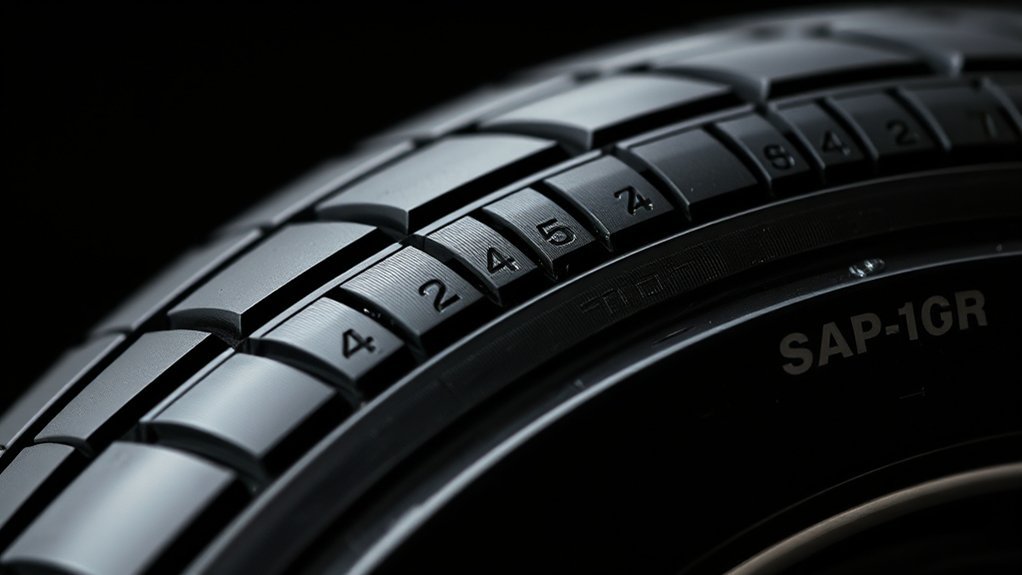
Have you ever wondered what the numbers stamped on your tire’s sidewall actually mean? Those numbers provide essential information about your tire’s specifications.
For example, a marking like “205/55R16” tells you several things. The first number, 205, is the tire’s width in millimeters from sidewall to sidewall. The second number, 55, is the aspect ratio, representing the tire’s height as a percentage of its width.
The “R” stands for radial construction, which most tires have. Finally, the 16 indicates the diameter of the wheel rim in inches that the tire fits. Alongside these numbers, you’ll also find load indexes and speed ratings.
Understanding these helps you ensure your tires suit your vehicle and driving conditions.
How Tire Width, Aspect Ratio, and Diameter Affect Performance
How do tire width, aspect ratio, and diameter influence your vehicle’s performance? Tire width affects grip and handling. Wider tires offer better traction but can increase rolling resistance and reduce fuel efficiency.
Tire width boosts traction and handling but may raise rolling resistance and lower fuel efficiency.
The aspect ratio, which is the tire’s height relative to its width, impacts ride comfort and stability. Lower ratios mean stiffer sidewalls for sharper handling but a firmer ride, while higher ratios provide more cushioning.
Tire diameter plays a key role in speedometer accuracy and gearing. Larger diameters can improve high-speed stability but may reduce acceleration.
When choosing tires, balancing these measurements ensures your vehicle performs optimally for your driving style, whether you prioritize comfort, efficiency, or sporty handling. Understanding these factors helps you make smarter tire choices tailored to your needs.
Tire Construction Types: Radial vs. Bias
Understanding tire measurements like width and diameter sets the stage for exploring how tires are built. When it comes to construction, you’ll encounter two main types: radial and bias.
Radial tires have cords running perpendicular to the tread, with belts beneath for added strength. This design offers better flexibility, improved fuel efficiency, and a smoother ride.
Bias tires, on the other hand, feature cords at angled layers crisscrossing beneath the tread. They’re tougher and more resistant to sidewall damage but generally provide a rougher ride and less traction.
Most modern vehicles use radial tires because they balance durability and comfort well. Knowing the difference helps you choose the right tire for your driving needs and guarantees you get the best performance and safety on the road.
Load Index and Speed Ratings: Why They Matter
Why do load index and speed ratings matter when choosing tires? These numbers guarantee your tires can safely handle your vehicle’s weight and the speeds you drive. Ignoring them can lead to tire failure or unsafe driving conditions.
The load index tells you the maximum weight each tire supports, which is essential for heavy loads or passengers. The speed rating indicates the highest speed your tire can safely maintain without overheating.
Consider these points:
- Safety: Tires with inadequate ratings risk blowouts or poor handling.
- Performance: Proper ratings maintain tire integrity at your driving speeds.
- Legal Compliance: Using tires below the recommended ratings may violate regulations.
Always choose tires that meet or exceed your vehicle manufacturer’s specified load and speed ratings.
How to Use Tire Measurements to Pick the Right Tires
To pick the right tires, you need to decode the size codes printed on the sidewall. These measurements tell you the tire’s width, aspect ratio, and diameter, ensuring a proper fit.
Matching these numbers to your vehicle’s specifications keeps your ride safe and smooth.
Decoding Tire Size Codes
Tire size codes might look like a confusing string of numbers and letters, but they actually provide essential information about your tires. When you see something like “205/55R16 91V,” each part tells you something important.
The first number (205) is the tire width in millimeters. The next number (55) is the aspect ratio, showing the tire’s height as a percentage of its width. The “R” stands for radial construction, which most tires have. The last number (16) is the wheel diameter in inches.
Here’s what to focus on when decoding tire size codes:
- Width affects grip and handling.
- Aspect ratio influences ride comfort and tire profile.
- Diameter must match your wheel size exactly.
Understanding these helps you pick tires that fit and perform well.
Matching Tires To Vehicle
How do you guarantee your vehicle performs safely and efficiently on the road? Start by matching tires to your vehicle’s specifications. Using tire measurements, you can pick tires that fit perfectly, ensuring proper handling, fuel efficiency, and safety.
Look for the size recommended in your owner’s manual or on the tire placard inside the driver’s door.
Here’s a quick reference to understand how tire measurements correspond to vehicle types:
| Vehicle Type | Recommended Tire Size Example |
|---|---|
| Compact Car | 195/65R15 |
| Sedan | 205/55R16 |
| SUV | 225/65R17 |
| Light Truck | 245/70R16 |
Choosing the right tire size based on these measurements keeps you safe and your ride smooth.
Tips for Choosing the Best Replacement Tire Based on Measurements
Wondering which measurements matter most when picking a replacement tire? Focus on these key areas to ensure safety, performance, and compatibility. First, check the tire width, aspect ratio, and diameter. These ensure the tire fits your wheel and maintains proper handling.
Next, consider the load index and speed rating to match your vehicle’s requirements and driving style. Finally, don’t forget the tread pattern and depth, as they affect traction and wear.
Here are three tips to guide you:
- Verify the tire size matches your vehicle’s manufacturer specifications.
- Choose tires with appropriate load and speed ratings for your driving needs.
- Pick tread designs suited for your typical road conditions, whether wet, dry, or off-road.
Following these tips helps you select the best tire for safety and performance.
Frequently Asked Questions
How Often Should Tire Pressure Be Checked?
You should check your tire pressure at least once a month and before long trips. Cold tires give the most accurate reading, so measure pressure when your car hasn’t been driven for a few hours.
What Causes Uneven Tire Wear?
Uneven tire wear happens because you’re driving with improper alignment, unbalanced tires, or incorrect tire pressure.
Worn suspension parts or aggressive driving can also cause uneven wear, so check these regularly to extend your tires’ life.
How Do Temperature Changes Affect Tire Pressure?
Isn’t it ironic that as temperatures drop, your tire pressure drops too? You’ll find your tires losing about 1 psi for every 10°F decrease, so check them often. You don’t want flat tires sneaking up on you!
Can Tire Size Impact Fuel Efficiency?
Yes, tire size can impact your fuel efficiency. Larger or wider tires increase rolling resistance, making your engine work harder.
Sticking to recommended sizes helps you maintain optimal fuel economy and performance on the road.
When Should Tires Be Rotated?
You should rotate your tires every 5,000 to 7,500 miles to guarantee even wear. Check your owner’s manual for specific intervals, and don’t forget to rotate them during regular oil changes to keep your ride smooth and safe.
Conclusion
Now that you know what those tire numbers mean, choosing the right set feels like cracking a code. Your tire’s width, aspect ratio, and diameter all dance together to shape your ride’s performance. Don’t forget the load index and speed rating—they’re the unsung heroes keeping you safe.
By understanding these measurements, you’ll steer confidently toward the perfect tires, ensuring your journey is smooth and secure. Knowing what tire measurements mean is key to making the best choice for your vehicle, no matter where the road takes you.