How Often Should You Get a Wheel Alignment
You should get your wheel alignment checked at least once a year or every 12,000 miles to keep your tires wearing evenly and your ride smooth. Regular wheel alignment helps ensure your vehicle handles properly and extends the life of your tires.
If you hit potholes, carry heavy loads, or just put on new tires or suspension parts, it’s smart to check alignment more often. Ignoring wheel alignment can lead to uneven tire wear, poor handling, and lower fuel efficiency.
Keep an eye out for signs of misalignment, and you’ll uncover how to protect your vehicle better. Staying proactive with wheel alignment maintenance saves you money and improves your driving experience.
Key Takeaways
- Get a wheel alignment inspected at least once a year or every 12,000 miles for regular maintenance.
- Check alignment more frequently if driving on rough roads or after hitting potholes and curbs.
- Schedule an alignment inspection after installing new tires or suspension components.
- Frequent heavy load carrying requires more regular alignment checks to prevent premature tire wear.
- Monitor for signs like uneven tire wear or vehicle pulling to one side and get alignment promptly.
How Often Should You Get a Wheel Alignment Check?
How often should you get a wheel alignment check? Generally, it’s a good idea to have your alignment inspected once a year or every 12,000 miles. However, if you drive on rough roads, hit potholes, or frequently carry heavy loads, you might need checks more often.
Getting your alignment checked regularly helps maintain even tire wear and improves fuel efficiency. You should also consider an alignment check after installing new tires or suspension components.
Even if you don’t notice any immediate issues, regular alignment checks can prevent costly repairs down the road. By staying proactive and scheduling these inspections as part of your routine maintenance, you’ll keep your vehicle handling smoothly and extend your tires’ lifespan.
How Do You Know Your Wheel Alignment Is Off?
You’ll notice your wheel alignment is off if your tires wear unevenly or your steering wheel vibrates while driving. Another sign is when your vehicle pulls to one side, making it hard to keep straight.
Paying attention to these symptoms can help you catch alignment issues early.
Uneven Tire Wear
Wondering if your wheel alignment is off? One of the clearest signs is uneven tire wear. When your wheels aren’t properly aligned, your tires don’t make even contact with the road.
This causes some areas of the tire to wear down faster than others. You might notice one side of a tire looks more worn or the tread depth varies significantly across the tire surface.
Uneven wear not only shortens tire life but also compromises your vehicle’s handling and safety. Checking your tires regularly for patches of excessive wear can help you catch alignment issues early.
If you spot uneven wear, it’s a good idea to schedule a wheel alignment soon to prevent further damage and maintain smooth driving.
Steering Wheel Vibration
Uneven tire wear often comes with other signs that your wheel alignment is off, such as steering wheel vibration. When your alignment is misaligned, the steering wheel may shake or vibrate noticeably, especially at higher speeds.
Here’s how to recognize it:
- Noticeable Shaking: If your steering wheel trembles while driving, especially over 40 mph, it could indicate misalignment.
- Uneven Vibration: Vibration might not be constant but occurs intermittently, signaling uneven tire contact with the road.
- Steering Wheel Position: If the wheel feels off-center or doesn’t return smoothly after a turn, alignment issues may be the cause.
If you experience these symptoms, it’s a good idea to have your alignment checked to avoid further tire damage and maintain safe handling.
Vehicle Pulling Sideways
Often, your vehicle will pull to one side when your wheel alignment is off, making it harder to keep the car driving straight. You might find yourself constantly adjusting the steering wheel to compensate, which can be both tiring and unsafe.
This sideways pull usually happens because the wheels aren’t aligned properly, causing uneven tire wear and affecting handling. If you notice your car drifting left or right without you turning the wheel, it’s a clear sign your alignment needs checking.
Ignoring this issue can lead to increased tire wear and reduced fuel efficiency. To stay safe and maintain control, get your wheel alignment inspected whenever you feel your vehicle pulling sideways, especially after hitting potholes or curbs.
Urgent Warning Signs of Wheel Misalignment
You should pay close attention to specific signs that indicate your wheels might be misaligned. Ignoring these warnings can lead to uneven tire wear, poor handling, and unsafe driving conditions. Here are three urgent warning signs to watch for:
- Steering Wheel Off-Center: When you drive straight, your steering wheel should be centered. If it’s noticeably crooked, your alignment is likely off.
- Uneven Tire Wear: Check your tires regularly. If you see more wear on one side than the other, that’s a clear sign of misalignment.
- Vehicle Pulling to One Side: If your car drifts or pulls to the left or right without you steering, it’s a sign you need an alignment immediately.
Don’t ignore these signs. Address them promptly to keep your vehicle safe and performing well.
Common Causes of Wheel Misalignment
What causes your wheels to fall out of alignment? The most common culprit is hitting potholes or curbs. When you slam into one, it can easily knock your wheels out of their proper position.
Another frequent cause is normal wear and tear over time. Suspension components and steering parts loosen or wear down, shifting your alignment gradually. Even rough or uneven road surfaces can contribute since they jostle your vehicle constantly.
Additionally, if you’ve recently replaced tires or had suspension work done, improper installation or adjustments might cause misalignment. Knowing these causes helps you understand why regular checks are crucial.
Risks of Driving With Poor Wheel Alignment
If you keep driving with poor wheel alignment, your tires will wear out unevenly and much faster than they should. This not only means more frequent replacements but also affects how your car handles on the road.
Ignoring alignment issues can seriously compromise your safety by making steering less predictable and increasing the risk of accidents.
Tire Wear Consequences
How quickly do uneven tire treads develop when your wheels are misaligned? Pretty fast, actually. Misalignment causes your tires to wear unevenly, cutting their lifespan short and costing you more in replacements.
Here’s what you can expect:
1. Premature Tire Wear
Misaligned wheels cause certain areas of your tires to wear down faster than others, forcing you to replace them sooner.
2. Reduced Fuel Efficiency
Uneven tire wear increases rolling resistance, making your engine work harder and burn more fuel.
3. Compromised Ride Quality
As tires wear unevenly, your ride becomes bumpier and less comfortable.
Getting your alignment checked regularly helps you avoid these costly consequences and keeps your tires in better shape longer.
Handling And Safety Risks
Uneven tire wear doesn’t just cost you money; it also affects how your vehicle handles on the road. When your wheels are misaligned, your car may pull to one side, making it harder to steer straight. This can be dangerous, especially at high speeds or in poor weather conditions.
You might notice vibrations or a shaky steering wheel, which reduces your control and increases fatigue. Poor alignment also lengthens your stopping distance because your tires don’t grip the road properly. Ignoring these risks puts you and others in harm’s way.
Getting your wheel alignment checked regularly ensures your vehicle responds predictably, keeping you safer behind the wheel and improving your overall driving experience. Don’t wait until problems become serious; stay proactive with alignment maintenance.
Why Wheel Alignment Matters for Your Tires and Gas Mileage
Why does wheel alignment play such a vital role in your vehicle’s performance? Proper alignment ensures your tires wear evenly and your car runs efficiently, saving you money and hassle. When your wheels aren’t aligned, you might notice uneven tire wear or poor gas mileage.
Here’s why wheel alignment matters:
1. Tire Longevity
Misaligned wheels cause uneven tire wear, forcing you to replace tires more often.
2. Fuel Efficiency
Proper alignment reduces rolling resistance, helping your engine use less fuel.
3. Smooth Ride
Correct alignment keeps your vehicle stable, improving comfort and control.
What Happens During a Wheel Alignment Service?
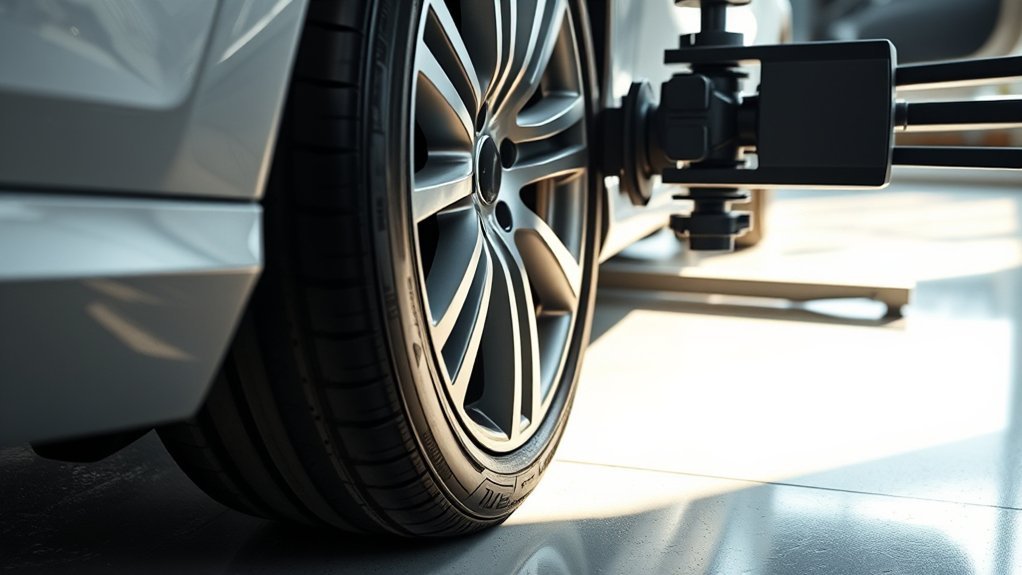
Wondering what mechanics do during a wheel alignment service? First, they place your vehicle on a specialized alignment rack equipped with sensors and cameras. These tools measure your wheels’ angles: camber, caster, and toe against your manufacturer’s specifications.
Next, they inspect your suspension and steering components for any worn parts that might affect alignment. Then, using adjustment equipment, they carefully tweak the angles to bring them back within the correct range. This process ensures your wheels point straight and parallel, improving handling and tire wear.
Finally, they test drive your vehicle to confirm everything feels right. By the end of the service, your car’s wheels will be properly aligned, ready to deliver a smoother, safer ride while maximizing tire life and fuel efficiency.
Tips to Keep Your Wheel Alignment Correct Longer
How can you extend the life of your wheel alignment after a service? The good news is that a few simple habits can help keep your wheels aligned longer, saving you money and improving safety.
Here are three key tips:
- Avoid potholes and curbs: Hitting these can quickly throw off your alignment, so steer clear whenever possible.
- Maintain proper tire pressure: Under- or over-inflated tires wear unevenly and can affect alignment. Check your pressure monthly.
- Rotate your tires regularly: This promotes even wear, reducing strain on suspension components that impact alignment.
Frequently Asked Questions
Can I Perform a Wheel Alignment Check at Home?
You can perform a basic wheel alignment check at home by inspecting tire wear and measuring wheel angles with simple tools. For accurate results and adjustments, it’s best to visit a professional with proper alignment equipment.
Does Wheel Alignment Affect Vehicle Handling in Rain?
Yes, wheel alignment affects handling in rain. When your wheels are misaligned, your tires don’t grip the road properly, increasing slipping risks.
You’ll notice better control and safety if you keep your alignment spot-on.
How Much Does a Typical Wheel Alignment Cost?
Sure, paying $100 to $150 for a wheel alignment feels like a luxury spa day for your car, but you’ll thank yourself when your tires last longer and you avoid costly repairs down the road.
Can Misalignment Cause Uneven Brake Wear?
Yes, misalignment can cause uneven brake wear because it makes your tires contact the road improperly. This uneven contact puts extra stress on certain brake areas.
You should check alignment regularly to avoid costly brake damage.
Is Wheel Alignment Necessary After Installing New Tires?
Think of your tires as dancers; after new ones join the stage, you’ll want an alignment to keep their steps perfectly in sync.
Yes, you should get a wheel alignment after installing new tires to guarantee smooth, balanced performance.
Conclusion
You should get your wheel alignment checked at least once a year or every 12,000 miles to avoid uneven tire wear and save on gas. Did you know that poor alignment can reduce your fuel efficiency by up to 10%? Keeping your wheels properly aligned not only extends your tire life but also improves handling and safety.
Regular checks help you drive smoother and save money in the long run—don’t wait until problems get worse! Remember, timely wheel alignment is key to maintaining your vehicle’s performance and protecting your investment.