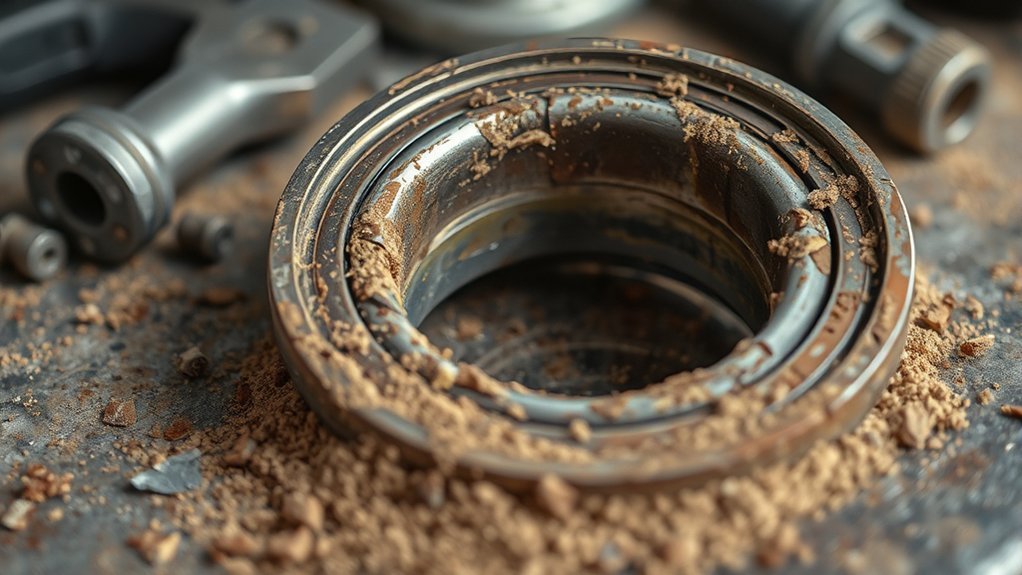
What Causes a Wheel Bearing to Go Bad
Your wheel bearings go bad mainly because dirt, water, and poor lubrication break down their protective seals and grease. These contaminants compromise the bearing’s ability to function properly, leading to premature failure.
Rough impacts from potholes or heavy loads cause internal damage and uneven wear. Heat and friction also speed up grease degradation, further reducing bearing lifespan.
Misalignment and faulty installation accelerate wear by causing uneven pressure on the bearings. Ignoring these issues increases the risk of noises, vibrations, and unsafe handling.
Understanding these causes helps you protect your bearings and keep your vehicle running smoothly. Regular maintenance and timely repairs are key to extending bearing life.
Key Takeaways
- Dirt, water intrusion, and debris contamination damage wheel bearings and accelerate wear.
- Lack of proper lubrication causes metal-on-metal contact, increasing friction and premature bearing failure.
- Rough terrain, potholes, and sudden impacts physically damage seals and bearing components.
- Excessive loads and misalignment create uneven stress, causing rapid bearing wear and potential cracking.
- Heat buildup from friction and heavy loads degrades grease, reducing bearing material strength and increasing clearance.
How Wheel Bearings Work and Common Causes of Wear
How do wheel bearings keep your vehicle running smoothly? They allow your wheels to spin freely with minimal friction by supporting the wheel hub and enabling it to rotate around the axle.
Inside the bearing, steel balls or rollers ride on a smooth surface, reducing resistance and absorbing the load from your vehicle’s weight. Over time, these components face wear caused by factors like dirt, water intrusion, or lack of lubrication.
Steel balls or rollers inside bearings reduce friction and carry your vehicle’s weight, but wear over time from contaminants and poor lubrication.
Driving through rough terrain or hitting potholes can damage the bearing’s protective seals, letting contaminants in. Heat buildup from friction or heavy loads can also break down the grease, leading to increased wear.
Understanding these causes helps you appreciate why maintaining wheel bearings is vital for safe, efficient driving.
Signs Your Wheel Bearing Is Starting to Fail
When should you start worrying about your wheel bearings? Pay attention if you hear a grinding or humming noise coming from the wheels, especially when turning or accelerating.
You might notice your vehicle pulling to one side, signaling uneven wear or damage. Vibration in the steering wheel or a loose feeling while driving can also indicate a failing bearing.
If you feel any wobbling or uneven tire wear, don’t ignore it. These are clear signs your wheel bearing may be compromised. Early detection is key to preventing further damage or unsafe driving conditions.
How Poor Lubrication Leads to Wheel Bearing Failure
If you don’t apply enough grease, your wheel bearing won’t get the protection it needs. Using contaminated lubricant can also cause dirt and debris to damage the bearing surfaces.
Both issues speed up wear and lead to failure much faster than you might expect.
Insufficient Grease Application
Why does insufficient grease cause wheel bearings to fail prematurely? Without enough grease, the bearing’s metal surfaces rub together, creating excessive friction and heat. This friction wears down the bearing components faster than usual, leading to early failure.
When you don’t apply enough grease, the bearing can’t maintain a protective film, leaving it vulnerable to damage. Additionally, insufficient lubrication increases stress on the bearing, causing it to overheat and seize.
You might think a small amount of grease is enough, but wheel bearings need proper, thorough lubrication to operate smoothly. Skimping on grease means the bearing won’t last as long and can fail unexpectedly, impacting your vehicle’s safety and performance.
Make sure you use the right amount and type of grease to keep bearings in good shape.
Contaminated Lubricant Effects
How does contaminated lubricant lead to wheel bearing failure? When dirt, water, or metal particles get into the grease, they compromise its ability to protect the bearing. You see, clean lubricant reduces friction and prevents metal-on-metal contact.
Once contaminated, the lubricant loses its effectiveness, allowing abrasive materials to wear down bearing surfaces. This accelerates heat buildup and corrosion, causing the bearing to degrade prematurely.
If you don’t address contaminated grease promptly, you’ll likely face noisy bearings, rough wheel rotation, and eventually, complete failure. Regularly checking and replacing lubricant helps keep contaminants out, ensuring your bearings stay properly lubricated and last longer.
In short, poor lubrication caused by contamination is a major reason your wheel bearing could go bad sooner than expected.
How Dirt, Water, and Contamination Damage Wheel Bearings
You might not realize it, but dirt slipping into your wheel bearings can cause serious wear over time. When water gets inside, it washes away lubrication and leads to rust that weakens the bearing.
Contaminants like dust and grime only speed up this damage, cutting your bearing’s lifespan short.
Dirt Ingress Effects
Ever wondered what happens when dirt and water sneak into your wheel bearings? When dirt gets inside, it acts like sandpaper, grinding down the smooth surfaces inside the bearing. This abrasive action wears away the metal, causing rough spots that increase friction and heat.
As the dirt mixes with grease, it contaminates the lubricant, reducing its ability to protect moving parts. You might notice noise, vibration, or uneven wheel movement as the bearing deteriorates.
Dirt ingress also accelerates corrosion, weakening the bearing structure over time. To prevent these issues, ensure seals and shields are intact and replace them if damaged.
Regular inspections and cleaning help keep contaminants out, extending your wheel bearings’ lifespan and maintaining safe, smooth driving.
Water Damage Risks
Why does water pose such a critical threat to your wheel bearings? When water gets inside, it washes away the grease that lubricates the bearing surfaces, leading to increased friction and heat. Over time, this can cause the metal parts to wear down or even seize.
Additionally, trapped water promotes rust and corrosion, which weaken the bearing’s structural integrity. You need to be aware of common situations that increase water exposure:
- Driving through deep puddles or flooded roads
- Frequent washing without proper sealing of wheel assemblies
- Off-road conditions where water and mud mix
Protecting your wheel bearings from water is essential to avoid premature failure and costly repairs. Regular inspections and maintaining seals can help keep moisture out and extend bearing life.
Contamination Consequences
How exactly does contamination like dirt and water wreak havoc on your wheel bearings? When dirt, grit, or water sneaks into the bearing, it disrupts the smooth metal-to-metal contact inside. Dirt acts like sandpaper, wearing down the bearing surfaces and causing rough spots.
Water washes away lubricants, leading to increased friction and heat. This combination accelerates corrosion and pitting, which causes the bearing to fail prematurely.
Contaminants also cause uneven wear, resulting in noise, vibration, and poor wheel performance. To protect your bearings, you need to keep seals intact and replace damaged seals immediately.
Regular inspections and maintenance help you catch contamination early before it causes irreversible damage and costly repairs.
Why Excessive Loads and Impacts Break Wheel Bearings
When do wheel bearings face their toughest challenges? It’s when your vehicle carries excessive loads or hits sudden impacts. These conditions place enormous stress on the bearings, causing premature wear or failure.
When you overload your vehicle or drive over potholes and curbs, the bearing’s internal components deform or crack. This damage interrupts smooth rotation and can lead to dangerous situations.
Here’s what you should watch out for:
- Carrying heavy cargo beyond your vehicle’s capacity
- Frequent driving on rough, uneven roads
- Sudden impacts from potholes, curbs, or debris
How Heat and Friction Wear Out Your Wheel Bearings
Ever wondered what happens inside your wheel bearings as your vehicle moves? Heat and friction constantly challenge these components. As your wheel spins, the bearings experience continuous contact between metal surfaces, generating friction.
This friction produces heat, which can break down the grease lubricating the bearings. Without proper lubrication, metal parts grind against each other, causing wear and damage.
Over time, this heat weakens the bearing material and causes it to expand, leading to increased clearance and vibration. The combination of heat and friction accelerates the wear process, reducing the bearing’s lifespan.
If ignored, this wear can lead to bearing failure, affecting your vehicle’s safety and performance. Regular inspections and maintaining proper lubrication help keep heat and friction in check.
Why Bad Installation Causes Early Wheel Bearing Failure
Why does a poorly installed wheel bearing fail so quickly? When you don’t install a wheel bearing correctly, you create conditions that accelerate wear and damage. Misalignment or improper torque can cause uneven pressure on the bearing surfaces.
This leads to excessive heat and friction, which breaks down the lubricant and wears the bearing prematurely.
Here are key reasons bad installation causes early failure:
Incorrect torque settings: Over- or under-tightening stresses the bearing.
Misalignment: Forces uneven load distribution, causing rapid wear.
Contamination introduction: Dirt or debris during installation damages the bearing’s smooth operation.
How to Prevent Wheel Bearing Failure and Extend Their Life
How can you keep your wheel bearings running smoothly for longer? Regular maintenance is key. Make sure to inspect your bearings during routine tire rotations or brake services.
Keep an eye out for unusual noises or vibrations, which often signal early bearing issues. Avoid driving through deep water or rough terrain whenever possible, as moisture and debris can damage bearings.
When replacing bearings, always use quality parts and ensure proper installation by a professional or yourself with the right tools. Don’t overlook the importance of proper lubrication; some bearings require periodic greasing to function optimally.
Frequently Asked Questions
How Often Should Wheel Bearings Be Replaced?
You should replace your wheel bearings every 85,000 to 100,000 miles, but check them regularly. If you hear noise or feel vibrations, don’t wait. Get them inspected and replaced promptly to avoid bigger problems.
Can Wheel Bearing Noise Be Mistaken for Other Car Issues?
You know what they say, “Not all that glitters is gold.” Yes, wheel bearing noise can be mistaken for other issues like tire problems or brake noise, so you’ll need a careful inspection to pinpoint the real culprit.
Are Wheel Bearings Covered Under Vehicle Warranties?
Yes, wheel bearings are usually covered under your vehicle’s warranty, especially if it’s a bumper-to-bumper or drivetrain warranty. However, coverage varies, so you’ll want to check your specific warranty details to be sure.
What Tools Are Needed to Replace a Wheel Bearing?
You’ll need a jack, jack stands, lug wrench, socket set, breaker bar, torque wrench, hammer, punch, and possibly a bearing press or puller.
Don’t forget safety gloves and eye protection to keep yourself safe during replacement.
Can Driving Habits Affect Wheel Bearing Lifespan?
Yes, your driving habits can affect wheel bearing lifespan. You’ll shorten it if you frequently hit potholes, drive aggressively, or overload your vehicle.
Smooth, careful driving helps your bearings last longer and perform better overall.
Conclusion
Think of your wheel bearings as the quiet heroes spinning smoothly beneath your ride. When dirt sneaks in or heat builds up, it’s like a storm brewing inside, ready to break their rhythm.
By keeping them clean, well-lubricated, and properly installed, you’re giving them the smooth road they deserve. Treat your bearings right, and they’ll keep your wheels dancing gracefully, mile after mile.
Understanding what causes a wheel bearing to go bad can help you prevent issues and enjoy a seamless glide on every journey.