What Does Coolant Smell Like
Coolant smells distinctly sweet, similar to ethylene glycol, with a faint chemical undertone that’s less pungent than fuel but more noticeable than water. This unique scent often signals the presence of coolant and can help you detect leaks or overheating parts early.
You’ll often detect this aroma near leaks or overheating components, especially around the radiator or hoses where evaporation intensifies the scent. Recognizing this smell helps you identify coolant issues early and avoid potential engine damage.
Understanding the causes, detection methods, and safety precautions can guide you in properly managing this warning sign and maintaining your vehicle’s health.
What Does Coolant Smell Like?
How can you identify the smell of coolant? The coolant aroma is distinct and often described as sweet, similar to ethylene glycol, a primary component in many coolants. This sweetness serves as a key odor clue to differentiate it from other automotive fluids.
You’ll notice a slightly chemical undertone, which is less pungent than fuel but more noticeable than plain water. Recognizing these odor clues is essential for early detection of issues related to the cooling system.
The scent is usually faint under normal conditions but becomes more pronounced if there’s evaporation or a spill. Being familiar with the coolant aroma allows you to promptly assess potential leaks or overheating problems before they escalate.
How to Spot a Coolant Leak by Smell
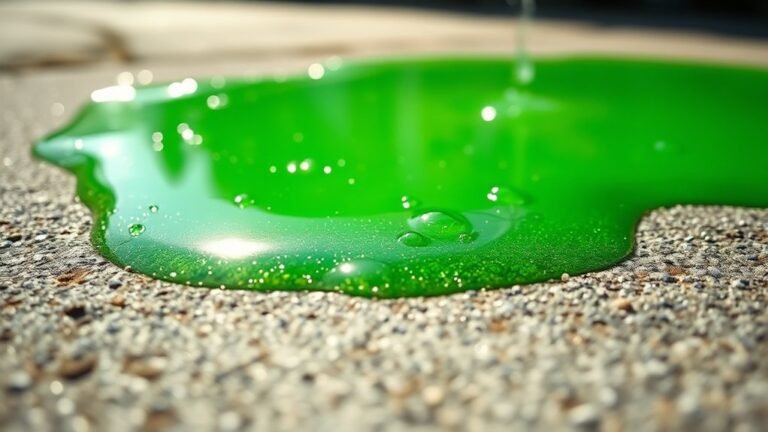
Recognizing the distinctive sweet and slightly chemical scent of coolant sets the foundation for detecting leaks by smell. When spotting leaks, approach your vehicle in a well-ventilated area and carefully inhale near the radiator, hoses, and engine block. A sharp, sugary odor often indicates coolant escaping from a compromised seal or crack.
During leak investigation, focus on areas where fluid accumulation or discoloration is visible, as these often coincide with the scent you detect. Use a flashlight to inspect tight spaces and confirm physical evidence supporting your olfactory findings.
Common Causes of Coolant Smells Under the Hood
Why might you notice a coolant smell under your vehicle’s hood? One common cause is leaking hoses. Over time, hoses carrying coolant can develop cracks or loose clamps, allowing fluid to escape. This leaking coolant then evaporates when it contacts hot engine components, producing that distinctive sweet smell.
Another factor is engine temperature. If your engine runs hotter than normal due to a malfunctioning thermostat or radiator issues, coolant can boil and evaporate more rapidly, intensifying the odor. Additionally, a damaged radiator or water pump can lead to coolant loss, contributing to the smell.
Understanding these causes helps you pinpoint why that coolant odor is present and highlights the importance of inspecting hoses and monitoring engine temperature regularly to prevent serious engine damage.
What to Do If You Smell Coolant in Your Car
When you detect a coolant smell in your car, the first step is to safely check for visible leaks or damaged components under the hood. Perform a thorough leak detection by inspecting hoses, the radiator, and the water pump for cracks, loose clamps, or wet spots.
If you identify coolant odor inside the cabin, examine the heater core for leaks. After locating any leaks, avoid driving the vehicle until repairs are made, as coolant loss can lead to engine overheating.
If no visible leaks are found, the odor might result from residual coolant or a minor internal leak requiring professional diagnostic tools. In all cases, addressing coolant odor promptly ensures the cooling system functions properly and prevents potential engine damage.
Safety Tips for Handling Coolant and Avoiding Exposure
How should you handle coolant to minimize health risks and avoid contamination? Prioritizing coolant safety requires strict adherence to exposure prevention protocols. Always wear chemical-resistant gloves and safety goggles when handling coolant to prevent skin and eye contact.
Work in a well-ventilated area to reduce inhalation of vapors. Never ingest coolant or allow it near food or drink. Proper storage is critical; keep coolant in tightly sealed, clearly labeled containers out of reach of children and pets.
In case of spills, immediately clean using absorbent materials and dispose of waste according to local hazardous waste regulations.
- Use personal protective equipment (PPE) consistently.
- Store coolant in secure, labeled containers.
- Follow local disposal guidelines for contaminated materials.
These practices ensure effective coolant safety and minimize exposure risks.
Frequently Asked Questions
How Long Does Coolant Smell Last After a Leak Is Fixed?
Like the lingering scent after a storm, coolant odor duration typically lasts 1-3 days post leak detection and repair. Proper ventilation and cleaning expedite dissipation, ensuring the smell fades swiftly once the source is fully sealed.
Can Coolant Smell Cause Health Problems if Inhaled?
Yes, prolonged coolant exposure can cause respiratory irritation, headaches, or dizziness. The odor health risks depend on concentration and ventilation, so you shouldn’t ignore persistent coolant smells.
Avoiding exposure helps prevent potential toxic effects on your well-being.
What Types of Coolant Have the Least Odor?
You’ll find that propylene glycol-based coolants have the least coolant odor, offering better odor mitigation compared to ethylene glycol variants. These are less volatile, reducing vapor release and minimizing unpleasant smells during operation or leaks.
Does Coolant Smell Differ Between Cars and Trucks?
Think of engine bay fragrances as a spice blend; coolant odor differences between cars and trucks exist but are subtle. These differences are influenced by varying coolant formulations and engine designs. This affects how you perceive the scent during maintenance or leaks.
Can Pets Detect Coolant Leaks by Smell?
Yes, your pets can detect coolant odor due to their acute sense of smell, aiding in early leak detection. However, coolant’s toxic nature means you should promptly address leaks to protect your pets’ health and safety.