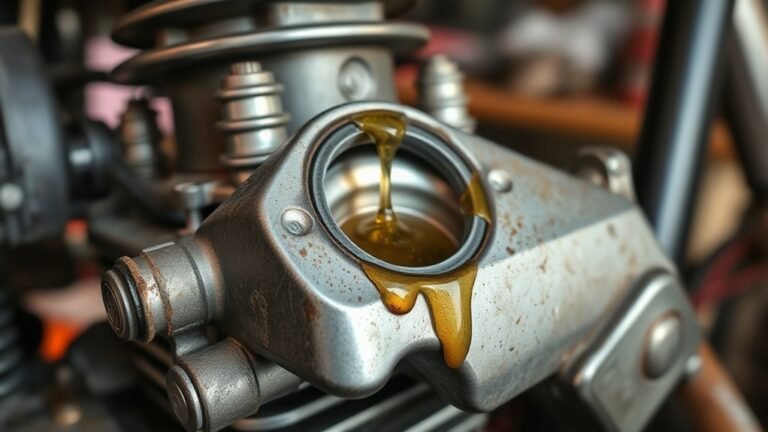
Where Is the Carburetor on a Lawn Mower
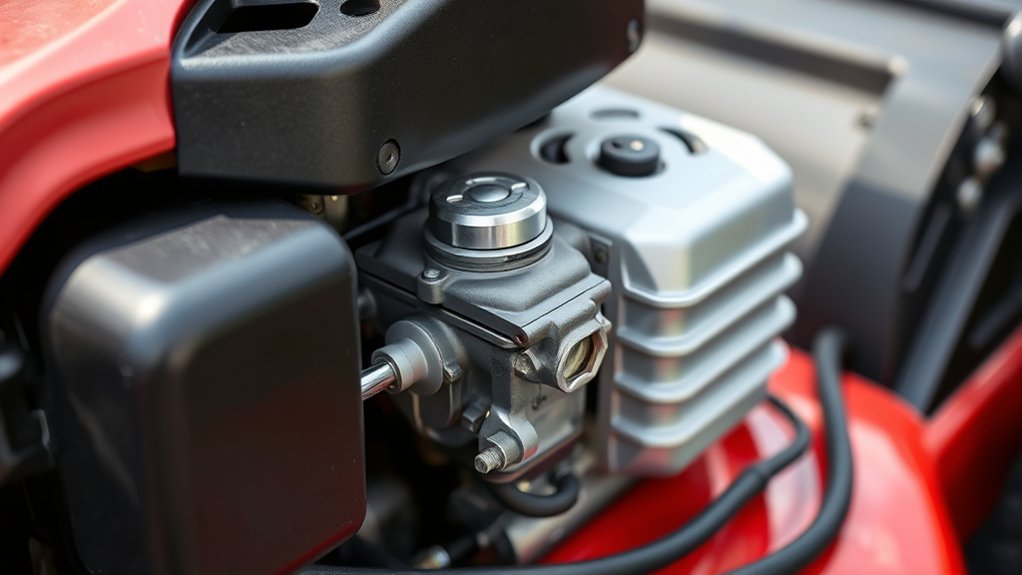
You’ll find the carburetor on your lawn mower near the air filter housing, typically mounted on the side or front of the engine block. The carburetor controls the fuel and air mix essential for engine performance.
To access it, you’ll usually need to remove or lift the air filter cover. Remember to disconnect the spark plug wire and drain or clamp fuel lines before working.
Understanding the carburetor’s placement helps you troubleshoot and maintain your lawn mower efficiently. More details are available to guide you further.
Locating the Carburetor on Your Lawn Mower
Where exactly is the carburetor on your lawn mower? To find the carburetor location, start by identifying your mower model. This mower identification step is crucial because carburetor placement varies by manufacturer and engine type.
Typically, the carburetor is positioned near the engine’s air filter housing, often on the side or front of the engine block. Once you’ve removed or lifted the air filter cover, you should see a small metallic component with fuel lines and a throttle linkage attached—that’s the carburetor.
It’s connected directly to the intake manifold, regulating air-fuel mixture for combustion. Precisely locating this part requires you to consult your mower’s manual if unsure, but focusing around the air intake assembly will lead you to the carburetor location efficiently.
How the Carburetor Works With Your Engine Parts
Your carburetor precisely mixes fuel and air to create the optimal combustion blend for your engine. It controls airflow through a throttle mechanism that adjusts engine speed and power output.
This mixture then interacts with the ignition system to start and sustain engine operation efficiently.
Fuel Mixing Process
How does the carburetor guarantee the right fuel-to-air ratio reaches the engine? It precisely meters fuel and mixes it with air to ensure efficient combustion. This process is critical and should not be confused with any non relevant topic or unrelated concept like electrical systems.
Here’s how the fuel mixing process works:
Fuel flows from the tank into the carburetor’s float chamber. The float maintains a constant fuel level to prevent overflow. Air enters through the venturi, creating a pressure drop. This pressure drop draws fuel into the airstream via the jet. The fuel and air mix thoroughly before entering the combustion chamber.
Airflow Regulation Mechanism
Why does controlling airflow matter so much in a lawn mower carburetor? Because the precise mix of air and fuel directly affects engine performance. The carburetor uses a throttle valve to regulate airflow entering the engine, ensuring the correct air-to-fuel ratio for combustion.
As air passes through a venturi, a narrow passage, it speeds up, lowering pressure and drawing fuel into the airstream. This interaction between airflow and fuel delivery is critical; ignoring it or discussing an unrelated topic like engine ignition would be off topic here.
You need to understand that any disruption in airflow regulation can cause poor engine efficiency, stalling, or rough operation. So, controlling airflow isn’t an unrelated topic; it’s fundamental to how the carburetor works with your engine parts.
Engine Ignition Interaction
The controlled mixture of air and fuel delivered by the carburetor must align perfectly with the engine’s ignition timing to guarantee efficient combustion. Knowing the carburetor location helps you understand its role in this synchronization.
Here’s how the carburetor works with your engine parts:
- The carburetor meters fuel based on airflow demands.
- It feeds the air-fuel mixture into the combustion chamber.
- Ignition timing controls when the spark plug ignites this mixture.
- Proper timing ensures maximum power and fuel efficiency.
- Misalignment causes engine knocking, poor performance, or stalling.
How to Safely Access Your Lawn Mower’s Carburetor
Wondering what steps you need to take before reaching the carburetor? First, ensure your lawn mower is off and the spark plug wire is disconnected to prevent accidental ignition, a critical safety hazard.
Before accessing the carburetor, always turn off the mower and disconnect the spark plug wire to ensure safety.
Drain the fuel tank or clamp the fuel line to avoid leaks. Remove the air filter cover and air filter to expose the carburetor.
Use care tips such as wearing gloves and safety glasses to protect yourself from fuel and debris. Keep your workspace clean and well-ventilated to minimize exposure to fumes.
Avoid working near open flames or sparks. Once the air filter assembly is off, you’ll see the carburetor attached to the engine intake manifold.
Follow these steps precisely to access it safely and prepare for inspection or maintenance without risking injury or damage.
Common Signs of Carburetor Problems to Watch For
If your lawn mower struggles to start or the engine runs unevenly, these are key signs your carburetor might be malfunctioning.
Pay attention to sputtering, stalling, or unusual engine noises during operation. Addressing these issues early can prevent more serious damage to your mower.
Engine Starting Issues
Why won’t your lawn mower start even after several attempts? Often, engine starting issues trace back to carburetor problems rather than irrelevant topics like spark plug failure or unrelated concepts such as battery charge.
The carburetor mixes air and fuel; if clogged or damaged, starting becomes difficult. Watch for these signs:
- Engine turns over but doesn’t ignite
- Strong fuel smell without engine running
- Difficulty maintaining idle speed
- Black smoke from the exhaust at start
- Flooded carburetor indicated by wet spark plug
If you notice these, the carburetor likely needs cleaning or adjustment. Addressing these symptoms promptly prevents further engine damage and ensures reliable starts.
Avoid confusing unrelated concepts; focus on carburetor condition for precise troubleshooting.
Irregular Engine Performance
Beyond starting issues, your lawn mower’s carburetor can also cause irregular engine performance that affects overall operation. If you notice inconsistent idling, sputtering, or fluctuating power, the carburetor might be the culprit. These symptoms often result from clogged jets or improper fuel-air mixture adjustments.
Despite widespread carburetor rumors blaming complex fuel politics, most issues stem from simple maintenance needs. Deposits from old fuel can obstruct passages, disrupting flow and causing hesitation or stalling under load.
To diagnose, inspect for dirt buildup and ensure fuel lines are clear. Adjusting the mixture screws can restore smooth operation. Understanding these signs helps you avoid unnecessary part replacements and addresses carburetor problems efficiently, ensuring your mower runs reliably throughout the season.
Basic Lawn Mower Carburetor Maintenance Tips
How often you maintain your lawn mower’s carburetor directly affects its performance and longevity. To avoid common carburetor myths, like fuel additives fixing all issues, stick to proven maintenance steps. Regular upkeep prevents clogging and ensures smooth engine operation.
Regular carburetor maintenance is key to preventing clogs and ensuring your mower runs smoothly and lasts longer.
Follow these essential tips:
- Drain fuel before storage to prevent gum deposits.
- Clean the carburetor’s jets and passages with a solvent.
- Inspect and replace gaskets to avoid air leaks.
- Use fresh, ethanol-free fuel when possible.
- Avoid overusing fuel additives; they’re not a cure-all.
Consistent care keeps your carburetor functioning effectively, reducing downtime and costly repairs. Understanding these practical steps helps you maintain peak mower performance without falling for misinformation.
Tools You Need to Inspect or Remove the Carburetor
What tools do you need to effectively inspect or remove your lawn mower’s carburetor? Avoid irrelevant topic or off topic discussion about unrelated tools. Focus on these essentials: a socket wrench set for bolts, screwdrivers (flathead and Phillips) for screws, and pliers for clips and fuel lines.
A clean workspace and a container to hold small parts are also practical.
| Tool | Purpose |
|---|---|
| Socket Wrench | Remove mounting bolts |
| Screwdrivers | Unscrew carburetor screws |
| Pliers | Disconnect fuel lines/clips |
Using these tools ensures precise handling without damage, streamlining inspection or removal. Avoid off topic discussion on unrelated gadgets to maintain efficiency.
When to Repair or Replace Your Lawn Mower’s Carburetor
When should you consider repairing or replacing your lawn mower’s carburetor? If your mower struggles to start, stalls frequently, or runs unevenly, it’s time to evaluate the carburetor’s condition. Ignoring these signs and focusing on an irrelevant topic like the air filter alone is not applicable to resolving carburetor issues.
Consider repair or replacement when you notice:
- Persistent engine flooding or fuel leaks
- Excessive smoke from the exhaust
- Visible corrosion or damage on the carburetor body
- Inability to adjust idle or mixture screws effectively
- Frequent clogging despite cleaning efforts
If multiple issues persist after cleaning, replacement is often more cost-effective than repair. Accurate diagnosis ensures you don’t waste time on irrelevant topics, focusing instead on the carburetor’s critical function.
Frequently Asked Questions
Can I Use Fuel Additives to Improve Carburetor Performance?
Yes, you can use fuel additives to improve carburetor performance, especially to counter altitude effects. They help stabilize fuel, reduce deposits, and optimize combustion.
This ensures smoother engine operation at varying elevations and conditions.
How Does Altitude Affect Carburetor Tuning on a Lawn Mower?
Like climbing a mountain, altitude impacts your mower’s carburetor by thinning air, demanding precise float adjustment. You’ll need to fine-tune the fuel-air mix to maintain engine efficiency and prevent running too rich or too lean.
Are There Different Types of Carburetors for Lawn Mowers?
Yes, you’ll find different carburetor types like float and diaphragm models. Each requires specific mower adjustments for optimal fuel-air mix, so knowing your carburetor type helps you fine-tune performance efficiently and avoid engine issues.
Can a Dirty Air Filter Cause Carburetor Problems?
Yes, a dirty air filter limits fuel flow, causing engine hesitation and poor performance. You’ll notice restricted airflow leads to a richer fuel mixture, which can clog the carburetor, requiring regular cleaning or replacement for optimal mower function.
How Do I Winterize My Lawn Mower’s Carburetor?
To winterize your carburetor, treat it like tucking in for a long sleep: add fuel stabilizers to the tank, run the engine briefly to circulate, then drain or fog the carburetor to prevent gumming and corrosion.