Can You Mix Coolant Colors
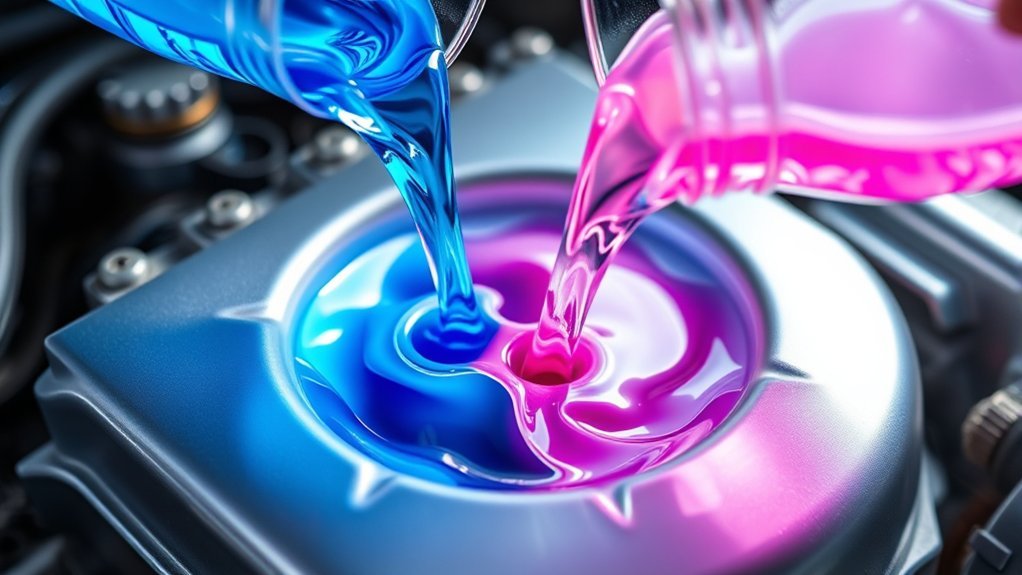
You shouldn’t mix coolant colors like green, orange, pink, or blue because their chemical formulations differ considerably. Mixing coolant colors can cause reactions that degrade corrosion inhibitors, leading to deposits, clogs, and engine damage.
Using the coolant type recommended by your vehicle manufacturer ensures ideal cooling and prevents costly repairs. If coolants get mixed by mistake, proper flushing is necessary to avoid issues.
Understanding coolant types and maintenance safeguards your engine’s performance and longevity.
What Coolant Colors Mean
What do the different coolant colors actually indicate? Coolant labeling uses color symbolism to help you quickly identify the type and chemical composition of the coolant.
Typically, green coolant contains inorganic additive technology (IAT) with silicates and phosphates, providing corrosion protection but requiring frequent changes. Orange and pink coolants usually signify organic acid technology (OAT) or hybrid organic acid technology (HOAT), offering longer service life and compatibility with newer engine materials.
Blue coolant often represents a specific formulation tailored for certain vehicle manufacturers. However, colors alone don’t guarantee compatibility; the labeling includes detailed chemical information essential for proper maintenance.
Understanding this color symbolism and coolant labeling ensures you select the correct coolant, preserving your engine’s cooling system and preventing damage.
Can You Safely Mix Green, Orange, Pink, and Blue Coolants?
Mixing green, orange, pink, and blue coolants isn’t generally recommended because their differing chemical formulations can lead to reduced corrosion protection and potential engine damage. Each color represents a specific additive technology, and combining them introduces a random factor that can compromise coolant performance. You should treat this as an unrelated topic to simple color matching; chemical compatibility is key.
| Coolant Color | Chemical Base |
|---|---|
| Green | Inorganic Additive Tech |
| Orange | Organic Acid Tech |
| Pink | Hybrid Organic Tech |
| Blue | Silicate-Free Organic |
| Mixed Result | Unpredictable Chemistry |
When mixing these coolants, you risk unpredictable chemical reactions, diminishing antifreeze efficiency and potentially harming your engine. It’s best to avoid mixing unless explicitly approved by your vehicle manufacturer.
Why Is Mixing Coolant Colors Risky?
Why does combining different coolant colors pose a risk to your engine’s health? Each coolant color typically represents a distinct chemical formulation with specific additives engineered for particular engine types. When you mix these formulations, you risk triggering chemical reactions that degrade corrosion inhibitors and compromise the coolant’s protective properties.
This can accelerate engine wear or cause blockages. Colorblind challenges add complexity. If you can’t distinguish coolant types by color, you may inadvertently mix incompatible fluids, exacerbating risks.
Beyond mechanical concerns, antifreeze ethics come into play. Using the correct coolant prevents environmental hazards caused by leaks or improper disposal of chemically incompatible mixtures. Consequently, maintaining the integrity of your engine’s cooling system requires strict adherence to coolant specifications rather than relying on color cues alone.
How Different Coolants Affect Engine Performance
When you use different coolant formulations, their chemical compatibility directly affects how well your engine stays protected. Mixing incompatible coolants can reduce cooling efficiency and increase the risk of corrosion inside the engine.
Understanding these impacts is crucial to maintaining optimal engine performance and longevity.
Coolant Chemical Compatibility
How do different coolant formulations interact within your engine’s cooling system? Each coolant type, whether organic acid technology (OAT), inorganic additive technology (IAT), or hybrid, contains distinct chemical inhibitors that protect against corrosion and scale. Mixing these can trigger adverse reactions, such as gel formation or depletion of corrosion inhibitors, compromising engine longevity.
While design aesthetics and color symbolism help identify coolant types, relying solely on color can be misleading due to manufacturer variations. You need to prioritize chemical compatibility over appearance to maintain optimal protection.
When incompatible coolants mix, they alter pH balance and inhibitor effectiveness, leading to increased wear or blockages. To safeguard your engine, always verify the chemical formulation compatibility rather than depending on coolant color or design cues before mixing fluids.
Impact on Cooling Efficiency
What happens to your engine’s cooling efficiency when different coolant types are combined? Mixing coolants can alter their thermal properties, potentially reducing heat transfer efficiency. Color change implications often signal chemical reactions affecting coolant performance.
Besides, inconsistent coolant mixtures may disrupt the coolant’s ability to maintain optimal temperatures, impacting engine performance.
| Coolant Type A | Efficient heat transfer, maintains stability |
|---|---|
| Coolant Type B | Designed for long life, specific additives |
| Mixed Coolants | Possible decreased thermal conductivity |
| Visual Impact | Color changes can mask coolant condition |
| Aesthetics | Cooling system aesthetics suffer due to discoloration |
You’ll want to avoid mixing to preserve consistent thermal performance and maintain clear cooling system aesthetics.
Engine Corrosion Risks
Several factors contribute to increased engine corrosion risks if you mix different coolant types. Coolants contain specific inhibitors tailored to various engine designs, and combining them can neutralize these additives, exposing metal surfaces to oxidation.
This corrosion can damage critical components like the radiator, water pump, and cylinder liners, impairing cooling efficiency. Over time, corrosion buildup restricts coolant flow, causing localized overheating and reducing overall engine performance.
You might also notice a decline in fuel economy, as the engine works harder to maintain optimal temperatures. Modern engines are designed with precise tolerances that rely on compatible coolant chemistry to prevent corrosion-related wear.
Therefore, mixing coolants compromises the protective balance essential for maintaining engine integrity and fuel efficiency, ultimately leading to costly repairs and reduced vehicle lifespan.
How to Identify the Right Coolant for Your Vehicle
Determining the correct coolant for your vehicle requires understanding its specific engine requirements and manufacturer recommendations. You need to verify the coolant’s chemical composition to ensure it matches your engine’s material compatibility, preventing corrosion and deposits.
Pay close attention to temperature tolerance specifications; the coolant must withstand your vehicle’s operating temperature range without breaking down. Additionally, consider scale compatibility. Some coolants are better suited for hard or soft water environments, reducing mineral buildup in the cooling system.
Consult your owner’s manual or manufacturer guidelines to identify the recommended coolant type, such as ethylene glycol-based or organic acid technology (OAT) formulas. Using the proper coolant ensures optimal heat transfer, corrosion resistance, and system longevity, avoiding costly damage or performance issues.
How to Flush and Replace Coolant Safely
Once you’ve identified the correct coolant for your vehicle, the next step is to properly flush the old fluid and replace it to maintain system efficiency. Follow these steps to ensure optimal coolant viscosity and engine temperature balance:
- Allow the engine to cool completely to avoid burns or pressure-related injuries.
- Drain the old coolant by opening the radiator drain valve and collecting the fluid in a suitable container.
- Flush the system with distilled water or a manufacturer-recommended flushing agent to remove deposits and contaminants.
- Refill with the specified coolant, ensuring the correct mixture ratio to maintain proper coolant viscosity and prevent engine overheating.
Performing this process carefully safeguards your engine’s cooling system and maintains consistent engine temperature balance.
What Happens If You Mix Coolants by Mistake?
What occurs when you accidentally mix different coolant types can vary widely, depending on their chemical compositions. Mixing organic acid technology (OAT) coolants with inorganic additive technology (IAT) or hybrid organic acid technology (HOAT) coolants can lead to chemical reactions that reduce corrosion inhibitors’ effectiveness.
This degradation compromises your engine’s protection, potentially causing corrosion, deposits, or even overheating. While this might seem an unrelated topic to general vehicle maintenance, understanding it avoids offbeat discussion pitfalls where misinformation circulates.
Additionally, incompatible coolants can form gels or precipitates, obstructing coolant flow. If you realize you’ve mixed coolants by mistake, it’s best not to ignore the issue, as it can lead to costly repairs. Proper diagnosis and system flushing are necessary to restore optimal performance and prevent damage.
Top Tips to Maintain Your Cooling System and Prevent Coolant Issues
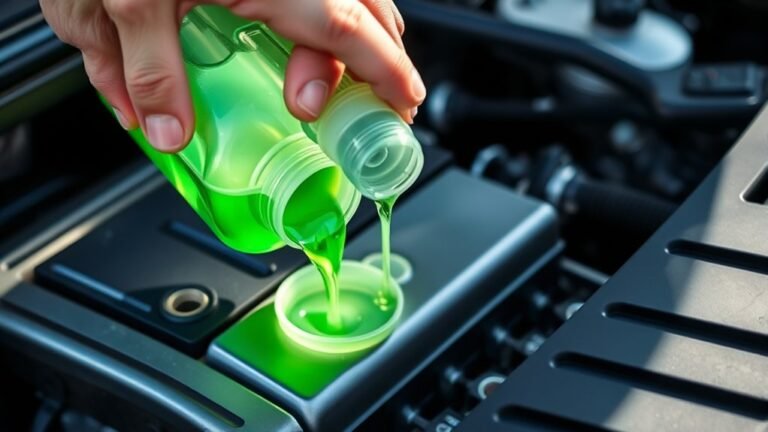
To keep your cooling system functioning at its best, regularly check the coolant level and top it off as needed. Always use the coolant type recommended by your vehicle manufacturer to avoid chemical incompatibilities.
Additionally, inspect hoses frequently for leaks or cracks to prevent system failures.
Regular Coolant Level Checks
How often do you check your vehicle’s coolant level? Regular checks are crucial to prevent overheating and avoid irreversible chemical reactions that degrade the coolant’s performance.
Always follow these steps:
- Locate the coolant reservoir and ensure the engine is cool before opening.
- Check the coolant level against the minimum and maximum marks, adhering to color labeling standards to identify the correct fluid type.
- Inspect the coolant color and clarity; any discoloration or cloudiness may indicate contamination or chemical breakdown.
- Top off with the appropriate coolant if levels are low, avoiding mixing different coolant formulations which can trigger irreversible reactions.
Routine monitoring helps maintain optimal cooling efficiency and engine protection without risking damage from improper coolant mixtures.
Use Recommended Coolant Types
Why should you stick to the recommended coolant types for your vehicle? Using the correct coolant ensures optimal engine temperature regulation and prevents corrosion. Mixing incompatible coolants can cause chemical reactions, leading to deposits or cooling system failure.
Just like mindful driving and regular tire rotation maintain your vehicle’s performance, using the proper coolant type protects your engine’s longevity.
| Coolant Type | Vehicle Compatibility | Risk if Mixed |
|---|---|---|
| Organic Acid Tech | Most modern vehicles | Gel formation, clogging |
| Inorganic Additive | Older vehicles | Corrosion, overheating |
| Hybrid | Specific models | Reduced protection |
Always consult your owner’s manual to maintain peak cooling system function.
Inspect Hoses For Leaks
Choosing the right coolant is only part of maintaining your vehicle’s cooling system; regularly inspecting hoses for leaks is equally important. Leaks risk increases if hoses degrade or don’t match the coolant chemistry, causing corrosion or swelling.
To properly inspect hoses:
- Check for visible cracks, bulges, or soft spots along the hose length.
- Feel for firmness; hoses should be pliable but not spongy or brittle.
- Look for coolant residue or wetness near hose connections, indicating leaks risk.
- Ensure clamps are tight and corrosion-free to maintain secure seals with compatible coolant chemistry.
Regular inspections prevent coolant loss and overheating. Address any signs of damage promptly to maintain system integrity and avoid costly repairs.
Frequently Asked Questions
Can Coolant Colors Fade Over Time?
Yes, coolant colors can fade over time due to heat and chemical breakdown. You shouldn’t rely solely on color for coolant fade assessment.
Always consider color compatibility and perform proper chemical tests to ensure performance and safety.
Does Coolant Color Affect Freeze Protection Levels?
You might think coolant color dictates freeze protection, but it’s actually coolant chemistry that matters most. Despite color compatibility concerns, freeze protection depends on the antifreeze’s formulation, not its hue.
Are There Eco-Friendly Coolant Options Available?
Yes, you’ll find eco-friendly coolant options featuring biodegradable formulations designed to reduce environmental impact. These coolants maintain effective thermal performance while minimizing toxicity, making them ideal if you prioritize sustainability and safety in your vehicle’s cooling system.
How Often Should Coolant Be Tested for Quality?
You should test coolant quality every 12 months or 12,000 miles to ensure formulation stability. Regular testing intervals help detect degradation early, maintaining optimal protection and preventing corrosion or overheating in your vehicle’s cooling system.
Can Coolant Additives Change the Color?
Yes, coolant additives can change the color due to variations in coolant chemistry and dye compatibility. When adding additives, you should guarantee they’re compatible to avoid unexpected color shifts or chemical reactions that affect performance.