
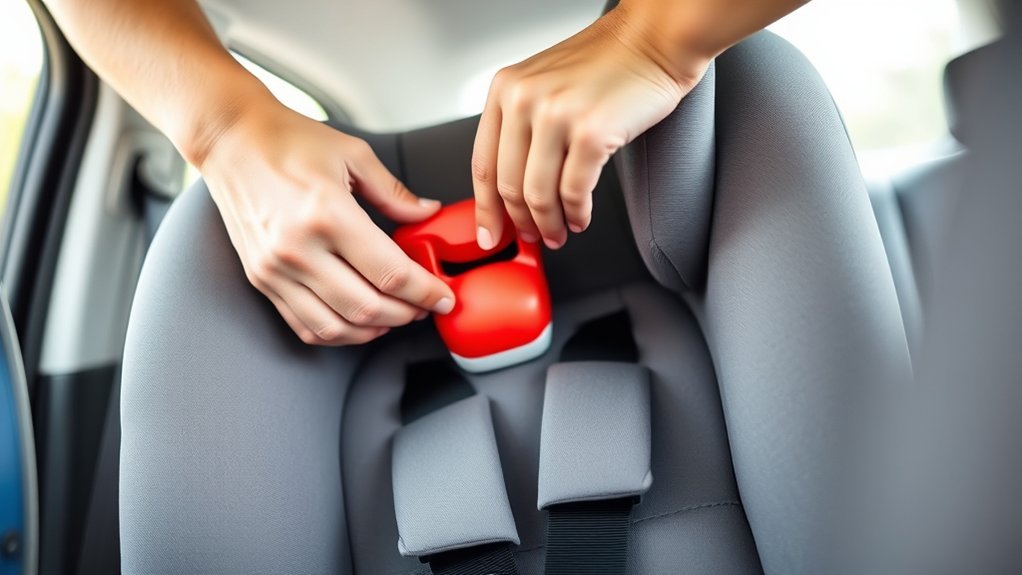
How to Buckle a Car Seat
To buckle a car seat properly, place the harness straps flat over your child’s shoulders without twists. Then secure the buckle snugly across their hips or pelvis—never over the abdomen.
Tighten the straps to remove all slack, ensuring a firm fit that doesn’t pinch. Check that buckles are free from debris and correctly threaded every time.
Following these steps ensures your child’s safety. Understanding common issues and solutions can improve your confidence and skill in secure buckling.
Confirm Your Car Seat Fits Your Child Safely
Before you buckle your child into a car seat, make sure the seat is appropriate for their size and weight. Selecting the right car seat is crucial for child safety, as it ensures proper support and protection during travel.
Check the manufacturer’s guidelines on weight and height limits to confirm the seat fits your child securely. Avoid using car seat accessories that haven’t been approved by safety standards, as they can interfere with the seat’s effectiveness.
Instead, rely on manufacturer-recommended accessories designed to enhance comfort without compromising safety. Regularly inspect the car seat for wear, and replace it if it’s damaged or expired.
Position the Car Seat Correctly in Your Vehicle
Where should you place the car seat to guarantee maximum safety? Always position it in the back seat, as it’s the safest spot for kids safety during safe driving. The middle of the back seat is preferable if your vehicle allows, reducing impact risks in side collisions.
Use this guide to choose the best spot:
| Position | Safety Level |
|---|---|
| Middle back seat | Highest safety |
| Rear side seats | Acceptable safety |
| Front seat | Not recommended |
Avoid placing the car seat in the front seat due to airbags and crash impact risks. Correct placement ensures your child is protected, giving you confidence in safe driving practices and prioritizing kids safety every trip.
Secure the Car Seat Base and Tether Properly
How exactly do you guarantee your car seat base stays firmly in place? First, ensure the secure base is tightly installed using either the vehicle’s seat belt or LATCH system, following manufacturer instructions precisely.
Next, connect the tether strap to the designated anchor point behind the seat. Proper tether safety reduces forward movement during a collision, enhancing protection. Tighten the tether until it’s snug but not overly strained.
Double-check that the base doesn’t shift more than an inch side to side or front to back. Remember, maintaining a secure base and correctly attached tether not only maximizes safety but also contributes to car seat longevity.
Finally, confirm your car seat is compatible with your stroller to maintain stability when transferring between devices.
Adjust Car Seat Harness Straps for a Snug Fit
Why is adjusting the harness straps essential for your child’s safety? A snug fit keeps your child secure, preventing excessive movement in a crash.
To achieve this, first check that the straps lie flat and are free of twists. Adjust the harness so it fits like a helmet fit, snug enough that you can’t pinch any slack at the shoulders.
If your car seat includes extra padding, consider padding removal if it interferes with a tight harness. This ensures the straps sit correctly against your child’s body without added bulk.
Always position the harness straps at or just below your child’s shoulders for rear-facing seats, or at or above for forward-facing. Proper adjustment maximizes protection and comfort during every ride.
Buckle the Car Seat Harness Correctly Every Time
Make sure the harness straps sit at or just below your child’s shoulders before buckling. Always place the buckle securely in the designated slots to prevent loosening.
Pull the straps tight enough to eliminate slack, ensuring a firm and safe fit every time.
Harness Positioning Tips
Where exactly should the harness straps sit to guarantee your child’s safety and comfort? For rear-facing seats, position the harness straps at or just below your child’s shoulders. In forward-facing seats, align the straps at or just above the shoulders.
Proper harness positioning ensures the straps effectively restrain your child during a crash. Next, adjust the strap tension so it’s snug but not too tight. You shouldn’t be able to pinch any slack at the shoulder. This tightness prevents excessive movement while maintaining comfort.
Regularly check harness positioning and strap tension as your child grows or wears thicker clothing. Remember, incorrect harness positioning or loose strap tension compromises safety, increasing injury risk. Always follow manufacturer guidelines to maintain optimal harness fit every time you buckle your child in.
Correct Buckle Placement
How do you guarantee the buckle secures your child safely every time? Focus on correct buckle placement. Position the buckle so it lies flat across your child’s hips or pelvis, never over the abdomen. This placement distributes crash forces properly and prevents injury.
Ensure the buckle clicks firmly into place; you should hear a distinct snap. Check for any twists or slack in the harness before securing the buckle.
Proper buckle placement works hand in hand with latch safety. Always use the vehicle’s LATCH system as instructed to anchor the car seat securely.
Securing Straps Firmly
A secure harness strap is essential for your child’s safety in the car seat. After buckling, pull the straps firmly to remove any slack. Ensure the clip alignment is correct. The chest clip should sit at armpit level to prevent the straps from slipping off or causing injury.
Check that both straps lie flat without twists, as twisted straps compromise secure installation and can cause discomfort or harm during a sudden stop. Tighten the harness until you can’t pinch any excess webbing at the shoulder.
This snug fit keeps your child firmly restrained while allowing enough comfort for movement. Regularly inspect strap tension and clip alignment to maintain optimal protection every trip. Properly securing the straps guarantees a reliable and secure installation every time.
Check Chest Clip Placement for Safety
Why does the chest clip’s placement matter? The chest clip keeps the harness straps positioned correctly over your child’s shoulders, preventing them from slipping off or becoming too loose.
When you check chest clip placement, make sure it’s at armpit level. This is the safest position. If it’s too low or too high, the harness won’t provide proper restraint during a sudden stop or crash.
To check chest clip placement, slide your fingers to feel if it sits at your child’s armpits. Adjust as needed before every ride.
Proper chest clip placement minimizes injury risk by ensuring the harness stays snug across the chest, not the neck or abdomen. Always prioritize this step to guarantee your child’s safety in their car seat.
Double-Check Buckles and Straps Before Every Trip
Before every trip, make sure you inspect the buckle to confirm it locks securely and releases smoothly. Check that the straps are snug enough to keep your child safe without causing discomfort.
Taking these quick steps ensures the car seat functions properly every time you hit the road.
Inspect Buckle Functionality
How can you guarantee your child’s safety during every car ride? Start by inspecting the buckle functionality meticulously. Before each trip, double-check that the buckle clicks securely and releases smoothly.
Dirt, crumbs, and sticky residues can hinder its performance, so regular car seat cleaning is essential. Use mild soap and water to clean around the buckle, avoiding harsh chemicals that might degrade the plastic.
Proper buckle maintenance ensures it functions reliably, preventing accidental unfastening. Test the buckle by fastening and unfastening it multiple times to confirm smooth operation.
Never ignore any signs of wear, cracks, or stiffness. Keeping the buckle in optimal condition is a critical step in protecting your child, so make this inspection a consistent part of your pre-trip routine.
Verify Strap Tightness
After confirming the buckle functions smoothly, focus on the strap tightness to keep your child secure. Always verify strap tension by pulling firmly at the shoulder straps; they should lie flat without slack or twists.
The straps must be snug enough that you can’t pinch any excess webbing between your fingers. Check the buckle placement to ensure it rests at armpit level. This positioning prevents the straps from slipping off or causing discomfort.
Each time you buckle your child in, double-check both the buckle placement and strap tightness. These steps are critical to maintaining safety during every trip. Don’t assume the straps remain correctly adjusted from one ride to the next; consistent verification ensures your child stays properly restrained at all times.
Troubleshoot Common Buckling Problems and Fixes
Why won’t the car seat buckle easily? Often, issues stem from common factors related to material testing and manufacturing quality. First, inspect the buckle for debris or sticky residue blocking the latch. Next, check if the straps are twisted or improperly threaded through the buckle mechanism. Finally, ensure the buckle itself isn’t damaged or warped from wear.
To troubleshoot effectively:
- Clean the buckle slot with a soft brush to remove dirt.
- Straighten and retighten straps to avoid obstruction.
- Replace the buckle if material testing indicates failure or if manufacturing quality is compromised.
Addressing these points ensures your car seat buckles securely, maintaining your child’s safety without frustration.
Frequently Asked Questions
How Often Should Car Seat Buckles Be Cleaned?
You should clean car seat buckles at least once a month to guarantee proper buckle maintenance. Regular cleaning frequency prevents dirt buildup, keeps the mechanism functioning smoothly, and maintains your child’s safety during every ride.
Can I Use a Car Seat Buckle Extender Safely?
Safety isn’t optional. Using a car seat buckle extender can be risky. You should only use one if the manufacturer approves it.
Prioritize car seat safety and buckle maintenance to keep your child secure every ride.
Are Aftermarket Car Seat Buckle Covers Safe?
Aftermarket car seat buckle covers aren’t always safe because improper installation can compromise aftermarket safety features. You shouldn’t use them unless they’re specifically tested and approved by your car seat manufacturer to guarantee proper protection.
How Do Temperature Changes Affect Buckle Functionality?
When it comes to temperature fluctuations, buckle material science shows that extreme cold can stiffen components, while heat may soften them, causing potential malfunctions.
You’ll want to check buckles regularly to keep them working like a charm.
When Should Car Seat Buckles Be Replaced?
You should replace car seat buckles if they’re damaged, sticky, or after a crash.
Stay alert to safety recall awareness and don’t hesitate to perform an old buckle replacement to guarantee your child’s safety.
Conclusion
Buckle your car seat like fastening a shield—secure, snug, and ready to protect. Every click is a promise, every strap a lifeline woven with care. By double-checking harnesses and chest clips, you turn safety from routine into ritual.
When you master these steps, you transform a simple buckle into a fortress of protection, ensuring your child’s journey is guarded with unwavering strength. Trust the process—it’s the key to peace on every mile.
Properly learning how to buckle a car seat is essential for keeping your child safe on every trip.