
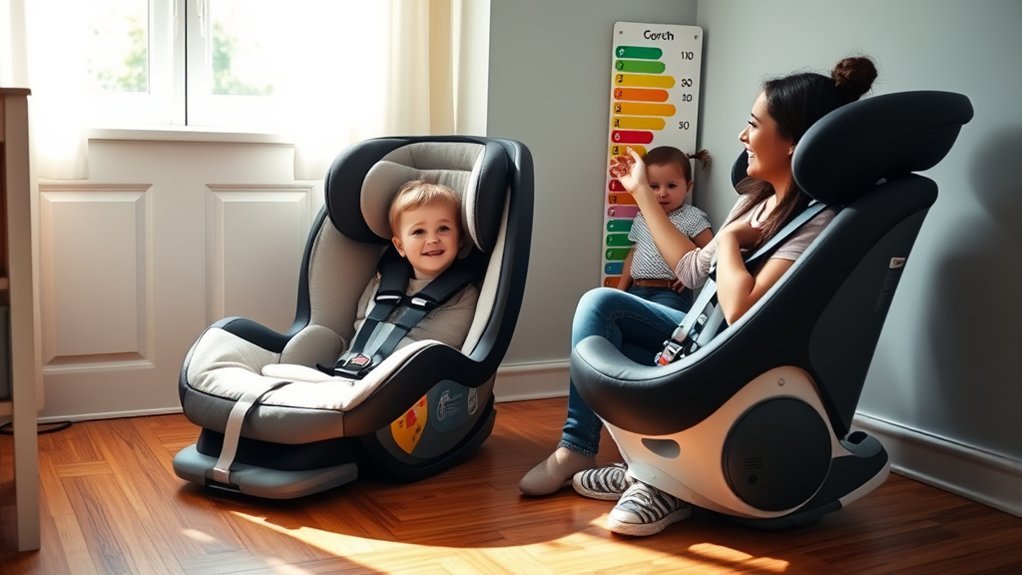
When to Switch From Infant Car Seat to Convertible
You should switch from your infant car seat to a convertible seat once your baby reaches the height or weight limit set by the manufacturer, usually between 22 and 35 pounds. Knowing when to switch from an infant car seat to a convertible seat is important for your child’s safety and comfort.
Don’t rush before these limits, but avoid delays that could compromise safety. Make sure the new seat fits your vehicle and install it securely, following both manuals.
Keeping your child rear-facing longer is ideal for safety. You’ll find more details on making this transition smooth and secure ahead.
When Should You Switch From an Infant Car Seat to a Convertible Seat?
You should switch from an infant car seat to a convertible seat once your baby reaches the height or weight limit set by the infant seat’s manufacturer. Proper transition timing is crucial to ensure your child’s safety and comfort during travel.
Don’t rush the switch before reaching these limits, but also avoid delays that could compromise security. Before making the change, verify seat compatibility with your vehicle to avoid installation issues and ensure the seat fits securely.
Convertible seats offer extended use by accommodating larger children rear and forward-facing, but only if you switch at the right time. Following the manufacturer’s guidelines on transition timing and confirming seat compatibility guarantees a smooth, safe progression from infant car seat to convertible seat.
How to Tell If Your Baby Has Outgrown the Infant Car Seat
How can you confidently determine when your baby has outgrown their infant car seat? Knowing the right infant transition and convertible timing is crucial for safety and comfort. Here’s how to tell:
- Weight Limit: Check if your baby exceeds the car seat’s maximum weight, typically 22-35 pounds.
- Height Limit: Ensure your baby’s head is no longer within the headrest boundary; their ears should be below the top edge.
- Legroom: If your baby’s legs feel cramped or bent too sharply, it’s a sign to switch.
- Harness Fit: The harness should sit at or below your baby’s shoulders. If it’s too tight or uncomfortable, consider transitioning.
Following these clear indicators helps you make a safe, timely infant transition to a convertible car seat.
Why Rear-Facing Car Seats Are Safest and When to Keep Them Longer
Although many parents are anxious to switch their child to a forward-facing seat, keeping your baby rear-facing as long as possible considerably reduces the risk of injury during a crash. The transition timing depends largely on your child’s weight limits and developmental readiness.
Rear-facing seats better support the head, neck, and spine by distributing crash forces evenly, which is crucial for infants and toddlers.
| Age Range | Weight Limits (lbs) | Recommended Duration |
|---|---|---|
| Infant | Up to 30 | Use infant seat rear-facing |
| Toddler | 22-40 | Keep convertible rear-facing |
| Older Toddlers | 30-50 | Consider forward-facing seat |
Always adhere to your car seat’s specific weight limits to maximize protection.
What to Look for in a Convertible Car Seat: Safety and Comfort Features
What features truly matter when choosing a convertible car seat? You want to prioritize both bed safety and travel etiquette to keep your child secure and comfortable. Here’s what to look for:
- Five-point harness: Ensures optimal restraint during sudden stops or impacts.
- Side-impact protection: Cushions your child’s head and torso, reducing injury risk.
- Adjustable recline positions: Helps maintain proper posture and comfort, especially on longer trips.
- Breathable, padded fabric: Keeps your child cozy without overheating, respecting travel etiquette by preventing fussiness.
How to Install a Convertible Car Seat Safely
Where should you start when installing a convertible car seat to guarantee your child’s safety? First, carefully read both your car seat manual and vehicle owner’s manual. Position the seat in the back seat, preferably in the middle, to minimize travel challenges.
Use either the LATCH system or the seat belt, never both, and tighten firmly so the seat doesn’t move more than an inch side to side or front to back. Adjust the harness straps to fit snugly at or below your child’s shoulders.
Don’t forget to check the recline angle; most seats have built-in indicators. While securing the seat, keep in mind that many models offer cute textures that provide comfort without sacrificing safety. Double-check every step to guarantee a secure, comfortable fit before every trip.
Tips to Make the Car Seat Transition Comfortable for Your Child
How can you ease your child’s adjustment to a convertible car seat while ensuring their comfort? Prioritize switch comfort by making the transition gradual and attentive to your child’s needs. Consider these tips to optimize the length of use and comfort:
- Familiarize Your Child: Let them explore the new seat outside the car to reduce anxiety.
- Adjust Harness and Padding: Customize straps and add soft inserts to maintain snugness without restricting movement.
- Maintain Routine: Keep consistent nap and feeding times to provide stability during the transition.
- Monitor Comfort Regularly: Check for signs of discomfort or pressure points, adjusting the seat setup as needed.
Common Mistakes Parents Make When Switching Car Seats
Why do some shifts between infant and convertible car seats feel more stressful than necessary? Often, parents overlook critical details that lead to common mistakes. You must follow tips to avoid common mistakes like installing the seat incorrectly or switching too early, risking your child’s safety.
Also, don’t underestimate choosing a seat fabric and color; comfort and easy cleaning matter.
| Common Mistake | How to Avoid It |
|---|---|
| Installing Incorrectly | Follow manual and get help |
| Switching Too Early | Check weight and height limits |
| Ignoring Seat Fabric & Color | Pick breathable, stain-resistant |
Frequently Asked Questions
Can I Use a Convertible Seat for Newborns?
Yes, you can use a convertible seat for newborns, but ensure it offers proper newborn compatibility with adequate support.
Check the switch suitability carefully to guarantee safety and comfort right from day one.
How Do I Clean and Maintain Convertible Car Seats?
You should follow cleaning routines by removing fabric covers and washing them per manufacturer instructions. Avoid maintenance pitfalls like harsh chemicals or neglecting harness checks.
Regularly inspect and tighten parts to keep your convertible car seat safe and durable.
Are There Weight Limits for Infant Car Seats?
Infant weight limits on car seats aren’t just rules; they’re lifesaving boundaries. You can’t ignore seat limits because exceeding them risks safety. Always check your infant car seat’s manual for precise weight limits to keep your baby secure.
Can I Use a Convertible Seat in Airplanes?
Yes, you can use a convertible seat on airplanes if it’s FAA-approved. Always check seat compatibility and airplane safety guidelines to guarantee the seat fits properly and secures your child safely during the flight.
Do Convertible Car Seats Expire?
You’d think convertible car seats last forever, but they don’t. Despite expiration myths, convertible longevity typically spans 6-10 years. Always check the manufacturer’s label.
Using an expired seat compromises your child’s safety, so don’t risk it.
Conclusion
Switching from an infant to a convertible car seat isn’t just about size—it’s about safety. For example, imagine Emma, who switched her 12-month-old to a convertible seat too early. She soon realized he wasn’t ready for the harness adjustments, which compromised both comfort and security.
By waiting until he outgrew the infant seat and choosing a high-quality convertible model installed rear-facing, she guaranteed his safety and comfort.
Follow these guidelines carefully to protect your child every mile when making the switch from infant car seat to convertible.