
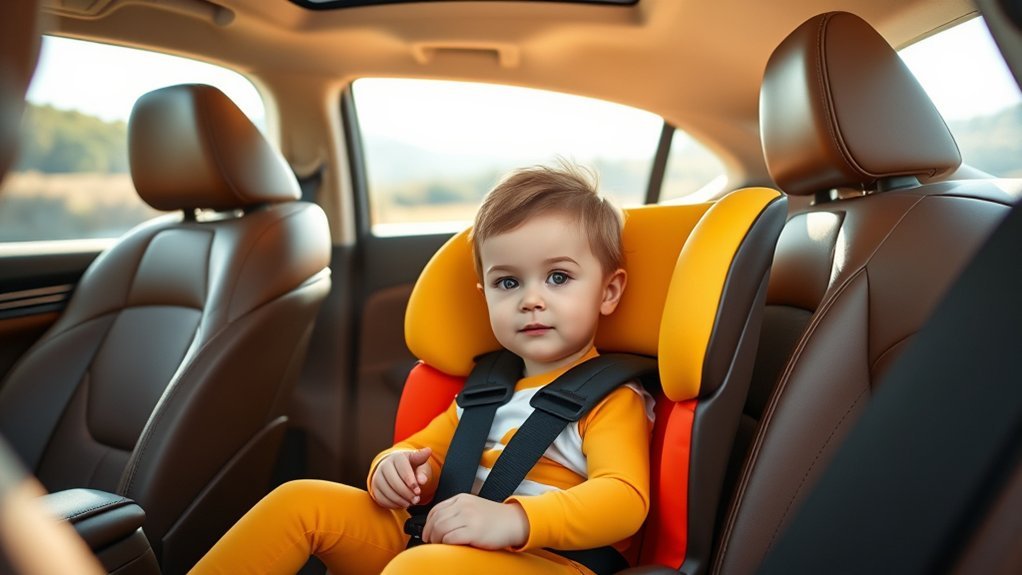
When Forward Facing Car Seat
You should switch your child to a forward-facing car seat once they outgrow the rear-facing limits, usually around 2 years old or when they exceed about 40 pounds and 35 inches in height.
Forward-facing car seats provide the necessary support as your child grows and gains better neck control.
Check the car seat manufacturer’s guidelines for specific weight and height limits, and ensure your child sits upright comfortably.
Proper installation and harness fit are essential for safety.
Keep exploring to make the progression as secure and smooth as possible.
How to Check Your Child’s Age, Weight & Height Limits
How do you know when your child is ready to transition to a forward-facing car seat? Start by checking your child’s age, weight, and height against the car seat manufacturer’s limits. These guidelines are crucial because child development varies, and physical growth affects safety.
Most forward-facing seats have clear weight and height thresholds, typically around 20 to 65 pounds and up to 49 inches tall. You also need to consider seat belt sizing, as proper fit ensures the seat belt lies flat across the chest and hips, not the neck or stomach.
If your child exceeds the rear-facing limits but hasn’t yet met forward-facing criteria, continue using the rear-facing seat. Always prioritize these objective measures over age alone to keep your child safe during travel.
When Is It Safe to Switch to a Forward-Facing Seat?
Wondering when you can safely switch your child to a forward-facing seat? The key is to respect both transition timing and weight limits specified by your car seat’s manufacturer. Make sure your child has outgrown the rear-facing seat’s limits before transitioning.
Focus on these critical points:
- Child meets or exceeds minimum weight limits for forward-facing seats
- Child’s height fits within the forward-facing seat’s guidelines
- Manufacturer’s recommended transition timing is reached
- Child’s neck and head control is strong enough for forward-facing
- Vehicle seat belt fits properly when used with the forward-facing seat
Signs Your Child Is Ready for Forward-Facing
When can you confidently tell that your child is ready to move to a forward-facing car seat? Key signs relate to child development milestones and car seat ergonomics. Your child should have outgrown the rear-facing seat’s height and weight limits, typically around 2 years old.
Look for sufficient neck strength and head control, essential for safe forward-facing travel. Your child must sit upright comfortably without slouching, ensuring proper harness positioning. Check that their ears are below the top of the seat, confirming correct ergonomic fit.
If your child resists reclining and prefers sitting upright, it’s another indicator of readiness. Trust these signs based on developmental readiness and car seat ergonomics rather than age alone to ensure your child’s safety during travel.
How to Install a Forward-Facing Car Seat Correctly
Once you’ve confirmed your child is ready for a forward-facing car seat, the next step is ensuring it’s installed securely. Incorrect installation leads to wrong usage, reducing protection and increasing injury risk. Follow these steps precisely:
Position the seat tightly against your vehicle’s back seat. Use the seat belt or LATCH system as per the manufacturer’s instructions. Lock the seat belt to prevent any slack.
Adjust the harness straps so they’re snug at or above your child’s shoulders. Attach the top tether strap to the designated anchor point and tighten it fully.
Essential Safety Tips for Forward-Facing Car Seats
How can you maximize your child’s safety in a forward-facing car seat? First, always ensure the harness is snug and positioned at or above your child’s shoulders. Double-check the seat is tightly secured using the vehicle’s seat belt or LATCH system.
Remember, your caregiver nutrition and alertness directly impact your attentiveness during travel. Stay well-nourished and rested. When choosing toys to keep your child occupied, pick soft, lightweight options free of small parts to prevent injury during sudden stops.
Avoid bulky clothing that can interfere with harness fit. Regularly inspect the car seat for wear and follow manufacturer guidelines for height and weight limits. By prioritizing these safety tips, you provide a secure environment, reducing risks and protecting your child on every trip.
Common Mistakes Parents Make When Switching to Forward-Facing
Why do many parents struggle when switching their child to a forward-facing car seat? Often, misleading labels on car seats create confusion about when to make the switch. Additionally, a strong rear facing bias leads parents to delay transitioning, sometimes beyond recommended safety limits.
Misleading labels and strong rear-facing preferences often cause parents to delay switching to forward-facing car seats.
To avoid common mistakes, don’t:
- Switch too early, ignoring height and weight guidelines
- Misinterpret car seat labels that suggest premature forward-facing
- Neglect proper harness tightening and positioning
- Forget to check for secure installation after switching
- Overlook your vehicle’s specific forward-facing seat requirements
Frequently Asked Questions
Can a Forward-Facing Car Seat Be Used on Airplanes?
Yes, you can use a forward-facing car seat on airplanes if it fits airplane seating and is FAA-approved. Always secure it properly to ensure flight safety.
Check airline policies before your trip for smooth boarding.
How Long Do Forward-Facing Car Seats Typically Last?
Forward-facing car seats typically last 6 to 10 years. Don’t fall for child safety myths claiming indefinite use.
You should follow car seat maintenance guidelines and check expiration dates to ascertain maximum protection for your child.
Are Booster Seats Necessary After Forward-Facing Car Seats?
You might think booster seat necessity ends with forward-facing safety, but it doesn’t. Afterward, boosters guarantee seat belts fit properly, protecting your child from injury.
Can Forward-Facing Car Seats Be Used in All Vehicle Types?
You can’t use forward facing car seats in all vehicles due to car seat compatibility and airplane use restrictions. Check brand recommendations carefully, and remember booster seats timing after outgrowing forward facing seats for maximum safety.
What Are the Best Brands for Forward-Facing Car Seats?
You’ll find the best brands for forward-facing car seats include Graco, Britax, Chicco, and Evenflo. They offer top safety features, durability, and comfort to keep your child secure during every ride.
Conclusion
You absolutely can’t afford to rush switching your child to a forward-facing car seat—it’s not just a seat, it’s a lifesaver. Ignoring age, weight, and height limits is like playing bumper cars with safety.
Follow every installation step with laser focus, and never skip those essential checks. Get it right, and you’re giving your child the best protection on the road.
Don’t risk it—your child’s safety demands your full attention every time you use a forward-facing car seat.