Can a Bad Fuel Injector Cause a Misfire
Yes, a bad fuel injector can cause your engine to misfire by disrupting the precise fuel delivery needed for proper combustion. When an injector clogs, leaks, or has electrical issues, it throws off the fuel-air mix, leading to rough idling, hesitation, and power loss.
Misfires result from uneven or inconsistent fuel spray that prevents smooth ignition. If you want to understand how these problems start and how to fix or prevent them, there’s more to explore.
Key Takeaways
- A bad fuel injector disrupts accurate fuel delivery, causing an imbalanced air-fuel mixture that leads to engine misfires.
- Clogged injectors reduce fuel flow, creating a lean mixture and causing misfires in affected cylinders.
- Leaking injectors increase fuel flow, resulting in a rich mixture and combustion misfires.
- Electrical faults in injectors cause intermittent spray patterns, leading to erratic fuel delivery and misfires.
- Misfires from bad injectors cause rough idling, power loss, increased emissions, and potential long-term engine damage.
What Does a Fuel Injector Do in Your Engine
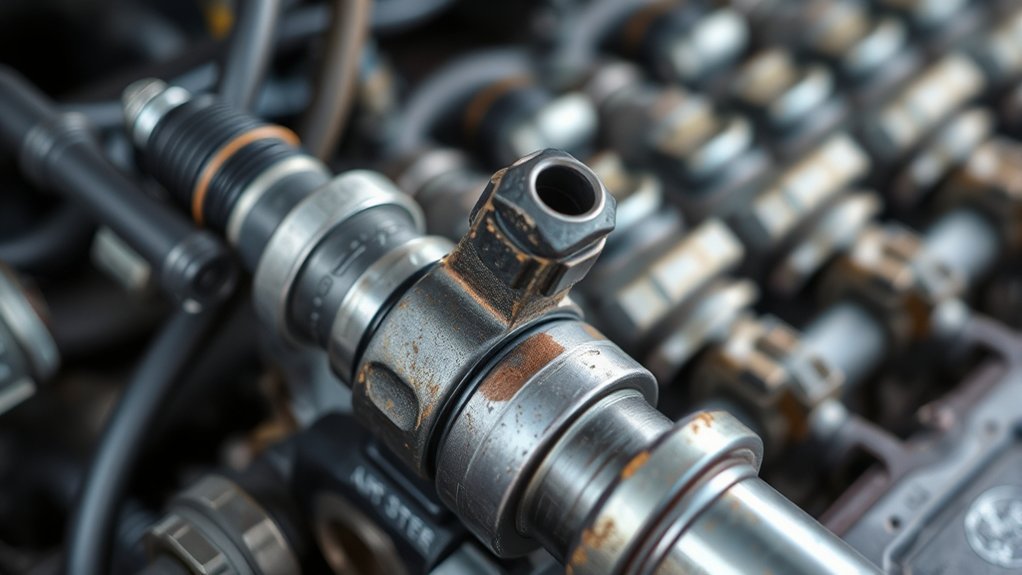
How does a fuel injector work in your engine? It sprays fuel directly into the combustion chamber or intake manifold in precise amounts. Your engine’s control unit sends signals to the injector, telling it when and how much fuel to release.
This precise delivery ensures your engine runs efficiently and smoothly. The fuel mixes with air, creating a combustible mixture that ignites to power your vehicle. Without fuel injectors, your engine wouldn’t get the right fuel-air balance, leading to poor performance.
Injectors replace older carburetor systems by offering better control, improving fuel economy and reducing emissions. You rely on fuel injectors to keep your engine running cleanly and responsively, adapting to different driving conditions seamlessly.
How a Bad Fuel Injector Leads to Engine Misfires
When a fuel injector goes bad, it disrupts the fuel delivery to your engine. This interruption throws off the combustion process and causes your engine to misfire.
Understanding how this happens helps you spot the problem early.
Fuel Delivery Disruption
Although your engine relies on a precise mix of air and fuel to run smoothly, a bad fuel injector can disrupt this balance by failing to deliver the right amount of fuel to the combustion chamber. This disruption causes uneven fuel distribution, leading to engine misfires.
When the injector clogs, leaks, or malfunctions, it either supplies too little or too much fuel, which affects combustion consistency.
| Injector Issue | Fuel Delivery Effect | Resulting Impact |
|---|---|---|
| Clogging | Reduced fuel flow | Lean mixture, misfire |
| Leakage | Excess fuel flow | Rich mixture, misfire |
| Electrical Fault | Intermittent spray | Erratic fuel delivery |
| Wear & Tear | Inconsistent spray | Combustion irregularity |
| Blockage | No fuel delivery | Cylinder misfire |
You’ll notice performance drops and rough idling as symptoms.
Combustion Process Interference
Why does a faulty fuel injector cause your engine to misfire? When a fuel injector malfunctions, it disrupts the precise fuel-air mixture needed for efficient combustion. If the injector sprays too much or too little fuel, the combustion chamber won’t ignite properly.
This irregular fuel delivery creates incomplete combustion, which leads to misfires. You’ll notice rough idling, reduced power, and hesitation during acceleration. The injector might also clog or leak, causing uneven fuel distribution across cylinders.
This imbalance interferes with the combustion process, making your engine struggle to maintain smooth operation. By understanding how a bad injector impacts combustion, you can pinpoint the root cause of misfires and address it before it results in more serious engine damage.
Signs Your Fuel Injector Might Be Failing
You might notice your engine struggling with performance or idling roughly when a fuel injector starts to fail. An unusual fuel smell around your vehicle can also be a clear warning sign.
Paying attention to these symptoms can help you catch problems early before they lead to bigger issues.
Engine Performance Issues
How can you tell if your fuel injector is starting to fail? One clear sign is a noticeable drop in engine performance. You might feel your car struggling to accelerate or hesitating when you press the gas pedal.
Your engine may also run rough or experience frequent misfires, causing uneven power delivery. Additionally, you could notice a decrease in fuel efficiency, meaning you’re filling up more often than usual.
Your vehicle might also stall unexpectedly or have trouble starting. These issues often stem from clogged or leaking injectors disrupting the fuel-air mixture. If you experience any of these symptoms, it’s important to have your fuel injectors inspected promptly to avoid further engine damage and maintain smooth, reliable performance.
Unusual Fuel Smell
Ever noticed a strong fuel smell around your car that wasn’t there before? That unusual odor can be a red flag signaling a failing fuel injector. When an injector leaks or sprays unevenly, excess fuel may escape, causing this distinct smell.
Here are three signs related to fuel smell to watch for:
- Fuel odor inside the cabin, especially after starting the engine.
- Strong gasoline smell near the engine bay or under the vehicle.
- Noticeable increase in fuel consumption paired with the smell.
If you catch any of these signs, don’t ignore them. A bad fuel injector leaking fuel not only causes that unpleasant smell but can also lead to misfires and damage to your engine.
Getting it checked promptly can save you costly repairs down the road.
Rough Idling Symptoms
A failing fuel injector doesn’t just cause a strong fuel smell. It can also make your engine run unevenly. When your fuel injector starts to clog or malfunction, you’ll notice your engine idling roughly.
The RPMs may fluctuate unpredictably, causing your car to shake or jerk slightly while at a stop. You might even feel vibrations through the steering wheel or seat. This happens because the injector isn’t delivering fuel consistently to the engine’s cylinders, disrupting combustion.
If you ignore these rough idling symptoms, it could lead to more serious engine problems or misfires. So, if your engine feels unstable when idling, it’s a good idea to have your fuel injectors checked and cleaned or replaced as needed.
What Causes Fuel Injectors to Fail?
Why do fuel injectors fail, causing engine issues like misfires? Understanding the causes helps you prevent costly repairs. Here are three common reasons:
- Contaminated Fuel: Dirt, debris, or water in your fuel can clog or damage injectors, leading to poor spray patterns.
- Wear and Tear: Over time, injector components wear out from constant use, reducing their effectiveness.
- Electrical Problems: Faulty wiring or connectors can disrupt the injector’s operation, causing inconsistent fuel delivery.
How Clogged Fuel Injectors Affect Engine Performance
How exactly do clogged fuel injectors impact your engine’s performance? When fuel injectors get clogged, they restrict the flow of fuel into the engine’s combustion chamber. This means your engine doesn’t get the right amount of fuel it needs to run smoothly.
Clogged fuel injectors limit fuel flow, causing your engine to run unevenly and lose smooth performance.
You’ll notice rough idling, hesitation during acceleration, and a drop in overall power. Your engine might also run lean, causing it to misfire or stall.
Over time, clogged injectors can increase fuel consumption because your engine compensates by injecting more fuel unevenly. Additionally, you may experience poor throttle response and reduced fuel efficiency.
Regular maintenance and cleaning of fuel injectors are essential to prevent these issues and keep your engine running at its best.
Why Leaking Fuel Injectors Cause Misfires
When a fuel injector leaks, it disrupts the precise fuel delivery your engine needs to run smoothly. This imbalance throws off the combustion process, causing your engine to misfire.
You’ll notice rough idling and poor performance because the fuel-air mix isn’t right.
Fuel Delivery Disruption
Ever wondered what happens inside your engine when a fuel injector starts leaking? When this occurs, it disrupts the fuel delivery system, leading to engine misfires. Here’s why:
- Uneven Fuel Supply A leaking injector floods one cylinder with excess fuel while starving others, causing imbalance.
- Poor Engine Performance Inconsistent fuel amounts mean your engine can’t burn fuel efficiently, reducing power and responsiveness.
- Increased Emissions Excess fuel from leaks doesn’t burn completely, leading to higher emissions and potential damage to your catalytic converter.
Combustion Process Imbalance
A leaking fuel injector doesn’t just disrupt fuel delivery. It throws off the entire combustion process inside your engine. When excess fuel leaks into the cylinder, it creates an imbalance in the air-fuel mixture.
This imbalance leads to incomplete combustion, causing your engine to misfire. Misfires reduce power, increase emissions, and can damage engine components over time.
Here’s a quick look at how a leaking injector affects combustion:
| Issue | Effect on Combustion |
|---|---|
| Excess Fuel | Rich air-fuel mixture |
| Incomplete Combustion | Misfires and rough running |
| Increased Emissions | Higher pollutants released |
| Engine Damage | Potential long-term harm |
Understanding this helps you see why fixing or replacing a bad injector is essential to keep your engine running smoothly.
How Electrical Problems Cause Injector Failures
Since fuel injectors rely on precise electrical signals to operate, any disruption in the wiring or connectors can quickly lead to injector failures. You might not realize it, but even minor electrical issues can cause your fuel injector to malfunction and trigger misfires.
Here are three common electrical problems that cause injector failures:
- Damaged Wiring Harness: Frayed or corroded wires interrupt the signal, preventing the injector from opening or closing properly.
- Faulty Connectors: Loose or oxidized connectors reduce electrical contact, leading to inconsistent injector operation.
- Blown Injector Coil: The injector’s internal coil can burn out due to overcurrent or heat, stopping it from activating altogether.
Keeping your vehicle’s electrical system in good shape is vital to prevent these failures and maintain smooth engine performance.
How to Diagnose a Bad Fuel Injector
Electrical issues can often cause fuel injectors to fail, but spotting a bad injector before it causes serious engine problems can save you time and money. To diagnose a faulty injector, start by listening for a clicking sound while the engine runs; a lack of clicking may indicate a stuck or dead injector. You can also use a mechanic’s stethoscope or a long screwdriver for this.
Next, check for engine misfires or rough idling, common symptoms of injector problems. Running a diagnostic scan tool can reveal trouble codes related to fuel delivery. Additionally, inspecting the fuel injector’s electrical connector and wiring for damage helps rule out external issues.
Finally, a fuel injector balance test or cleaning might be necessary to confirm its condition.
Repairing vs. Replacing Fuel Injectors
When dealing with fuel injector issues, you’ll need to decide whether repairing or replacing them is the best course of action. Here’s how to weigh your options:
- Cost-effectiveness: Repairing might save you money upfront if the damage is minor, but replacement ensures long-term reliability.
- Injector condition: If your injectors are clogged or leaking slightly, cleaning and minor repairs can work. Severe damage or electrical failure usually calls for replacement.
- Performance impact: Replacing faulty injectors restores full engine performance and prevents misfires better than repairs, which may only provide a temporary fix.
Ultimately, if you want a lasting solution and peace of mind, replacing bad fuel injectors is often the smarter choice. However, if budget constraints are tight, repairing can be a reasonable stopgap.
Preventing Fuel Injector Problems for a Smooth Engine
Choosing to repair or replace your fuel injectors affects not only immediate engine performance but also long-term reliability. To prevent injector problems, you should use high-quality fuel and avoid letting your gas tank run too low, which can introduce debris into the system.
Regularly changing your fuel filter is essential to keep contaminants from reaching the injectors. Periodic fuel system cleaning helps remove buildup that might cause clogging or uneven spray patterns.
Pay attention to warning signs like rough idling or poor acceleration and address them promptly. Also, follow your vehicle’s maintenance schedule closely.
Frequently Asked Questions
Can Bad Fuel Injectors Affect Fuel Economy Significantly?
Yes, bad fuel injectors can substantially affect your fuel economy. They disrupt the proper fuel-air mix, causing your engine to use more fuel than necessary. This lowers efficiency and increases your overall fuel consumption and costs.
Do Fuel Injector Issues Trigger the Check Engine Light?
Think of your check engine light as a smoke alarm. It’ll go off if fuel injector issues arise.
How Often Should Fuel Injectors Be Cleaned Professionally?
You should get your fuel injectors cleaned professionally every 30,000 to 50,000 miles to maintain optimal performance. Regular cleaning helps prevent buildup that can cause misfires or poor fuel efficiency. Don’t skip it!
Can Using Fuel Additives Prevent Injector Clogging?
Yes, using fuel additives can help prevent injector clogging by cleaning deposits and improving fuel flow. You’ll want to use them regularly and choose high-quality additives to keep your fuel injectors in good shape over time.
Are Fuel Injector Problems Covered Under Vehicle Warranties?
Imagine your car’s fuel injector fails within warranty. Typically, manufacturers cover such issues.
You’ll want to check your specific warranty terms, but most include fuel injector problems, especially if they cause drivability issues like misfires or poor performance.
Conclusion
If your engine’s misfiring, don’t jump to conclusions without checking the fuel injectors first—they can be the root of the problem. A bad fuel injector disrupts the fuel flow, throwing your engine off balance like a wrench in the works.
By spotting signs early and addressing issues promptly, you’ll keep your engine running smoothly and avoid costly repairs down the road. Remember, a little prevention goes a long way in keeping your ride reliable.
In conclusion, a bad fuel injector can cause a misfire, so it’s important to inspect them when troubleshooting engine issues.