Where to Put Car Seat
You should always install your child’s car seat in the back seat to avoid airbag injuries and collision impact risks. Proper car seat placement is essential for your child’s safety while traveling.
The safest spot is the rear middle seat, but if that’s unavailable, place it on the curbside to shield from traffic.
Secure the car seat tightly using seat belts or LATCH, ensuring the harness fits snugly. Never put a child under 13 in the front seat.
Knowing proper placement and installation can greatly enhance your child’s safety on the road.
Why the Back Seat Is the Safest Place for Car Seat Installation
Why should you always install a car seat in the back seat? Because it’s the safest spot for your child during travel. The back seat places your child away from airbags and the impact zones in frontal collisions, markedly reducing injury risk.
When you’re childproofing your vehicle, prioritizing back seat installation keeps your little one protected. During trip planning, always ensure the car seat is securely fastened there. This placement also allows you to focus on driving without distractions, keeping everyone safer.
Avoid installing the seat in the front, even if it seems convenient. By consistently choosing the back seat, you’re making a cautious, informed decision that maximizes your child’s safety every time you hit the road.
Which Side of the Back Seat Is Best for Car Seat Installation
Where exactly in the back seat should you install your child’s car seat? The safest spot is usually the rear middle seat, but if that’s not an option, the side closest to the curb is best. Here’s why you should consider this carefully:
- Safety from traffic: Installing on the curbside reduces exposure to passing vehicles when loading and unloading.
- Ease of access: It’s easier to reach your child without stepping into traffic, especially during road trips.
- Toy storage convenience: Placing the seat on the side allows more space for toys and essentials within your child’s reach.
- Vehicle design: Some cars have better anchorage and seatbelt fit on one side, improving installation security.
Always check your vehicle’s manual to confirm the optimal spot for your car seat.
Is It Ever Safe to Put a Car Seat in the Front Seat?
You should be very cautious about placing a car seat in the front seat because airbags can cause serious injury to a child. Laws often restrict front-seat car seat use based on age and weight, so it’s important to check your local regulations.
Generally, the safest place is the back seat unless specific guidelines say otherwise.
Airbag Risks
How safe is it to place a car seat in the front seat when airbags are involved? Airbag awareness is essential for vehicle safety, especially since airbags deploy with great force. Placing a car seat in the front seat exposes your child to serious risks. Here’s why:
- Front airbags inflate rapidly and can strike the car seat, causing injury.
- The force of deployment is designed for adults, not infants or small children.
- Even with airbags turned off, the front seat isn’t the safest spot due to crash dynamics.
- Vehicle safety experts recommend the rear seat as the safest location for car seats.
Understanding these airbag risks helps you protect your child effectively by choosing the safest seating position.
Legal Restrictions
When is it legally permissible to place a car seat in the front seat? Generally, legal compliance requires placing car seats in the back seat, as it’s the safest spot for children.
However, some states allow front-seat placement under specific conditions, such as when the vehicle lacks a back seat or if the passenger-side airbag is disabled. You must check your state’s citation requirements carefully, as laws vary widely.
Failing to follow these rules can lead to fines or legal trouble. Even if legally allowed, experts caution that the back seat offers the best protection. To stay within legal boundaries and prioritize safety, always verify your local regulations before deciding to install a car seat in the front seat.
Age And Weight Guidelines
Legal permissions set the baseline, but understanding age and weight guidelines plays a major role in deciding if a car seat can safely be placed in the front seat. While fashion trends and popular travel destinations might influence your lifestyle, child safety takes priority. Here’s what you need to consider:
- Children under 13 years old should ride in the back seat to minimize airbag risks.
- Rear-facing car seats are safest for infants and toddlers until they reach the weight or height limit set by the manufacturer.
- Forward-facing seats suit older toddlers who meet minimum age and weight requirements.
- Always check your vehicle’s manual for specific front seat airbag deactivation options.
Following these guidelines ensures your child stays protected, no matter where your next trip takes you.
How to Secure Your Car Seat With Seat Belts or LATCH
You’ll need to choose between securing your car seat with the vehicle’s seat belts or the LATCH system, depending on your car and seat model. Both methods require careful attention to ensure the seat is tight and properly positioned.
Let’s look at how to use each option correctly to keep your child safe.
Using Seat Belts
How do you guarantee your car seat is securely installed using seat belts? Start by avoiding discussion ideas that lead you to unrelated topics. Focus solely on proper installation steps. Here’s what you should do:
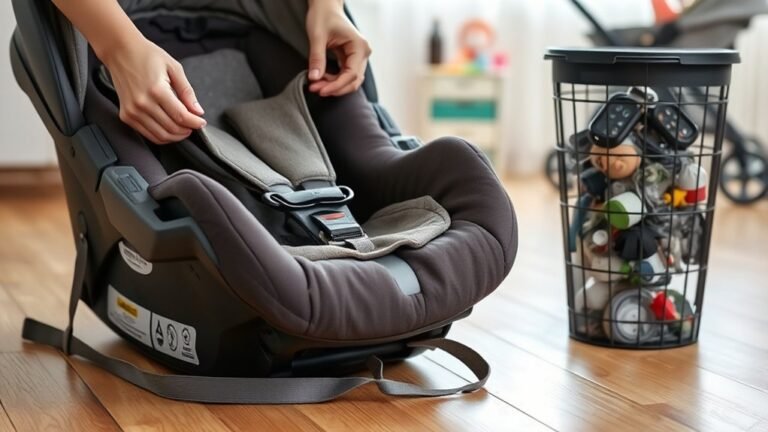
- Thread the seat belt through the car seat’s belt path as specified in the manual.
- Buckle the seat belt firmly and lock it by pulling the belt all the way out, then letting it retract.
- Press down on the car seat with your knee while tightening the belt to remove slack.
- Check for tightness: the car seat shouldn’t move more than an inch side-to-side or front-to-back.
Following these steps helps ensure your child’s safety by securing the car seat properly without confusion from unrelated factors.
Installing With LATCH
Where exactly should you attach the LATCH connectors to guarantee your car seat is secure? You’ll find the lower anchors in the vehicle’s back seat, usually where the seat cushion and backrest meet. Attach the LATCH connectors firmly to these anchors, ensuring they’re not connected to unrelated topics like seat belts or cargo hooks.
Tighten the straps so the car seat doesn’t move more than an inch side to side or front to back. While discussing installation, avoid confusing discussion ideas about LATCH and seat belt use; they’re distinct methods. Remember, not all cars or seats use LATCH, so check your manuals carefully.
Installing with LATCH properly is imperative to your child’s safety, so take your time and double-check every step.
How to Position Rear-Facing Car Seats Correctly
When installing a rear-facing car seat, ensuring it is positioned correctly is essential for your child’s safety. Proper positioning protects your little one during family road trips and complements your car seat fashion with a secure fit.
Follow these steps:
- Recline the seat at a 45-degree angle to support your baby’s head and neck.
- Use the car’s seat belt or LATCH system tightly to prevent movement over one inch.
- Position the harness straps at or below your child’s shoulders and snugly secure the chest clip at armpit level.
- Double-check the seat’s angle and stability after every adjustment or trip.
Correct placement not only prioritizes safety but also ensures comfort, making every journey worry-free.
Best Placement for Forward-Facing Car Seats
When installing a forward-facing car seat, you’ll want to choose the spot that offers the best protection in a crash. The middle of the back seat is usually the safest place, as it’s farthest from impact zones.
Always consider your vehicle’s specific seat design and seat belt or LATCH system to ensure a secure fit.
Optimal Seat Position
How can you ensure your forward-facing car seat offers the best protection? Positioning is key, and avoiding common car care misconceptions helps. Unlike car seat recipes that suggest one-size-fits-all solutions, your car’s layout matters.
Here’s how to find the optimal seat position:
- Choose the back seat, preferably the middle, to reduce impact risk.
- Ensure the seat is upright and reclined according to the manufacturer’s instructions.
- Tighten the seatbelt or LATCH system securely to minimize movement.
- Adjust the harness so it fits snugly at or above your child’s shoulders.
Safety Considerations
Why does the placement of a forward-facing car seat matter so much for safety? Proper placement minimizes injury risks during collisions by ensuring the seat absorbs impact effectively.
You should always position the car seat in the back seat, preferably in the center, as it’s the safest spot away from airbags and side impacts. Before road trips, double-check that the car seat is securely installed and that your vehicle’s car maintenance is up to date, including seat belts and anchors.
Avoid placing the seat where airbags deploy since they can cause serious harm to a forward-facing child. By following these safety considerations, you protect your child and reduce risks, making every journey safer and more comfortable.
Best Placement for Booster Seats
Where should you position a booster seat to maximize safety for your child? Proper placement is crucial as it ensures the seatbelt fits correctly, providing optimal protection. When navigating car seat navigation, consider these key points:
- Place the booster seat in the back seat, preferably in the middle, as it’s the safest spot away from airbags.
- Ensure the seatbelt fits snugly across your child’s shoulder and lap, not their neck or stomach.
- Avoid booster seat alternatives like using only a seatbelt too early, which can compromise safety.
- Check your vehicle’s manual and the booster seat instructions for specific guidance on installation and positioning.
Following these steps helps you secure your child safely and complies with recommended safety standards.
Common Car Seat Placement Mistakes to Avoid
Placing a booster seat correctly is key to your child’s safety, but common mistakes can reduce its effectiveness. Don’t let fashion trends or flashy travel gadgets distract you from proper installation.
Avoid placing the seat in front of an active airbag or using a seat that’s too large or small for your child.
| Mistake | Why to Avoid It |
|---|---|
| Front seat installation | Airbags can cause serious injury |
| Loose seatbelt fit | Reduces restraint effectiveness |
| Wrong seat size for child | Compromises protection |
Stay vigilant and focus on the basics, ensuring the booster seat fits snugly and is installed in the safest position. Your child’s safety always comes before convenience or style.
How to Fit Car Seats in Different Vehicles
How can you guarantee a car seat fits securely in different vehicles? First, check your vehicle’s manual for specific car seat guidelines. Despite varying car seat aesthetics, safety remains paramount. Keep in mind that many car seat patents focus on universal fit features, but compatibility can still vary.
- Measure your vehicle’s seat dimensions and compare them with the car seat’s specifications.
- Use the LATCH system or seatbelt as recommended, ensuring a tight installation.
- Test for movement; the seat shouldn’t shift more than an inch side-to-side or front-to-back.
- Avoid placing the seat where airbags might deploy, even if it looks aesthetically pleasing.
Each step ensures safety, regardless of your vehicle’s design or the car seat’s look.
How to Keep Your Child Comfortable in Their Car Seat
After securing the car seat properly, the next priority is making sure your child stays comfortable during the ride. Start by dressing your child in breathable, weather-appropriate clothing to prevent overheating or chill.
Ensure comfort after securing the car seat by dressing your child in breathable, weather-appropriate clothing.
Use the car’s interior design to your advantage: adjust the seat’s position to avoid direct sunlight or drafts, and consider window shades for added protection. Ensure the harness is snug but not too tight, allowing your child to move slightly without compromising child safety.
Adding a small, firm headrest or neck support can help maintain proper posture without obstructing straps. Regularly check for any pressure points caused by the car seat padding, and remove bulky coats that might interfere with harness fit.
Comfort and safety go hand in hand. Paying attention to both keeps your child secure and content on every trip.
Frequently Asked Questions
How Often Should I Check the Car Seat Installation?
You should check your car seat installation at a daily vs weekly check interval. Check daily if you use it often, especially after adjusting or moving it.
At least check weekly to guarantee it’s secure and correctly positioned.
Can I Use a Car Seat With Aftermarket Seat Covers?
You wouldn’t use a rotary phone today, so don’t rely on aftermarket seat covers with your car seat. They can interfere with car seat maintenance and safety, so always check compatibility before adding aftermarket accessories.
What Age or Weight Requires Transitioning Car Seats?
You’ll shift car seats based on age requirements and weight thresholds; usually, toddlers switch from rear-facing at around 2 years or when they reach 40 pounds.
Always follow your car seat’s specific guidelines carefully.
Are There Specific Car Seats for Winter Weather?
You might think winter-specific car seats exist, but they don’t. Instead, you should avoid bulky coats under your child and limit seat heating use to prevent overheating, ensuring both safety and comfort in winter weather.
How Do I Register My Car Seat for Safety Recalls?
You can register recalls and complete your safety registration by visiting the manufacturer’s website or calling their customer service. This ensures you get timely updates about any safety recalls related to your car seat.
Conclusion
Think of your car seat placement like planting a seed—you want it in the safest soil to help your child grow protected. Always choose the back seat, preferably the middle or the side away from traffic, to shield them from harm.
Secure the seat properly, avoiding common mistakes, and adjust for comfort. By doing this, you’re not just placing a seat; you’re building a strong foundation of safety and care for every journey ahead.
Remember, the best place for your child’s car seat is where they are safest and most secure—this is the key to proper car seat placement.