How to Let Air Out of Tire
To let air out of your tire safely, first locate the valve stem and remove the cap. Use a reliable tire pressure gauge to check the current pressure when tires are cold. Press the valve core gently to release air slowly, watching the pressure closely, and stop once you reach the recommended level.
Avoid rushing or deflating hot tires to prevent damage. Afterward, replace the valve cap and adjust as needed for your driving conditions. There’s more to know to do this correctly and safely.
Key Takeaways
- Use a reliable tire pressure gauge to check the current pressure when tires are cold before letting air out.
- Remove the valve cap, press the valve core slowly with a tool or fingernail to release air gradually.
- Monitor pressure frequently and stop releasing air when the recommended tire pressure is reached.
- Avoid rushing the process and never deflate hot tires to maintain safety and even pressure.
- Replace the valve cap securely after adjusting and recheck pressure to ensure it stays at the correct level.
How to Check Your Tire Pressure Before Letting Air Out
Before you let air out of your tire, how do you know if it’s necessary? First, find the recommended tire pressure for your vehicle, usually listed on a sticker inside the driver’s door or in the owner’s manual.
Then, use a reliable tire pressure gauge to check the pressure when the tires are cold for the most accurate reading. Remove the valve cap, press the gauge firmly onto the valve stem, and read the number.
Compare this to the recommended pressure. If your tire pressure is above that level, you’ll need to let some air out. Checking pressure regularly helps you maintain optimal tire performance, improve fuel efficiency, and ensure safety.
Don’t guess. Always measure before adjusting your tire’s air.
Tools Needed to Let Air Out of Tires Safely
What tools do you need to safely let air out of your tires? First, grab a reliable tire pressure gauge to check the current pressure accurately.
Next, a valve core tool is essential. It helps you press down the valve stem to release air without damaging it. Some prefer using a small screwdriver or the tip of the gauge itself if designed for deflation, but a dedicated valve core tool offers better control.
Additionally, keep a portable air compressor or pump handy to re-inflate the tire if needed. Finally, wear gloves to protect your hands from dirt and sharp elements.
With these tools, you can safely and precisely let air out of your tires, avoiding damage or over-deflation risks.
How Much Air to Let Out for Safe Tire Performance
You’ll want to let out just enough air to reach the recommended tire pressure for your vehicle. Overinflation can cause uneven wear and reduce traction, so be careful not to leave too much air inside.
Also, consider your load. Heavier loads may require slightly higher pressure for safe performance.
Recommended Tire Pressure Levels
How much air should you let out to keep your tires performing safely? First, check your vehicle’s recommended tire pressure, usually found on a sticker inside the driver’s door or in the owner’s manual. This pressure is measured in pounds per square inch (PSI) and varies by vehicle and tire type.
When you let air out, aim to reach this recommended PSI for optimal grip, fuel efficiency, and tire longevity. Avoid guessing. Use a reliable pressure gauge to monitor your tires. If your tires are overinflated, releasing air until you hit the correct PSI ensures balanced handling and prevents uneven wear.
Keeping your tires at their recommended pressure keeps you safer on the road and extends the life of your tires.
Impact of Overinflation Risks
Why does overinflation pose such a risk to your tires? When you pump in too much air, your tires become stiff and less able to absorb road shocks. This leads to uneven wear, especially in the center tread, reducing tire life.
Overinflated tires also have a smaller contact patch with the road, which can compromise traction and increase stopping distances. You might feel a harsher ride, and the risk of a blowout rises because the tire is under excessive internal pressure.
To keep your tires safe, let out just enough air to reach the recommended pressure, avoiding the temptation to overinflate “just in case.” Proper inflation ensures balanced wear, better handling, and safer driving, so don’t overlook this essential step.
Adjusting for Load Conditions
Ensure your tires are kept at the recommended pressure, but adjusting air pressure based on your load can make a big difference in tire performance and safety. When you carry heavier loads, your tires need more air to support the extra weight and maintain proper contact with the road.
Check your vehicle’s manual or tire placard for specific load-based pressure recommendations. Don’t guess. Too little air can cause tire wear and heat buildup, while too much can reduce traction.
If you lighten your load, you can safely let some air out to improve ride comfort and handling. Always use a reliable pressure gauge to measure and adjust air pressure after loading or unloading. This simple step helps ensure your tires perform safely under varying conditions.
How to Let Air Out of Your Tire Step-by-Step
First, find the valve stem on your tire, which is usually easy to spot. Then, press the valve core to release air slowly while keeping an eye on the pressure.
This way, you can make sure you let out just the right amount.
Locate Valve Stem
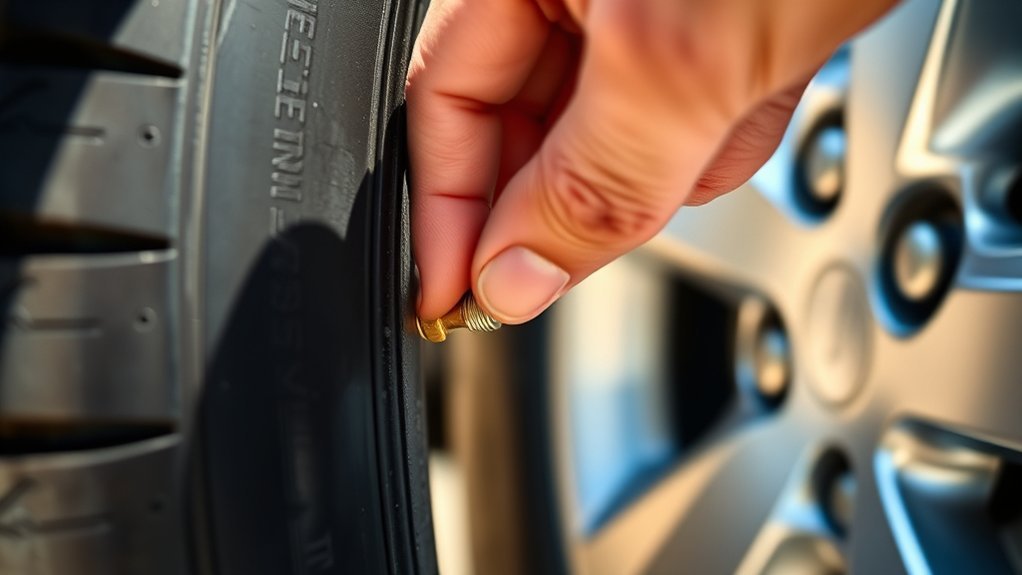
Where exactly is the valve stem on your tire? It’s a small, cylindrical rubber or metal piece that sticks out from the wheel. Usually, you’ll find it near the edge of the rim, pointing outward.
It’s where you inflate or deflate your tire, so locating it is essential before letting air out. To spot it quickly, stand near your tire and look around the rim’s perimeter.
The valve stem may have a cap on it, which you’ll need to unscrew before releasing any air. Keep in mind it’s usually about an inch long and easy to spot once you know what you’re looking for.
Identifying the valve stem is your first step to safely adjusting your tire pressure.
Press Valve Core
How do you release air from your tire once you’ve found the valve stem? First, remove the valve cap by twisting it counterclockwise.
Next, locate the small pin inside the valve core at the center of the stem. Use a valve core tool or a small, pointed object like a screwdriver or pen to press down on this pin.
Pressing the valve core lets the air escape from the tire. Keep steady pressure to release air gradually; releasing too quickly can cause the tire to deflate too much.
Listen for the hissing sound to confirm air is escaping. When you’ve let out enough air, stop pressing the pin, and replace the valve cap to protect the valve from dirt and moisture.
Monitor Tire Pressure
Why does monitoring your tire pressure matter after letting air out? It ensures your tire maintains the right inflation level for safety and performance. After you press the valve core to release air, use a reliable tire pressure gauge to check the pressure immediately.
Compare the reading to the manufacturer’s recommended PSI, usually found on the driver’s side door jamb or your owner’s manual. If the pressure is still too high or too low, adjust accordingly by releasing more air or adding air.
Regularly monitoring prevents uneven tire wear, improves fuel efficiency, and enhances handling. Don’t forget to recheck the pressure after driving a short distance, as tires can settle or fluctuate with temperature changes. Staying vigilant keeps your ride safe and smooth.
How to Adjust Air Pressure for Different Driving Conditions
When should you adjust your tire pressure for different driving conditions? You should tweak it based on the terrain and load. For rough or off-road surfaces, slightly lowering tire pressure improves traction and absorbs bumps better. Just don’t go too low, or you risk damaging the tire.
On highways or smooth roads, keep the pressure at the manufacturer’s recommended level for optimal fuel efficiency and handling. If you’re carrying heavy loads, add a few PSI to support the extra weight safely.
Cold weather can also reduce tire pressure, so check and adjust accordingly to maintain proper inflation. Always use a reliable gauge to measure pressure before driving. Adjusting your tire pressure to match conditions ensures better performance, safety, and tire longevity.
Common Mistakes When Letting Air Out of Tires
What are some common mistakes you might make when letting air out of your tires? Avoid these errors to keep your tires safe and balanced. First, don’t rush the process; releasing air too quickly can lead to uneven pressure.
Avoid rushing when releasing tire air to maintain even pressure and keep your tires safe and balanced.
Second, avoid using sharp objects to press the valve, as they can damage it. Third, don’t forget to check the pressure frequently with a reliable gauge to avoid letting out too much air.
Fourth, don’t ignore the manufacturer’s recommended tire pressure, even if you want a softer ride. Lastly, never let air out when the tires are hot from driving, as pressure readings will be inaccurate.
- Rushing air release
- Using improper tools
- Skipping pressure checks
- Ignoring recommended pressure
- Deflating hot tires
How to Reinflate Tires After Letting Air Out
After carefully letting air out of your tires without making common mistakes, the next step is to reinflate them properly. First, check your vehicle’s recommended tire pressure, usually found on the driver’s door jamb or owner’s manual. Use a reliable tire pressure gauge to measure the current pressure.
Attach an air compressor or pump to the valve stem and add air in short bursts. Frequently stop to check the pressure, preventing overinflation. If you don’t have a compressor, visit a gas station with an air pump. Remember, inflating slowly and checking often ensures accuracy.
Once the tire reaches the target pressure, securely replace the valve cap to keep dirt out. Proper reinflation maintains safety, performance, and tire longevity.
When Should You See a Pro About Your Tire Pressure?
How do you know if your tire pressure issue requires professional help? If you’ve checked and adjusted your tires but still notice problems, it’s time to consult a pro. Certain signs indicate that the issue might be beyond simple air adjustments and need expert attention.
Watch out for these warning signs:
- Frequent loss of pressure despite reinflating
- Visible damage like cuts, bulges, or punctures
- A persistent vibration or wobbling while driving
- Difficulty maintaining proper air pressure over time
- Tire pressure warning light stays on after adjustments
If any of these happen, don’t hesitate to visit a tire specialist. They can diagnose hidden issues and ensure your safety on the road.
Frequently Asked Questions
Can Tire Pressure Affect Fuel Efficiency?
Yes, tire pressure affects fuel efficiency. When your tires are underinflated, your car works harder, using more gas.
Keeping them properly inflated helps you save fuel and improve your vehicle’s performance and safety.
How Does Temperature Impact Tire Pressure?
Temperature impacts tire pressure because air expands when heated and contracts when cold. You’ll notice your tire pressure rises on hot days and drops in cold weather, so you should check and adjust it regularly to stay safe.
Are All Tire Valves the Same Size?
Not all tire valves are the same size. You’d think they’d fit every tire like a glove, but nope! There are Schrader and Presta valves, each demanding your attention when you’re checking or adjusting pressure.
Can Overinflated Tires Cause Uneven Wear?
Yes, overinflated tires can cause uneven wear by concentrating pressure in the center tread, leading to faster wear there. You’ll notice reduced traction and a harsher ride, so checking and adjusting pressure regularly is important.
How Often Should Tire Pressure Be Checked?
Every month, every week, or every time you hit the road, checking your tire pressure keeps you safe and saves fuel.
Don’t wait for a flat. Make it a habit, a simple rhythm in your routine.
Conclusion
Now that you know how to gently encourage your tires to breathe, you’re set for smoother, safer rides. Remember, a little let-out goes a long way in tuning your tire’s performance.
Keep an eye on your pressure and adjust thoughtfully for the road ahead. If things feel off, don’t hesitate to invite a pro to take a look.
With these tips, your tires will be happy campers, ready for any journey! Properly letting air out of tire ensures your safety and enhances your driving experience.