What Does Tire Pressure Monitor Mean
A tire pressure monitor means your vehicle continuously checks the air pressure in each tire to keep you safe and prevent blowouts. Sensors inside your tires send real-time pressure data to your dashboard, alerting you if any tire is under or overinflated.
This system helps maintain better handling, fuel efficiency, and tire wear. If your tire pressure light comes on, it’s a signal to act promptly.
There’s more to learn about why this matters and how to handle it.
Key Takeaways
- A Tire Pressure Monitor System (TPMS) continuously tracks tire air pressure in real time using sensors inside each tire.
- It alerts the driver via dashboard warnings if tire pressure falls below recommended levels.
- TPMS helps prevent unsafe driving conditions like blowouts and poor vehicle handling caused by incorrect tire pressure.
- The system improves safety by maintaining proper tire inflation, ensuring better traction, braking, and stability.
- TPMS eliminates manual pressure checks by providing accurate, real-time tire pressure information to the driver.
What Is a Tire Pressure Monitor and How Does It Work?
How does a tire pressure monitor keep you safe on the road? It constantly checks your tires’ air pressure and alerts you if it drops below the recommended level. You don’t have to guess or manually check each tire. The system does it for you in real time.
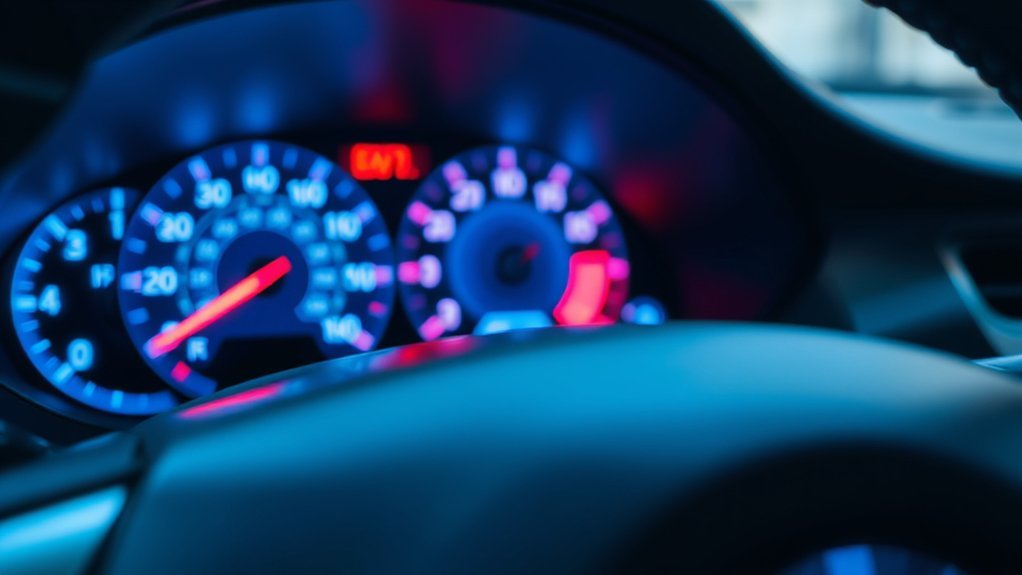
Most monitors use sensors inside the tires that send pressure data to your car’s dashboard. When pressure is low, you see a warning light or message immediately, so you can act quickly. This helps prevent dangerous situations like blowouts or loss of control.
Why Does Tire Pressure Matter for Your Safety?
You rely on proper tire pressure to keep your vehicle stable and responsive while driving. Low or high pressure can increase the risk of tire blowouts and make it harder to stop quickly.
Understanding how tire pressure affects handling, safety, and braking distance can help you avoid accidents.
Impact On Vehicle Handling
Tire pressure plays a crucial role in your vehicle’s handling and overall safety. When your tires are properly inflated, you maintain excellent contact with the road, which means better traction and control.
Underinflated tires can make steering sluggish and less responsive, while overinflated tires reduce the tire’s grip, causing a harsher ride and unstable handling. Both conditions increase your chances of losing control, especially during sharp turns or sudden maneuvers.
Proper tire pressure also ensures even tire wear, helping your vehicle handle predictably over time. By keeping an eye on your tire pressure monitor and adjusting as needed, you’ll drive with confidence and improve your safety on the road.
Don’t underestimate how much correct tire pressure affects your driving experience.
Risk Of Tire Blowouts
Why does maintaining correct pressure in your tires matter so much for your safety? Because underinflated tires increase the risk of blowouts. When your tires don’t have enough air, they flex more as you drive, generating excess heat.
This heat weakens the tire structure, making it more likely to fail suddenly. A blowout at high speeds can cause you to lose control, leading to dangerous accidents. On the other hand, overinflated tires are more prone to impact damage, which can also cause blowouts.
Effect On Braking Distance
How much difference can correct tire pressure make when you hit the brakes? Quite a bit. Properly inflated tires grip the road better, helping you stop faster and safer.
When your tires are underinflated, the contact patch changes, reducing traction and increasing braking distance. This delay can be critical in emergencies.
Think about it like this:
- Your car’s tires gripping icy roads
- Sudden stops in heavy traffic
- Wet pavement slickness
- Emergency braking on gravel
- Sharp turns at high speeds
Each scenario demands optimal tire pressure for maximum control. Your Tire Pressure Monitoring System (TPMS) helps you maintain that balance, ensuring you don’t compromise safety.
Keep your tires at the recommended pressure; it’s a simple step that can save lives.
How Does Tire Pressure Affect Car Performance?
When your tire pressure is off, your car’s fuel efficiency takes a hit, meaning you’ll spend more at the pump. You’ll also notice changes in handling, which can affect your safety on the road.
Keeping your tires properly inflated helps your car perform its best in both areas.
Fuel Efficiency Impact
Have you ever noticed your car feels sluggish or guzzles more fuel than usual? Low tire pressure can be the culprit, reducing your fuel efficiency significantly. When tires aren’t properly inflated, your engine works harder, burning more fuel.
Here’s how underinflated tires impact fuel economy:
- Increased rolling resistance makes your car drag more.
- Engine strains to maintain speed, consuming extra fuel.
- Tires wear unevenly, affecting overall performance.
- You need more frequent refueling stops.
- Your fuel costs rise without any change in driving habits.
Handling And Safety
Beyond affecting your fuel efficiency, tire pressure plays a significant role in your car’s handling and safety. When your tires are underinflated, you’ll notice sluggish steering and reduced responsiveness, making it harder to control your vehicle, especially during sudden maneuvers.
Overinflated tires, on the other hand, can cause a harsh ride and reduce the tire’s contact patch with the road, compromising traction. Both extremes increase the risk of tire blowouts, which can lead to dangerous accidents.
Properly inflated tires ensure even tread wear, better grip, and optimal braking performance. By keeping your tires at the recommended pressure, you maintain stability and improve your ability to react quickly in emergencies, ultimately protecting you and your passengers on the road.
Common Causes of Your Tire Pressure Monitor Light
Why does your tire pressure monitor light come on unexpectedly? Several common causes could be triggering it, and knowing these helps you act quickly. Often, the light signals uneven or low tire pressure, but it’s not the only reason.
Here are five typical causes:
- Sudden temperature drops causing tire pressure to fall
- A slow leak from a punctured tire
- Faulty or damaged tire pressure sensors
- Improper tire inflation after a recent fill-up
- Tire pressure sensors needing a reset after rotation or replacement
Understanding these causes keeps you aware and ready to check your tires whenever the warning light flashes. Ignoring it can lead to unsafe driving conditions or damage to your tires and vehicle.
What Should You Do When the Tire Pressure Monitor Light Comes On?
What steps should you take when the tire pressure monitor light comes on? First, don’t panic. The light is a warning, not an emergency alert.
Safely pull over as soon as possible and inspect your tires visually for obvious signs of deflation or damage. If everything looks normal, it’s still important to address the issue promptly.
Drive carefully to a nearby service station or use a portable gauge to check tire pressure. Adjust any tires that are underinflated to the recommended levels specified in your vehicle’s manual or door jamb sticker.
After inflating, the light should turn off after you drive for a bit. If it remains on, or if you notice uneven wear or leaks, have a professional inspect your tires and the monitoring system.
How Do You Check Tire Pressure Manually?
Once you’ve noticed the tire pressure monitor light and taken initial steps, checking your tire pressure manually ensures accuracy. Here’s how you do it:
Find a reliable tire pressure gauge. Digital or analog works fine.
Remove the valve cap from the tire you want to check.
Press the gauge firmly onto the valve stem and hold it to get a reading.
Compare the reading to your vehicle’s recommended tire pressure, usually found on the driver’s side door jamb.
Repeat this process for all four tires, including the spare if applicable.
Checking manually helps you confirm if the TPMS is accurate or if you need to add or release air. Always do this when tires are cold for the best results.
How to Reset and Maintain TPMS Sensors
Wondering how to reset your TPMS sensors after adjusting tire pressure? First, consult your vehicle’s owner manual for specific reset instructions, as methods vary by make and model. Commonly, you’ll start by turning your ignition to the “on” position without starting the engine, then pressing and holding the TPMS reset button until the warning light blinks or turns off.
Some vehicles require driving at a certain speed for the sensors to recalibrate. To maintain your TPMS sensors, regularly check tire pressure and keep valves clean to prevent damage. Avoid harsh chemicals or high-pressure water near the sensors.
Proper maintenance ensures accurate readings and prolongs sensor life, keeping your monitoring system reliable and your driving safe.
When Should You Replace TPMS Sensors?
How do you know when it’s time to replace your TPMS sensors? You’ll notice signs that indicate your sensors aren’t working properly or are nearing the end of their life. Typically, TPMS sensors last about 5-10 years or 60,000-100,000 miles, but certain factors can shorten their lifespan.
Look out for these warning signs:
- Tire pressure warning light stays on even after inflating tires
- Inconsistent or inaccurate tire pressure readings
- Sensor battery failure messages on your dashboard
- Physical damage to the sensor during tire changes
- Sensors older than 7 years, as batteries begin to weaken
Replacing your TPMS sensors promptly ensures accurate monitoring and keeps you safe on the road.
Frequently Asked Questions
Can Weather Changes Affect Tire Pressure Readings?
Yes, weather changes affect tire pressure readings because air contracts when it’s cold and expands when it’s warm. You’ll notice your tire pressure drops in colder weather, so you should check and adjust regularly to stay safe.
Are Tire Pressure Monitors Required by Law?
Yes, tire pressure monitors are required by law on all new cars sold in the U.S. since 2007. They help you stay safe by alerting you when your tires lose pressure unexpectedly.
How Accurate Are Tire Pressure Monitoring Systems?
Tire pressure monitoring systems are about 90-95% accurate, so you can trust them to alert you promptly. However, factors like temperature changes and sensor age might cause occasional false readings. Regular manual checks help too.
Can Aftermarket Tires Affect TPMS Functionality?
Yes, aftermarket tires can affect your TPMS functionality if they don’t match the original specifications. You might experience inaccurate readings or sensor issues, so always ensure your new tires are compatible with your TPMS system.
Do All Vehicles Have the Same Type of TPMS?
Do you think all vehicles use the same TPMS? They don’t. You’ll find direct and indirect systems, each working differently.
Conclusion
Now that you know how a tire pressure monitor helps keep you safe and your car performing well, isn’t it worth paying attention to that warning light? Ignoring it could lead to poor handling, reduced fuel efficiency, or even a blowout.
Regularly checking and maintaining your tire pressure and TPMS sensors guarantees you’re driving safely and smoothly.
So, next time the light comes on, you’ll know exactly what to do to keep your tire pressure monitor functioning properly!