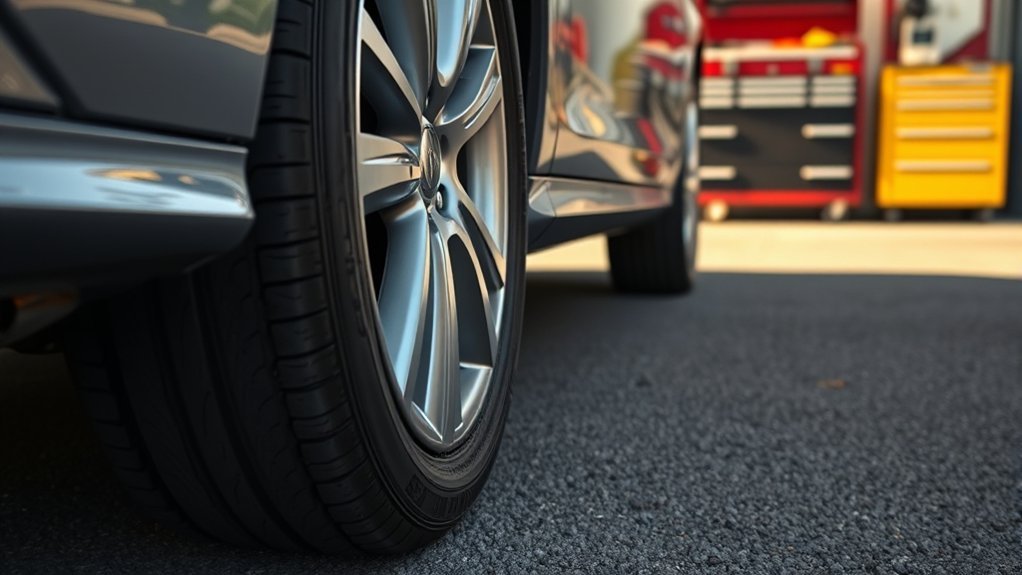
Is Wheel Alignment Necessary
You can’t skip wheel alignment if you want your car to drive straight and handle well. Proper wheel alignment is essential for maintaining your vehicle’s performance and safety. Misalignment causes uneven tire wear, makes your vehicle pull to one side, and lowers fuel efficiency.
It also leads to costly tire replacements and suspension damage over time. Getting regular alignment checks keeps your car safe, saves money, and improves driving comfort. If you keep going, you’ll find out how to spot misalignment signs and maintain the best performance for your vehicle.
Key Takeaways
- Wheel alignment ensures proper tire angles, preventing uneven wear and extending tire lifespan.
- Misalignment causes poor handling, steering issues, and vehicle pulling, compromising safety and driving comfort.
- Regular alignment improves fuel efficiency by reducing rolling resistance and strain on suspension components.
- Alignment checks are recommended every 12,000 miles or after impacts like potholes or curbs.
- Proper alignment saves money long-term by reducing tire replacements and suspension repair costs.
What Is Wheel Alignment and Why Does It Matter?
What exactly is wheel alignment, and why should you care about it? Wheel alignment refers to adjusting your vehicle’s wheels to the manufacturer’s specifications. This ensures they point in the right direction and sit at the correct angles relative to the road and each other.
When your wheels are properly aligned, your car drives straight without pulling to one side, and your tires wear evenly. You’ll also notice smoother handling and better fuel efficiency.
Neglecting wheel alignment can lead to uneven tire wear, forcing you to replace tires more often. It’s a simple service that maintains your vehicle’s stability and safety on the road. So, keeping an eye on your wheel alignment helps you save money and drive more confidently.
How Does Misalignment Affect Your Car’s Performance?
When your wheels are misaligned, your tires wear out faster, costing you more in replacements. You’ll also notice your steering feels off, making handling less precise and safe.
Plus, misalignment can lower your fuel efficiency, draining your wallet at the pump.
Tire Wear And Tear
How often have you noticed uneven tire wear but dismissed it as normal? Misalignment causes your tires to wear unevenly, reducing their lifespan and your car’s efficiency.
When your wheels aren’t aligned properly, certain parts of the tire bear more stress, leading to faster wear and potential damage.
Here’s what misalignment does to your tires:
- Causes uneven tread wear, forcing you to replace tires sooner.
- Increases the risk of tire blowouts due to weak spots.
- Reduces fuel efficiency by increasing rolling resistance.
- Compromises vehicle stability, increasing the chance of accidents.
Regular wheel alignment helps you avoid these issues, saving money and ensuring your tires last longer. Don’t ignore uneven wear; it’s a clear sign your car needs attention.
Steering And Handling
Uneven tire wear doesn’t just shorten your tires’ lifespan. It also affects how your car responds on the road. When your wheels are misaligned, you’ll notice your steering feels off.
Your vehicle might pull to one side, forcing you to constantly correct your steering, which can be tiring and unsafe. Misalignment can also cause your steering wheel to vibrate or feel loose, reducing your control.
Sharp turns may feel less stable, and your car’s handling won’t be as smooth as it should be. By keeping your wheels properly aligned, you ensure that your steering is precise and your handling is predictable, making your drives safer and more comfortable every time you get behind the wheel.
Fuel Efficiency Impact
Why does your car seem to burn more fuel than usual? One major culprit could be wheel misalignment. When your wheels aren’t aligned properly, your vehicle faces increased rolling resistance. This forces your engine to work harder, consuming more fuel.
Plus, misalignment causes uneven tire wear, reducing traction and efficiency.
Here’s how misalignment impacts fuel efficiency:
- Increased tire drag leads to higher fuel consumption.
- Uneven tire wear reduces optimal road contact.
- The engine strains more to maintain speed.
- Poor alignment disrupts smooth driving, causing inefficient fuel use.
How To Tell If Your Car Needs a Wheel Alignment?
You can usually tell if your car needs a wheel alignment by checking for uneven tire wear.
If your steering wheel feels off-center or you notice it pulling to one side, that’s another clear sign. Paying attention to these issues helps you avoid bigger problems down the road.
Uneven Tire Wear
How can you tell if your car needs a wheel alignment? One of the clearest signs is uneven tire wear. When your wheels aren’t properly aligned, your tires won’t wear evenly, which can lead to premature replacement and unsafe driving conditions.
Here’s what to look for:
- Bald spots appearing more on one side of the tire than the other.
- Feathered edges where the tire tread feels rough or worn down unevenly.
- Inner or outer edge wear showing significant tread loss on just one side.
- Vibration or pulling when you drive, which often accompanies uneven wear.
If you notice any of these signs, it’s a good idea to get your alignment checked to protect your tires and improve your car’s handling.
Steering Wheel Issues
When does your steering wheel signal a need for alignment? If you notice your steering wheel isn’t centered when driving straight, it’s a clear warning. You might also feel it pulling to one side even on smooth roads.
Another sign is a vibrating steering wheel, which often means your wheels are misaligned or unbalanced. These issues can cause uneven tire wear and affect your car’s handling and safety.
If you experience any of these symptoms, get your alignment checked promptly. Ignoring steering wheel problems can lead to more costly repairs and unsafe driving conditions.
Regular alignment checks ensure your steering feels responsive and your vehicle drives straight, saving you money and stress in the long run.
How Often Should You Get a Wheel Alignment?
Wondering about the ideal timing for a wheel alignment? Generally, you should get your wheels aligned every 1 to 2 years. However, several factors might require more frequent checks to keep your vehicle in top shape.
Consider these key points:
- After hitting a pothole or curb hard, check your alignment immediately.
- If you notice uneven tire wear or your vehicle pulling to one side, schedule an alignment promptly.
- Regular maintenance schedules often recommend alignment checks when you rotate your tires, usually every 6,000 to 8,000 miles.
- If you drive on rough or unpaved roads frequently, you may need alignments more often than average.
What Happens During a Professional Wheel Alignment?
Keeping your wheel alignment on schedule helps prevent uneven tire wear and pulling, but understanding what happens during a professional wheel alignment can give you confidence in the process.
Regular wheel alignment prevents uneven tire wear and pulling while boosting your confidence in the process.
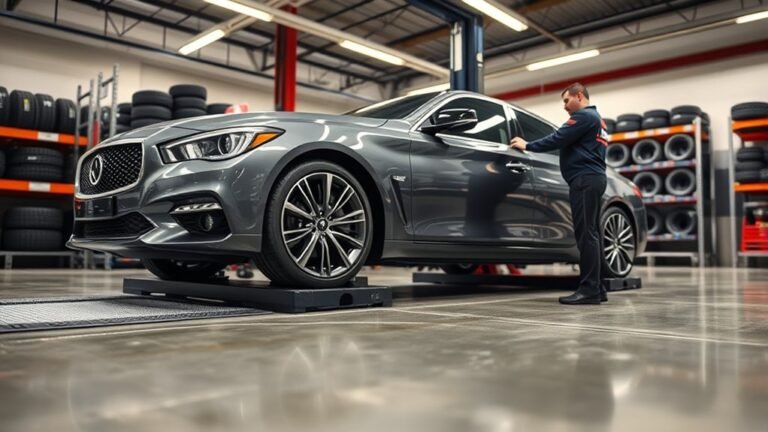
When you bring your vehicle in, a technician will first inspect your suspension and steering components for any damage or wear. Then, they’ll mount your car on an alignment rack and use specialized sensors or cameras to measure the angles of your wheels: camber, caster, and toe.
Using this data, they’ll adjust these angles to match your vehicle’s manufacturer specifications. Once the adjustments are complete, the technician will run a final check to ensure everything is accurate.
This process helps your car drive straight, improves tire life, and enhances overall safety.
Can You Check Wheel Alignment Yourself?
How can you tell if your wheel alignment is off without professional tools? While a precise check requires specialized equipment, you can spot signs yourself. Start by observing your car’s behavior and tire condition.
Here are four ways to check at home:
- Visual Tire Inspection: Look for uneven tire wear or bald spots.
- Steering Wheel Position: Notice if it’s crooked when driving straight.
- Vehicle Pulling: See if your car drifts to one side on a flat road.
- Test Drive Feedback: Pay attention to vibrations or unusual handling.
These simple checks can alert you to alignment issues early, but for accuracy and safety, a professional alignment remains essential.
How Much Does Wheel Alignment Cost?
What should you expect to pay for a wheel alignment? Typically, a standard two-wheel alignment costs between $50 and $75, while a four-wheel alignment ranges from $100 to $150. Prices can vary depending on your vehicle’s make, model, and where you live.
Luxury or specialty vehicles may cost more. Some shops offer a free alignment check, but the actual service usually requires a fee. Keep in mind, if your suspension or steering components need repair, those expenses will be extra.
Also, many places suggest regular alignment checks every 12,000 miles or once a year. Knowing the cost upfront helps you budget for this important maintenance without surprises. Getting your wheels aligned ensures your vehicle handles safely and smoothly.
How Proper Wheel Alignment Saves You Money
Ever wondered why proper wheel alignment saves you more than just the cost of the service? When your wheels are aligned correctly, you prevent uneven tire wear, extending tire life and avoiding early replacements.
Proper wheel alignment prevents uneven tire wear, extending tire life and saving you money on early replacements.
Proper alignment also improves fuel efficiency, so you spend less at the pump. Additionally, it reduces strain on suspension components, cutting down repair costs. Lastly, aligned wheels enhance vehicle handling, which means safer driving and potentially fewer accident-related expenses.
Here’s how proper alignment saves you money:
- Extends tire lifespan, reducing replacement frequency
- Improves fuel efficiency, lowering gas costs
- Prevents suspension damage, minimizing repair bills
- Enhances safety, reducing accident risks and costs
Investing in alignment pays off in the long run.
Frequently Asked Questions
Can Wheel Alignment Affect Fuel Efficiency?
Yes, wheel alignment can affect your fuel efficiency. When your wheels aren’t aligned properly, your car works harder, using more fuel.
Keeping them aligned helps your tires roll smoothly, saving gas and improving overall performance.
Does Wheel Alignment Impact Tire Wear Differently on Front vs. Rear Tires?
Think of your tires as dancers, with the front ones leading and the rear ones following. Misalignment causes the front tires to wear unevenly and faster. Rear tires suffer less wear but still degrade over time. You need to align both to keep the dance smooth and ensure your tires last.
Are There Specific Driving Conditions That Cause Faster Misalignment?
Yes, you’ll notice faster misalignment if you frequently drive on rough roads, hit potholes, or take sharp turns aggressively. Off-roading and curb impacts also throw your alignment off quicker, so watch out for those conditions.
Can Poor Wheel Alignment Damage Suspension Components?
Just like a crooked arrow misses its mark, poor wheel alignment can strain and damage your suspension components. You’ll notice uneven wear and handling issues if you don’t fix it, so don’t let misalignment wreak havoc on your ride.
Is Wheel Alignment Necessary After Installing New Tires?
Yes, you should get a wheel alignment after installing new tires. It guarantees even tire wear, improves handling, and extends tire life.
Skipping alignment can cause uneven wear and reduce your new tires’ performance.
Conclusion
Just like a crooked picture frame throws off the whole room, misaligned wheels can disrupt your car’s performance and safety. When your wheels line up perfectly, your ride feels smoother, your tires last longer, and you save money on repairs.
It’s a simple tune-up that keeps everything in balance, much like adjusting those frames to brighten your space. So, don’t ignore the signs—get your wheel alignment checked and drive with confidence.
In conclusion, regular wheel alignment is necessary to maintain optimal vehicle performance and safety.