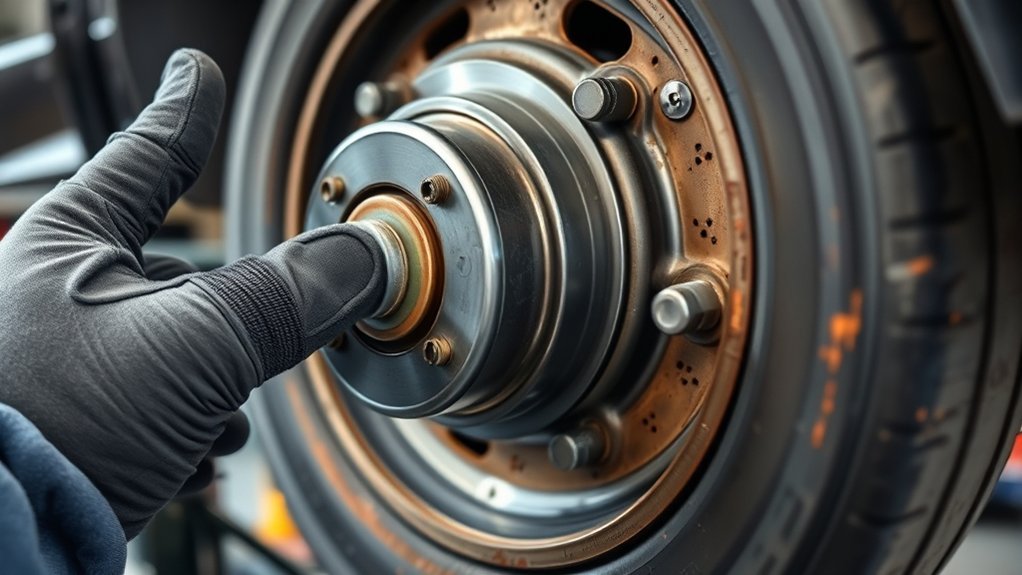
How to Tell if Wheel Bearing Is Bad
You can tell your wheel bearing is bad if you hear unusual grinding, humming, or clicking noises near the wheels, especially when turning or at higher speeds. These sounds are often the first sign that your wheel bearing needs attention.
You might also feel vibrations or wobbling through the steering wheel, experience uneven tire wear, or notice your car pulling to one side. These symptoms indicate the bearing may be worn or damaged.
If you spot grease leaks or detect looseness when rocking the wheel, it’s a clear sign to act. Keep reading to understand why prompt attention matters and what to expect during repairs.
Key Takeaways
- Listen for grinding, humming, or growling noises that increase with speed or when turning corners.
- Feel for vibrations or wobbling in the steering wheel or floorboard, especially during turns.
- Check for uneven tire wear, such as cupping or faster wear on one side.
- Inspect the wheel for looseness by manually rocking it with the vehicle lifted.
- Look for grease leaks, rust, or corrosion around the hub and axle nut.
What Is a Wheel Bearing and Why It Matters
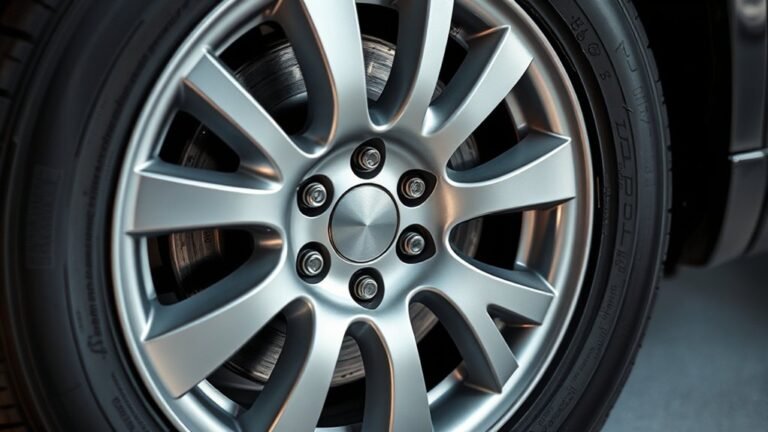
What exactly does a wheel bearing do, and why should you care? A wheel bearing lets your wheel spin smoothly while supporting the vehicle’s weight. It sits between the wheel and axle, reducing friction and ensuring steady rotation.
Without a properly functioning wheel bearing, your ride wouldn’t be safe or efficient. You’d feel increased resistance, and the wheel might wobble or seize up.
You rely on wheel bearings every time you drive, even if you don’t notice them. They play an essential role in handling, fuel efficiency, and overall safety.
Keeping your wheel bearings in good shape helps prevent costly damage to your vehicle’s suspension and steering components. So, understanding their role is key before spotting any issues or failures.
Signs Your Wheel Bearing Is Failing
You might notice unusual noises coming from your wheels or feel vibrations in the steering while driving. Pay attention to uneven tire wear, which can also signal a failing wheel bearing.
Catching these signs early helps you avoid bigger problems down the road.
Hearing Unusual Noises
How can you tell if your wheel bearing is failing just by listening? Pay close attention to any unusual noises coming from your wheels while driving. A bad wheel bearing often produces a grinding, humming, or growling sound that increases with speed.
You might hear a rhythmic clicking or chirping noise, especially when turning corners. These sounds result from worn or damaged bearings rubbing against other components. If you notice these noises, don’t ignore them; they’re a clear sign your wheel bearing needs inspection or replacement.
Catching these sounds early can prevent further damage to your vehicle and keep you safe on the road. Always listen carefully during your drives, as your ears can alert you before other symptoms appear.
Experiencing Steering Vibrations
Why does your steering wheel start to shake or vibrate while driving? This often happens when a wheel bearing begins to fail. As the bearing wears out, it causes the wheel hub to wobble slightly, which you feel as vibrations through the steering wheel.
These vibrations tend to increase with speed and may become more noticeable during turns. If you notice your steering wheel isn’t as steady as before or feels loose, it’s a strong sign that the bearing is compromised.
Ignoring these vibrations can lead to further damage or unsafe driving conditions. So, if your steering wheel shakes consistently, it’s wise to have your wheel bearings inspected and replaced if necessary to keep your ride smooth and safe.
Observing Uneven Tire Wear
When tires start wearing unevenly, it often points to a problem with the wheel bearing. You might notice one tire wearing out faster on one side or developing unusual patterns like cupping or scalloping.
This happens because a failing wheel bearing causes the wheel to wobble or misalign, putting uneven pressure on your tires. If you catch this early, you can prevent further damage to both your tires and suspension components.
Make it a habit to inspect your tires regularly for uneven wear, especially if you feel vibrations or hear humming noises while driving. Addressing a bad wheel bearing promptly not only saves you money but also keeps your vehicle safe and smooth on the road.
How to Identify Wheel Bearing Noise
Wondering what a bad wheel bearing sounds like? You’ll usually notice a persistent humming, growling, or grinding noise coming from one side of your vehicle. This sound often gets louder as you speed up or when you turn, especially if the bearing is severely worn.
It’s different from typical road noise and tends to change with your vehicle’s movement. To pinpoint it, try driving at various speeds or gently turning your steering wheel left and right; the noise may intensify or lessen depending on the wheel bearing’s condition.
If you hear this kind of irregular noise, it’s a clear sign that your wheel bearing might be failing and needs prompt attention to avoid further damage or safety risks.
Feeling Wheel Bearing Vibrations and How They Affect Your Ride
Along with unusual noises, a failing wheel bearing can cause noticeable vibrations that affect how your vehicle feels on the road. You might feel a subtle shaking through the steering wheel or the floorboard, especially at higher speeds.
These vibrations often worsen when you turn or corner, signaling uneven bearing wear. If you ignore these sensations, the vibrations can lead to less responsive handling and an uncomfortable driving experience.
Paying attention to this feedback is crucial; it helps you catch the issue early before it affects other components. When you sense these unusual vibrations, it’s a clear sign to have your wheel bearings inspected promptly to maintain vehicle safety and performance.
Don’t let the ride get rougher. Address wheel bearing vibrations without delay.
Visual Checks to Spot Wheel Bearing Problems
How can you tell if a wheel bearing is failing without hearing strange noises or feeling vibrations? Start by visually inspecting the wheel area. Look closely for any grease leaking from the hub or around the wheel bearing seal, as this can indicate a worn or damaged bearing.
Check for rust or corrosion on the hub assembly, which may cause premature bearing failure. Also, examine the wheel for any looseness or unusual play by trying to rock it back and forth; excessive movement can point to bearing problems.
Additionally, inspect the axle nut for signs of looseness or damage. Catching these visual signs early helps you address issues before they worsen, keeping your vehicle safe and preventing costly repairs down the line.
How to Test Wheel Bearings Without Special Tools
Visual inspections can reveal many signs of a failing wheel bearing, but to confirm the issue, you can perform simple tests without needing special tools. First, safely lift the vehicle using a jack and secure it with jack stands.
Visual inspections help spot wheel bearing issues, but simple tests confirm the problem without special tools.
Grab the wheel at the top and bottom, then try to rock it back and forth. If you feel any play or looseness, the bearing might be worn out.
Next, spin the wheel by hand; listen closely for roughness, grinding, or unusual noises. Finally, while the wheel spins, try to detect any wobbling or resistance.
These tests give you a good idea of the bearing’s condition without expensive equipment. If you notice any of these signs, it’s wise to keep monitoring or plan for a repair.
When to See a Mechanic for Wheel Bearing Problems
Wondering when you should take your car to a mechanic for wheel bearing issues? If you notice persistent noise, vibration, or uneven tire wear, it’s time to get a professional check. Ignoring these signs can lead to more serious damage.
A mechanic can accurately diagnose and replace worn bearings.
| Symptom | When to See a Mechanic |
|---|---|
| Grinding or humming noise | If noise worsens or persists after testing |
| Wheel vibration | If vibration increases with speed |
| Uneven tire wear | When noticeable on one or more tires |
| Loose or wobbly wheel | If wheel feels loose during manual check |
Don’t wait. Early repairs save you from costly fixes later.
Risks of Driving With a Bad Wheel Bearing
What happens if you keep driving with a bad wheel bearing? You risk causing further damage to your vehicle’s suspension and axle components, which can lead to costly repairs.
A failing wheel bearing can generate excessive heat, potentially damaging the hub and surrounding parts. You may also experience uneven tire wear, reducing your tires’ lifespan and affecting your vehicle’s performance.
Ignoring the problem could lead to the wheel hub seizing or even the wheel detaching in extreme cases, putting you and others in danger.
Additionally, a bad wheel bearing can cause your brakes to work improperly by affecting the wheel’s alignment. It’s best to address the issue promptly to avoid escalating repair costs and prevent avoidable breakdowns on the road.
How Bad Wheel Bearings Affect Safety and Handling
How exactly do bad wheel bearings impact your vehicle’s safety and handling? When wheel bearings wear out, they cause instability and uneven tire movement. This can lead to poor steering response and increased risk of accidents.
You’ll notice vibrations, noise, and sometimes pulling to one side, all of which compromise control. Ignoring these signs puts you and others on the road in danger.
| Issue | Effect on Safety & Handling |
|---|---|
| Vibration | Reduces steering precision |
| Noise | Distracts and signals failing parts |
| Wheel play | Causes uneven tire wear and pulls |
What to Expect During Wheel Bearing Repair or Replacement
When you bring your vehicle in for wheel bearing repair or replacement, the process usually starts with a thorough inspection to confirm the issue. The mechanic will test for noise, play, and wheel movement.
Once confirmed, they’ll lift the car, remove the wheel, brake caliper, and rotor to access the bearing assembly. Depending on your vehicle, they may press out the old bearing and press in a new one or replace the entire hub assembly.
Expect the repair to take one to two hours, depending on damage and vehicle type. After installation, the mechanic will reassemble the components, lower the vehicle, and perform a test drive to ensure the noise and play are gone. You’ll get safer handling and a quieter ride.
Frequently Asked Questions
How Much Does Wheel Bearing Replacement Typically Cost?
You’ll typically pay between $150 and $400 for a wheel bearing replacement, depending on your car’s make and model. Labor costs and parts quality can affect the price, so getting a detailed quote helps.
Can Bad Wheel Bearings Affect Fuel Efficiency?
Yes, bad wheel bearings can affect your fuel efficiency. They create extra friction and resistance, making your engine work harder.
Fixing them helps your car run smoother and saves gas, so you’ll spend less at the pump.
Are Wheel Bearings the Same for All Vehicle Types?
No, wheel bearings aren’t the same for all vehicle types. You’ll find different sizes and designs depending on your car’s make, model, and weight.
Always check your vehicle’s specifications before buying replacements.
How Long Do Wheel Bearings Usually Last?
You’ll find that most wheel bearings last between 85,000 to 100,000 miles. But don’t wait. Ignoring signs can lead to dangerous breakdowns, so keep an eye on your bearings to stay safe and avoid costly repairs.
Can I Drive on a Bad Wheel Bearing Temporarily?
You can drive on a bad wheel bearing temporarily, but you shouldn’t. It risks further damage, unsafe handling, and potential accidents.
Get it checked and replaced as soon as possible to keep yourself and others safe.
Conclusion
Just like a trusted dance partner, your wheel bearings keep your ride smooth and steady. Ignoring their warning signs is like stepping on toes—uncomfortable and risky. If you notice strange noises or vibrations, don’t wait; get them checked.
Staying attentive now keeps you safe on every twist and turn ahead. Remember, a well-maintained wheel bearing is your silent guardian, ensuring every journey feels as graceful as a waltz.
Taking care of your wheel bearing is essential for a safe and smooth driving experience.