How to Fix a Wheel Bearing
You can fix a wheel bearing by first recognizing early signs like humming noise, vibrations, or uneven tire wear. Identifying these symptoms early helps prevent further damage and ensures a safer drive.
Use a jack, lug wrench, socket set, and bearing press to safely remove the faulty bearing after lifting the vehicle and removing the wheel and brake parts. Make sure to follow safety precautions during this process.
Press the new bearing into place, reassemble the components, and check that the wheel spins smoothly. Knowing these steps helps you maintain your vehicle, but there’s more to master for lasting results.
Key Takeaways
- Identify early signs like humming noise, vibrations, or pulling to diagnose a bad wheel bearing.
- Safely lift the vehicle using a quality jack and jack stands before removing the wheel and brake components.
- Remove the hub assembly by disconnecting the axle nut, ABS sensor, and unbolting from the steering knuckle.
- Press out the faulty bearing carefully and press in the new bearing using a bearing press or appropriate tool.
- Reassemble the hub, tighten bolts to manufacturer torque specs, and verify smooth wheel rotation by hand.
How To Spot Early Signs Of A Bad Wheel Bearing
How can you tell if your wheel bearing is starting to fail? Listen closely for a humming, grinding, or growling noise that changes with your speed. This sound often gets louder when you turn, indicating uneven wear.
You might also feel vibrations in the steering wheel or notice the vehicle pulling to one side. Another sign is looseness or play in the wheel when you try to wiggle it while the car is lifted.
Additionally, uneven tire wear can point to a bad bearing. Catching these signs early helps you avoid more serious damage and unsafe driving conditions. If you notice any of these symptoms, it’s a good idea to inspect the wheel bearing before it worsens.
Tools Needed For Wheel Bearing Replacement
What tools do you need to replace a wheel bearing effectively? First, you’ll need a quality jack and jack stands to safely lift and support your vehicle. A lug wrench or impact wrench will help you remove the wheel quickly.
Start with a quality jack, jack stands, and a lug or impact wrench to safely remove the wheel.
You’ll also require a socket set, including a breaker bar, to loosen stubborn bolts. A torque wrench is essential to tighten bolts to manufacturer specifications.
Additionally, a bearing puller or press kit will make removing and installing the bearing much easier and prevent damage. Don’t forget a hammer and punch for knocking out old components.
Finally, safety gear like gloves and eye protection will keep you safe throughout the process. Having these tools ready ensures you can replace the wheel bearing smoothly and safely.
How To Remove A Faulty Wheel Bearing
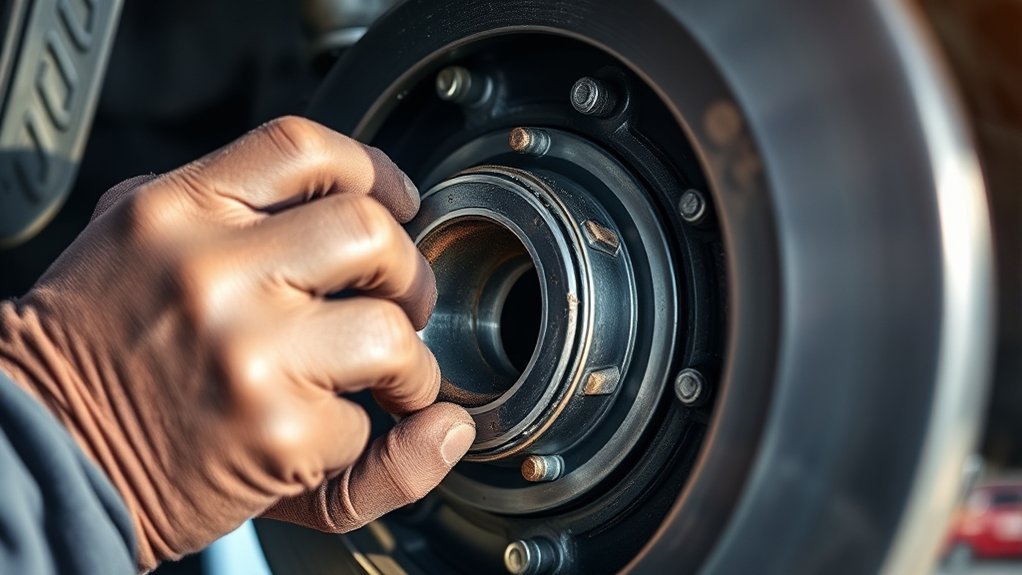
Wondering where to start when removing a faulty wheel bearing? First, make sure the vehicle is securely lifted and the wheel is off. Remove the brake caliper and rotor to access the hub assembly.
Next, disconnect the ABS sensor if your vehicle has one. Then, loosen and remove the axle nut with the appropriate socket.
You’ll need to unbolt the hub assembly from the steering knuckle. Keep track of all bolts. Gently tap the hub assembly with a hammer or use a puller tool to free it from the knuckle.
Be patient; it may be stuck due to rust or corrosion. Once the hub assembly is free, you can extract the bearing carefully. Avoid forcing parts to prevent damage to surrounding components.
How To Install A New Wheel Bearing
Start by preparing the hub assembly for the new wheel bearing installation, making sure all surfaces are clean and free of debris. Next, carefully align the new wheel bearing with the hub.
Use a bearing press or a suitable tool to press the bearing evenly into place, avoiding any damage by applying steady, even pressure. Once the bearing is seated correctly, reinstall the hub assembly onto the vehicle.
Secure it with the appropriate fasteners, tightening them to the manufacturer’s specified torque. Don’t forget to reattach any components you removed, such as the brake rotor or caliper.
Finally, spin the wheel by hand to check for smooth rotation and ensure the bearing is properly seated before moving on. This method ensures a solid, safe installation.
Testing And Maintaining Your Wheel Bearings
Regularly testing and maintaining your wheel bearings can prevent costly repairs and ensure your vehicle runs smoothly. Start by lifting the vehicle and securely supporting it with jack stands.
Spin the wheel and listen for any grinding or unusual noises, which indicate worn bearings. Next, grab the tire at opposite ends and try to wiggle it; excessive play points to a loose or damaged bearing.
Keep your bearings well-lubricated to reduce friction and wear. Clean them during routine brake maintenance, and replace the grease as needed.
If you notice vibrations or uneven tire wear, inspect your bearings immediately. Staying proactive with these checks extends bearing life, improves safety, and keeps your drive quiet and comfortable.
Don’t wait for symptoms. Test and maintain regularly to avoid bigger issues.
Frequently Asked Questions
How Much Does a Wheel Bearing Replacement Typically Cost?
You’ll typically pay between $150 and $400 for a wheel bearing replacement, depending on your vehicle and labor costs.
Luxury cars and trucks can cost more, so it’s smart to get a detailed estimate first.
Can I Drive With a Bad Wheel Bearing Temporarily?
You can drive with a bad wheel bearing temporarily, but it’s risky. It may cause noise, vibration, or worse, wheel failure.
Get it fixed as soon as possible to avoid dangerous situations and costly damage.
What Causes Wheel Bearings to Fail Prematurely?
Think of your wheel bearing like a trusted dancer. If you don’t keep it lubricated or expose it to harsh moves (rough roads, water, or dirt), it’ll stumble and fail prematurely. You’ve got to care for it right!
Are Wheel Bearings Covered Under Vehicle Warranties?
Wheel bearings are sometimes covered under your vehicle’s warranty, especially if they fail due to manufacturing defects.
You’ll want to check your specific warranty terms, as coverage varies by make, model, and warranty type.
How Long Do Wheel Bearings Usually Last?
Wheel bearings usually last between 85,000 to 100,000 miles, but they can feel like they’ll last forever!
You should check them regularly, especially if you hear grinding or feel vibration while driving.
Conclusion
Now that you know the signs and steps to fix a wheel bearing, you might think the job’s done—but don’t rush just yet. What if a hidden issue is waiting to reveal itself once you hit the road? Stay vigilant, test carefully, and maintain regularly.
Your safety depends on it. Missing one detail could turn a simple fix into a costly problem. So, are you ready to take control and keep your ride smooth?
Remember, proper wheel bearing maintenance is key to preventing future issues and ensuring a safe driving experience.