How Do I Know if My Fuel Injectors Are Clogged
You’ll know your fuel injectors are clogged if your engine idles roughly, hesitates when you press the accelerator, or misfires with jerks or stutters. These symptoms indicate that your fuel injectors are not delivering fuel properly.
You might also notice reduced fuel efficiency and unusual engine noises like popping or backfiring. These signs show your fuel is not flowing properly, affecting overall performance.
If you keep experiencing these issues, exploring how clogged injectors impact your engine and possible fixes can help you restore smooth driving. Addressing clogged fuel injectors promptly can improve your vehicle’s reliability and efficiency.
Key Takeaways
- Rough or shaky idling and engine misfires often indicate clogged fuel injectors.
- Hesitation or sluggish acceleration can signal fuel delivery problems caused by injector blockages.
- Decreased fuel efficiency despite normal driving suggests inefficient fuel combustion from clogged injectors.
- Unusual engine noises like popping or backfiring may result from improper fuel spray patterns.
- Visible deposits on injector nozzles and consistent engine improvement after cleaning confirm clogging.
What Are Fuel Injectors? Why They Clog
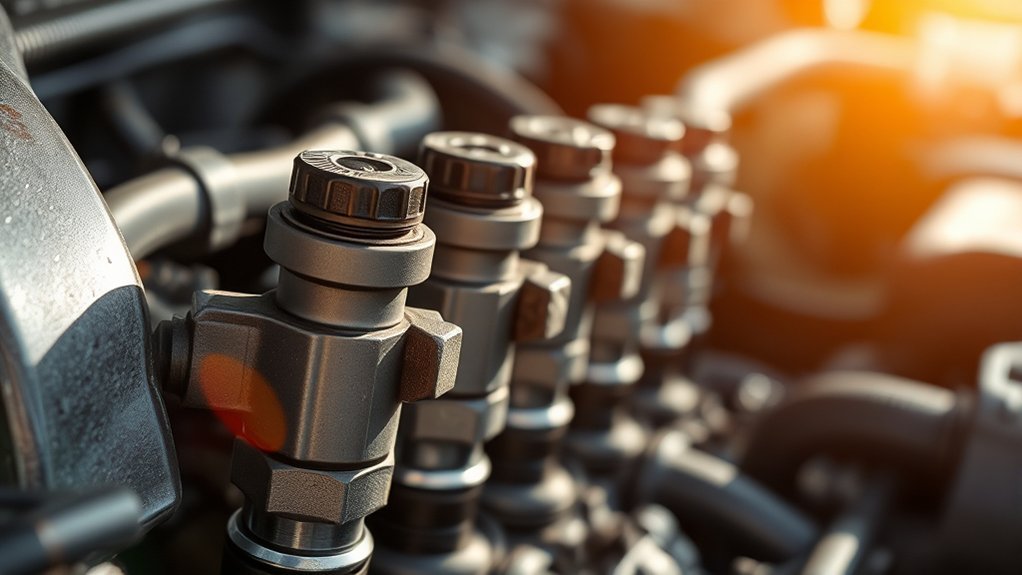
What exactly are fuel injectors, and why do they clog? Fuel injectors are tiny nozzles that spray fuel into your engine’s combustion chamber, ensuring the right mix of air and fuel for efficient burning. They work fast and precisely, adjusting spray patterns based on driving conditions.
Over time, though, these injectors can get blocked by residues that build up, which restricts fuel flow. When that happens, your engine won’t get the fuel it needs, causing performance issues.
You might not notice this immediately, but clogged injectors affect how your car runs. Keeping them clean is essential for smooth engine operation and fuel efficiency. Understanding what they are helps you recognize when they might be causing problems.
Common Causes of Fuel Injector Clogging
Why do fuel injectors clog in the first place? It usually happens because dirt, debris, and contaminants build up inside the fuel system. When you use low-quality fuel, it often contains impurities that can leave deposits on the injectors. Over time, these deposits restrict fuel flow.
Another common cause is infrequent maintenance. If you don’t change fuel filters regularly, they can’t trap particles effectively, allowing grime to reach the injectors. Fuel sitting unused for long periods can also thicken, creating varnish-like residue that clogs the injectors.
Lastly, water contamination from condensation or poor fuel storage can cause corrosion and blockages. Being aware of these causes helps you take preventive steps to keep your injectors clean and your engine running smoothly.
Symptoms of Clogged Fuel Injectors: Rough Idling, Poor Acceleration, and Misfires
When fuel injectors get clogged, your engine won’t perform as smoothly as it should. You’ll likely notice symptoms that make driving frustrating and potentially unsafe. Here’s what to watch for:
- Rough idling that feels shaky or uneven
- Hesitation or sluggishness when you press the accelerator
- Engine misfires causing sudden jerks or stutters
- Decreased fuel efficiency despite normal driving habits
- Unusual engine noises, like popping or backfiring
These signs indicate your fuel injectors aren’t delivering fuel properly, disrupting combustion. If you experience one or more of these symptoms, it’s a strong hint that clogged injectors need attention. Catching these early can save you from bigger engine problems down the road.
How Clogged Fuel Injectors Affect Engine Performance
When your fuel injectors are clogged, your engine won’t get the right amount of fuel, which cuts down its power. You’ll likely notice your car struggles more during acceleration and feels weaker overall.
Plus, clogged injectors can make your engine burn more fuel, so your gas mileage drops.
Reduced Engine Power
How can you tell if your engine is losing power due to clogged fuel injectors? When fuel can’t flow properly, your engine struggles to perform. You might notice your car feels sluggish or slow to accelerate.
This happens because the engine isn’t getting the right fuel-air mixture it needs. Here are signs that point to reduced engine power from clogged injectors:
- Difficulty reaching highway speeds or maintaining acceleration
- Hesitation or stalling during quick throttle changes
- Rough idling or engine misfires
- Poor response when you press the gas pedal
- Noticeable drop in towing or carrying capability
If you experience these symptoms, it’s a strong sign your fuel injectors need attention to restore your engine’s power and performance.
Increased Fuel Consumption
Why does your fuel gauge seem to drop faster than usual? Clogged fuel injectors disrupt the precise fuel spray pattern, causing inefficient combustion. As a result, your engine consumes more fuel to maintain performance.
This inefficiency not only wastes fuel but also increases emissions.
Here’s how clogged injectors impact your fuel consumption and engine behavior:
| Symptom | Effect on Performance |
|---|---|
| Uneven Fuel Delivery | Poor combustion, higher usage |
| Engine Misfires | Wasted fuel, rough running |
| Reduced Fuel Efficiency | More frequent fill-ups |
Diagnostic Tools for Clogged Fuel Injectors
Wondering how to pinpoint clogged fuel injectors effectively? Using the right diagnostic tools can save you time and money. These tools help you identify injector issues before they cause major engine problems.
Here are the key diagnostic tools you should consider:
- Fuel Pressure Gauge: Measures fuel pressure to detect blockages.
- OBD-II Scanner: Reads engine error codes related to injector performance.
- Multimeter: Checks injector electrical resistance and continuity.
- Ultrasonic Cleaner: Not a diagnostic tool but helps clean injectors after testing.
- Fuel Injector Tester: Simulates injector operation to observe spray patterns.
Using these tools, you can quickly assess injector health and decide if cleaning or replacement is necessary.
Easy Tests to Identify Clogged Fuel Injectors
When should you suspect your fuel injectors might be clogged? If your engine misfires, idles roughly, or feels sluggish, it’s time to check. One easy test is to listen for irregular engine sounds or sputtering at idle.
You can also observe fuel economy. Noticeable drops may indicate injector issues. Another quick method is the “fuel injector balance test,” where you measure fuel pressure drops when each injector is activated; uneven drops suggest clogs.
Additionally, you can perform a visual check by removing the injectors and inspecting for dirt or deposits on the tips. If you have basic tools, try the spray pattern test by activating the injector and watching the fuel spray. An uneven or weak spray means it’s likely clogged.
These tests can help you identify problems early.
Cleaning and Repairing Clogged Fuel Injectors
If you notice rough idling or poor acceleration, your injectors might be clogged. You can try different cleaning methods, from fuel additives to ultrasonic cleaning, to clear the buildup.
Knowing when to repair or replace your injectors will help you avoid bigger engine problems down the road.
Signs Of Injector Clogging
How can you tell when your fuel injectors are clogged? You’ll notice your engine isn’t running as smoothly as usual.
Clogged injectors disrupt fuel flow, causing a range of symptoms you shouldn’t ignore. Here are common signs to watch for:
- Rough idling or engine misfires
- Decreased fuel efficiency
- Hesitation or stumbling during acceleration
- Increased exhaust emissions or black smoke
- Difficulty starting the engine
If you experience any of these issues, your injectors might be struggling to deliver fuel properly. Addressing these signs early helps prevent more serious engine problems down the road.
Keep an eye on your vehicle’s performance, and if these symptoms persist, it’s a good idea to have your fuel injectors checked by a professional.
Cleaning Methods Explained
Noticing symptoms of clogged fuel injectors means it’s time to take action and restore proper fuel flow. You can start with fuel injector cleaner additives that you pour into your gas tank; these help dissolve light deposits over time.
For more stubborn clogging, consider professional ultrasonic cleaning, which removes buildup by immersing injectors in a cleaning solution using sound waves. You might also use a fuel injector cleaning kit, which connects directly to the fuel rail and runs a specialized solvent through the system, bypassing the tank.
Always follow manufacturer instructions to avoid damage. Regular maintenance with these methods can improve performance and fuel efficiency. Remember, effective cleaning restores injector spray patterns and ensures your engine runs smoothly without hesitation or rough idling.
Repair Vs Replacement
When should you consider repairing clogged fuel injectors instead of replacing them? If the clog is minor and limited to deposits, cleaning might be enough to restore proper function. Repairing is often quicker and less expensive than a full replacement. However, if injectors are damaged or heavily worn, replacement is the safer choice.
Look for these signs to decide:
- Slight rough idling that improves after cleaning
- Reduced fuel efficiency without mechanical damages
- Injector nozzles with visible, removable deposits
- No leaks or cracks in injector housing
- Consistent engine performance after a cleaning attempt
If these apply, try cleaning and minor repairs first. Otherwise, replacement ensures reliability and prevents further engine issues.
When to Replace Clogged Fuel Injectors
Wondering if it’s time to replace your clogged fuel injectors? If cleaning doesn’t improve your engine’s performance, or you notice persistent symptoms like rough idling, poor acceleration, or increased fuel consumption, substitution might be necessary.
Also, if your injectors are physically damaged or leaking, don’t hesitate to swap them out. Keep in mind that older vehicles with high mileage often benefit more from replacement than repair, as worn injectors may not respond well to cleaning.
If your mechanic confirms that cleaning won’t restore proper function or the cost of repair approaches replacement prices, opting for new injectors is the smarter move. Replacing clogged injectors ensures better fuel efficiency, smoother running, and helps prevent further engine issues down the road.
Tips to Prevent Fuel Injector Clogging
How can you keep your fuel injectors clean and functioning optimally? Start by choosing high-quality fuel to minimize contaminants. Use fuel system cleaners periodically to dissolve buildup before it becomes a problem.
Avoid letting your gas tank run too low, as sediment can enter the fuel system. Keep your fuel filter in good condition to trap debris effectively. Finally, drive your vehicle regularly and avoid extended idling, which helps prevent fuel stagnation and deposits.
- Select premium fuel brands for cleaner combustion
- Add fuel injector cleaner every few thousand miles
- Refill before the tank drops below a quarter
- Replace fuel filters according to the manufacturer’s schedule
- Maintain consistent driving habits to circulate fuel thoroughly
These simple steps help you prevent clogging and ensure smoother engine performance.
How Regular Maintenance Keeps Fuel Injectors Healthy
You can keep your fuel injectors in top shape by sticking to a regular maintenance schedule that includes cleaning. Checking your injectors during routine inspections helps catch potential issues early before they cause problems.
Staying proactive with these steps guarantees your engine runs smoothly and efficiently.
Scheduled Cleaning Benefits
When was the last time you had your fuel injectors cleaned? Scheduled cleaning plays a crucial role in keeping them efficient and your engine running smoothly.
By sticking to a cleaning schedule, you’ll:
- Prevent buildup that restricts fuel flow
- Maintain optimal spray patterns for better combustion
- Improve fuel efficiency, saving you money at the pump
- Reduce harmful emissions, helping the environment
- Extend the lifespan of your fuel injectors and engine components
Regular cleaning removes deposits before they cause serious blockages, ensuring consistent performance. Skipping this maintenance can lead to rough idling, poor acceleration, and increased engine wear.
Preventive Inspection Tips
Why wait for problems to surface when regular inspections can keep your fuel injectors in top shape? By checking key areas frequently, you catch issues early and maintain smooth engine performance.
Use this simple checklist to guide your preventive inspections:
| Inspection Area | What to Look For | How Often to Check |
|---|---|---|
| Fuel Injector Nozzles | Dirt, debris, or buildup | Every 10,000 miles |
| Fuel Filter | Clogs or contamination | Every 15,000 miles |
| Fuel Lines | Cracks or leaks | Every 10,000 miles |
| Engine Performance | Rough idling or misfires | Monthly or if noticed |
| Fuel Quality | Use clean, recommended fuel | At every fill-up |
Stick to this routine, and you’ll avoid clogged injectors and costly repairs.
Frequently Asked Questions
Can Clogged Fuel Injectors Cause Increased Fuel Consumption?
Yes, clogged fuel injectors can cause increased fuel consumption because they disrupt the proper fuel spray pattern. You’ll notice your engine runs inefficiently, wasting fuel and reducing performance.
You’ll need to clean or replace them to fix this.
Are Fuel Injector Issues Covered Under Vehicle Warranties?
Warranties weave a safety net, but coverage varies. You’ll want to check your specific warranty terms because some include fuel injector issues while others don’t.
Don’t guess. Call your dealer or read your contract carefully.
How Much Does It Typically Cost to Replace Fuel Injectors?
You’ll typically pay between $300 and $800 to replace fuel injectors, depending on your vehicle and labor costs. High-performance or luxury cars might cost more, so getting a detailed quote before you commit is smart.
Can Fuel Additives Prevent Clogging in All Types of Injectors?
You can use fuel additives to help prevent clogging in many types of injectors, but they’re not foolproof for all.
Regular maintenance and quality fuel are also key to keeping your injectors clean and working properly.
Do Clogged Fuel Injectors Affect Emissions and Environmental Compliance?
Clogged fuel injectors are like a blocked pipe, causing your engine to run rough and increasing harmful emissions.
You’ll fail environmental compliance tests if you don’t clean or replace them promptly, so stay ahead for cleaner air.
Conclusion
Think of your fuel injectors as tiny gatekeepers fueling your engine’s fire. When they get clogged, your engine sputters and struggles like a campfire starved of sparks.
By recognizing the signs early and keeping up with regular maintenance, you’ll keep your engine running smoothly and efficiently.
Don’t let clogged injectors slow you down—take charge, clean them when needed, and enjoy a ride that’s always ready to roar with clear fuel injectors.