
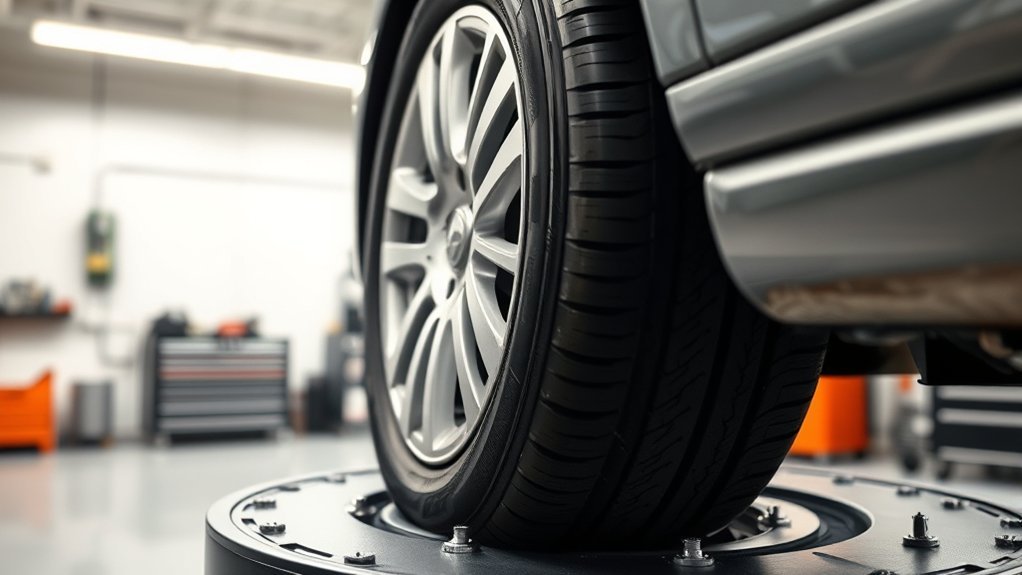
What Is Tire Balancing
Tire balancing means evenly distributing the weight around each tire and wheel to prevent vibrations and wobbling while you drive. Proper tire balancing ensures a smoother ride, better handling, and helps avoid uneven tire wear that can shorten tire life.
When your tires are balanced, you also reduce strain on your suspension and steering systems. This improves both safety and comfort while driving.
If you want to know how to spot signs of imbalance and maintain your tires properly, keep exploring these key tips.
Key Takeaways
- Tire balancing evenly distributes weight around the tire and wheel assembly to eliminate vibrations.
- It prevents shaking or wobbling at certain speeds, improving comfort and safety.
- Balancing reduces uneven tire wear, extending tire life and maintaining vehicle performance.
- Proper balancing decreases strain on suspension and steering components.
- The process involves spinning the tire on a machine and adding weights to counteract imbalances.
What Is Tire Balancing and Why It Matters for Your Vehicle
How does tire balancing affect your driving experience? When your tires are balanced, you’ll notice a smoother ride without vibrations in the steering wheel or floorboard. Tire balancing means evenly distributing weight around each tire and wheel assembly.
If your tires aren’t balanced properly, you may feel shaking or wobbling at certain speeds, which can make driving uncomfortable and even unsafe. It also helps prevent uneven tire wear, extending your tire life and saving you money in the long run.
Plus, balanced tires reduce strain on your suspension and steering components, improving your vehicle’s overall handling and performance. By keeping your tires balanced, you ensure better fuel efficiency and a more comfortable, controlled drive every time you hit the road.
How to Balance Tires: Step-by-Step
Wondering what it takes to balance your tires properly? First, remove the tire from your vehicle using a jack and lug wrench. Next, clean the wheel to remove dirt and debris.
Mount the tire on a balancing machine, which spins it to detect heavy spots. The machine will show where to place small weights on the rim to counterbalance these spots. Attach the weights securely, then spin the tire again to guarantee balance is achieved.
If needed, adjust the weights until the machine indicates a balanced tire. Finally, remount the tire on your vehicle and tighten the lug nuts in a star pattern. Balancing your tires this way helps ensure a smooth, safer ride and extends tire life.
Signs Your Tires Need Balancing Right Now
Now that you know how to balance your tires, it’s important to recognize when they actually need balancing. Ignoring signs can lead to uneven wear, vibrations, and unsafe driving.
Here are common symptoms you shouldn’t overlook:
| Sign | What It Means |
|---|---|
| Steering Wheel Vibrates | Imbalance causing shaky driving |
| Uneven Tire Wear | Tires wear faster on one side |
| Vehicle Pulls to One Side | Weight distribution is off |
| Noise from Tires | Imbalanced tires create unusual hum |
| Poor Fuel Efficiency | Extra friction wastes fuel |
If you notice any of these, it’s time to get your tires balanced to ensure a smoother, safer ride and extend tire life.
Tools Used for Tire Balancing
When you balance your tires, you’ll use specific tools designed to identify and correct weight imbalances. These range from traditional manual equipment to advanced digital machines that offer greater accuracy.
Understanding the differences between these tools helps you choose the right method for your needs.
Common Balancing Equipment
What tools do technicians rely on to achieve perfect tire balance? They use specialized equipment designed to detect and correct imbalances, ensuring your ride stays smooth and safe.
Here are the common balancing tools you’ll encounter:
- Balancing Machine: Spins the tire to identify uneven weight distribution.
- Wheel Weights: Small weights attached to the rim to counteract imbalances.
- Weight Pliers: Used to securely attach or remove wheel weights.
- Chalk or Marking Tools: Mark high spots on the tire for precise weight placement.
Using these tools correctly helps maintain tire longevity and vehicle performance. When you get your tires balanced, these pieces of equipment work together to keep your drive comfortable and vibration-free.
Digital Versus Manual Tools
Tire balancing tools come in two main types: digital and manual, each offering unique benefits depending on your needs and experience level. Digital tools provide fast, precise readings and easy-to-understand displays, making them ideal if you want efficiency and accuracy.
Manual tools, while requiring more skill, offer simplicity and durability, often favored in low-tech settings or for hands-on learning.
| Feature | Digital Tools | Manual Tools |
|---|---|---|
| Accuracy | High | Moderate |
| Ease of Use | User-friendly, automated | Requires skill |
| Cost | Higher upfront | Lower upfront |
| Maintenance | Needs calibration | Minimal |
| Ideal For | Professionals, busy shops | Small shops, DIYers |
Choose based on your budget, skill level, and balancing frequency.
When Should You Get Your Tires Balanced?
How often should you get your wheels balanced to guarantee a smooth ride? Generally, it’s wise to balance your tires every 5,000 to 7,000 miles or when you notice certain signs. You should also consider balancing your tires in these situations:
- After installing new tires or wheels
- When you experience vibration in the steering wheel or seat
- Following a tire repair that affected the wheel
- If you notice uneven tread wear
Balancing ensures your tires rotate evenly, preventing premature wear and improving fuel efficiency. By staying proactive about tire balancing, you maintain better control and extend your tires’ lifespan. Don’t wait for discomfort or damage. Keeping a regular balance schedule keeps your drive smooth and safe.
How Unbalanced Tires Affect Your Drive
Keeping your tires properly balanced doesn’t just prolong their life; it directly impacts your driving experience. When your tires are unbalanced, you’ll likely notice vibrations through the steering wheel, floorboard, or seat, especially at higher speeds. These vibrations can make your drive uncomfortable and tiring.
Unbalanced tires also cause uneven tire wear, which means you’ll need to replace your tires sooner than expected. Additionally, your suspension and steering components take a harder hit, potentially leading to costly repairs. You might also find your vehicle pulling to one side or handling less predictably, which can compromise safety.
Tire Balancing vs. Wheel Alignment: What’s the Difference?
Wondering why your mechanic talks about both balancing and alignment during a tire service? Although they sound similar, tire balancing and wheel alignment address different issues to ensure a smooth ride.
Tire balancing focuses on evenly distributing the weight around each tire and wheel assembly, preventing vibrations. Wheel alignment adjusts the angles of your wheels to match manufacturer specifications, improving handling and preventing uneven tire wear.
Here’s a quick breakdown:
- Tire Balancing: Corrects weight imbalances in tires.
- Wheel Alignment: Adjusts wheel angles for proper direction.
- Balancing prevents vibrations: Keeps your ride smooth.
- Alignment prevents uneven wear: Extends tire life and improves safety.
Both are essential but serve distinct purposes for your vehicle’s performance.
How Proper Tire Balancing Extends Tire and Vehicle Life
Proper tire balancing plays a vital role in extending both your tires’ lifespan and your vehicle’s overall health. When your tires are balanced correctly, they wear evenly, preventing premature tread wear and saving you money on replacements.
Balanced tires reduce vibrations, which means less stress on your suspension and steering components. This helps maintain smoother handling and improves your vehicle’s fuel efficiency.
Without proper balancing, uneven tire wear can lead to poor traction and compromised safety. Plus, unbalanced tires cause your car to shake, accelerating wear on wheel bearings and shocks.
Tips to Keep Tires Balanced Between Service Visits
You can help keep your tires balanced by regularly checking their pressure and rotating them as recommended. These simple habits prevent uneven wear and maintain smooth driving.
Staying on top of these tasks means fewer balancing issues between service visits.
Regular Tire Pressure Checks
How often do you check your tire pressure? Maintaining the right pressure is key to keeping your tires balanced and extending their life.
Underinflated or overinflated tires can cause uneven wear and vibrations, affecting your ride’s comfort and safety. Make it a habit to check tire pressure regularly, especially before long trips or when carrying heavy loads.
Here’s why regular tire pressure checks matter:
- Prevent uneven tire wear that disrupts balance
- Improve fuel efficiency by reducing rolling resistance
- Enhance vehicle handling and braking performance
- Avoid premature tire damage and costly repairs
Use a reliable gauge and check pressure when tires are cold for the most accurate reading. Staying on top of this simple task helps keep your tires balanced between service visits.
Rotate Tires Periodically
Although tire pressure plays a critical role in maintaining balance, rotating your tires periodically ensures even wear across all four wheels. When you rotate your tires, you switch their positions, helping them wear evenly and preventing premature imbalance.
Uneven wear can cause vibrations, reduced traction, and a rougher ride. Most manufacturers recommend rotating tires every 5,000 to 7,500 miles, but you should check your owner’s manual for specifics.
You can do this yourself if you have the right tools, or let a professional handle it during routine maintenance. Regular rotation extends tire life, improves safety, and keeps your vehicle running smoothly between balancing services.
Don’t forget, consistent rotation helps maintain overall tire balance and performance.
Frequently Asked Questions
Can I Balance Tires Myself Without Professional Equipment?
You can try balancing tires yourself, but without professional equipment, it’s tough to get it precise. You’ll likely need proper tools and expertise to avoid vibrations and uneven wear.
Consider professional help for best results.
Does Tire Balancing Affect Fuel Efficiency?
Imagine riding a bike with a wobbly wheel. Your effort increases. Similarly, unbalanced tires make your engine work harder, reducing fuel efficiency by up to 10%.
How Much Does a Typical Tire Balancing Service Cost?
You can expect to pay between $15 and $50 per tire for balancing, depending on your location and shop. Some places offer deals if you balance all four tires at once, saving you money.
Are All Types of Tires Balanced the Same Way?
You might think all tires get balanced like knights preparing for battle, but they don’t. Different tires, like run-flats or performance types, need unique balancing methods to keep your ride smooth and safe on the road.
Can Tire Balancing Fix a Bent Rim?
No, tire balancing can’t fix a bent rim. You’ll need to get the rim repaired or replaced first.
Balancing only evens out tire weight for smooth driving, but it won’t correct physical damage like bends.
Conclusion
Proper tire balancing keeps your ride smooth and safe, saving you money on premature tire wear. Imagine driving on a long road trip with unbalanced tires—vibrations could wear out your suspension and make the journey uncomfortable.
By staying on top of tire balancing, you avoid this hassle and enjoy better fuel efficiency. So, next time you notice a shake or vibration, don’t wait—get your tires balanced and keep your vehicle running its best with proper tire balancing.