What Are Shocks on a Car
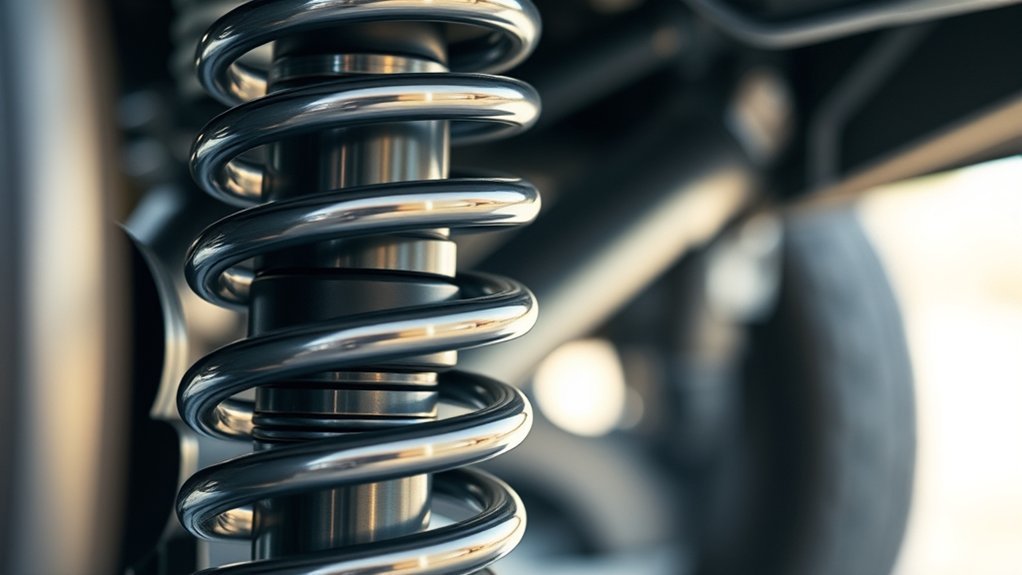
Car shocks control your vehicle’s suspension movement by damping oscillations from springs and suspension components. Shocks convert kinetic energy into heat via hydraulic fluid, stabilizing your ride and maintaining consistent tire contact with the road for better traction. Proper shocks improve comfort by reducing jolts and vibrations while enhancing handling and braking safety.
Without shocks, your vehicle’s stability and tire wear suffer. Understanding how shocks function helps you choose and maintain the right ones to match your driving needs. This knowledge ensures a safer, smoother driving experience.
Key Takeaways
- Shocks dampen spring and suspension oscillations to control impact and rebound for a smoother ride.
- They convert kinetic energy from wheel movement into heat using hydraulic fluid to stabilize the vehicle.
- Shocks maintain tire contact with the road, ensuring consistent traction and improving handling and safety.
- Unlike struts, shocks only damp suspension movement and do not provide structural support or affect alignment.
- Worn shocks cause uneven tire wear, excessive bouncing, and reduced braking and handling efficiency.
What Are Car Shocks and What Do They Do
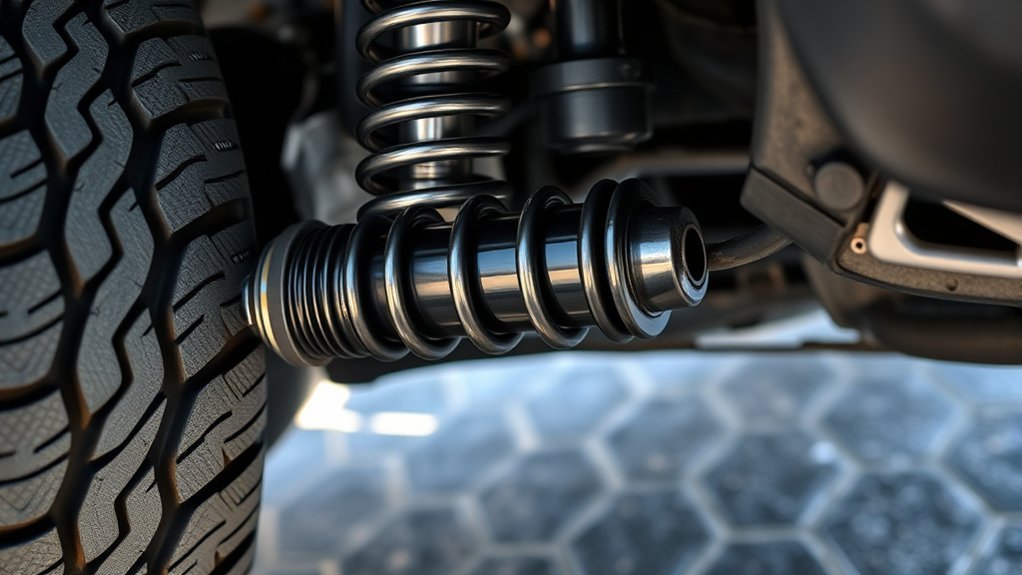
How exactly do car shocks contribute to your vehicle’s performance? Shocks, or shock absorbers, are critical components of your car’s suspension system designed to control the impact and rebound movement of your vehicle’s springs and suspension. They dampen the oscillations caused by uneven road surfaces, preventing excessive bouncing.
By converting kinetic energy into heat through hydraulic fluid, shocks stabilize your ride, ensuring consistent tire contact with the road. This control directly influences car ride comfort, reducing jolts and vibrations you feel inside the cabin.
Without properly functioning shocks, your suspension would allow uncontrolled spring movement, compromising handling, braking efficiency, and overall safety. In summary, shocks work in tandem with suspension parts to provide a smooth, stable driving experience, balancing performance and comfort under various road conditions.
How Car Shocks Work With Suspension
Shocks work alongside other suspension components to manage your vehicle’s dynamics over varying surfaces. When you drive, shocks control the suspension’s oscillations by converting kinetic energy from wheel movements into heat, which dissipates through hydraulic fluid.
This process stabilizes your car, preventing excessive bounce and ensuring tire contact with the road. Proper shocks installation is essential; incorrect placement or incompatible parts can disrupt suspension tuning, causing poor handling or uneven tire wear.
During suspension tuning, you adjust shock absorber stiffness and damping rates to match your driving needs, balancing comfort and control. By integrating shocks effectively with springs, control arms, and bushings, you create a cohesive system that responds precisely to road irregularities, enhancing overall vehicle stability and safety.
Types of Car Shock Absorbers
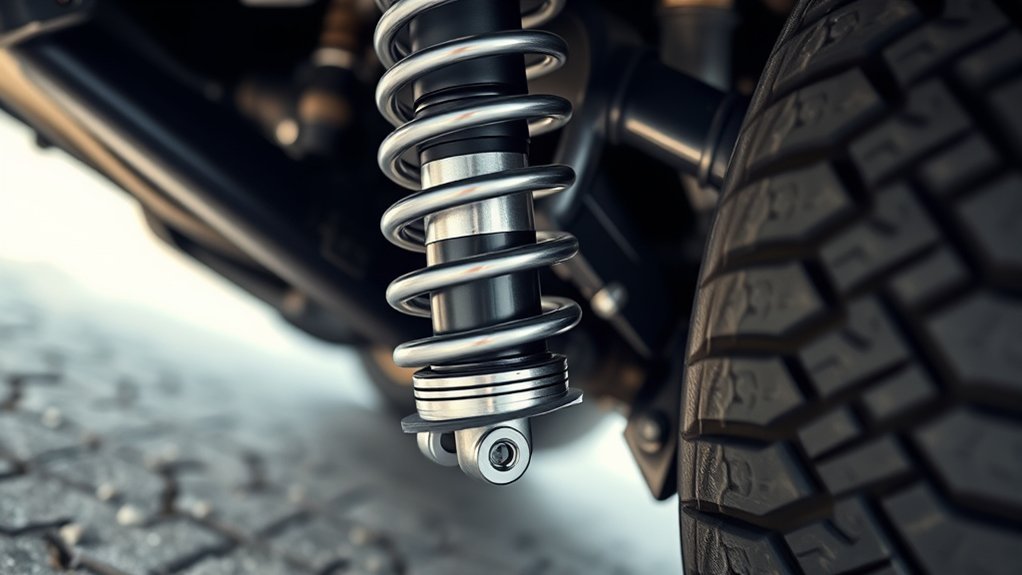
What distinguishes various car shock absorbers lies in their internal design and damping mechanisms. You’ll encounter two primary types: hydraulic and gas shocks. Hydraulic shocks use oil to dampen suspension movement, providing smooth control but can fade under intense use.
Gas shocks, on the other hand, pressurize nitrogen gas to reduce aeration and improve response, offering better performance and durability.
Understanding shocks vs struts is also crucial. Shocks solely control suspension movement, while struts integrate the shock absorber with structural support for the vehicle’s suspension.
Struts serve as a load-bearing component, affecting alignment and ride height, whereas shocks do not. Selecting the right type depends on your vehicle’s suspension design and driving needs, balancing comfort, handling, and longevity.
Signs Your Car Shocks Need Replacing
You’ll notice uneven tire wear when your shocks no longer absorb impacts effectively, causing inconsistent pressure on the tires.
If your car exhibits excessive bouncing after hitting a bump, it indicates the shocks are failing to stabilize the suspension. Both signs mean it’s time to inspect and likely replace your vehicle’s shock absorbers.
Uneven Tire Wear
Uneven tire wear often signals underlying issues with your vehicle’s suspension system, particularly worn-out shocks. When shocks deteriorate, they fail to keep tires firmly pressed against the road, causing irregular contact and accelerated tire degradation.
This uneven tire wear not only compromises traction but also indicates the need for immediate shock maintenance.
Look for these specific tire wear patterns linked to faulty shocks:
- Feathering or scalloped edges on tire tread
- One-sided tire wear where the inner or outer edges wear faster
- Patchy tread wear varying across tires
- Rapid wear compared to normal tire lifespan
Addressing uneven tire wear promptly helps maintain vehicle stability, improves safety, and extends tire life. These are key reasons to inspect and replace your shocks regularly.
Excessive Bouncing
Tire wear patterns often reveal how well your shocks control your vehicle’s movement over varying surfaces. When your shocks deteriorate, you’ll notice excessive bouncing as your car fails to dampen road impacts effectively.
This bouncing compromises traction and can cause uneven tire wear, further reducing handling precision. If your vehicle continues to rebound after hitting a bump or dip, it signals that the shock absorbers no longer provide sufficient resistance.
This results in a loss of stability and control, especially during cornering or braking. Addressing excessive bouncing promptly helps prevent accelerated tire degradation and maintains optimal suspension performance.
To ensure safety and prolong tire life, inspect your shocks regularly and replace them when you detect persistent bouncing or uneven tire wear patterns.
What Worn Shocks Do to Your Car’s Safety and Handling
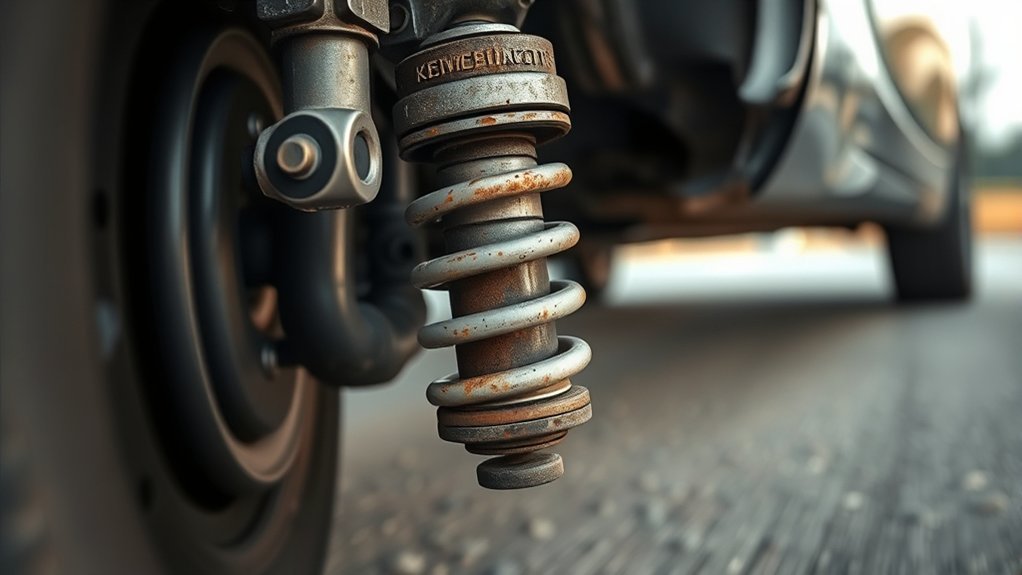
How exactly do worn shocks impact your vehicle’s safety and handling? When shocks degrade, they compromise your car’s stability and responsiveness, directly affecting your control.
Worn shocks fail to absorb road impacts effectively, causing excessive body roll and longer stopping distances. This deterioration can also lead to uneven tire wear, affecting traction and aesthetics by making your ride look less composed.
Worn shocks increase body roll, extend stopping distances, and cause uneven tire wear, reducing traction and ride quality.
Here’s what you can expect with worn shocks:
- Reduced steering precision, increasing the risk during evasive maneuvers
- Increased braking distances due to unstable tire contact
- Poor ride quality, negatively impacting shocks and fuel economy
- Greater susceptibility to hydroplaning on wet surfaces
Maintaining functional shocks is critical to ensure your vehicle handles safely and predictably.
Choosing the Right New Shocks for Your Car
When selecting new shocks for your car, you need to understand the different types, including twin-tube, monotube, and gas-charged models. Consider factors like your vehicle’s weight, driving conditions, and desired handling characteristics to ensure, or guarantee, peak performance.
Matching the shock absorber to these variables enhances ride stability and safety.
Types of Shock Absorbers
Selecting the right shock absorbers requires understanding the distinct types available and their specific functions within your vehicle’s suspension system. You’ll encounter various designs, each affecting ride quality and handling differently.
It’s important to distinguish shocks vs struts: shocks primarily dampen oscillations, while struts combine shock absorption with structural support. Additionally, hydraulic vs gas shocks differ in performance; hydraulic shocks use oil to control suspension movement, offering a smoother ride, whereas gas shocks pressurize nitrogen gas to reduce foaming and improve responsiveness.
Common types include:
- Twin-tube hydraulic shocks: cost-effective, smooth damping
- Mono-tube gas shocks: better heat dissipation, improved control
- Strut assemblies: integrate shocks with coil springs for structural support
- Adjustable shocks: allow tuning for varied driving conditions
Choosing the right type ensures ideal suspension performance tailored to your driving needs.
Factors Influencing Shock Selection
Why do certain shocks suit one vehicle better than another? When selecting shocks, you must consider factors like vehicle weight, driving conditions, and suspension type. The shocks market offers a range from standard to performance grade options.
Performance grade shocks provide enhanced damping control, ideal for aggressive driving or towing. Your vehicle’s suspension geometry and load capacity directly influence shock compatibility and effectiveness. Additionally, consider whether you need gas-charged or hydraulic shocks, as each responds differently to road impacts.
Matching shock specifications to your driving style ensures optimal ride comfort, stability, and tire wear. Ignoring these factors can lead to premature wear or compromised handling. By analyzing these technical variables, you’ll choose shocks that maintain your vehicle’s intended performance and safety standards.
Maintaining Your Car Shocks for Longer Life
How can you extend the functional lifespan of your car’s shocks? Proper maintenance is key, focusing specifically on the shocks rather than unrelated maintenance or unrelated components. Neglecting unrelated parts won’t improve shock performance or durability. Instead, concentrate on measures that directly impact shock longevity.
- Regularly inspect shocks for leaks, dents, or corrosion.
- Replace worn bushings and mounts to prevent excessive movement.
- Avoid overloading your vehicle, which stresses shocks beyond design limits.
- Keep tires properly inflated to reduce uneven shock wear.
Frequently Asked Questions
How Much Do Car Shocks Typically Cost to Replace?
You’ll typically pay $200 to $500 per shock for shocks maintenance, including parts and labor. When budgeting, consider installation considerations like vehicle type, labor rates, and whether you replace all shocks simultaneously for optimal performance.
Can I Replace Car Shocks Myself or Need a Mechanic?
Can you replace car shocks yourself or need a mechanic? You can, with proper tools and knowledge, but precision and safety demands often mean needing a mechanic.
Complex suspension systems require expertise to avoid misalignment or injury risks.
How Long Do Car Shocks Usually Last on Average?
You can expect shocks durability to last between 50,000 and 100,000 miles, depending on driving conditions.
Maintaining them ensures optimal ride stability, preventing excessive bouncing and improving overall vehicle control and safety.
Do All Vehicles Use the Same Type of Shocks?
Not all shocks wear the same hat; shock absorber construction varies widely. You’ll find different suspension tuning tailored to vehicle weight, purpose, and ride quality.
Matching shocks precisely ensures optimal performance and safety on every ride.
Can Bad Shocks Affect Fuel Efficiency?
Yes, bad shocks can reduce your fuel efficiency by causing bad handling and uneven tire wear, increasing rolling resistance and drag. This forces your engine to work harder, consuming more fuel during acceleration and steady driving.
Conclusion
Now that you understand how shocks control up to 90% of your vehicle’s stability by dampening suspension movement, you see why maintaining them is essential. Worn shocks not only compromise handling but also extend braking distances, increasing accident risk.
By choosing the right shocks and keeping them in peak condition, you guarantee your car responds precisely, rides smoothly, and stays safe. Don’t overlook their impact—your safety depends on it.
In conclusion, properly functioning shocks are vital for your vehicle’s performance and safety, making regular maintenance a must.