How Can I Tell if My Fan Clutch Is Bad
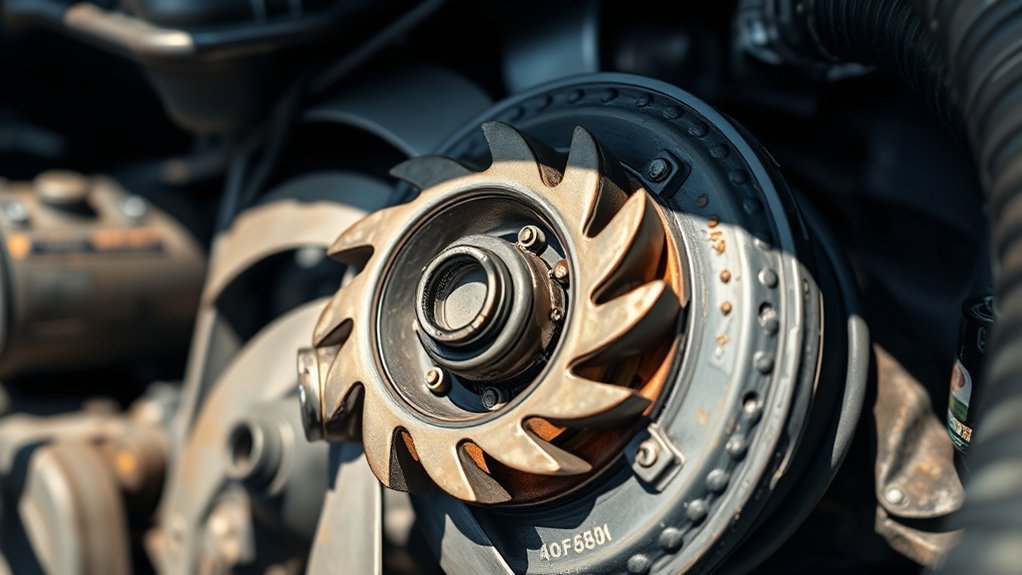
You can tell your fan clutch is bad if you notice grinding or squealing noises, excessive wobbling of fan blades, or your engine overheating despite normal coolant levels.
Also, if the fan spins constantly at high speed or offers too much resistance when you try to turn it by hand while cold, the clutch is likely failing.
These symptoms often indicate internal wear or locking issues that affect cooling efficiency. Understanding these signs will help you diagnose the problem accurately and decide on next steps.
Common Signs of a Failing Fan Clutch
How can you tell if your fan clutch is failing? Begin by listening for unusual noises. Grinding or squealing sounds often indicate internal bearing wear.
Listen for grinding or squealing noises, as they often signal internal bearing wear in a failing fan clutch.
Next, check for excessive fan blade movement. A loose fan clutch causes wobbling during operation.
Overheating engine temperatures signal insufficient fan engagement, while a fan that spins continuously at high speed may suggest clutch locking.
Avoid confusing these signs with unrelated topics like electrical issues or irrelevant concepts such as thermostat failure, which do not directly pertain to the fan clutch’s mechanical function.
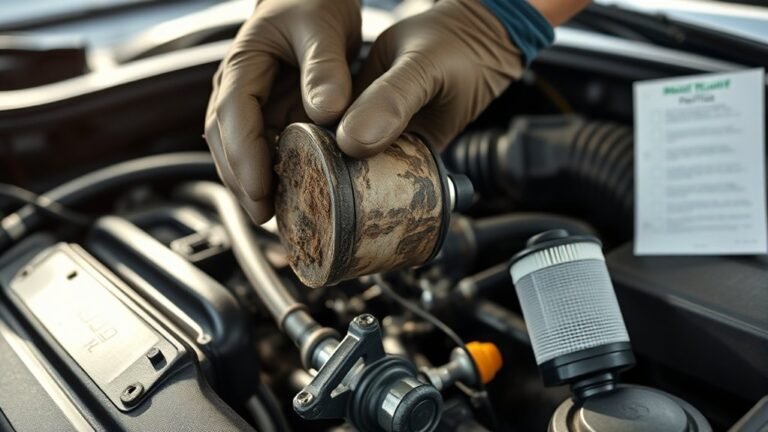
To diagnose accurately, inspect the fan clutch’s resistance by trying to rotate the fan by hand when the engine is cool. Excessive free spinning or stiffness points to malfunction.
These diagnostic steps help isolate fan clutch problems precisely.
Why Driving With a Bad Fan Clutch Is Risky
Identifying the signs of a failing fan clutch is only the first step; understanding the risks of continuing to drive with a compromised unit is equally important. When your fan clutch malfunctions, it can cause engine overheating due to inadequate cooling, especially at low speeds.
Additionally, if your vehicle uses electric fans as a supplement or replacement, bad wiring can exacerbate the cooling failure by preventing proper fan activation. Prolonged overheating stresses engine components, potentially leading to warped heads, blown gaskets, or complete engine failure.
Ignoring these risks not only compromises engine reliability but also increases repair costs substantially. Consequently, diagnosing and addressing fan clutch issues promptly is critical to maintaining effective engine temperature control and preventing cascading mechanical damage.
What Does a Fan Clutch Actually Do?
What role does the fan clutch play in your vehicle’s cooling system? It regulates the engine cooling fan’s speed based on temperature, ensuring optimal airflow through the radiator. When the engine heats up, the fan clutch engages, increasing fan rotation to dissipate heat efficiently.
Conversely, it disengages at lower temperatures to reduce drag, improving fuel efficiency and supporting alternate energy efforts by minimizing unnecessary engine load. This precise modulation helps maintain stable engine temperature, crucial for effective climate control inside your vehicle.
Without a properly functioning fan clutch, you risk overheating or inefficient cooling, which can compromise engine performance and passenger comfort. Understanding its function is essential for diagnosing cooling system issues and maintaining your vehicle’s thermal balance.
How to Test Your Fan Clutch at Home
To test your fan clutch at home, start with a thorough visual inspection for leaks, damage, or excessive play in the bearing.
Next, perform a temperature-based test by monitoring engine heat and fan engagement during startup and warm-up. These steps help identify if the clutch is functioning within its designed thermal range.
Visual Inspection Steps
How can you determine if your fan clutch is failing without specialized tools? Begin with a thorough visual inspection. First, check for obvious physical damage like cracks, dents, or oil leakage around the clutch housing, which indicates seal failure.
Next, examine the fan blades for warping or damage that could affect performance. Inspect the mounting bolts to ensure they’re tight and not corroded.
Spin the fan by hand; it should offer resistance but rotate smoothly without excessive play or noise. Any looseness or grinding suggests internal wear.
Document these findings to compare against manufacturer specifications. If defects appear, consider your replacement options promptly to avoid engine overheating.
This precise visual inspection helps diagnose fan clutch conditions effectively before advancing to temperature-based testing.
Temperature-Based Testing
When should you perform temperature-based testing on your fan clutch? This test is crucial when you suspect the clutch isn’t engaging or disengaging properly under different engine temperatures.
Begin by warming up your engine to normal operating temperature, then carefully observe the fan’s behavior as the temperature rises and falls. During temperature-based testing, you’re checking if the clutch responds correctly, engaging fully when hot to provide cooling and disengaging when cooler to reduce drag.
Pay close attention to any irregularities that might indicate lubrication concerns inside the clutch mechanism, such as delayed or incomplete engagement. If the fan spins freely when hot or remains locked when cold, these signs point to internal lubrication failure or wear, signaling that your fan clutch likely needs replacement.
When to Replace Your Fan Clutch
You should consider replacing your fan clutch if you notice consistent engine overheating despite normal coolant levels and radiator function.
Pay attention to abnormal noise or vibrations coming from the fan area, as these can indicate internal clutch failure.
Additionally, if you experience reduced engine performance or increased fuel consumption, it may be linked to a malfunctioning fan clutch affecting cooling efficiency.
Signs of Overheating
Why does your engine temperature rise unexpectedly? One key culprit could be a failing fan clutch reducing cooling system efficiency. Overheating myths often misattribute high engine temperatures to coolant or radiator issues alone, but a malfunctioning fan clutch impairs airflow through the radiator, diminishing heat dissipation.
When you notice consistent temperature spikes during idling or slow speeds, despite adequate coolant levels, suspect the fan clutch. It may not engage properly, leading to insufficient cooling.
Also, if your engine overheats only under load or in stop-and-go traffic, this indicates the fan clutch isn’t responding to temperature changes as designed. Identifying these signs promptly helps you avoid serious engine damage by replacing the fan clutch before the cooling system fails entirely.
Noise and Vibration Indicators
Overheating isn’t the only symptom indicating a failing fan clutch; unusual noise and vibration often signal its deterioration as well. If you notice increased noise or vibration, it’s essential to perform a vibration comparison against normal operation to diagnose the issue accurately.
Key indicators prompting replacement include:
- Excessive whining or grinding noises during engine operation, indicating worn bearings.
- Noticeable vibration through the engine compartment, exceeding baseline vibration levels.
- Lack of noise reduction when the fan should engage, suggesting clutch slippage.
- Intermittent noise changes correlated with engine temperature, reflecting inconsistent clutch engagement.
Reduced Engine Performance
How can reduced engine performance signal a failing fan clutch? When the fan clutch malfunctions, it can cause excessive drag on the engine, leading to reduced engine efficiency. You may notice a distinct power loss, especially during acceleration or under load, as the engine works harder to overcome the added resistance.
This reduced engine output is a clear diagnostic indicator that the fan clutch isn’t disengaging properly. Conversely, if the clutch fails to engage, the engine can overheat, triggering a protective reduction in power to avoid damage.
In both cases, the compromised fan clutch disrupts optimal cooling and engine operation. If you’re experiencing consistent power loss alongside temperature irregularities, it’s time to replace your fan clutch to restore proper engine performance.
How to Pick the Right Replacement Fan Clutch
When selecting a replacement fan clutch, what key specifications should you prioritize to ensure proper fit and function? First, verify the clutch’s compatibility with your vehicle’s make and model to avoid installation errors. Next, assess the torque rating to match your engine’s cooling requirements accurately.
Third, check the thermal response time, as it impacts fan engagement and engine temperature regulation. Lastly, consider the clutch’s durability and manufacturer reliability for long-term maintenance strategies.
To optimize your diagnostic tips, focus on these four critical factors:
- Vehicle-specific compatibility
- Torque capacity matching
- Thermal activation precision
- Manufacturer quality and warranty
Prioritizing these specifications ensures the replacement fan clutch performs effectively, minimizing future cooling system failures.
Frequently Asked Questions
Can a Bad Fan Clutch Cause Poor Fuel Economy?
Yes, a bad fan clutch with tight coupling can cause bad fuel economy by forcing the fan to run constantly, increasing engine load and fuel consumption.
You’ll notice poor fuel efficiency and overheating symptoms if it’s failing.
Is It Safe to Drive With a Noisy Fan Clutch Temporarily?
You can drive temporarily with a noisy fan clutch, but monitor your drive belt and radiator cap closely. Excess noise may indicate stress on components, so avoid long trips to prevent overheating or further damage to your cooling system.
How Much Does Fan Clutch Replacement Typically Cost?
Replacing your fan clutch can cost between $200 and $600, depending on cost estimates and labor considerations.
Like tuning a precision instrument, accurate diagnosis and skilled labor are essential for ideal cooling system performance.
Are There Different Types of Fan Clutches for Different Vehicles?
Yes, there are different types of fan clutches designed for specific vehicle compatibility. You’ll find thermal, viscous, and electronic variants, each tailored to engine requirements and cooling efficiency.
Always check your vehicle’s specifications before replacement.
Can a Bad Fan Clutch Affect Air Conditioning Performance?
Yes, a bad fan clutch can reduce your cooling system’s efficiency, causing higher engine temps that strain the AC.
Listen for noise during diagnosis, as a failing clutch risks driving safety by overheating components.