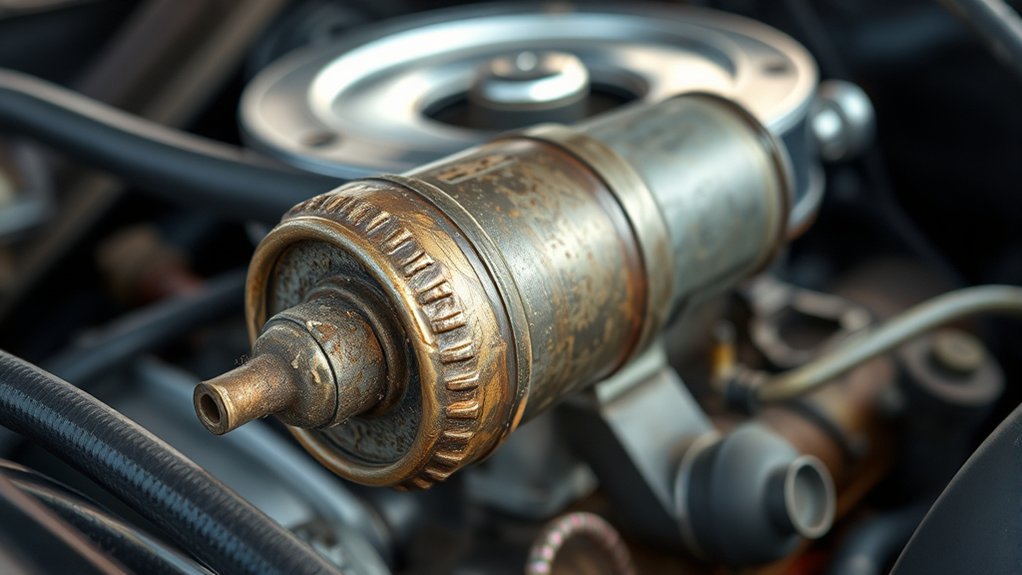
Can Clogged Mustang Fuel Filter Create Loss of Pressure
Yes, a clogged fuel filter in your Mustang can create a loss of fuel pressure by restricting the flow of fuel to the engine. This drop in pressure impairs combustion, causing symptoms like hesitation, rough idling, and reduced power.
The fuel pump faces increased resistance, which affects overall system performance. Measuring pressure at the fuel rail can confirm this issue.
Understanding how fuel filter clogging impacts pressure and performance will help you diagnose and address the problem effectively.
How the Fuel Filter Affects Mustang Fuel Pressure
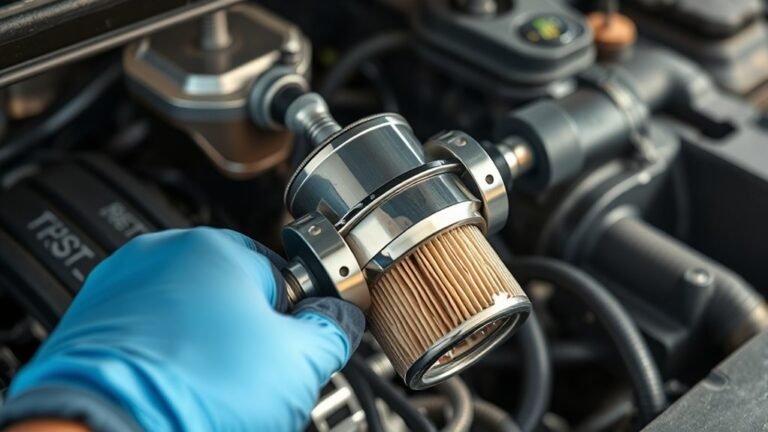
How exactly does the fuel filter impact your Mustang’s fuel pressure? The fuel filter plays a critical role in your car’s fuel filtration system, removing contaminants before fuel reaches the engine.
In proper car maintenance, this filtration ensures consistent fuel flow and pressure. If the filter is functioning correctly, it allows fuel to pass through with minimal resistance, maintaining stable pressure.
The fuel pump relies on this steady flow to deliver the correct amount of fuel for combustion. Any disruption in filtration efficiency can alter fuel pressure dynamics, affecting engine performance.
Monitoring and maintaining the fuel filter is essential to prevent pressure fluctuations. Understanding this relationship helps you diagnose fuel-related issues accurately and maintain your Mustang’s optimal operation.
How a Clogged Fuel Filter Lowers Your Mustang’s Fuel Pressure
When your Mustang’s fuel filter clogs, it restricts fuel flow, causing a noticeable drop in fuel pressure. This reduced pressure limits the amount of fuel reaching the engine, which can impair combustion efficiency.
As a result, you’ll experience diminished engine performance and potential drivability issues.
Fuel Flow Restriction
Why does your Mustang experience a drop in fuel pressure when the fuel filter is clogged? The fuel filter’s primary role is to trap contaminants, but as debris accumulates, it restricts fuel flow. This restriction forces the fuel pump to work harder to maintain pressure, often resulting in a measurable pressure loss before the injectors.
The reduced fuel flow compromises the optimal operation of your Mustang’s V8 exhaust system, which relies on precise fuel delivery for efficient combustion. Though Mustang aesthetics focus on power and performance, a clogged filter undermines these by choking fuel supply.
Diagnostically, a pressure gauge reading below manufacturer specs signals flow restriction. Addressing this ensures consistent fuel pressure, preserving the integrity of both engine function and your Mustang’s signature V8 exhaust sound.
Impact on Engine Performance
What happens to your Mustang’s engine performance as fuel pressure drops due to a clogged filter? A reduction in fuel pressure directly impacts combustion efficiency and overall drivability. You’ll notice symptoms that are diagnostic indicators of this issue:
- Misfires and hesitation. Insufficient fuel delivery disrupts the air-fuel mixture, causing incomplete combustion.
- Decreased power output. The engine can’t generate expected torque as fuel flow is limited.
- Rough idling. Inconsistent fuel pressure leads to unstable engine RPMs.
It’s important to avoid chasing irrelevant topics or unrelated concepts, such as ignition timing faults or sensor failures, when diagnosing fuel pressure loss from a clogged filter. Focus on fuel system components first to isolate the root cause. Understanding this precise relationship helps you maintain optimal Mustang performance and prevents misdiagnosis.
Common Symptoms of a Clogged Fuel Filter in Mustangs
How can you tell if your Mustang’s fuel filter is clogged? Key symptoms include engine hesitation during acceleration, frequent stalling, and a noticeable drop in fuel pressure. You might also experience difficulty starting the engine or rough idling.
These signs directly indicate restricted fuel flow, not an unrelated topic such as off topic discussion about unrelated engine components. If you notice inconsistent engine performance or a sudden loss of power, focus your diagnostics on the fuel delivery system first.
Avoid confusing these symptoms with issues caused by other components, as that would lead to an off topic discussion irrelevant to the fuel filter’s condition. Properly identifying these specific symptoms helps isolate the clogged filter as the root cause, enabling targeted repairs and restoring optimal fuel pressure.
Other Fuel System Problems That Cause Fuel Pressure Issues
You might be dealing with more than just a clogged fuel filter if your Mustang’s fuel pressure is off. A failing fuel pump can reduce flow, while a faulty fuel pressure regulator can cause inconsistent pressure levels. Both issues require careful testing to diagnose accurately.
Fuel Pump Malfunction
When does a fuel pump malfunction start affecting your Mustang’s fuel pressure? It typically begins once the pump’s internal components show wear or electrical faults disrupt power delivery. Unlike clogged filters, pump issues often stem from mechanical or electrical failures, not maintenance routines neglect.
To diagnose a malfunctioning fuel pump, focus on:
- Electrical testing: Verify voltage and continuity at the pump connector to rule out wiring faults.
- Pressure measurement: Use a fuel pressure gauge to compare readings against manufacturer specifications.
- Noise and vibration assessment: Listen for unusual sounds indicating worn bearings or impeller damage.
Addressing fuel pump malfunctions promptly prevents cascading failures and ensures consistent fuel delivery. Avoid conflating this with unrelated topics like fuel filter clogging or pressure regulator faults, as each requires distinct diagnostic approaches.
Faulty Fuel Pressure Regulator
Why does a faulty fuel pressure regulator cause inconsistent fuel pressure in your Mustang? The regulator maintains steady fuel pressure by controlling return flow to the tank. When it malfunctions, pressure fluctuates, leading to poor engine performance or stalling.
Diagnostically, you’ll notice symptoms like black smoke, rough idling, or fuel leaks. It’s crucial to differentiate this from other issues; some discussion ideas might wrongly link unrelated subtopic causes like clogged filters or pump failures.
To accurately diagnose, measure fuel pressure with a gauge at the fuel rail and check for vacuum leaks affecting the regulator diaphragm. Identifying a faulty fuel pressure regulator ensures you address the root cause of pressure loss rather than chasing unrelated subtopic problems, enhancing reliability and performance.
How to Test Fuel Pressure on Your Mustang
How can you accurately determine if your Mustang’s fuel system is delivering the proper pressure? Avoid falling into unrelated topic discussions or random speculation. Instead, rely on a precise diagnostic approach to test fuel pressure correctly. Follow these steps:
- Locate the Schrader valve on the fuel rail and connect a calibrated fuel pressure gauge securely.
- Turn the ignition to the “on” position without starting the engine; note the static pressure reading and compare it to your Mustang’s specified range.
- Start the engine and observe the pressure under operating conditions. Watch for fluctuations or drops that indicate possible fuel delivery issues.
This method provides an exact measurement, allowing you to distinguish genuine fuel pressure problems from unrelated concerns.
Replacing a Clogged Fuel Filter on Your Mustang
Wondering what steps to take if your Mustang’s fuel filter is clogged and causing pressure loss? First, relieve fuel system pressure by disconnecting the battery and carefully loosening the fuel line fittings near the filter.
Avoid pursuing any irrelevant topic like random idea fixes unrelated to the fuel system. Next, remove the mounting bracket or clips securing the old fuel filter. Take note of the filter’s flow direction, usually indicated by an arrow, to install the new one correctly.
Swap in the replacement filter, ensuring tight, leak-free connections on both inlet and outlet sides. Finally, reconnect the battery and start the engine, checking for consistent fuel pressure and absence of leaks.
This diagnostic replacement process restores proper fuel flow, directly addressing the pressure loss caused by clogging.
Preventing Fuel Filter Clogs to Keep Fuel Pressure Steady
After replacing a clogged fuel filter to restore proper fuel pressure, maintaining that pressure depends on preventing future clogs. To effectively do this, focus on these critical steps:
Maintaining fuel pressure requires preventing clogs through regular filter care and system cleanliness.
- Regularly inspect and replace the fuel filter based on manufacturer guidelines. Don’t rely on outdated two word discussion ideas about longevity.
- Use high-quality fuel and additives to minimize debris accumulation, countering common mustang misconceptions about fuel purity.
- Periodically clean the fuel tank and lines to prevent sediment buildup, dispelling fuel system myths that only the filter traps contaminants.
Frequently Asked Questions
What Type of Fuel Filter Is Best for a Mustang?
You’ll want a high-flow, OEM or quality aftermarket fuel filter for your Mustang. It prevents a clogged filter that reduces fuel pressure, ensuring consistent fuel delivery and optimal engine performance without pressure drops or diagnostic issues.
How Often Should I Change My Mustang’s Fuel Filter?
You should change your Mustang’s fuel filter every 30,000 miles to maintain optimal filtration efficiency. Proper maintenance timing ensures fuel system cleanliness, preventing clogging at filler necks and preserving consistent fuel pressure for reliable performance.
Can a Clogged Fuel Filter Damage the Fuel Pump?
Yes, a clogged filter can cause fuel pump damage by forcing the pump to work harder, leading to overheating and premature failure.
Regular maintenance helps prevent this issue and ensures optimal fuel system performance.
Are Aftermarket Fuel Filters Reliable for Mustangs?
Are you willing to risk Mustang reliability with unreliable filters? Aftermarket fuel filters vary; some cause clogged filters and fuel pressure drops.
Choose high-quality brands to maintain consistent fuel flow and avoid diagnostic headaches on your Mustang.
Does Premium Fuel Prevent Fuel Filter Clogs?
Premium fuel alone won’t prevent fuel filter clogs, but you’ll benefit from fuel additives within it that help clean deposits. Regularly using quality additives enhances filtration efficiency, reducing clogging risks and maintaining optimal fuel pressure in your Mustang.