
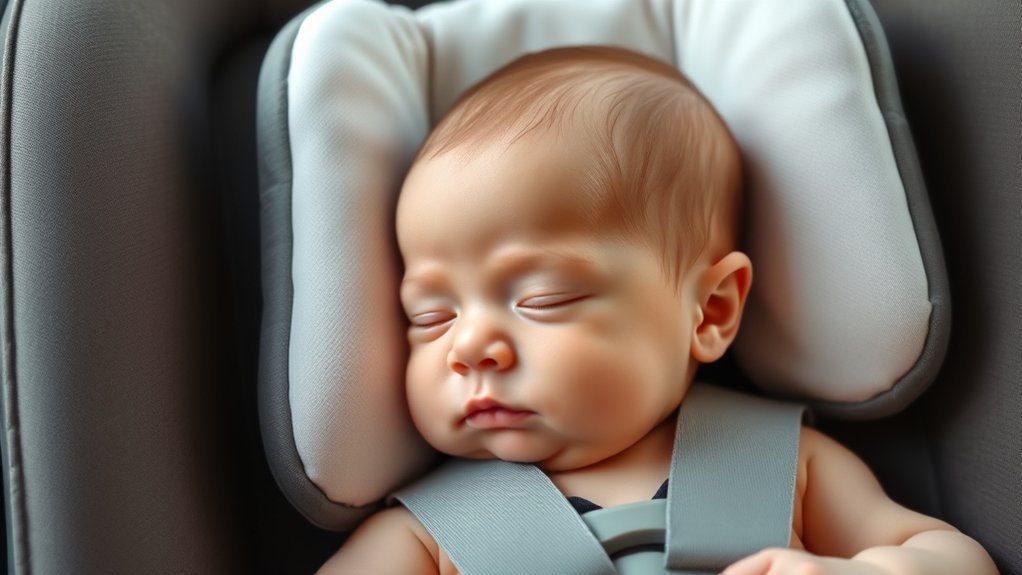
How a Newborn Should Look in a Car Seat
Your newborn should sit with their back flat against the car seat, harness straps snug over their shoulders, and the chest clip aligned at armpit level to keep everything secure. This is how a newborn should look in a car seat to ensure maximum safety and comfort.
The seat should be reclined between 30 and 45 degrees, supporting the head without tipping forward. Dress your baby in thin, breathable clothes, avoiding bulky layers that affect harness fit.
Watch for calm breathing and relaxed limbs, signs of comfort and safety. You can explore ways to perfect harness fit and avoid common mistakes next.
How to Position Your Newborn Safely in a Car Seat
To position your newborn safely in a car seat, place them firmly with their back flat against the seat and guarantee the harness straps lie snugly over their shoulders. Avoid common car seat myths, such as loosening straps for comfort or using bulky clothing under the harness, which can compromise safety.
Make sure the chest clip rests at armpit level to keep your baby secure. Always check that the car seat is installed tightly and follows manufacturer guidelines.
Furthermore, avoid using aging car seats past their expiration date or after any accident, as their integrity may be compromised. Regularly inspect your car seat for wear and replace it when necessary to ensure maximum protection for your newborn on every trip.
How to Set the Right Car Seat Angle for Your Newborn
You need to set your newborn’s car seat at the ideal recline angle to keep their airway open and safe. Adjust the seat support carefully to maintain this angle without causing slumping.
Always ensure your baby’s head stays properly positioned to prevent it from tipping forward.
Ideal Recline Angle
How can you guarantee your newborn stays safe and comfortable during every car ride? The ideal recline angle plays a crucial role in both newborn comfort and car seat safety.
For most infant car seats, setting the recline between 30 and 45 degrees is optimal. This angle keeps your baby’s airway open, reducing the risk of breathing difficulties, while also preventing their head from slumping forward.
Most car seats include built-in angle indicators or adjusters. Use these tools to achieve the precise position. Avoid reclining too far back or too upright, as either extreme compromises safety and comfort.
Always consult your car seat’s manual for specific recommendations, and double-check the angle before every trip to ensure your newborn rides securely and comfortably.
Adjusting Seat Support
Where should your newborn’s car seat angle sit for maximum support? Proper adjusting seat and support positioning are essential for your baby’s safety and comfort. Aim for a recline angle between 30 to 45 degrees to prevent the head from falling forward and ensure open airways.
Use the car seat’s built-in angle indicators or a portable level to verify this angle. When adjusting seat support, keep these points in mind:
- Ensure the seat base rests securely and flat against the vehicle seat.
- Adjust the recline mechanism until the indicator shows the correct angle.
- Use rolled towels or car seat inserts only if recommended by the manufacturer for added support.
- Confirm the seat doesn’t tilt further back or forward during installation.
Following these steps guarantees optimal support positioning for your newborn’s safety.
Ensuring Proper Head Position
Why does your newborn’s head position matter so much in the car seat? Proper head alignment ensures airway safety and promotes newborn comfort, preventing the head from slumping forward.
Setting the right car seat angle is essential, as many car seat myths suggest that a fully upright position is safest, but too upright can cause discomfort and breathing issues.
Use the table below as a quick guide to proper angles and signs to watch for:
| Car Seat Angle | Newborn Head Position |
|---|---|
| 30°-45° | Head centered, stable |
| <30° | Risk of head slumping forward |
| >45° | May cause neck strain |
| Signs to Watch | Slumped head, difficulty breathing |
| Adjustments | Use recline features or inserts |
Always guarantee your newborn’s head is well-supported and aligned for safe, comfortable travel.
How to Fit the Harness Properly on Your Newborn
What ensures your newborn stays safe during every trip is the correct harness fit. Forget calibration myths or zodiac readings. Safety relies on precise adjustment. You need to snug the harness so it holds your baby securely without causing discomfort. Follow these key steps:
- Position the harness straps at or just below your newborn’s shoulders.
- Pull the straps tight enough that you can fit only one finger between the harness and your baby’s chest.
- Ensure the harness lies flat and isn’t twisted.
- Check that the buckle clicks securely and holds firmly.
How to Position the Chest Clip for Maximum Safety
You need to position the chest clip at armpit level to keep your newborn secure and prevent the straps from slipping off. Make sure the clip aligns properly with your baby’s chest and that the harness straps fit snugly without being too tight.
Correct placement of the chest clip is essential for maximizing safety during every car ride.
Proper Chest Clip Placement
A properly positioned chest clip plays an essential role in keeping your newborn secure in their car seat. You’ll want to ensure it’s placed at armpit level, preventing the straps from slipping off your baby’s shoulders while avoiding discomfort. Proper placement minimizes injury risk during sudden stops or accidents.
To position the chest clip correctly, consider these points:
- Align the clip horizontally across the chest, not the stomach.
- Secure the harness snugly without pinching the skin.
- Avoid placing the clip too low or too high, which compromises safety.
- Regularly check and adjust the clip as your baby grows.
Despite privacy concerns and marketing strategies distracting caregivers, focus on correct chest clip placement for your newborn’s safety above all.
Aligning Chest Clip Height
Ensuring the chest clip sits at the correct height directly affects your newborn’s safety in the car seat. Position the chest clip at armpit level. This two word idea1 is crucial for preventing injury during sudden stops.
When aligned properly, the chest clip keeps the harness straps snugly over your baby’s shoulders, maintaining the essential two word idea2 of restraint. If the clip sits too low or too high, it can cause the straps to slip off or press uncomfortably against your newborn’s neck.
Always double-check the clip’s placement after securing your child, as shifts can occur during travel. By aligning the chest clip height accurately, you ensure your newborn’s protection and comfort, reinforcing the car seat’s designed safety features.
Ensuring Secure Strap Fit
How exactly should you position the chest clip to maximize your newborn’s safety? Place the chest clip at armpit level to ensure the harness straps stay securely on your baby’s shoulders. This positioning reduces the risk of injury during sudden stops or impacts, a critical element of safe driving.
Regularly check the strap fit and chest clip placement as part of your car maintenance routine to maintain optimal protection.
Keep these points in mind for a secure strap fit:
- Chest clip at armpit height, centered on the chest
- Harness straps snug against your baby without slack
- No twists in the straps for even pressure distribution
- Verify fit each trip to adapt to your growing newborn
Proper strap fit supports safe driving and effective car seat use.
How to Dress Your Newborn for a Safe Car Seat Ride
Why does dressing your newborn properly for a car seat ride matter? Proper attire ensures the harness fits snugly and functions as intended, preventing injury during sudden stops. Avoid bulky coats or thick blankets that compress in a crash, creating dangerous slack in the straps.
Contrary to popular car seat myths, you don’t need heavy layers for safety; instead, use thin, breathable clothing that maintains warmth without interfering with harness tightness. Choose simple, well-fitting outfits that allow you to secure the straps close to your baby’s body.
Newborn fashion should prioritize safety over style. Opt for soft onesies or sleepers without extra padding. Remember, the key is a secure fit, not trendy layers. Dressing your newborn correctly is essential for a safe and comfortable car seat ride.
Signs Your Newborn Is Secure and Comfortable
Properly dressing your newborn sets the foundation for safety, but recognizing when your baby is secure and comfortable in the car seat is just as important. Despite communication myths that suggest babies always express discomfort clearly, you need to observe subtle, consistent signs.
Don’t let fashion trends distract you from safety; comfort and correct positioning matter most.
Look for these signs to ensure your newborn is secure and comfortable:
- Snug harness straps without gaps, lying flat against the body
- Baby’s head supported, not slumped or tilted excessively
- Calm, relaxed facial expressions and steady breathing
- Limbs free to move slightly without excessive restriction
Trust these indicators over assumptions to keep your newborn safe and content during every ride.
Newborn Car Seat Mistakes to Avoid
When securing your newborn in a car seat, what common mistakes should you watch out for? One major error is using bulky clothing or blankets under the harness, which compromises newborn safety by preventing a snug fit.
Another frequent car seat mistake is improper harness positioning. Ensure the straps sit at or below your newborn’s shoulders and are tightened with no slack. Avoid placing the chest clip too low or too high; it should rest at armpit level to keep the harness secure.
Also, never use an expired or damaged car seat, as this severely risks newborn safety. Finally, avoid loose installation. Double-check your seat’s tightness and angle to prevent excessive movement. Avoiding these car seat mistakes ensures your newborn travels safely and comfortably.
Frequently Asked Questions
When Should I Transition My Newborn to a Convertible Car Seat?
You should transition timing to a convertible car seat once your newborn exceeds the rear-facing infant seat’s height or weight limits. Convertible seats accommodate growth better but always keep your child rear facing as long as possible for safety.
Can I Use a Car Seat With a Newborn if They Have Medical Conditions?
You can use a car seat with newborn medical conditions, but you must address car seat safety challenges carefully. Always consult your pediatrician and ensure the seat accommodates any special needs to keep your baby safe and secure.
How Do I Clean and Maintain a Newborn Car Seat?
You should follow a maintenance checklist: regularly vacuum crumbs, spot-clean fabric with mild soap, and remove the cover for machine washing if allowed. Use cleaning tips like avoiding harsh chemicals to keep your newborn’s car seat safe and fresh.
Are There Specific Car Seat Brands Recommended for Newborns?
You should consider brands like Chicco, Graco, and Britax for newborns, as they prioritize brand safety and infant comfort. These brands consistently meet rigorous safety standards and offer features tailored to your baby’s needs.
How Long Can a Newborn Safely Stay in a Car Seat During Travel?
Think of a newborn in a car seat like a puppy in a crate: comfortable but limited. You shouldn’t exceed two hours to ensure newborn sleep isn’t compromised and maintain optimal car seat safety during travel.
Conclusion
Your newborn should ride in a car seat that fits like a gentle embrace, protecting them every mile. By positioning them correctly, setting the right angle, fitting the harness snugly, and placing the chest clip properly, you ensure their safety and comfort.
Dress them appropriately, watch for secure signs, and avoid common mistakes.
Remember, a well-fitted car seat isn’t just a seat—it’s peace of mind, wrapping your baby in safety like a warm hug. Ensuring how a newborn should look in a car seat is key to their protection on every journey.