How to Place Newborn in Car Seat
Place your newborn securely in a rear-facing car seat designed for their size and anatomy to ensure maximum safety.
Install the seat at about a 45-degree recline, following manufacturer instructions carefully. Use either the LATCH system or the seat belt—not both—to secure the seat properly.
Dress your baby in snug, thin layers to ensure the harness fits tightly without any slack. Buckle the straps at or below shoulder level, with the chest clip aligned at armpit height. Avoid bulky clothing or extra padding that can interfere with harness fit.
For full safety, keep exploring important positioning and harness tips.
Choose the Right Car Seat for Your Newborn
How do you guarantee your newborn’s safety from the very first ride? Start by choosing the right car seat designed specifically for newborn ergonomics. You want a seat that supports your baby’s fragile spine and neck properly, ensuring a secure and comfortable fit.
Don’t fall for common car seat myths, like the idea that any infant seat is safe or that bulky clothing provides added protection. Instead, focus on seats that meet current safety standards and offer adjustable features to accommodate your newborn’s unique size.
Prioritize rear-facing models, as they provide the best crash protection. Remember, the right car seat isn’t just about brand or price—it’s about how well it aligns with your newborn’s anatomy and provides reliable safety for every trip.
Install and Adjust Your Newborn’s Car Seat Before Use
Before placing your newborn in the car seat, make sure you install it securely following the manufacturer’s instructions. Check that the harness fits snugly, with straps positioned at or below your baby’s shoulders.
Proper installation and adjustment are essential for your newborn’s safety during every trip.
Proper Seat Installation
Although installing a car seat may seem straightforward, you need to ensure it’s securely fastened and correctly positioned for your newborn’s safety. Begin by reading your car seat and vehicle manuals carefully.
Use either the LATCH system or seat belt, never both, to anchor the seat tightly. Position the car seat at a 45-degree angle to support your newborn’s head and neck, especially during newborn feeding and diaper changes.
Confirm there’s no more than one inch of movement side-to-side or front-to-back at the belt path. Double-check that the seat’s recline angle prevents your baby’s chin from falling onto their chest.
Proper installation protects your newborn in every journey, so take the time to install and adjust the seat before every trip to ensure the highest safety standards.
Harness Adjustment Tips
Why does proper harness adjustment matter? It ensures your newborn’s safety by keeping them securely in place during sudden stops or impacts. Start by placing your baby in the car seat and buckling the harness.
Next, eliminate harness slack by tightening the straps until they lie flat without pinching. You should not be able to pinch any excess webbing at the shoulder. Check the chest clip position; it should align with your baby’s armpits, not their stomach or neck.
This placement helps distribute force evenly and prevents the straps from sliding off. Adjust the harness height so the straps come through slots at or just below your newborn’s shoulders. Regularly reassess these adjustments as your baby grows to maintain optimal protection.
Dress Your Newborn Safely for Car Seat Use
You’ll want to dress your newborn in thin, comfortable layers that won’t interfere with the car seat harness. Avoid bulky coats or snowsuits, as they can prevent the straps from fitting snugly and reduce safety.
Choosing appropriate clothing ensures your baby stays both secure and comfortable during every ride.
Choose Appropriate Clothing
How should you dress your newborn to ensure both comfort and safety in the car seat? Start with careful layering to regulate your baby’s temperature without adding bulk. Choose breathable fabrics like cotton or bamboo that wick moisture and prevent overheating.
Dress your newborn in a snug-fitting base layer, such as a onesie, which allows the car seat harness to lie flat against their body. Avoid thick or padded clothing that can interfere with harness effectiveness.
Instead, add a lightweight, breathable layer for warmth if needed, and remove outer layers like jackets once your baby is secured. Always check that the harness fits snugly over clothing to maximize safety.
Avoid Bulky Layers
Choosing the right clothing for your newborn sets the foundation for safe car seat use, but it’s equally important to avoid bulky layers that can compromise harness effectiveness. Bulky clothing, like thick coats or padded snowsuits, can create slack in the harness, increasing injury risk during a crash.
Focus on these two word discussion ideas to keep your newborn secure without venturing into unrelated subtopic territory:
- Use thin layers – Dress your baby in thin, warm layers that fit snugly.
- Tighten harness – Always tighten the harness over clothing, ensuring no slack.
- Add blankets – Place blankets over the secured harness for warmth, not under.
Avoid bulky layers to maintain proper restraint and keep your newborn safe on every ride.
Position Your Newborn Correctly in the Car Seat
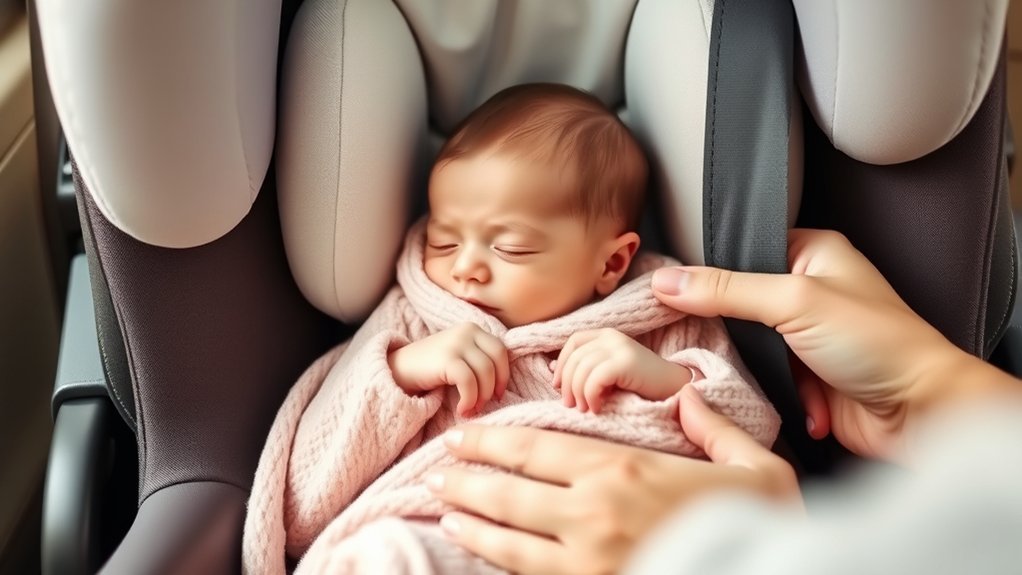
Where should your newborn be placed to guarantee maximum safety in the car seat? Position your baby with their back flat against the seat, ensuring their head rests comfortably within the headrest area to avoid slumping.
Avoid common car seat myths suggesting bulky clothing or extra padding for birth safety; these can compromise the harness fit and reduce protection. Instead, keep your newborn in a thin layer and use rolled blankets beside them if needed for support, never behind.
The seat should be reclined according to the manufacturer’s instructions, usually around 45 degrees, to keep your newborn’s airway open and secure. Proper positioning prevents injury during sudden stops and maximizes the car seat’s protective design, ensuring your baby stays safe on every trip.
Secure the Harness and Straps Correctly
Always double-check that the harness and straps are snug and correctly positioned before every ride. To secure the harness properly, follow these steps:
- Ensure the chest clip is at armpit level to keep the straps aligned over your newborn’s shoulders.
- Pull the straps to remove any slack, achieving firm strap tension without causing discomfort.
- Confirm the secure harness lies flat against your baby’s body, avoiding twists or folds that reduce effectiveness.
Maintaining correct strap tension is critical for safety; too loose and your newborn may slip, too tight and it can restrict breathing. By consistently securing the harness and straps correctly, you’re providing optimal protection for every journey.
Check the Fit and Make Necessary Adjustments
After securing the harness and straps correctly, the next step is to check the overall fit of your newborn in the car seat. Ensure the harness lies flat without twists, providing seamless harnessing that keeps your baby snug and secure.
The straps should be tight enough that you can’t pinch any slack at the shoulder, but not so tight that they cause discomfort. Pay special attention to careful neck support, making sure your newborn’s head rests comfortably without slumping or excessive movement.
Adjust the harness height to align with or just below your baby’s shoulders, depending on the car seat’s instructions. Finally, confirm that the chest clip is positioned at armpit level, securing the fit for maximum protection during travel.
Safe Newborn Car Seat Tips for Every Trip
A safe trip with your newborn starts before you even buckle the car seat. Prioritize newborn seating and travel safety every time you head out. Follow these essential tips to protect your baby:
- Position Correctly: Always place the car seat rear-facing in the back seat. This setup offers maximum protection during sudden stops or collisions.
- Secure Harness: Ensure the harness fits snugly at or below your newborn’s shoulders. The chest clip should be at armpit level to prevent movement.
- Limit Accessories: Avoid bulky clothing or aftermarket products that can interfere with the harness. Use only manufacturer-approved inserts for support.
Frequently Asked Questions
How Long Can a Newborn Safely Stay in a Car Seat?
You shouldn’t keep your newborn in a car seat for more than two hours at a time. Align car rides with breastfeeding schedules and nap transitions to secure comfort and safety, preventing breathing or circulation issues.
When Should I Transition My Baby to a Convertible Car Seat?
You should transition your baby to a convertible car seat when they outgrow the infant seat’s height or weight limits. Check your car seat’s manual for exact transition timing and ensure convertible compatibility for safety.
Can I Use a Car Seat on an Airplane for My Newborn?
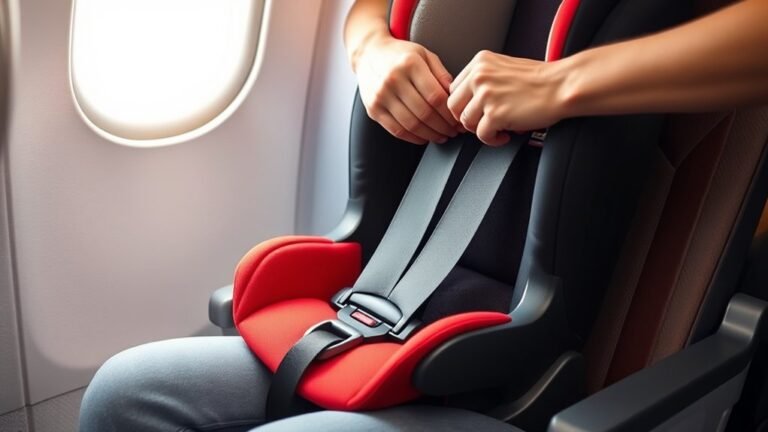
Absolutely, you can’t fly safer than with your newborn in a car seat! Follow air travel safety guidelines and car seat regulations strictly to ensure proper installation on the plane.
It’s the smartest choice for secure travel.
How Do I Clean and Maintain My Newborn’s Car Seat?
You should follow cleaning rituals like spot-cleaning fabric with mild soap and water, regularly wiping plastic parts, and checking straps for wear.
Maintenance tips include tightening harnesses and inspecting the seat for damage to keep it safe and reliable.
Are Car Seat Accessories Like Head Supports Safe for Newborns?
Car seat accessories like head supports aren’t always safe for newborns. You should use only those approved by manufacturers to guarantee newborn safety, as improper accessories can interfere with harness fit and crash protection.
Conclusion
Remember, “safety first” isn’t just a saying—it’s your newborn’s lifeline. By choosing the right car seat, installing it properly, dressing your baby safely, and securing the harness correctly, you’re giving your little one the best protection on every trip.
Always double-check the fit and make adjustments as needed. Taking these steps ensures peace of mind and keeps your newborn safe from the very first ride.
Your vigilance makes all the difference when you place your newborn in a car seat.