How Many Brake Pads per Wheel
Each wheel needs two brake pads—one on each side of the rotor—that clamp down when you press the brake pedal. This dual-pad setup helps distribute pressure evenly, giving you balanced, reliable stopping power and preventing uneven wear or rotor damage.
Front pads usually handle more stress and are thicker than rear ones, which support consistent braking. Understanding why you need two pads per wheel and when to replace them can help keep your vehicle safe and performing well.
Key Takeaways
- Each wheel typically requires two brake pads, one on each side of the brake rotor for effective clamping.
- Two pads per wheel ensure balanced pressure and prevent uneven braking or pad wear.
- The dual-pad setup helps distribute braking heat, reducing brake fade and enhancing safety.
- Most modern disc brake systems on cars use this two-pad per wheel configuration.
- Using the correct number of brake pads per wheel supports consistent stopping power and rotor protection.
How Many Brake Pads Does Each Wheel Need?
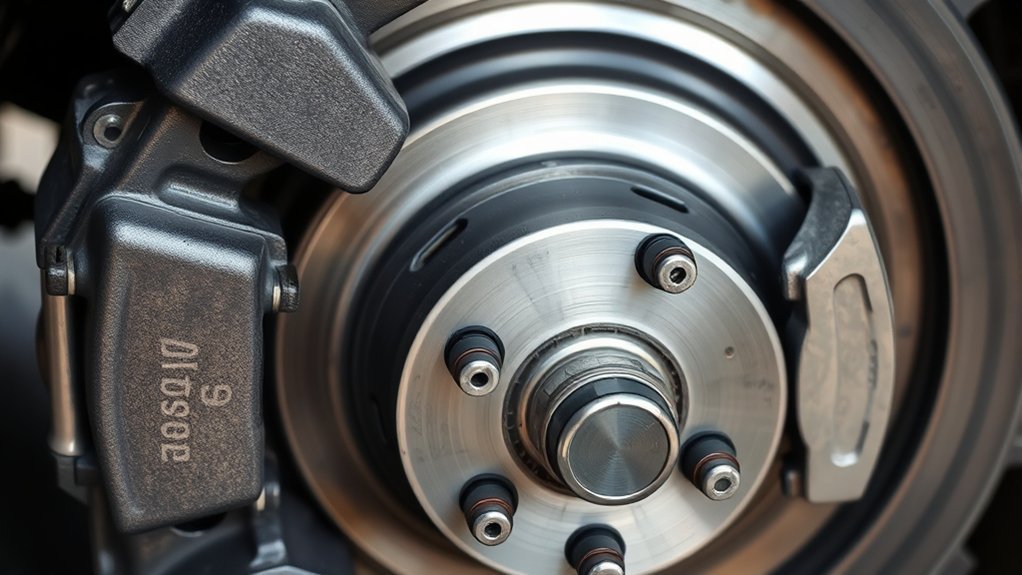
How many brake pads does each wheel actually need? Typically, each wheel requires two brake pads, one on each side of the brake rotor. When you press the brake pedal, these pads clamp onto the rotor to create friction, which slows your vehicle down.
You’ll find this setup in most disc brake systems, common on modern cars. Each pad faces the rotor, ensuring even pressure and effective braking. While some older vehicles or certain designs might differ, two pads per wheel is the standard.
This arrangement helps distribute braking force evenly, improving safety and wear. So, when inspecting or replacing brake pads, remember to check both sides of the rotor to maintain optimal braking performance.
How Front and Rear Brake Pads Differ
Why do front and rear brake pads look and perform differently? It’s because they handle different amounts of braking force and wear. Front brake pads usually face more pressure since the car’s weight shifts forward when you stop, so they’re thicker and made from tougher materials.
Rear brake pads handle less stress but still need to provide consistent stopping power.
Here’s how they differ:
- Size: Front pads are larger to handle greater force.
- Material: Front pads use harder compounds for durability.
- Design: Rear pads focus on stability and less aggressive friction.
- Wear rate: Front pads wear faster due to higher load.
Knowing these differences helps you maintain your brakes properly and replace pads as needed.
Why Each Wheel Has Two Brake Pads
Ever wondered what keeps your car stopping smoothly and safely? Each wheel has two brake pads because they work together to clamp the brake rotor from both sides. When you press the brake pedal, hydraulic pressure pushes the brake caliper pistons, forcing the two pads to squeeze the rotor.
This dual-pad setup ensures balanced pressure, maximizing friction to slow or stop your vehicle efficiently. If there was only one pad, the braking force would be uneven, causing vibrations and faster wear.
Having two pads also helps distribute heat generated during braking, reducing the risk of overheating and brake fade. So, the two-pad design isn’t just about stopping power; it’s about safety, reliability, and maintaining control every time you hit the brakes.
Signs You Need to Replace Brake Pads
You’ll know it’s time to replace your brake pads when you notice warning noises like squealing or grinding. Vibrations or a pulsing brake pedal are also clear signs something’s wrong.
Paying attention to these symptoms helps you stay safe and avoid costly repairs.
Common Brake Pad Symptoms
How can you tell when your brake pads need replacing? Paying attention to common symptoms can help you avoid costly repairs and ensure your vehicle’s safety. If you notice any of these signs, it’s time to check your brake pads:
- Reduced braking performance: Your car takes longer to stop or feels less responsive.
- Brake warning light: The dashboard brake indicator illuminates.
- Visible wear: You see less than a quarter-inch of brake pad material remaining.
- Pulling to one side: Your vehicle veers when braking, indicating uneven pad wear.
Warning Noises and Vibrations
Why does your car make strange noises or shake when you hit the brakes? Those warning sounds and vibrations often signal worn-out brake pads.
When brake pads wear thin, metal parts can rub against the rotor, causing squealing, grinding, or screeching noises. If you feel a vibration or pulsing through the brake pedal, it could mean the rotors are warped or uneven due to excessive pad wear.
Ignoring these signs can lead to reduced braking performance and costly repairs. Pay attention to these warning noises and vibrations; they’re your car’s way of telling you it’s time to replace the brake pads.
Addressing the issue promptly keeps you safe and prevents damage to other brake components.
Why Brake Pad Numbers Matter for Your Safety
When do brake pad numbers become critical for your safety? It’s when the braking system’s design depends on the correct number of pads to provide optimal stopping power and balance. Using the right quantity ensures even pressure distribution and prevents premature wear or brake failure.
Brake pad numbers are crucial when your braking system relies on the correct count for safe, balanced stopping power.
If you compromise on the number, you risk reduced braking efficiency, which can lead to dangerous situations.
Here’s why the count matters:
- Ensures consistent and reliable stopping performance
- Maintains balanced braking to avoid wheel lock or skidding
- Prevents uneven wear that could damage rotors or drums
- Supports your vehicle’s overall braking system integrity
How to Choose the Right Brake Pads for Your Wheels
Choosing the right brake pads for your wheels starts with understanding your vehicle’s specific needs and driving habits. If you drive mostly in the city, you’ll want pads that offer quick stopping power and durability for frequent braking.
For highway driving, choose pads that handle heat well to avoid fading. Consider the material: ceramic pads provide quieter operation and less dust, while semi-metallic pads deliver strong braking but can be noisier.
Check your owner’s manual for manufacturer recommendations, and don’t forget to match the pads to your wheel size and brake system type. Finally, factor in your budget, balancing cost with performance and longevity. Selecting the right pads ensures your wheels stop safely and efficiently every time.
Frequently Asked Questions
How Long Do Brake Pads Typically Last?
Brake pads typically last between 30,000 and 70,000 miles, but it depends on your driving habits and conditions.
You’ll want to check them regularly and replace them once they’re worn down to avoid damage or reduced braking performance.
Can I Replace Brake Pads Myself?
Yes, you can replace brake pads yourself if you have basic tools and mechanical skills. Just make sure you follow safety precautions, consult a reliable guide, and take your time to avoid damaging the braking system.
What Materials Are Brake Pads Made From?
Brake pads are made from materials like semi-metallic, ceramic, and organic compounds. You’ll find semi-metallic for durability, ceramic for quiet braking, and organic for softer, quieter stops. Each is suited for different driving needs and conditions.
How Do Weather Conditions Affect Brake Pad Wear?
You’ll feel like your brakes are battling a thousand storms because wet or icy weather makes brake pads wear faster. Moisture causes corrosion and reduces friction, so you’ll need to check and replace pads more often in harsh conditions.
Are Brake Pads Recyclable?
Yes, you can recycle brake pads, but it depends on the materials. Many shops accept used pads for proper disposal or recycling.
Always check local regulations and recycling programs to ensure you handle them responsibly.
Conclusion
You might think one brake pad per wheel is enough, but actually, each wheel needs two to stop you safely. Front and rear pads work differently, yet both are essential.
Ignoring worn pads can lead to dangerous consequences, while timely replacement keeps you in control. Choosing the right pads isn’t just about numbers—it’s about your safety.
So, don’t underestimate those two simple pads; they’re the difference between stopping smoothly and risking a crash. Remember, the number of brake pads per wheel directly impacts your vehicle’s braking performance and safety.