Do I Need All Wheel Drive
You need all-wheel drive if you often drive on slippery, rough, or unpredictable roads where traction matters. AWD automatically powers all four wheels to improve control, stability, and safety without any extra effort from you.
It’s especially helpful in snow, rain, or off-road adventures and in areas with changing conditions. If your driving includes these challenges or outdoor trips, AWD adds confidence and ease.
To see if it fits your lifestyle and budget, keep exploring these factors.
Key Takeaways
- AWD improves safety and control on slippery, uneven, or rough terrain without driver input, enhancing traction in varied conditions automatically.
- Choose AWD if you frequently drive in snow, rain, icy roads, mountainous areas, or unpaved rural roads for better stability and confidence.
- 2WD is sufficient for mild, predictable weather and paved roads, offering better fuel efficiency and lower initial and maintenance costs.
- AWD costs more upfront, uses more fuel, and requires additional maintenance, so weigh benefits against budget and driving needs carefully.
- Assess your daily routes and weather patterns to decide if AWD’s added traction and safety justify the increased expenses.
What Is AWD and How Does It Work
How does AWD actually work to improve your driving experience? AWD, or all-wheel drive, automatically distributes power to all four wheels instead of just two. This means when your car detects wheel slippage or uneven traction, it shifts torque to the wheels that hold the best grip.
You don’t have to engage anything manually; the system constantly adjusts to road conditions in real time. AWD uses sensors and a center differential or electronic clutch to balance power between the front and rear wheels.
This setup provides better control and stability on slippery or uneven surfaces. So, when you’re driving on wet roads or loose gravel, AWD helps maintain traction, giving you more confidence behind the wheel without extra effort on your part.
Everyday Benefits of AWD
Why should you consider AWD for your daily drive? AWD systems distribute power to all four wheels, which helps maintain steady traction on varied surfaces. Whether you’re commuting on wet roads, driving through light snow, or navigating through different terrain, AWD offers smoother acceleration and less wheel slippage.
You won’t have to worry about getting stuck in unexpected conditions, making your day-to-day trips more reliable. AWD also enhances your vehicle’s versatility, so you can switch from city streets to weekend adventures with ease.
Plus, it generally requires no input from you. It works automatically, so you get these benefits without extra effort. Choosing AWD means you’re better equipped for diverse driving challenges, increasing convenience and confidence every time you get behind the wheel.
How AWD Improves Safety and Handling
When you drive with AWD, you get enhanced traction control that helps keep your wheels gripping the road, especially in tricky conditions. This means you’ll experience better cornering stability, giving you more confidence on sharp turns.
Let’s look at how these features contribute to your overall safety and handling.
Enhanced Traction Control
Ever wondered what makes all-wheel drive stand out in slippery conditions? It’s all about enhanced traction control. AWD systems constantly monitor the grip of each wheel and instantly adjust power distribution to the wheels that need it most.
This means when you hit wet, icy, or uneven surfaces, your vehicle doesn’t just rely on front or rear wheels struggling for traction. Instead, power shifts seamlessly to maintain grip, helping you avoid wheel spin and maintain forward momentum.
You stay more in control, especially in unexpected slippery spots. This quick response reduces the chances of slipping or getting stuck, making your drive safer and more confident.
With AWD, you get improved stability and traction without having to think twice.
Better Cornering Stability
How does all-wheel drive boost your vehicle’s cornering stability? AWD distributes power to all four wheels, helping you maintain better control when you take turns.
Unlike two-wheel drive, which sends power to just the front or rear wheels, AWD adjusts power delivery dynamically based on traction. This means when you’re cornering, especially on slippery or uneven surfaces, your vehicle can grip the road more effectively, reducing the risk of skidding or sliding out.
You’ll feel more confidence and safety, knowing your car responds quickly to changes in road conditions. Whether you’re navigating sharp bends or wet roads, AWD helps keep your vehicle stable, giving you smoother handling and improved overall safety. It’s a smart choice if cornering stability matters to you.
AWD Performance in Snow, Rain, and Off-Road Conditions
When you’re driving in snow, AWD helps keep your wheels gripping the slippery surface for better control. In rainy conditions, it improves traction to reduce slipping and hydroplaning risks.
Plus, AWD gives you added stability when you’re off the beaten path, making rough terrain easier to handle.
Snow Traction Benefits
Why does all-wheel drive (AWD) matter so much in snowy or slippery conditions? Because it helps you maintain control and traction when the road gets tricky. With AWD, power goes to all four wheels, reducing the chance of slipping.
Here’s how AWD benefits you in snow:
- Improved Grip: Distributes power to wheels with the most traction, helping you move forward.
- Better Stability: Keeps your vehicle balanced, minimizing skids on icy surfaces.
- Enhanced Climbing Ability: Helps you ascend slippery hills without getting stuck.
- Safer Cornering: Provides extra control when turning on snow-covered roads.
Rain Handling Capabilities
Ever wonder how AWD handles wet roads and muddy trails? AWD systems constantly distribute power to all four wheels, giving you better grip when the pavement is slick from rain. Unlike two-wheel-drive vehicles, AWD can reduce wheel spin during acceleration, helping you maintain control in slippery conditions.
When you hit puddles or uneven, muddy surfaces, AWD’s ability to send torque to the wheels with the most traction keeps you moving confidently without getting stuck. This means you’re less likely to lose control or get bogged down during wet weather drives.
However, AWD isn’t a substitute for cautious driving. Always adjust your speed and follow safe practices in rain. Still, AWD definitely boosts your confidence and safety on wet and muddy roads.
Off-Road Stability Features
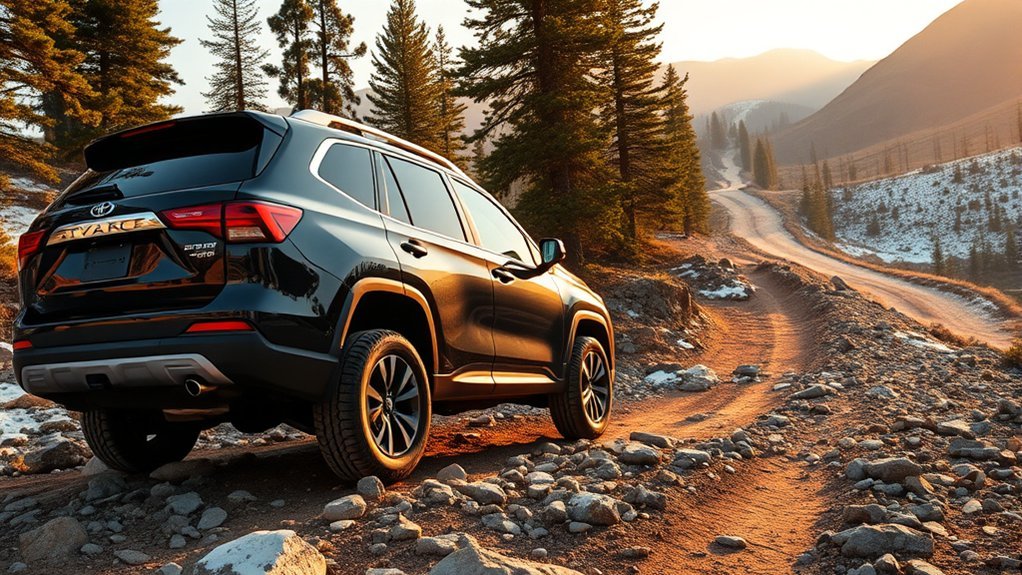
Although AWD systems excel on wet roads, they truly shine in off-road and snowy conditions by enhancing your vehicle’s stability and traction. When you tackle uneven terrain or slippery surfaces, AWD distributes power to all wheels, giving you better control and reducing the risk of getting stuck.
Here’s how AWD helps you stay steady off-road:
- Improved Traction: Power reaches wheels with the most grip, preventing slippage on mud, snow, or rocks.
- Balanced Stability: AWD maintains vehicle balance during sharp turns or sudden maneuvers on rough ground.
- Enhanced Climbing Ability: You can handle steep, slippery inclines more confidently.
- Automatic Adjustments: The system adapts in real time to changing conditions without driver input.
With AWD, you’re better equipped to face challenging environments safely and confidently.
Comparing AWD With Front-Wheel and Rear-Wheel Drive
How does all-wheel drive stack up against front-wheel and rear-wheel drive? AWD offers better traction by powering all four wheels simultaneously or as needed, giving you improved control in slippery conditions.
Front-wheel drive sends power to the front wheels only, which helps with fuel efficiency and is typically lighter, but it can struggle on loose or uneven surfaces. Rear-wheel drive powers the back wheels, providing balanced handling and better performance in dry conditions, but it’s less effective on snow or ice.
AWD blends the strengths of both, adapting to various road situations to keep you stable. If you often drive in variable weather or on rough terrain, AWD enhances safety and confidence compared to FWD or RWD.
Costs and Maintenance of AWD Vehicles
What should you expect when it comes to the costs and maintenance of AWD vehicles? AWD systems add complexity, which can impact your wallet over time. Here’s what to keep in mind:
1. Higher Purchase Price
AWD models typically cost more upfront due to added components.
AWD vehicles usually come with a higher initial price because of their extra components.
2. Increased Fuel Consumption
AWD systems add weight and drivetrain drag, reducing fuel efficiency.
3. Maintenance Costs
You’ll need regular checks on differentials, transfer cases, and additional drivetrain parts.
4. Tire Wear
AWD requires all tires to wear evenly, so you might replace all four at once instead of just two.
Understanding these factors helps you budget and maintain your AWD vehicle properly, ensuring it performs reliably without unexpected expenses.
Who Needs AWD: Lifestyle and Location Guide
Knowing the costs and upkeep of AWD vehicles is important, but figuring out if you actually need one depends on your lifestyle and where you live. If you frequently drive on rough, uneven terrain or face unpredictable weather like snow, rain, or ice, AWD can boost your safety and control.
Living in mountainous or rural areas with unpaved roads makes AWD especially useful. On the other hand, if your daily commute is mostly on well-maintained city streets or highways, AWD might not provide much added value.
Also, if you enjoy outdoor activities like camping or skiing, AWD can help you reach remote spots. Ultimately, consider how often you encounter slippery or challenging conditions. AWD shines when it helps you maintain traction and confidence in varied environments.
When Two-Wheel Drive Is the Better Choice
Why choose two-wheel drive over all-wheel drive? If you mostly drive in good weather and on paved roads, two-wheel drive (2WD) can be a smarter, more efficient choice. Here’s why you might pick 2WD:
- Fuel Efficiency: 2WD vehicles typically consume less fuel since they’re lighter and have fewer drivetrain components.
- Lower Cost: Both the upfront price and maintenance costs tend to be lower with 2WD.
- Simpler Repairs: With fewer parts involved, repairs are often easier and cheaper.
- Adequate Performance: If you don’t face slippery or rough terrain regularly, 2WD provides sufficient traction and control.
Choosing 2WD makes sense when your driving conditions are predictable and mild, helping you save money while meeting your daily needs without compromising safety.
How to Decide If AWD Fits Your Needs and Budget
Wondering if all-wheel drive (AWD) fits your needs and budget? Start by evaluating where and how often you drive. If you frequently face slippery roads, rough terrain, or harsh weather, AWD can improve safety and control.
Consider your driving conditions—AWD enhances safety on slippery roads, rough terrain, or harsh weather.
However, AWD usually costs more upfront and can increase fuel consumption. Consider your daily commute and driving conditions. If you mostly drive in mild weather on paved roads, two-wheel drive might suffice.
Also, factor in maintenance and potential repair costs. Compare vehicle prices with and without AWD and decide if the added expense is worth the benefits for your lifestyle.
Balancing your driving needs with your budget helps you choose the right drivetrain without overspending on features you don’t truly need.
Frequently Asked Questions
Can AWD Improve My Vehicle’s Resale Value?
Yes, AWD can improve your vehicle’s resale value, especially in regions with harsh weather. Buyers often pay more for better traction and safety, so having AWD makes your car more attractive and easier to sell later on.
Does AWD Affect Fuel Efficiency Significantly?
You might be surprised, but yes, AWD does affect fuel efficiency. It usually lowers it slightly because it adds weight and drivetrain complexity.
However, the impact varies, so it might not be as significant for your daily drive.
Are AWD Systems Compatible With Electric Vehicles?
Yes, AWD systems are compatible with electric vehicles. You’ll find many EVs use dual motors to power both axles, improving traction and performance.
This setup boosts control without sacrificing efficiency or range considerably.
How Does AWD Impact Tire Wear?
All-wheel drive can cause more even tire wear since power’s distributed to all four tires, but if your AWD system isn’t maintained properly, you might notice uneven wear or faster tire degradation.
Rotate tires regularly to avoid this.
Can I Add AWD to a Non-Awd Car Later?
You can’t easily add AWD to a non-AWD car later. It requires major drivetrain, suspension, and electronic changes, making it expensive and complicated.
It’s usually better to buy a car with AWD already installed.
Conclusion
Deciding if you need AWD depends on your lifestyle and where you drive. Did you know that AWD can reduce accident risk by up to 25% in slippery conditions? That’s a big safety boost if you face snow, rain, or rough terrain.
However, AWD isn’t always necessary and can add to costs and maintenance. Weigh your driving habits and budget carefully to decide if AWD truly fits your needs.
In conclusion, considering whether you need all wheel drive is essential to making the right choice for your safety and vehicle expenses.