How to Loosen a Wheel Nut
To loosen a wheel nut, first spray penetrating oil and let it sit 10–15 minutes to break down rust.
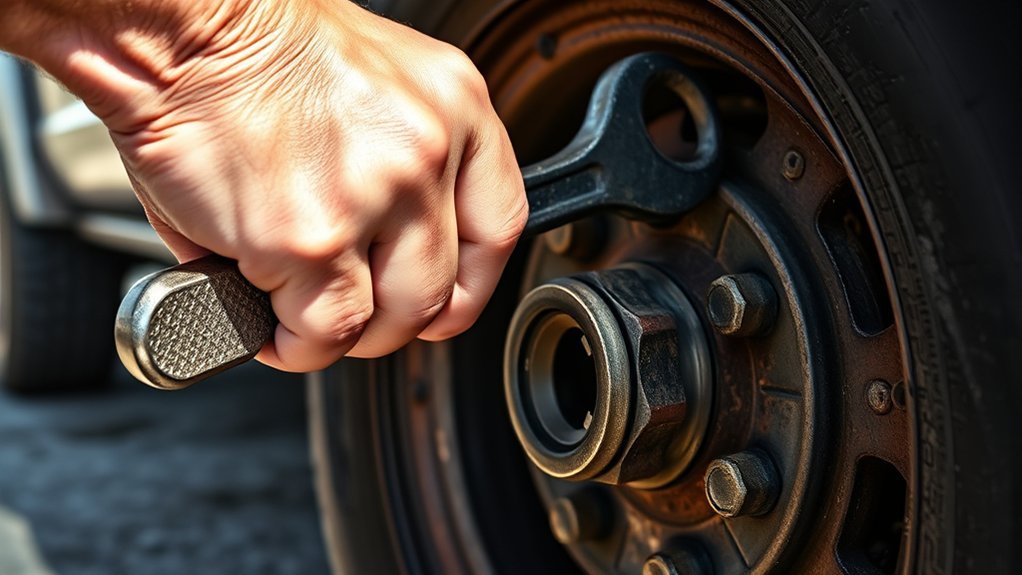
Use a properly fitting lug wrench or breaker bar for better leverage, turning the nut counterclockwise with steady force.
If the nut is stuck, gently tap it with a hammer and try applying heat carefully to soften corrosion.
Always work slowly to avoid damage and ensure safety.
If you keep going, you’ll uncover more tips to make the process easier and secure your wheel properly afterward.
Key Takeaways
- Apply penetrating oil to rusted or stuck nuts and wait 10–15 minutes before attempting to loosen.
- Use a sturdy lug wrench or breaker bar that fits securely over the nut for better leverage.
- Position the wrench perpendicular and handle outward to avoid slipping and ensure safe force application.
- Tap the nut gently with a hammer if needed, avoiding sudden or forceful impacts to prevent damage.
- Heat the nut with a propane torch or heat gun carefully, then let it cool slightly before loosening.
Why Wheel Nuts Won’t Loosen (And How to Spot the Problem)
Why won’t your wheel nuts budge? Often, it’s because they’ve been tightened too much or rust has set in over time. You might also find that dirt and grime have built up around the threads, making the nuts stick fast.
Sometimes, wheel nuts are cross-threaded, which means they were screwed on at an angle and are now stuck. If your car has been sitting for a while or exposed to harsh weather, corrosion likely plays a role.
To spot the issue, look closely at the nuts and studs. Check for rust, damage, or debris. If you notice any of these, that’s your clue why the nuts won’t turn. Identifying the cause helps you choose the right approach to loosen them safely and effectively.
Essential Tools for Loosening Wheel Nuts
To loosen stubborn wheel nuts, you’ll need the right tools at hand. Start with a sturdy lug wrench, designed to fit your wheel nuts perfectly and provide enough leverage.
Begin with a strong lug wrench that fits securely and delivers sufficient leverage to loosen those tough wheel nuts.
A breaker bar can be invaluable if the nuts are especially tight, giving you extra torque to break them free. You might also want penetrating oil to spray on rusted or stuck nuts, helping to ease the loosening process.
A torque wrench is useful later for properly tightening nuts, but not necessary for loosening. Avoid using makeshift tools; they can strip nuts or cause injury.
Having a reliable jack and wheel chocks ensures your vehicle stays secure while you work, making the task safer and more efficient. With these essentials, you’re set to tackle most wheel nut challenges confidently.
How to Use a Lug Wrench to Loosen a Wheel Nut
To loosen a wheel nut effectively, start by choosing the right lug wrench that fits snugly on the nut. Position the wrench correctly on the nut to ensure a secure grip and prevent slipping.
Then, apply force steadily and safely to avoid injury or damage.
Choosing The Right Lug Wrench
How do you pick the right lug wrench for loosening a wheel nut? You want one that fits securely and gives you enough leverage without straining. Lug wrenches come in different styles and sizes, so matching the wrench to your vehicle’s lug nut size is key.
Here’s a quick guide to help you decide:
| Lug Wrench Type | Best For |
|---|---|
| Cross Wrench | Versatile, offers good leverage |
| Socket Wrench | Precise fit, ideal for tight nuts |
| Adjustable Wrench | Flexible sizes, less sturdy |
Choose a wrench that feels comfortable and sturdy in your hand. Avoid using tools that don’t fit well; they can strip nuts or cause injury. Having the right lug wrench makes loosening wheel nuts much easier and safer.
Proper Lug Wrench Positioning
Once you’ve chosen the right lug wrench, positioning it correctly on the wheel nut makes loosening much easier. First, place the lug wrench’s socket fully over the nut, ensuring a snug fit to prevent slipping.
Align the wrench so its handle extends outward, giving you room to apply force comfortably. Make sure the wrench is perpendicular to the nut’s surface; this maximizes grip and reduces the chance of rounding off the nut edges.
If your wrench has a cross shape, choose the arm that provides the best leverage based on your wheel’s space. Avoid angling the wrench or placing it partially on the nut, as this can damage both the tool and the nut, making loosening more difficult.
Applying Force Safely
Where should you position your body to apply force safely when loosening a wheel nut? Stand with your feet shoulder-width apart for balance. Keep your back straight and bend your knees slightly to avoid strain.
Use your body weight to push down on the lug wrench, rather than relying solely on arm strength. This method reduces injury risk and increases torque.
When applying force, ensure the lug wrench fits snugly on the nut to prevent slipping. Apply steady, controlled pressure instead of sudden jerks.
| Step | Body Position | Action |
|---|---|---|
| 1 | Feet shoulder-width apart | Stand firmly |
| 2 | Slight knee bend | Use legs, not back |
| 3 | Back straight | Push wrench down steadily |
How to Prevent Damage When Loosening Wheel Nuts
Why risk damaging your wheel nuts when loos’tightening them? To prevent damage, always use the correct size socket or wrench. Never force a tool that’s too big or small. Apply steady, even pressure instead of sudden jerks to avoid rounding the nuts.
Make sure your tools are in good condition; worn sockets slip easily and cause damage. Clean the wheel nuts and studs before loosening to remove dirt or debris that can cause slipping.
Turn the nuts counterclockwise gently at first to test their tightness, then increase force gradually. Avoid using impact tools unless you’re experienced, as they can easily strip or break nuts. Following these steps helps keep your wheel nuts intact and ready for safe reinstallation.
How to Use Heat and Oil to Loosen Rusted Wheel Nuts
If a wheel nut is rusted and stuck, applying heat can help expand the metal and break the rust bond. Make sure you use heat safely to avoid damaging surrounding parts or causing injury.
Also, choosing the right penetrating oil will make loosening the nut much easier.
Applying Heat Safely
Applying heat and oil can be an effective way to break the grip of rust on stubborn wheel nuts. When applying heat, always prioritize safety. Use a propane torch or heat gun designed for automotive work, and keep a fire extinguisher nearby.
Avoid heating plastic or rubber parts, as they can melt or catch fire. Heat the nut evenly by moving the flame around it, but don’t apply direct flame to the wheel itself.
After heating for about 1-2 minutes, allow the metal to cool slightly before attempting to loosen the nut. Never use excessive heat, which can damage components or cause injury.
Wearing heat-resistant gloves and eye protection will protect you from burns or sparks during this process.
Choosing The Right Oil
How can the right oil make loosening a rusted wheel nut easier? Using a penetrating oil designed to break down rust and corrosion is key. These oils seep into tight spaces, loosening bonds caused by rust and grime.
When choosing oil, pick one labeled “penetrating” or “rust remover.” Avoid heavy lubricants; they won’t penetrate well. Apply the oil generously around the nut’s base and let it sit for at least 15-20 minutes, or longer if the rust is severe.
This waiting period allows the oil to work its way into the threads, making heat application more effective and reducing the risk of stripping the nut. Remember, combining the right oil with heat can save you time and effort when dealing with stubborn wheel nuts.
How to Use Leverage to Loosen Stubborn Wheel Nuts
Why do some wheel nuts refuse to budge no matter how hard you try? Often, it’s because they’re tightened too much or corroded.
To tackle this, leverage is your best friend. Use a longer breaker bar or slip a sturdy pipe over your wrench handle to extend it. This increased length multiplies your force, making it easier to break the nut free.
Position yourself steadily, and apply slow, steady pressure to avoid slipping or rounding the nut. Make sure your tool fits snugly to prevent damage.
What to Do When a Wheel Nut Won’t Loosen
Struggling to loosen a wheel nut that just won’t budge can be frustrating. First, try applying penetrating oil and let it sit for 10-15 minutes to break down rust or grime.
Next, use a breaker bar or a longer lever for extra torque. If it still won’t budge, gently tap the wrench with a hammer to shock the nut loose.
Avoid forcing it too hard to prevent damage.
| Method | Tool Needed | Tip |
|---|---|---|
| Penetrating Oil | Spray can | Wait 10-15 minutes |
| Breaker Bar | Long lever | Apply slow, steady pressure |
| Hammer Tap | Hammer + wrench | Tap gently, avoid damage |
How to Re-Tighten Wheel Nuts Safely After Removal
When should you re-tighten the wheel nuts to guarantee safety after removal? You should do it immediately after fitting the wheel back onto the hub but before lowering the car completely.
Start by tightening the nuts by hand to ensure they’re threaded correctly. Then, use a cross or star pattern to tighten each nut evenly, preventing the wheel from sitting crooked.
Begin by hand-tightening the nuts, then use a cross pattern to evenly secure the wheel.
Use a torque wrench set to the manufacturer’s recommended torque value to avoid under- or over-tightening. After lowering the vehicle, re-check the torque again, as the wheel may settle and loosen slightly.
Properly re-tightening wheel nuts ensures your safety and prevents wheel damage or accidents caused by loose nuts while driving. Don’t skip this crucial step!
Frequently Asked Questions
How Often Should Wheel Nuts Be Checked for Tightness?
You should check your wheel nuts for tightness every time you change a tire or after driving about 50 to 100 miles. Regular checks guarantee safety and prevent nuts from loosening during your trips.
Can Using the Wrong Size Socket Damage Wheel Nuts?
Using the wrong size socket is like forcing a square peg into a round hole. It can strip or damage your wheel nuts.
You’ll want the perfect fit to avoid ruining them and guarantee safe, smooth driving.
What Is the Torque Specification for Wheel Nuts?
The torque specification for wheel nuts usually ranges between 80 to 120 lb-ft, but you should check your vehicle’s manual. Using the correct torque guarantees safety and prevents damage to the wheel or studs.
Are Wheel Locks Effective Against Theft?
Wheel locks do help deter theft, but don’t think they’re like a medieval moat. Determined thieves can still bypass them.
You’ll add a layer of security, but combining locks with alarms or tracking tech works best to protect your wheels.
Can Weather Conditions Affect Wheel Nut Performance?
Yes, weather conditions can affect wheel nut performance. Moisture causes rust and corrosion, making nuts harder to loosen.
Cold temperatures can tighten them further. You should regularly check and maintain your wheel nuts to avoid issues.
Conclusion
Just like a knight needs the right sword to conquer a dragon, you need the right tools and techniques to loosen those stubborn wheel nuts. With patience, the right leverage, and a bit of oil or heat, you’ll have those nuts turning in no time.
Remember, a careful approach prevents damage and keeps you safe on your journey. So, gear up and tackle those wheel nuts like the champion you are!
In the end, mastering how to loosen a wheel nut is key to keeping your vehicle in top shape and ready for any adventure.