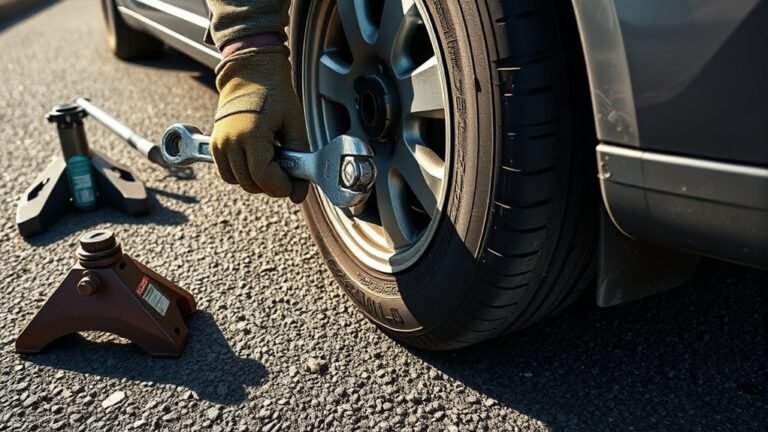

Do It Yourself Wheel Alignment
You can save money and boost your car’s performance by doing a DIY wheel alignment yourself. Start by spotting signs like uneven tire wear or your vehicle pulling to one side.
Gather tools like a camber gauge, tape measure, and adjustable wrenches to measure angles like camber, toe, and caster accurately. Follow a clear, step-by-step process to adjust tie rods and suspension parts for smooth handling and longer tire life.
Keep going to master safe, precise alignment techniques.
Key Takeaways
- Gather essential tools like a camber gauge, tape measure, adjustable wrenches, jack, and jack stands for precise wheel alignment.
- Measure camber, toe, and caster angles on a flat surface with correct tire pressure before making adjustments.
- Adjust tie rods and suspension components carefully to correct wheel angles based on accurate measurements.
- Use a string or alignment board to establish a straight reference line for consistent alignment checking.
- Recheck all measurements after adjustments to ensure even tire wear, better handling, and improved safety.
What Is Wheel Alignment and Why It Matters
What exactly is wheel alignment, and why should you care about it? Wheel alignment refers to adjusting your vehicle’s suspension angles so the tires meet the road correctly. When your wheels are properly aligned, they point straight ahead and are parallel to each other.
This ensures even tire wear, better handling, and improved fuel efficiency. If your alignment is off, you might notice uneven tire wear or your vehicle pulling to one side, but more on that later. Keeping your wheels aligned reduces strain on suspension components, extending their lifespan.
Proper alignment also enhances your driving safety by maintaining predictable steering response. By understanding wheel alignment, you take the first step toward maintaining your vehicle’s performance and saving money on premature tire replacements.
How to Tell If You Need Wheel Alignment
If your vehicle isn’t handling as smoothly as before or your tires show uneven wear, it’s a sign your wheel alignment might be off. You might notice your car pulling to one side when you drive on a flat road or your steering wheel isn’t centered when driving straight.
Vibrations in the steering wheel or unusual tire wear patterns, like bald spots or rapid tread wear on one edge, also signal misalignment. Additionally, if you’ve recently hit a curb or pothole, it’s wise to check your alignment.
Catching these signs early helps you avoid uneven tire wear and unsafe driving conditions. Paying attention to how your vehicle responds on the road lets you decide when it’s time to adjust your wheel alignment.
Tools You’ll Need for DIY Wheel Alignment
Achieving a proper wheel alignment requires a few essential tools that you can easily gather before starting the process. Having the right gear ensures you can measure and adjust accurately, saving time and money.
Here’s a quick list to get you ready:
| Tool | Purpose |
|---|---|
| Tape Measure | Measure distances between wheels |
| Carpenter’s Square | Check wheel angles |
| Jack and Jack Stands | Lift and secure your vehicle |
| Wrenches/Socket Set | Adjust tie rods and bolts |
| Alignment Gauge | Measure camber and toe angles |
With these tools, you’re set to tackle most alignment tasks yourself. Make sure everything’s in good condition and calibrated if needed. Proper preparation makes the job straightforward and effective.
What Wheel Alignment Angles Mean for Your Car
Wondering how wheel alignment angles affect your car’s performance? These angles, camber, toe, and caster, directly influence handling, tire wear, and safety.
Camber is the tilt of your wheels inward or outward when viewed from the front. Too much camber wears tires unevenly and reduces stability.
Camber is the inward or outward wheel tilt that impacts tire wear and vehicle stability.
Toe refers to the direction your wheels point relative to each other; if they point inward or outward excessively, your tires drag or scrub, causing premature wear.
Caster is the angle of the steering pivot, affecting your car’s straight-line stability and steering feel.
Properly understanding and adjusting these angles ensures your car drives smoothly, handles predictably, and extends tire life. Knowing what each angle means helps you make precise adjustments that improve overall performance and safety.
Step-by-Step DIY Wheel Alignment
To get started with your DIY wheel alignment, you’ll need the right tools and a clear workspace for preparation. First, measure your current alignment to identify any issues.
Then, adjust the alignment angles carefully to bring your wheels back into proper position.
Tools Needed Preparation
Before you dive in to the wheel alignment process, gather all the necessary tools to ensure a smooth and accurate job. Having everything ready prevents interruptions and helps you stay focused.
Here’s what you’ll need:
- Alignment gauge or camber/caster gauge for measuring wheel angles precisely.
- Tape measure to check distances between wheels.
- Wrenches and sockets to adjust tie rods and suspension components.
- Jack and jack stands to lift and securely support your vehicle.
Make sure your tools are in good condition and suitable for your car’s specifications. Organize them close by so you can easily reach for what you need during the alignment process.
With these tools prepped, you’re ready to move on confidently to measuring your wheel alignment.
Measuring Wheel Alignment
With your tools ready and organized, start by positioning your vehicle on a flat, level surface to ensure accurate measurements. Begin by checking your tire pressure, as uneven pressure can skew results.
Next, use your measuring tape or alignment gauge to assess the toe setting. Measure the distance between the front edges of the front tires and then the rear edges, noting any differences. This helps you determine if the wheels point inward or outward.
Then, use a camber gauge to check the vertical tilt of each wheel by placing it against the wheel’s face. Finally, record all your measurements carefully. These readings give you a clear baseline and let you know exactly what adjustments are needed to bring your wheels back into alignment.
Adjusting Alignment Angles
How do you begin adjusting your wheel alignment angles accurately? Start by loosening the tie rod clamps so you can make precise changes.
Next, adjust the camber by turning the camber bolts or using shims, depending on your vehicle. Then, move on to setting the caster angle, which usually involves adjusting the upper control arm or strut mounts.
Finally, tweak the toe angle by rotating the tie rods until you hit the recommended specifications.
- Loosen tie rod clamps for toe adjustments
- Adjust camber using bolts or shims
- Set caster by modifying control arms or strut mounts
- Fine-tune toe by rotating tie rods
Always recheck your measurements after each adjustment to ensure accuracy and safety.
How to Avoid DIY Wheel Alignment Mistakes
To get your DIY wheel alignment right, you need to watch out for common errors that can throw off your results. Using the proper measurement techniques guarantees accuracy and saves you time.
Plus, having the right tools makes the whole process smoother and more reliable.
Common Alignment Errors
Even if you follow every step carefully, overlooking small details during a DIY wheel alignment can lead to costly mistakes. Avoid these common errors to keep your wheels rolling smoothly:
- Ignoring Tire Pressure: Uneven pressure skews alignment readings, causing inaccurate adjustments.
- Skipping Vehicle Leveling: Uneven surfaces tilt your car, leading to false measurements.
- Misreading Angle Measurements: Incorrectly reading camber, caster, or toe angles results in improper alignment.
- Neglecting Suspension Wear: Worn parts affect alignment outcomes, so inspect and replace before adjusting.
Proper Measurement Techniques
Where should you focus your attention when measuring wheel alignment to avoid costly mistakes? Start by ensuring your vehicle is on a level surface and the tires are properly inflated. Always measure from consistent reference points on the wheels, such as the rim edges, to get accurate toe and camber readings.
Double-check that the steering wheel is centered before you begin. Take multiple measurements and compare them to spot any inconsistencies. Avoid rushing; small errors compound quickly. Also, keep your measuring tools steady and perpendicular to the wheel to prevent skewed results.
Tools To Use
Accurate measurements depend not only on technique but also on the right tools. Without proper equipment, you risk misaligning your wheels and causing uneven tire wear or handling issues. To avoid these mistakes, you’ll need reliable tools that give you precise readings.
Here are four essential tools for DIY wheel alignment:
- Tape Measure – For measuring distances between wheels and alignment points.
- Camber Gauge – To check the angle of the wheels relative to vertical.
- String or Alignment Board – Helps establish a straight reference line around the wheels.
- Adjustable Wrenches – To make necessary adjustments on tie rods and suspension components.
Using these tools correctly ensures your DIY alignment is accurate, safe, and effective.
Frequently Asked Questions
How Often Should Professional Wheel Alignment Be Performed?
You should get a professional wheel alignment at least once a year or every 12,000 miles. Also, get it checked if you hit a curb, notice uneven tire wear, or your car pulls to one side.
Can Wheel Alignment Improve Fuel Efficiency?
Imagine your car effortlessly gliding down the road. Yes, wheel alignment can improve fuel efficiency. When your wheels are properly aligned, your engine doesn’t have to work as hard, saving gas and boosting performance.
What Are the Risks of Incorrect Wheel Alignment?
If your wheel alignment is off, you’ll risk uneven tire wear, poor handling, and decreased fuel efficiency. It can also cause steering problems and increase the chance of accidents, so it’s important to get it right.
Does Wheel Alignment Affect Tire Wear Differently on Various Road Types?
Yes, wheel alignment affects tire wear differently on various road types. When you drive on rough or uneven surfaces, misalignment causes faster, uneven wear.
Smooth roads might show less immediate impact but still wear tires prematurely over time.
Are There Specific Car Models That Require Special Alignment Procedures?
Yes, some car models like luxury or performance vehicles need special alignment procedures because of unique suspension designs. You should check your owner’s manual or consult a professional to ensure you follow the correct steps for your specific car.
Conclusion
Doing your own wheel alignment is like tuning a guitar—when everything’s perfectly adjusted, your ride feels smooth and responsive. By learning the key angles and using the right tools, you can save money and avoid uneven tire wear.
Just take your time, follow the steps carefully, and double-check your work. With patience and attention, you’ll keep your car driving straight and true.
Mastering these techniques will help you maintain your vehicle’s performance and safety. Doing it yourself wheel alignment ensures every journey is safer and more enjoyable.