
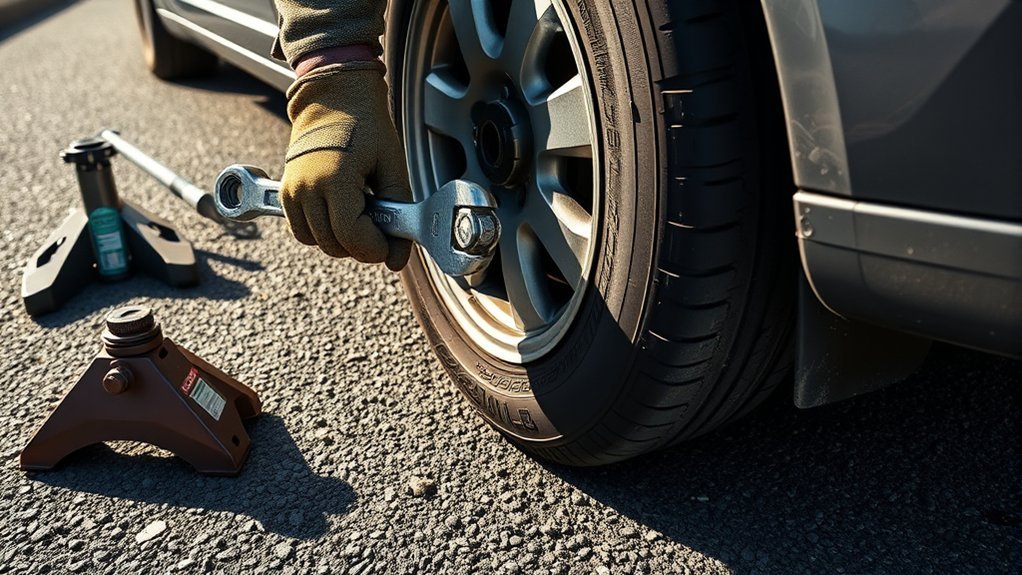
How to Fix a Flat Tire
To fix a flat tire, first pull your vehicle onto a flat, stable surface away from traffic and turn on your hazard lights. Engaging the parking brake and using wheel wedges will help prevent the car from rolling.
Loosen the lug nuts slightly before lifting the car with a jack. Remove the flat tire carefully, then install the spare by aligning the holes and hand-tightening the lug nuts.
Lower the car back down, and fully tighten the lug nuts in a star pattern to ensure even pressure. Drive cautiously below 50 mph and check the tire pressure soon after installation. Keep going to learn how to handle each step safely and efficiently.
Key Takeaways
- Safely park on a flat, stable surface away from traffic and engage the parking brake before starting the tire change.
- Gather essential tools: lug wrench, jack, spare tire, tire pressure gauge, and flashlight if needed.
- Loosen lug nuts slightly, lift the car with the jack, then fully remove lug nuts and the flat tire.
- Mount the spare tire by aligning holes with studs, hand-tighten lug nuts, lower the vehicle, then tighten nuts in a star pattern.
- Drive carefully under 50 mph on the spare and check tire pressure as soon as possible.
Preparing to Change a Flat Tire Safely
How do you get ready to change a flat tire without risking your safety? First, pull your vehicle off the road as far as possible, ideally onto a flat, stable surface away from traffic. Turn on your hazard lights to alert other drivers.
Engage the parking brake and, if you have wheel wedges, place them to prevent the car from rolling. Avoid changing a tire on a hill or uneven ground where the car could shift.
Before you step out, make sure it’s safe to do so—check for oncoming traffic. Finally, gather yourself mentally; stay calm and focused to avoid mistakes. Taking these precautions sets the foundation for a safer, smoother tire-changing process.
Tools Needed to Fix a Flat Tire
Before you start fixing your flat tire, make sure you have the right tools on hand. You’ll need essential items like a jack, lug wrench, and a spare tire, plus safety gear such as gloves and reflective triangles.
Having these ready will make the process smoother and safer.
Essential Tire Repair Tools
A reliable set of tools makes fixing a flat tire much easier and faster. You’ll need a lug wrench to loosen and tighten the lug nuts, and a jack to lift your vehicle safely off the ground.
Don’t forget a spare tire that’s fully inflated and ready to use. A tire pressure gauge helps you ensure the spare is properly inflated before driving.
Carrying a tire repair kit with patches and adhesive can be handy for temporary fixes if a spare isn’t available. Lastly, a flashlight is essential if you’re changing a tire in low light.
Having these tools organized and within reach means you can handle a flat tire quickly and get back on the road with confidence.
Safety Equipment Checklist
You should always prioritize safety when fixing a flat tire by having the right protective equipment on hand. This gear not only keeps you safe but also makes the job easier and quicker. Before you start, make sure you have these essentials ready:
- Gloves Protect your hands from dirt, sharp edges, and grime.
- Safety Glasses Shield your eyes from debris, dust, or unexpected sparks.
- Reflective Vest or Triangle Increase your visibility to other drivers, especially if you’re working roadside.
How to Remove a Flat Tire Step-by-Step
How exactly do you remove a flat tire safely and efficiently? First, make sure your car is on a flat, stable surface and engage the parking brake. Place wheel wedges opposite the flat tire to prevent rolling.
Next, loosen the lug nuts slightly using your lug wrench, but don’t remove them yet. Then, use the jack to lift the vehicle until the flat tire is off the ground.
Once lifted, fully unscrew the lug nuts and carefully pull the tire straight off the hub. Place the flat tire aside safely. Avoid rushing; these steps protect you and your vehicle.
Now, with the flat tire removed, you’re ready for the next step in fixing your tire.
How to Install Your Spare Tire Correctly
Now that the flat tire is off, it’s time to align the spare tire with the wheel studs carefully. Make sure the holes line up perfectly before you start tightening.
Then, secure the lug nuts properly in a star pattern to keep the tire firmly in place.
Aligning The Spare Tire
Several key steps guarantee you align the spare tire correctly for a safe and secure fit. First, position the spare tire so the holes on the wheel match the studs on your car. This alignment ensures the tire sits flush against the hub.
Next, gently push the tire onto the studs, making sure it’s centered and snug. Avoid forcing it, as that can cause misalignment. Finally, check that the tire is evenly touching the hub all around.
If it wobbles or feels off, adjust the position slightly until it fits perfectly.
Here’s a quick checklist to help you:
- Match the wheel holes to the studs precisely.
- Push the tire gently onto the hub without forcing.
- Confirm the tire sits evenly and flush against the hub.
Securing Lug Nuts Properly
Why is securing lug nuts properly essential when installing your spare tire? If you don’t tighten them correctly, your spare could come loose while driving, risking your safety.
Start by hand-tightening each lug nut to ensure they’re threading on properly. Avoid cross-threading by turning them gently at first.
Once all lug nuts are hand-tight, use your lug wrench to tighten them in a star pattern. This evenly distributes pressure and helps the tire sit flush against the hub.
Don’t fully tighten one lug nut before the others; that can cause uneven mounting. After lowering the car, give each lug nut a final firm turn with the wrench.
Double-check their tightness before you hit the road to keep your spare secure and safe.
Driving Safely After Changing a Flat Tire
How should you handle your vehicle once the spare tire is on? First, remember that most spare tires, especially donuts, aren’t designed for long distances or high speeds. To stay safe, follow these tips:
- Drive slowly and carefully: Keep your speed below 50 mph to avoid stressing the spare tire and maintain control.
- Avoid sudden maneuvers: Steer gently and brake smoothly to prevent tire damage or loss of control.
- Check your tire pressure soon: Spare tires can lose air quickly, so inspect and inflate it as soon as possible.
When to Call a Professional for Flat Tire Repair
While driving carefully on a spare tire can get you to a safe spot, some situations call for professional help. If your tire is severely damaged, like a large puncture, sidewall cut, or multiple holes, don’t attempt a DIY fix.
Also, if you don’t have the right tools, or if changing the tire feels unsafe due to traffic, weather, or location, it’s best to call a professional. Professionals have the expertise and equipment to ensure the repair is done correctly and safely.
If the spare tire is a temporary one, you’ll need a proper tire replacement soon, and a tire shop can assist. Remember, your safety and vehicle integrity come first, so don’t hesitate to seek expert help when needed.
Frequently Asked Questions
How Can I Prevent Flat Tires in the First Place?
You can prevent flat tires by regularly checking tire pressure, avoiding road hazards, rotating tires as recommended, and inspecting for wear or damage.
Keeping tires properly inflated and maintained helps you avoid flats and ensures safer driving.
What Types of Spare Tires Are Available?
You’ll find full-size spares, compact “donut” spares, and run-flat tires. Full-size matches your regular tire, donuts save space but limit speed, and run-flats let you drive a short distance after a puncture.
How Long Can I Drive on a Temporary Spare Tire?
You can drive on a temporary spare tire for about 50 to 70 miles, like a brief dance partner, quick and cautious. Don’t speed or take sharp turns; it’s meant to get you safely to a repair shop.
Can a Tire Sealant Fix All Types of Punctures?
No, tire sealant can’t fix all punctures. It works best for small holes like nails but won’t seal large gashes or sidewall damage.
You’ll need a proper repair or replacement for serious issues.
What Should I Do if My Tire Valve Is Damaged?
If your tire valve’s feeling under the weather, don’t sweat it. You’ll want to replace it ASAP to keep air where it belongs.
Grab a new valve, or visit a pro to avoid any unexpected deflations.
Conclusion
Now that you know how to fix a flat tire safely and effectively, you can handle this common roadside issue with confidence. Some say you need a professional for every flat, but with the right tools and steps, you can do it yourself quickly and safely.
Just remember to drive carefully after the repair and know when it’s best to call for help. You’ve got this—flat tires don’t have to stop you!
With these tips, fixing a flat tire becomes a manageable task you can tackle anytime.