How Often to Replace Clutch
You should replace your clutch roughly every 50,000 to 100,000 miles, depending on your vehicle type and driving habits. How often to replace clutch depends on factors like riding the clutch, aggressive shifting, and heavy loads, which can accelerate wear. This wear may cause slipping, difficulty shifting, or unusual noises.
Regular inspections help catch issues early to avoid costly repairs. Performance and heavy-duty vehicles often need earlier replacement. Understanding these variables ensures timely maintenance and optimal clutch performance.
Further details are available on prolonging clutch life and costs. Keeping track of these can help you maintain smooth driving and prevent unexpected breakdowns.
Top Signs Your Clutch Needs Replacing
You’ll often notice specific symptoms when your clutch is failing, indicating it’s time for replacement. One common sign is a slipping clutch, where the engine revs increase without corresponding acceleration. This typically results from worn clutch materials, which lose friction capability over time.
Another indicator is difficulty shifting gears smoothly, often caused by hydraulic wear in the clutch master or slave cylinder, leading to inconsistent pedal pressure. You might also experience a spongy or stiff clutch pedal, signaling potential hydraulic system degradation.
Additionally, unusual noises during clutch engagement or disengagement can point to damaged components. Monitoring these symptoms closely allows you to address clutch issues before complete failure, ensuring drivetrain reliability and preventing costly repairs. Regular inspections help confirm the condition of clutch materials and hydraulic components.
How Driving Habits Wear Out Your Clutch
Your driving habits directly affect clutch longevity, especially if you frequently ride the clutch by resting your foot on the pedal. This constant partial engagement causes premature wear on the clutch disc and pressure plate.
Additionally, aggressive shifting with abrupt clutch release increases stress on these components, accelerating their degradation.
Impact Of Riding Clutch
How exactly does riding the clutch accelerate its wear? When you rest your foot on the clutch pedal unnecessarily, it causes continuous friction between the clutch disc and flywheel, leading to accelerated impact wear. This constant partial engagement reduces the clutch’s lifespan and alters the pedal feel, making it spongier and less responsive over time.
| Driving Habit | Impact Wear Level | Pedal Feel Effect |
|---|---|---|
| Foot resting on pedal | High | Softer, less precise |
| Full pedal release | Low | Firm, responsive |
| Partial engagement | Moderate | Slightly mushy |
To minimize wear, avoid resting your foot on the pedal and engage it fully only when shifting. This preserves clutch integrity and maintains optimal pedal feel.
Effects Of Aggressive Shifting
Moderately, aggressive shifting considerably contributes to premature clutch wear by subjecting the clutch components to excessive stress and heat. When you shift gears aggressively, you cause rapid engagement and disengagement, which generates higher friction and accelerates wear on the clutch disc and pressure plate.
This behavior often leads to clutch slipping, where the clutch fails to fully engage, reducing power transmission efficiency and increasing heat generation. Over time, clutch slipping causes glazing and uneven wear, compromising the clutch’s ability to transfer torque effectively.
To minimize damage, avoid abrupt gear changes and allow smooth, deliberate clutch engagement. By moderating your shifting technique, you can significantly extend your clutch’s lifespan and maintain optimal vehicle performance, reducing the frequency of costly clutch replacements caused by aggressive shifting habits.
How Long Does a Clutch Last? (By Vehicle Type)
Typically, clutch lifespan varies considerably depending on the vehicle type and driving conditions. For standard passenger cars, expect about 50,000 to 100,000 miles before needing replacement.
Sports cars or vehicles with high-performance clutches may require earlier service due to increased wear. Trucks and heavy-duty vehicles often experience shorter clutch life because of heavier loads and frequent stop-and-go driving.
If you notice unusual noises like grinding or slipping during gear shifts, it’s a clear sign to evaluate clutch health promptly. Being concerned maintenance-wise about these symptoms helps prevent further damage and costly repairs.
Monitoring clutch performance regularly based on your vehicle’s type ensures timely intervention, maintaining suitable drivability and extending the clutch’s service life effectively.
Why You Shouldn’t Delay Clutch Replacement
You shouldn’t delay clutch replacement because a worn clutch can cause additional damage to your transmission components. Ignoring the issue may lead to costly repairs and decreased vehicle efficiency.
Timely replacement ensures optimum performance and prolongs the lifespan of your drivetrain.
Prevent Further Transmission Damage
How long can you afford to wait before replacing a worn clutch without risking serious harm to your transmission? Delaying clutch replacement can escalate wear and tear, drastically reducing your transmission lifespan.
Using clutch diagnostics early helps identify issues before they worsen, preventing costly damage. Ignoring signs of clutch failure leads to increased friction and heat, which can damage transmission gears and bearings.
To prevent further transmission damage, consider:
- Scheduling prompt clutch diagnostics at first signs of slippage
- Avoiding continued driving with a slipping or sticking clutch
- Replacing the clutch assembly before significant wear impacts other components
- Consulting a transmission specialist if unusual noises or difficulty shifting occur
Acting quickly preserves transmission integrity and avoids expensive repairs.
Maintain Vehicle Performance
Why wait to replace a worn clutch when delaying can directly degrade your vehicle’s performance? A compromised clutch reduces power transmission efficiency, leading to sluggish acceleration and irregular gear engagement.
You might be tempted to ignore clutch issues, but shifting this responsibility onto unrelated topic areas like engine tuning or suspension adjustments is an off topic discussion; these won’t resolve clutch-specific problems.
Continuing to drive with a failing clutch causes increased slippage, heat buildup, and accelerated wear on transmission components, ultimately diminishing fuel economy and drivability.
Timely replacement ensures consistent torque transfer, smoother gear shifts, and preserves overall vehicle responsiveness. Don’t let clutch maintenance become an off topic discussion; addressing it promptly sustains optimal performance and prevents cascading mechanical failures that could cost more down the line.
Clutch Replacement Costs: What to Expect
Wondering what it costs to replace a clutch? Clutch replacement expenses vary widely based on vehicle type, labor rates, and parts quality. It’s important to avoid focusing on irrelevant topics like cosmetic repairs or tangential concepts unrelated to drivetrain components when budgeting. Here’s what you can expect:
Parts cost: Typically ranges from $150 to $400 for the clutch kit.
Clutch kit parts typically cost between $150 and $400, depending on quality and vehicle requirements.
Labor: Can be $300 to $800 due to the complexity of accessing the clutch assembly.
Additional repairs: Flywheel resurfacing or replacement might add $100 to $300.
Vehicle type: Luxury or performance cars often have higher costs due to specialized components.
Understanding these factors helps you plan effectively without distractions from unrelated expenses or tangential issues.
What Happens During Clutch Replacement
When replacing your clutch, the first step involves carefully removing the old clutch assembly to access the components. Next, each part is thoroughly inspected for wear or damage to guarantee proper function. Finally, the new clutch is installed and tested to confirm smooth engagement and reliable performance.
Clutch Removal Process
Typically, the clutch removal process begins with safely lifting the vehicle and disconnecting the battery to prevent electrical hazards. You’ll then proceed to remove components obstructing access to the transmission, such as the driveshaft or exhaust system.
After unbolting the transmission, you can separate it from the engine to expose the clutch assembly. Key steps include:
- Detaching the pressure plate and clutch disc carefully to avoid damaging clutch alignment marks
- Removing the flywheel bolts and inspecting the flywheel surface
- Conducting a throwout bearing inspection to assess wear or damage
- Cleaning the mating surfaces before installing a new clutch
Following these precise steps ensures proper removal and sets the stage for effective clutch replacement.
Component Inspection Steps
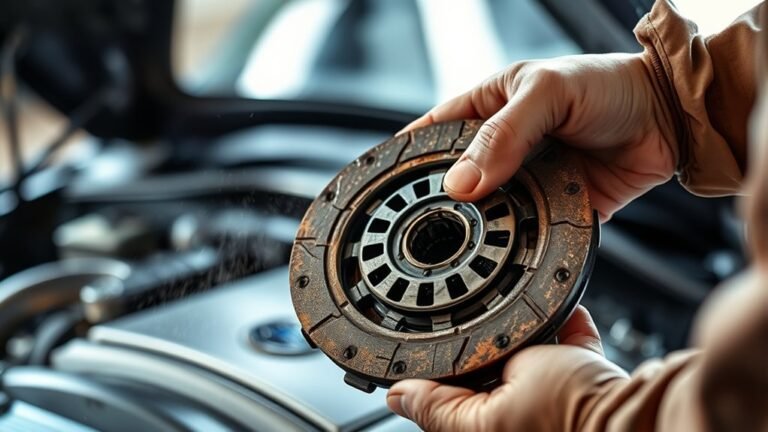
Once the clutch assembly is accessible after removal, the inspection process begins to evaluate each component’s condition before installing new parts. You’ll start by examining the clutch material for signs of excessive wear, glazing, or contamination, which can impair friction performance.
Next, check the pressure plate and flywheel surfaces for scoring or heat spots, as these defects affect engagement and longevity. Don’t overlook the release bearing and pilot bearing; ensure they rotate smoothly without noise or play.
Additionally, verify that the clutch disc’s spline and hub are intact. While tire compatibility isn’t directly related to the clutch mechanism, it’s essential to confirm that the new clutch system aligns with the vehicle’s intended tire specifications to maintain drivetrain harmony and optimal performance.
This thorough inspection ensures reliability and safety before reassembly.
Installation And Testing
How do you ensure the clutch replacement is executed correctly for optimal performance? After removing the worn clutch, you’ll install the new clutch disc, pressure plate, and release bearing, aligning components precisely to manufacturer specifications. Avoid any irrelevant topic or off topic discussion that might distract from critical steps.
Key actions include:
- Aligning the clutch disc using a centering tool to prevent misalignment
- Securing the pressure plate bolts in a crisscross pattern to ensure even pressure
- Reinstalling the transmission carefully to avoid damaging the input shaft
- Bleeding the hydraulic system to remove air and ensure smooth clutch engagement
Finally, test the clutch operation under varied conditions, checking for smooth engagement, no slippage, and proper pedal feel to confirm successful installation.
How to Extend Your Clutch’s Lifespan
Why does your clutch wear out faster than expected? Excessive clutch temperature caused by prolonged slipping or riding the clutch pedal can degrade friction materials, reducing torque capacity and accelerating wear.
To extend your clutch’s lifespan, avoid partial engagement that causes overheating. Shift gears smoothly and only release the pedal fully when the clutch is fully engaged.
Additionally, minimize holding the vehicle on an incline using the clutch; use the handbrake instead. Regularly inspect the clutch system for hydraulic leaks or cable adjustments to maintain optimal pedal feel and engagement points.
Maintaining proper clutch temperature and operating within the designed torque capacity prevents premature failure. By controlling these factors, you ensure your clutch performs efficiently and lasts closer to its intended service interval.
Differences Between Clutch Types and Durability
Understanding how to manage clutch wear effectively also involves recognizing the differences in clutch types and their durability. The clutch material and design substantially influence lifespan and performance. For example, organic friction plates offer smooth engagement but wear faster, whereas ceramic plates endure higher temperatures and last longer.
Effective clutch wear management requires understanding clutch types and their impact on durability and performance.
Here are key differences to consider:
- Organic clutches: Softer clutch material, ideal for daily driving, moderate durability.
- Ceramic clutches: Harder friction plates, excellent heat resistance, longer lifespan.
- Kevlar clutches: Durable clutch material, balanced between performance and longevity.
- Metallic clutches: High durability but can cause faster wear on the flywheel.
Knowing these distinctions helps you predict replacement intervals and maintain peak clutch performance.
When to Consult a Mechanic About Your Clutch
When should you consult a mechanic about your clutch? If you notice symptoms like slipping gears, difficulty shifting, or unusual noises, it’s time to seek professional evaluation. These signs indicate clutch wear or potential failure, requiring expert diagnosis and repair.
Avoid engaging in unrelated topic conversations or off topic discussions when explaining your issue; focus on describing specific clutch problems for accurate assessment. Early consultation prevents further damage and costly repairs.
Additionally, if your clutch pedal feels spongy or sticks, or if there’s a burning smell during operation, these warrant immediate mechanical inspection. Don’t delay seeking help, as ignoring these indicators risks transmission damage.
Consulting a mechanic ensures proper maintenance tailored to your clutch type and driving conditions, preserving your vehicle’s performance and safety.
Common Mistakes That Shorten Clutch Life
How do common driving habits and maintenance oversights contribute to premature clutch wear? Many drivers unknowingly accelerate clutch degradation through improper techniques and neglect. Understanding the technical aspects can help extend clutch life significantly.
Avoid these mistakes:
- Riding the clutch pedal continuously, which causes unnecessary friction and heat buildup.
- Ignoring proper techniques for clutch lubrication, leading to increased wear on moving parts.
- Believing myths about wear patterns, such as thinking that clutch slipping always indicates impending failure.
- Using the clutch to hold the vehicle on inclines instead of the handbrake, which strains the clutch components.
Frequently Asked Questions
Can a Slipping Clutch Affect Fuel Efficiency?
Yes, slipping symptoms can reduce your fuel economy because the clutch doesn’t fully engage, causing engine RPM to rise unnecessarily. This inefficiency forces your engine to work harder, wasting fuel and lowering overall performance.
Is It Possible to Replace Just the Clutch Disc?
Yes, you can replace just the clutch disc, but relining options vary by vehicle. With dual clutch quirks, partial replacements are less common, as the system’s complexity often necessitates full assembly servicing for optimal performance.
How Does Climate Impact Clutch Wear?
Climate impact affects clutch wear considerably; in humid or hot climates, materials degrade faster, increasing wear rates.
You’ll notice more clutch wearxiety if you drive in extreme temperatures, as heat accelerates friction material breakdown and moisture causes corrosion.
Can a Worn Clutch Damage Other Car Parts?
You should know clutch corrosion can accelerate pilot bearing wear by up to 40%, causing transmission misalignment. This means a worn clutch can indeed damage other car parts, leading to costly repairs if ignored.
Are Aftermarket Clutches as Reliable as OEM Parts?
Aftermarket reliability can match OEM parts if you choose reputable brands and guarantee proper clutch disc replacement techniques. However, quality varies widely, so research and verify specifications to maintain performance and longevity comparable to OEM components.