What Coolant Does My Car Need
You need the coolant type specified in your vehicle manual, which is essential when determining what coolant does my car need. This is usually ethylene glycol-based, propylene glycol-based, or OAT formulations. Using the correct coolant ensures proper heat transfer, corrosion protection, and engine longevity.
Color coding on labels helps identify compatibility, but always confirm with your manual. Mixing types or ignoring specifications can cause serious damage to your engine. Your climate also affects coolant choice due to freezing and boiling point requirements.
Understanding these factors will help you maintain your car’s cooling system effectively and avoid costly repairs. Always follow manufacturer recommendations to keep your engine running smoothly.
What Is Car Coolant and Why It Matters
Why does your car need coolant? Your engine generates intense heat during operation, and coolant plays a critical role in maintaining suitable temperature. It absorbs heat and transfers it away from the engine, preventing overheating and potential damage.
Understanding the theoretical coolant chemistry is essential; it involves a mixture of water, ethylene glycol, and corrosion inhibitors that optimize heat transfer and protect engine components. This chemical balance ensures efficient thermal regulation and longevity.
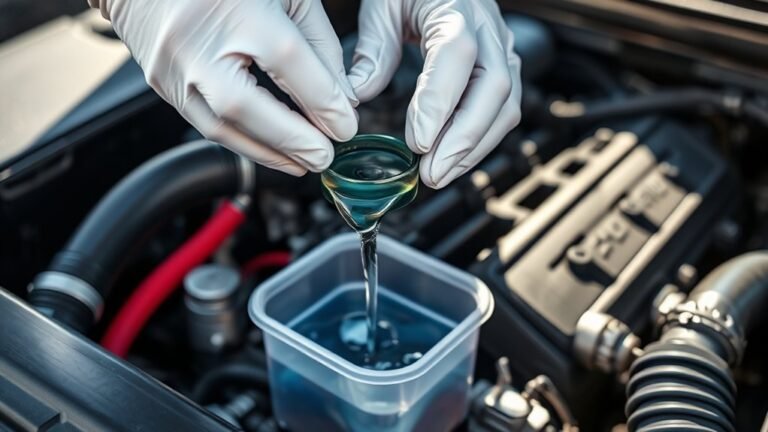
Additionally, you must consider coolant disposal ethics. Improper disposal can harm the environment due to toxic components. Always follow local regulations for safe disposal or recycling.
Types of Coolants: Which One Suits Your Car?
How do you determine which type of coolant is best for your vehicle? It depends largely on your car’s make, model, and engine specifications. Common coolant types include ethylene glycol-based, propylene glycol-based, and organic acid technology (OAT) coolants.
Choosing the right coolant depends on your vehicle’s make, model, and engine specifications.
Each has distinct corrosion inhibitors suited for specific metals in your cooling system. Using the wrong coolant can accelerate radiator corrosion, leading to expensive radiator replacement.
Additionally, proper coolant disposal is critical due to its toxic components; never pour it down drains or onto the ground. Always follow manufacturer recommendations to ensure optimal heat transfer and corrosion protection.
Selecting the right coolant not only prolongs engine life but also prevents costly repairs, making it essential to match coolant type precisely with your vehicle’s cooling system requirements.
How to Check Your Car’s Coolant Type and Compatibility
You’ll want to start by inspecting the coolant label on the container, which specifies the formulation and additives used. Next, consult your vehicle’s manual to confirm the recommended coolant type and any compatibility requirements. Matching these details ensures optimum performance and prevents potential engine damage.
Identifying Coolant Labels
Where can you find the information needed to determine the correct coolant for your vehicle? Start by examining the coolant container’s label, which uses standardized coolant labeling and color coding to indicate compatibility.
These labels specify chemical composition and recommended applications, helping you match your vehicle’s needs precisely.
| Coolant Color | Typical Composition |
|---|---|
| Green | Inorganic Acid Tech |
| Orange | Organic Acid Tech |
| Yellow | Hybrid Organic Acid |
| Pink | Phosphate-Free OAT |
| Blue | Silicate-Free OAT |
Always verify that the coolant’s label aligns with your vehicle’s requirements to avoid corrosion or cooling inefficiency. Color coding simplifies quick identification but never rely solely on color; read the technical specifications on the label for full compatibility.
Checking Vehicle Manual
While coolant container labels provide valuable insights into chemical composition and compatibility, the most reliable source of information is your vehicle’s manual. It specifies the exact coolant type formulated to match your engine’s materials and operating conditions.
Since off road chemistry differs from standard formulations, using the recommended coolant ensures optimal heat transfer and corrosion protection. Your manual also factors in elements like tire design, which indirectly affects engine load and cooling demands.
To check compatibility, locate the coolant section in the manual, noting specifications such as Organic Acid Technology (OAT), Inorganic Additive Technology (IAT), or Hybrid Organic Acid Technology (HOAT). Following these guidelines prevents chemical reactions that degrade cooling efficiency or damage engine components.
Always cross-reference your coolant choice with the manual before topping off or flushing the system.
How to Choose the Right Coolant for Your Vehicle
How do you determine the right coolant for your vehicle? First, consult the vehicle manual for manufacturer recommendations, as improper coolant can affect engine performance and longevity. Just as you regularly check tire pressure or maintain cleaning interior routines, selecting the correct coolant is essential for optimal engine temperature regulation.
| Coolant Type | Base Chemical | Best For |
|---|---|---|
| Inorganic Additive | Ethylene Glycol | Older vehicles, classic cars |
| Organic Acid | Propylene Glycol | Modern vehicles, extended life |
| Hybrid Organic | Mix of both | Mixed fleet, moderate use |
| Silicone-based | Silicone additives | Heavy-duty, high temp engines |
| Phosphate-free | No phosphates | European vehicles |
Choose coolant matching your engine’s requirements, considering vehicle age and climate conditions to ensure peak performance.
Signs Your Car Needs a Coolant Change or Flush
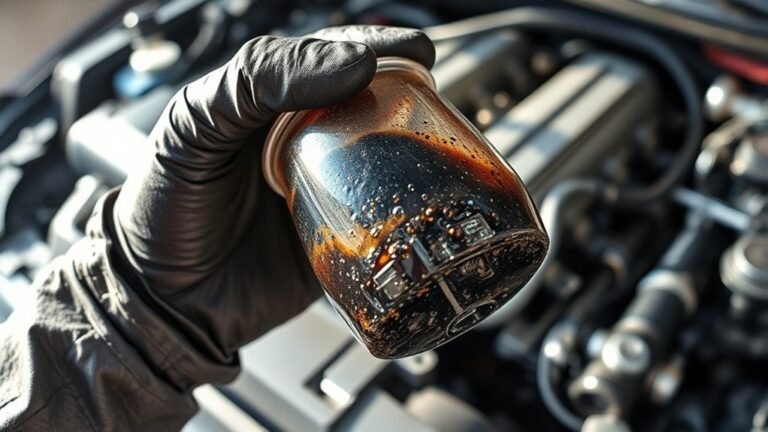
Selecting the appropriate coolant is only part of maintaining your vehicle’s cooling system. You need to recognize signs indicating a coolant change or flush is due. Dark, rusty, or contaminated coolant suggests corrosion or breakdown, compromising heat transfer.
Overheating or frequent engine temperature fluctuations also signal coolant degradation. Don’t fall for common car care misconceptions that fuel additives alone can resolve cooling issues; they often don’t address coolant contamination or corrosion.
Additionally, a swollen radiator cap or visible coolant leaks indicate system failure requiring immediate attention. Regularly monitor coolant condition and engine temperature to avoid costly repairs.
Timely coolant maintenance ensures optimal engine performance and longevity by preventing corrosion, sludge buildup, and overheating, all crucial for reliable vehicle operation.
How to Safely Add or Replace Coolant
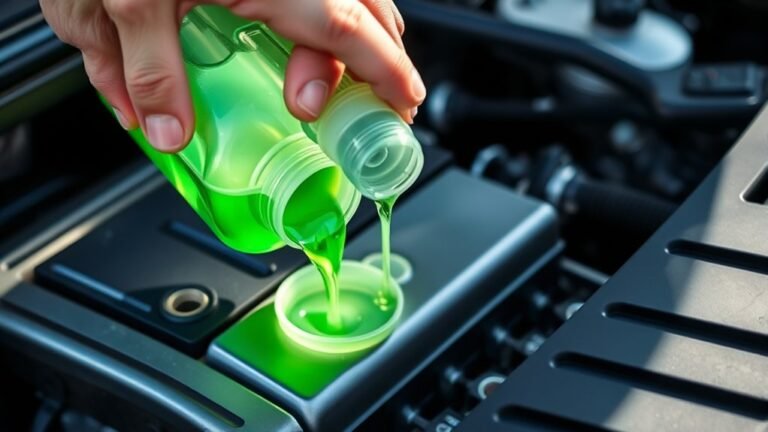
Before you add or replace coolant, make sure your engine is completely cool and the vehicle is on a level surface. Selecting the correct type of coolant compatible with your car’s specifications is essential to prevent damage.
Follow a step-by-step process to safely drain old coolant and fill the system without introducing air pockets.
Preparing Your Vehicle
Why is it essential to prepare your vehicle correctly before adding or replacing coolant? Proper preparation ensures safety and system integrity. First, make sure the engine is cool to prevent burns from hot coolant or steam.
Park on a level surface and engage the parking brake to avoid movement. While preparing, check other maintenance tasks like tire rotation or applying car wax to maintain overall vehicle health.
Next, locate the coolant reservoir and radiator cap, inspecting them for damage or leaks. Clean the area around the reservoir cap to prevent contaminants from entering the system.
Always wear gloves and eye protection to avoid contact with toxic fluids. Taking these steps minimizes risk and ensures the cooling system functions efficiently after coolant replacement or addition.
Choosing The Right Coolant
How do you determine the correct coolant for your vehicle? Start by consulting your owner’s manual, which specifies the required coolant type based on your engine’s materials and operating temperature. Using the wrong coolant can cause corrosion or inadequate heat transfer.
Focus on two word discussion ideas like “coolant specifications” and “chemical compatibility” to avoid mixing incompatible fluids. When selecting a coolant, prioritize formulations that meet industry standards such as ASTM or SAE.
For coolant maintenance, ensure you replace or top off the fluid according to the recommended intervals to maintain optimal engine temperature and prevent overheating. Always handle coolant safely, avoiding spills and disposing of old coolant properly to protect the environment.
Choosing the right coolant is essential for engine longevity and performance.
Step-By-Step Filling Process
Although adding or replacing coolant might seem straightforward, following a precise step-by-step process is essential to guarantee safety and proper system function. First, ensure the engine is cool to avoid burns.
Next, check the coolant type considering finding weather impact on freezing and boiling points. Then, drain old coolant properly, adhering to coolant storage guidelines for disposal or reuse.
Afterward, refill with the recommended coolant mixture up to the specified level. Finally, securely replace the cap and run the engine, checking for leaks or air pockets.
| Step | Action | Notes |
|---|---|---|
| 1 | Cool engine | Prevent burns |
| 2 | Select coolant | Consider weather impact |
| 3 | Drain old coolant | Follow storage guidelines |
| 4 | Refill coolant | Use proper mixture |
| 5 | Secure cap & check system | Inspect for leaks and air pockets |
Coolant Mistakes to Avoid That Can Hurt Your Engine
Even if you’re diligent about maintaining your car, using the wrong coolant or mixing incompatible types can cause serious engine damage. Like the precision needed in wind turbines or coffee brewing, your engine’s cooling system demands exact specifications.
Here are three coolant mistakes to avoid:
- Mixing Different Coolants: Combining ethylene glycol with propylene glycol or different additive packages can cause chemical reactions that degrade corrosion inhibitors, damaging your radiator and engine.
- Ignoring Manufacturer Recommendations: Using a coolant not specified for your vehicle can lead to improper heat transfer, risking overheating or freezing.
- Skipping Regular Coolant Changes: Old coolant loses its protective properties, increasing corrosion and scale buildup, reducing cooling efficiency.
Avoid these errors to keep your engine running smoothly and extend its lifespan.
How Seasonal Changes Affect Your Car’s Coolant Needs
Maintaining the right coolant isn’t just about choosing the correct type; it also involves adjusting to changes in temperature and weather conditions throughout the year. Seasonal maintenance is critical since coolant performance must match climate impact to prevent engine damage.
In colder months, your coolant requires a higher concentration of antifreeze to lower the freezing point and protect against ice formation. Conversely, during hotter seasons, the coolant’s boiling point needs to be sufficiently elevated to avoid overheating.
Neglecting these adjustments can lead to inadequate thermal regulation, causing engine stress or failure. By understanding how seasonal temperature fluctuations affect coolant properties, you ensure optimal heat dissipation and corrosion prevention. Tailoring your coolant mixture to the prevailing climate conditions is essential for maintaining engine reliability year-round.
Tips for Maintaining Your Car’s Cooling System Year-Round
Since your car’s cooling system plays an essential role in regulating engine temperature, regular inspections and maintenance are essential to prevent overheating and corrosion.
To keep your system efficient year-round, focus on these key two word ideas one:
- Coolant Level: Check and top off coolant to maintain proper fluid balance.
- Hose Integrity: Inspect hoses for cracks or leaks to avoid fluid loss.
- Radiator Flush: Perform scheduled flushes to remove contaminants and preserve corrosion inhibitors.
Frequently Asked Questions
Can I Mix Different Brands of Coolant Safely?
You can’t safely mix different brands of coolant unless their mixing compatibility is confirmed on the brand labeling.
Incompatible formulations can cause corrosion or reduced effectiveness, so always verify compatibility before combining coolants.
How Long Does Car Coolant Typically Last Once Opened?
Once opened, car coolant typically lasts about two years if stored properly.
Two word ideas like “shelf life” aren’t relevant here, but they often appear in unrelated discussion topics about fluid storage and maintenance intervals.
Does Coolant Have an Expiration Date?
Think of coolant like milk; it does have an expiration date. Coolant shelf life varies by type and storage, and brand compatibility matters.
Using expired or mixed brands risks corrosion and reduced effectiveness, so always check dates and specs carefully.
Can Coolant Be Used in Other Types of Vehicles Like Motorcycles?
You can use coolant in motorcycles, but you need to ensure motorcycle compatibility because coolant chemistry varies. Some coolants formulated for cars might not suit motorcycles’ cooling systems, so always check manufacturer recommendations for proper use.
What Should I Do if I Accidentally Swallow Coolant?
If you’ve swallowed coolant during your storing mishaps, don’t try to power through it like an engine. Immediately call poison control or seek emergency help. Coolant’s toxicity demands urgent disposal safety measures for your health, not your vehicle.