How to Set Chainsaw Carburetor
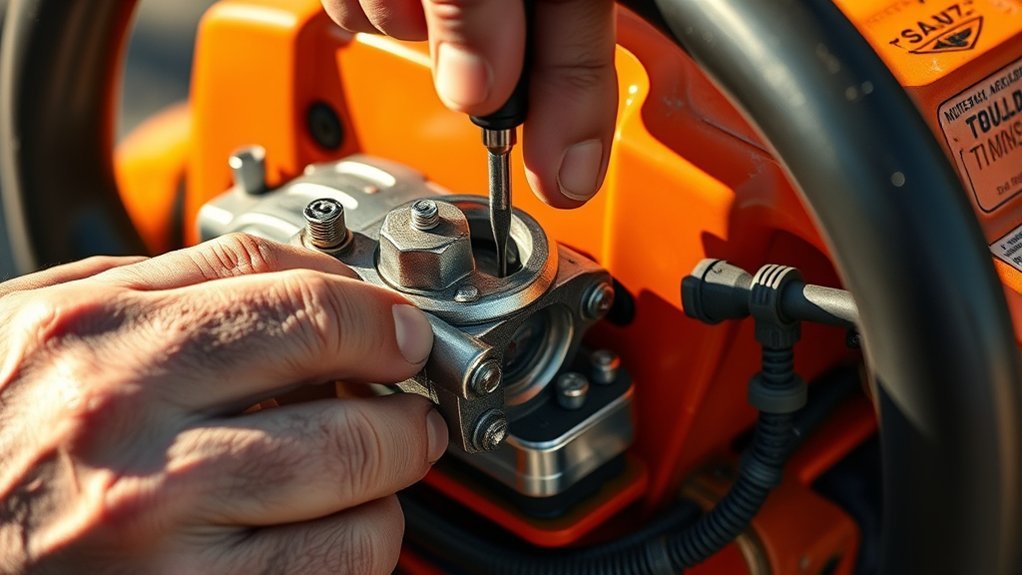
To set your chainsaw carburetor, start with a warm engine and locate the three adjustment screws: low-speed (L), high-speed (H), and idle speed (T/LA). Using a flathead screwdriver, first adjust the idle speed screw so the chain stops moving when the engine is idling.
Next, fine-tune the L and H screws to achieve smooth acceleration and proper combustion. Always ensure you are using fresh, properly mixed fuel and check that the air filter is clean before making any adjustments.
Proper tuning of the chainsaw carburetor boosts engine power and helps prevent stalling. Keep following for detailed steps and model-specific tips to get the best performance from your chainsaw.
How to Identify When Your Chainsaw Carburetor Needs Adjustment
How do you know when your chainsaw carburetor needs adjustment? Watch for signs such as inconsistent idling, difficulty starting, or reduced engine power. Carburetor failure often results from improper fuel mixture, which can be caused by poor fuel quality or aging components.
If your saw stalls frequently or the chain doesn’t respond smoothly to throttle input, it’s a clear indicator the carburetor isn’t delivering the right air-fuel ratio. Additionally, excessive smoke or unusual engine noises suggest the carburetor settings are off.
Regularly inspect fuel quality, as contaminated or old fuel can mimic carburetor problems, leading to misdiagnosis. Identifying these symptoms early helps prevent further engine damage and ensures optimal performance before you proceed with adjustment.
Tools You’ll Need to Set Your Chainsaw Carburetor
To set your chainsaw carburetor accurately, you’ll need specific adjustment tools like a screwdriver suited for your model and a tachometer for precise RPM measurement.
Don’t forget safety gear, including gloves and eye protection, to prevent injury during adjustments. Having the right tools and protective equipment ensures both effectiveness and safety while you work.
Essential Adjustment Tools
What tools do you need to accurately adjust your chainsaw carburetor? Avoid harboring ambiguity or mixing unrelated topics by focusing strictly on essential adjustment tools. Precision is key to setting your carburetor correctly.
1. Flathead screwdriver
Most carburetor screws require this for fine tuning the idle and mixture settings.
2. Tachometer
Measures engine RPM to ensure adjustments meet manufacturer specifications.
3. Carburetor adjustment tool
Some models use specialized screws needing a specific tool for accurate turns.
4. Clean rag
Essential to wipe off fuel residues and keep the area clean during adjustments.
Having these tools handy ensures precise tuning without confusion or guesswork, streamlining your adjustment process efficiently.
Safety Gear Requirements
Several key pieces of safety gear are essential when setting your chainsaw carburetor to protect you from fuel exposure, sharp components, and accidental engine starts. First, always wear protective gloves to shield your hands from fuel, oil, and the sharp edges of the chainsaw. Gloves made of nitrile or heavy-duty materials offer chemical resistance and grip.
Eye protection is mandatory to prevent debris or fuel splashes from causing injury. Consider safety goggles or a full-face shield. Hearing protection is advisable if the chainsaw runs during adjustments.
Additionally, wear long sleeves and durable clothing to minimize skin exposure. Ensure you work in a well-ventilated area to avoid inhaling fuel fumes. Using proper safety gear reduces the risk of injury and ensures a safer, more effective carburetor adjustment process.
Step-by-Step Guide to Adjusting Your Chainsaw Carburetor
First, you’ll need to identify the carburetor screws: the idle speed, low-speed mixture, and high-speed mixture screws.
Next, adjust the idle speed to guarantee the chain doesn’t move when the throttle is released.
Finally, fine-tune the fuel mixture screws to optimize engine performance and fuel efficiency.
Identifying Carburetor Screws
How can you quickly identify the key screws on your chainsaw’s carburetor? Proper carburetor calibration starts with knowing each screw’s function. Typically, you’ll find three main screws:
- Low-Speed (L) Screw Controls fuel mixture at idle and low RPM.
- High-Speed (H) Screw Regulates fuel mixture at full throttle.
- Idle Speed (T or LA) Screw Adjusts the chain’s idle speed without stalling.
Each screw is usually marked or located on the carburetor body, but consulting your chainsaw’s manual helps confirm their exact positions. When identifying carburetor screws, ensure the engine is off and cool to avoid injury.
This clarity in recognizing screws ensures precise carburetor calibration, optimizing performance and fuel efficiency before you proceed to fine-tuning adjustments like idle speed.
Adjusting Idle Speed
Why should you pay close attention when adjusting the idle speed on your chainsaw carburetor? Proper idle speed ensures fuel stabilization, prevents the chain from moving unexpectedly, and extends engine life.
Incorrect idle speed risks stalling or unsafe chain movement during chain sharpening. To adjust: warm up the engine, locate the idle screw, and turn it slowly until the chain stops moving but the engine keeps running smoothly.
| Step | Action | Expected Result |
|---|---|---|
| 1 | Warm engine | Stable running temperature |
| 2 | Locate idle screw | Ready for adjustment |
| 3 | Turn screw clockwise | Increase idle speed |
| 4 | Turn screw counterclockwise | Decrease idle speed |
| 5 | Test chain movement | Chain stationary at idle |
This ensures safe operation and optimal performance during chain sharpening.
Fine-Tuning Fuel Mixture
Where do you start when fine-tuning your chainsaw’s fuel mixture? You want precise adjustments for optimal performance and longevity. Follow these steps:
- Locate the high-speed (H) and low-speed (L) mixture screws on the carburetor.
- With the engine running, turn the L screw slowly clockwise until the engine stutters, then back out slightly to stabilize idle.
- Adjust the H screw carefully to increase RPM without causing the engine to over-rev or smoke.
- Recheck the idle speed and readjust if needed to maintain steady operation.
How to Fine-Tune Chainsaw Carburetor Idle and High-Speed Settings
Once you’ve adjusted the basic carburetor screws, you’ll need to fine-tune the idle and high-speed settings to ensure optimal engine performance. Start by warming up the chainsaw, then adjust the idle screw to achieve a smooth, consistent idle without the chain moving.
If the chain spins at idle, reduce the idle speed immediately to prevent accidents. Always apply safety training principles here. Next, test the high-speed screw by running the saw at full throttle.
Turn the screw slowly until you reach maximum RPM without the engine bogging or over-revving. Avoid excessive fuel consumption by maintaining an efficient mix, which also ties into proper fuel storage to prevent carburetor clogging. Fine-tuning these settings improves power delivery, fuel efficiency, and prolongs engine life.
Recommended Carburetor Settings for Popular Chainsaw Models
How do you determine the ideal carburetor settings for your chainsaw model? Start by consulting the manufacturer’s manual for baseline adjustments. Popular models like Stihl, Husqvarna, Echo, and Makita each have specific recommended settings to optimize performance.
- Stihl MS 170: Set low-speed screw to 1.5 turns out, high-speed screw around 2 turns out.
- Husqvarna 455 Rancher: Low-speed screw 1.25 turns out, high-speed screw 2.5 turns out.
- Echo CS-590: Low 1.75 turns out, high 2.25 turns out.
- Makita DCS6400: Low 1.5 turns out, high 2 turns out.
Adjustments should ensure proper chainsaw lubrication and smooth operation without bogging. Regularly check tire maintenance on attached equipment to prevent operational issues linked to carburetor inefficiencies.
Troubleshooting Chainsaw Issues After Carburetor Adjustment
Why does your chainsaw still stall or run unevenly after adjusting the carburetor? Common causes include clogged fuel filters, dirty spark plugs, or air leaks disrupting fuel-air mixture accuracy. Check the fuel line for blockages or cracks that impair flow.
Chainsaw stalls after carburetor adjustment? Check fuel filters, spark plugs, air leaks, and fuel line for blockages or damage.
Inspect the spark plug for fouling or incorrect gap, as ignition timing directly affects performance. Also, ensure the carburetor screws are set precisely; slight deviations can cause inconsistent idling or stalling.
In creative gardening or woodworking aesthetics, reliable chainsaw operation is crucial for precision cuts and clean finishes. Addressing these mechanical issues ensures your tool functions optimally, preventing frustration during detailed tasks.
If problems persist, consider professional inspection, as internal carburetor wear or damaged gaskets might require expert repair rather than simple adjustments.
Tips to Keep Your Chainsaw Carburetor Running Smoothly
Where should you focus to keep your chainsaw carburetor running smoothly? Prioritize consistent tool maintenance and careful fuel management. Follow these four practical tips:
1. Use fresh, properly mixed fuel
Old or incorrect fuel mixtures degrade performance and harm fuel economy.
2. Regularly clean the carburetor
Remove dirt and debris to prevent blockages that affect engine response.
3. Check and replace air filters
A clogged air filter disrupts the air-fuel ratio, causing inefficient combustion.
4. Inspect and tighten carburetor screws
Vibrations can loosen screws, altering settings and affecting smooth running.
Frequently Asked Questions
Can I Use Any Fuel Type With My Chainsaw Carburetor?
You can’t use just any fuel type with your chainsaw carburetor; improper fuel harms the fuel system. Stick to recommended mixes to guarantee optimal performance.
For discussion ideas, always check your manual before refueling.
How Often Should I Clean the Carburetor?
You should clean the carburetor every 25 hours of use or seasonally to maintain optimal performance. Proper cleaning frequency ensures fuel compatibility isn’t compromised by debris, preventing engine issues and prolonging your chainsaw’s lifespan.
What Are Common Signs of a Faulty Carburetor Gasket?
Like a telegram from the past, you’ll notice carburetor failure symptoms such as rough idling, poor acceleration, or fuel leaks. Gasket leakage often causes these issues, so check for visible cracks, fuel smells, or oily residue.
Can Carburetor Issues Cause Excessive Smoke?
Yes, carburetor issues can cause excessive smoke. You’ll need thorough carburetor maintenance and fuel system diagnosis to identify fuel mixture imbalances or leaks causing rich combustion. This leads to smoke and reduced engine performance.
Is It Safe to Adjust the Carburetor Without Protective Gear?
You shouldn’t adjust the carburetor without protective gear; 60% of injuries stem from unclear safety practices. Proper gloves and goggles protect you, especially when fuel compatibility is uncertain, preventing burns or inhalation of toxic fumes.